
Stairway Between the Worlds
Critique
1. Introduction This evocative painting presents a sacred pathway leading to a Shinto shrine, characterized by a succession of vibrant red torii gates and traditional lanterns. The composition is structured around a central stone staircase that ascends into a dense, sun-dappled forest, creating a powerful sense of spiritual journey and progression. The work captures the solemn yet inviting atmosphere of a hallowed space where nature and faith intersect. 2. Description The foreground is dominated by a massive vermilion torii gate, adorned with a thick sacred rope and decorative tassels. A large, ornate lantern stands prominently on the left, its internal glow competing with the natural light filtering through the canopy. Beyond the first gate, a series of smaller torii and rows of lit lanterns line the weathered stone steps, which lead the viewer’s eye upward toward a luminous, mist-filled background where more gates are partially visible amidst the foliage. 3. Analysis The artist employs a dramatic use of chiaroscuro, contrasting the deep shadows of the forest floor with the brilliant, golden light that breaks through the trees. This lighting creates a rhythmic pattern along the staircase, emphasizing the repetitive forms of the torii gates and lanterns. The color palette is centered on the saturated reds and oranges of the structures, which are complemented by the cool, dark greens of the surrounding vegetation, establishing a vibrant and energetic visual harmony. 4. Interpretation and Evaluation The painting successfully conveys a feeling of reverence and transcendence through its focus on depth and the ethereal quality of light. The technical execution of the weathered stone and the intricate details of the shimenawa demonstrate a high level of craftsmanship and thematic consistency. This work evaluates the concept of the "liminal space," where each gate represents a transition between the mundane and the divine, highlighting the enduring power of traditional religious iconography. 5. Conclusion Initially striking for its bold use of red, the work reveals a subtle complexity in the way it handles atmospheric perspective and the play of light. The balance between the man-made ritual structures and the organic chaos of the forest creates a unified and compelling vision of a sacred landscape. Ultimately, the painting stands as a profound and visually stunning tribute to the spiritual heritage and natural beauty of Japan.
Same Subcategory
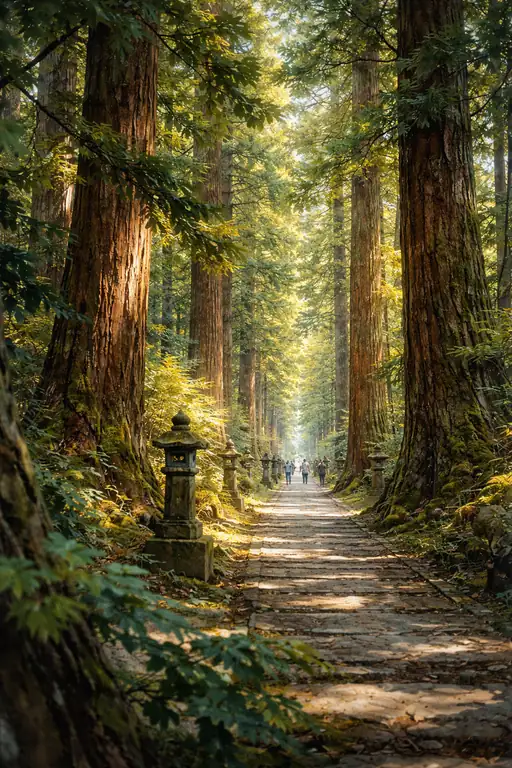 Serene Path: Ancient Stone Lanterns Illuminating a Mossy Japanese Forest
Similar Artworks
 Path of the A Thousand Torii
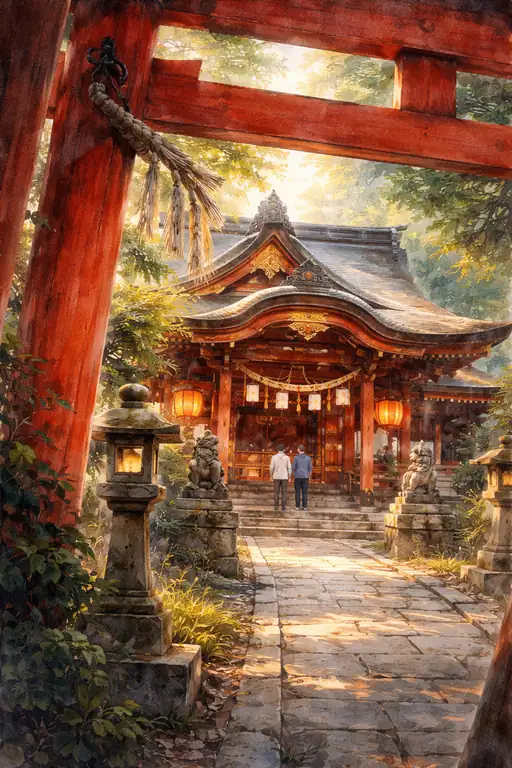 Vermilion Gateway to the Sacred
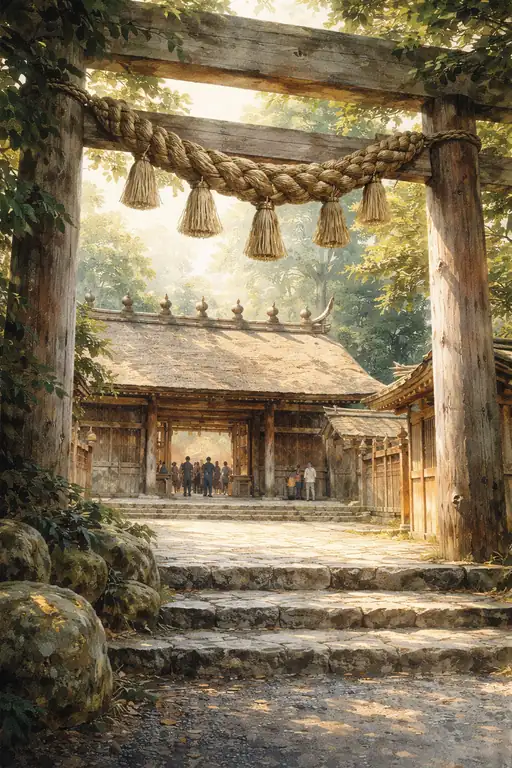 Awakening the Sacred Path
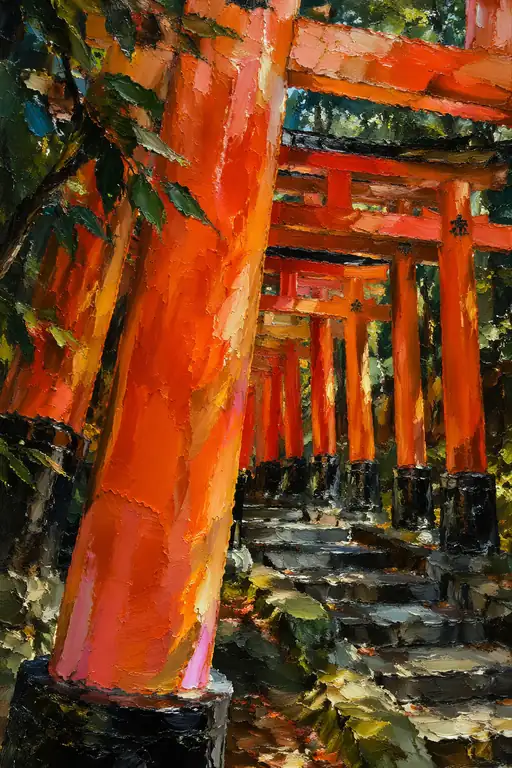 Passage of the Crimson Light
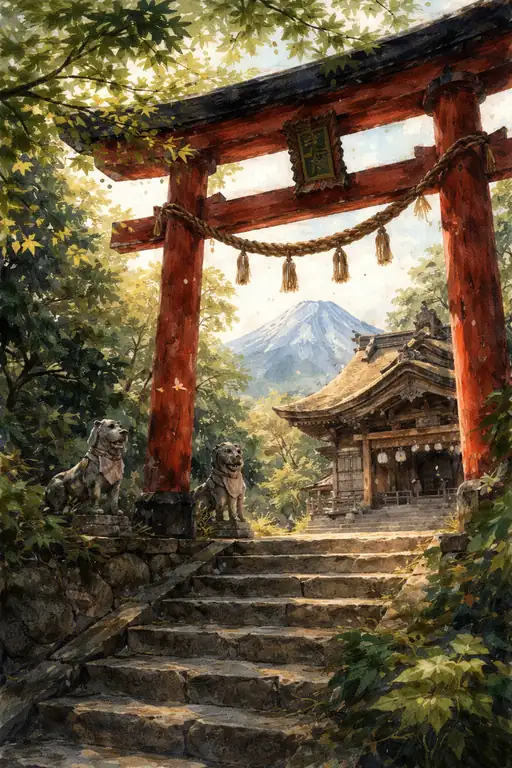 Sacred Portal to the Divine Peak
 Pilgrimage Through Dappled Sacred Light
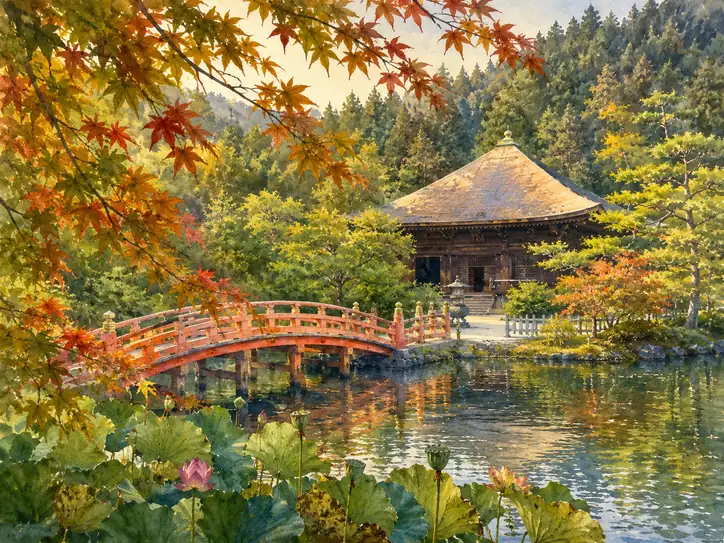 Whispers of the Crimson Autumn
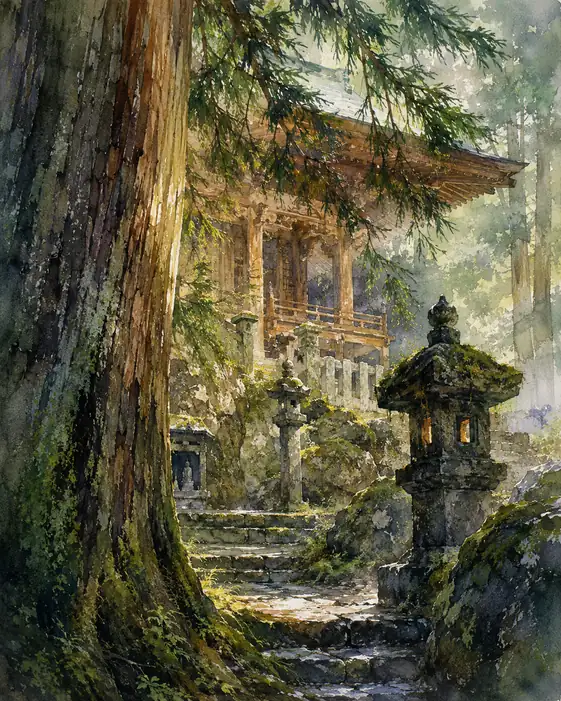 Sanctuary of the Ancient Cedars
 The Crimson Gate to the Heavens
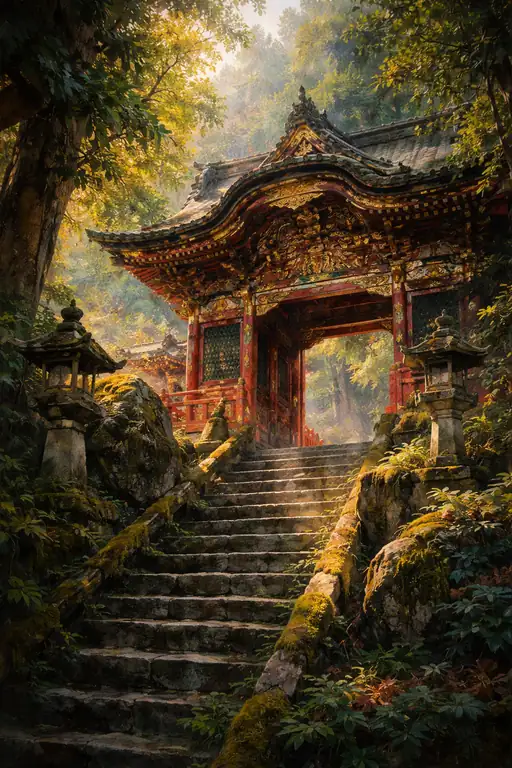 Passage to the Forgotten Sanctuary