
The Light We Carry Home
Critique
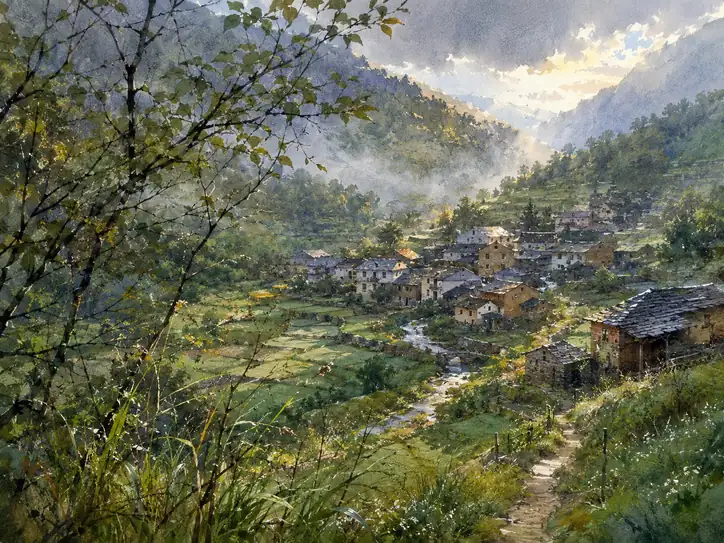
1. Introduction The work presented here captures a serene rural landscape, deeply rooted in the traditional aesthetic of the Japanese countryside. It depicts a peaceful village nestled between rolling hills, centered around vibrant rice paddies that shimmer under a warm, golden light. This piece invites the viewer to reflect on the harmonious relationship between human habitation and the natural environment. 2. Description In the foreground, a clear stream flows gently, bordered by dense, dark green foliage and wild grasses. Above, leafy branches from a deciduous tree frame the upper portion of the composition, casting soft shadows. The middle ground is dominated by sprawling rice fields, where the crops have begun to turn a brilliant golden yellow, suggesting a late summer or early autumn setting. Several traditional houses with steep, thatched roofs are scattered among the fields, with faint wisps of smoke rising from a chimney. The background features layered, mist-shrouded mountains covered in a thick blanket of evergreen and deciduous forests. 3. Analysis The composition utilizes a classic three-tier structure to create a profound sense of depth. The framing provided by the overhead foliage directs the eye toward the brightly lit center of the work. Linear perspective is established by the narrow water channels within the rice paddies, which lead the viewer’s gaze toward the village. The color palette is rich and harmonious, relying on a spectrum of greens and ochre yellows that are unified by the warm, directional sunlight. This lighting creates high contrast in the foreground while transitioning into a softer, atmospheric perspective in the distant mountains. 4. Interpretation and Evaluation This painting excels in its ability to evoke a sense of nostalgia and tranquility through meticulous detail and masterful light management. The technical execution of the water’s reflection and the individual blades of rice demonstrates significant skill. The composition is well-balanced, avoiding clutter despite the density of the foliage and architectural elements. The artist’s choice of colors effectively communicates the warmth of the "golden hour," lending the scene a poetic quality. This work serves as a sophisticated tribute to the satoyama landscape, blending realistic observation with an idealized vision of pastoral life. 5. Conclusion Initially, the viewer is struck by the vividness of the colors and the inviting warmth of the light. Upon closer inspection, the intricate details of the traditional architecture and the layered mountain scenery reveal a deep appreciation for the specificities of the landscape. The work successfully synthesizes technical precision with an emotive atmosphere, leaving a lasting impression of enduring peace and natural beauty.
Same Subcategory
 Dreaming in the Meadow's Embrace
 Harvest of the Mediterranean Breeze
Similar Artworks
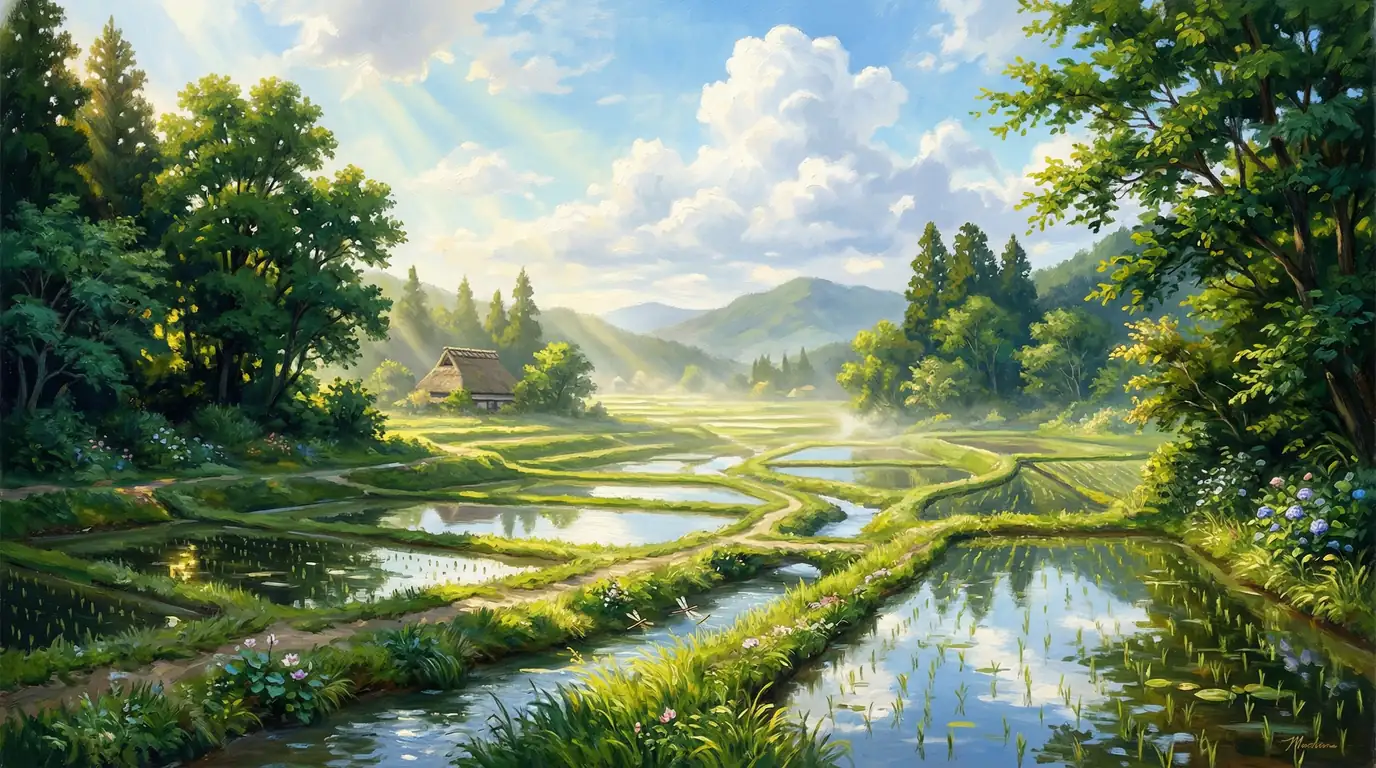 Rays of Hope Over the Terraces
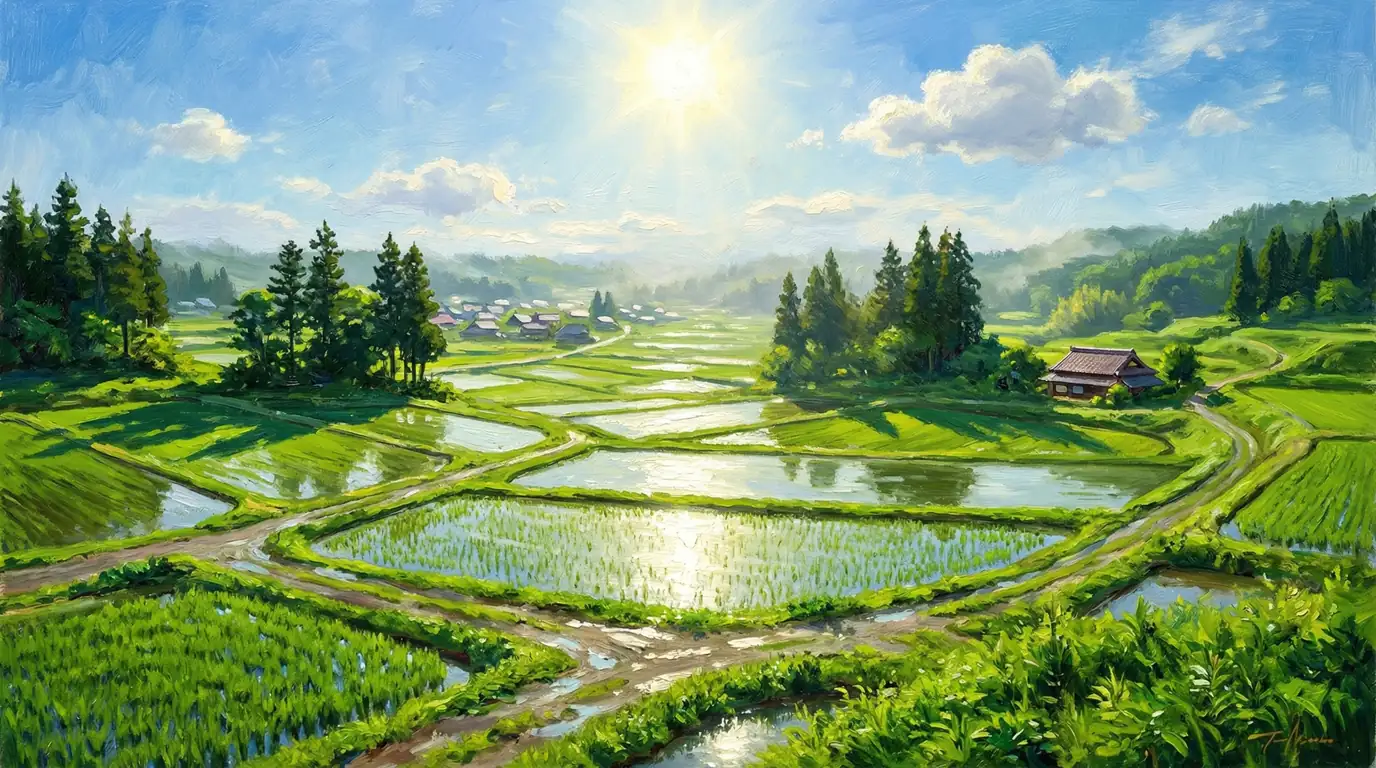 Golden Echoes of the Terrace
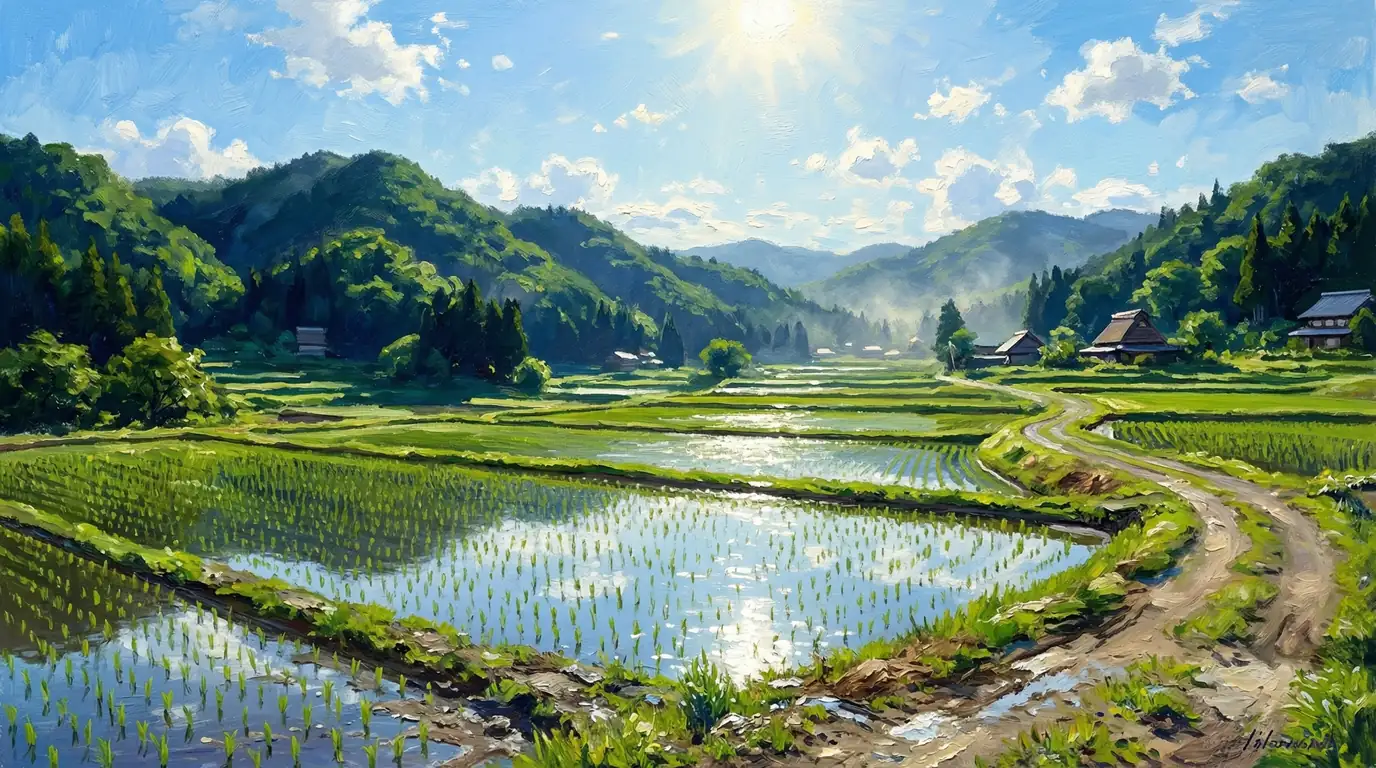 Sunlit Promise of the Harvest
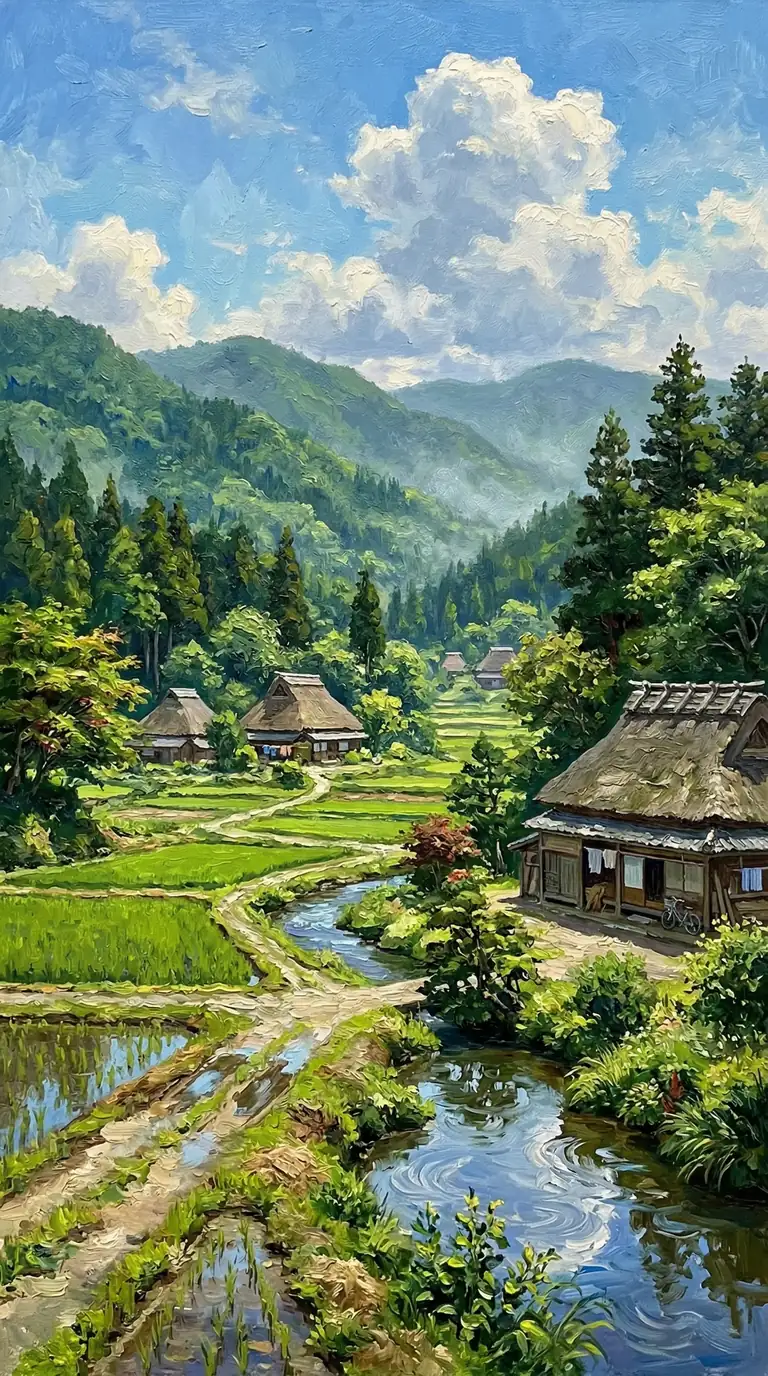 Summer's Grandeur: The Village Under the Clouds
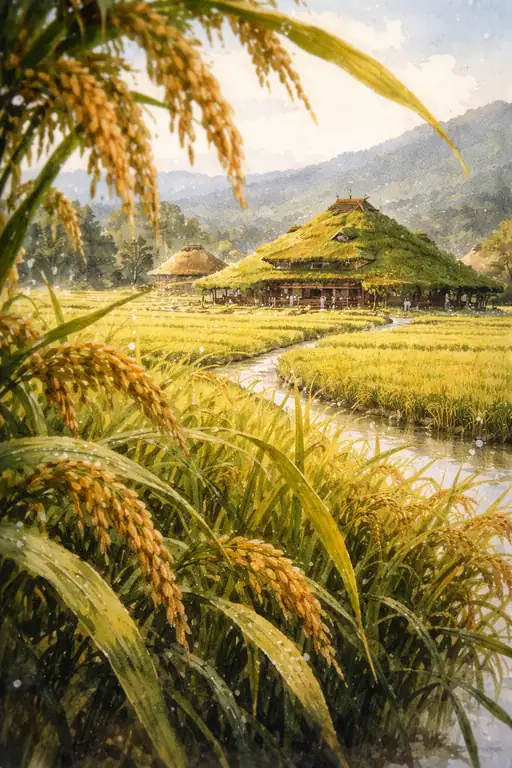 Golden Harvest in the Serene Countryside
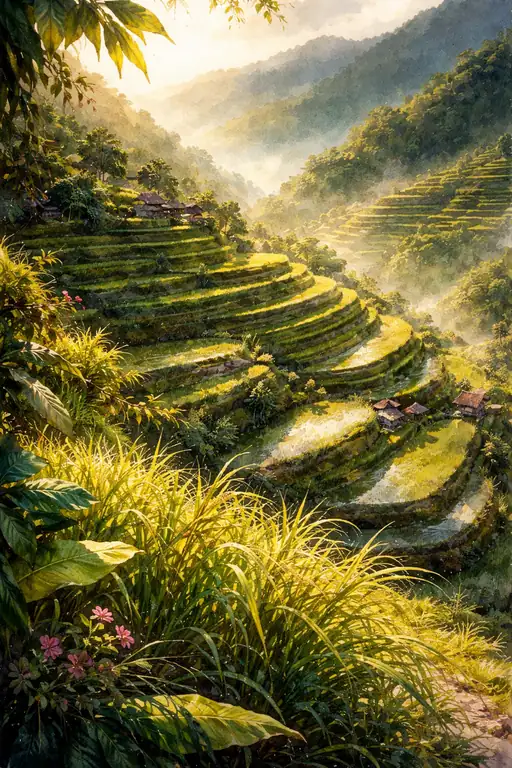 Golden Terraces Touched by the Morning Mist
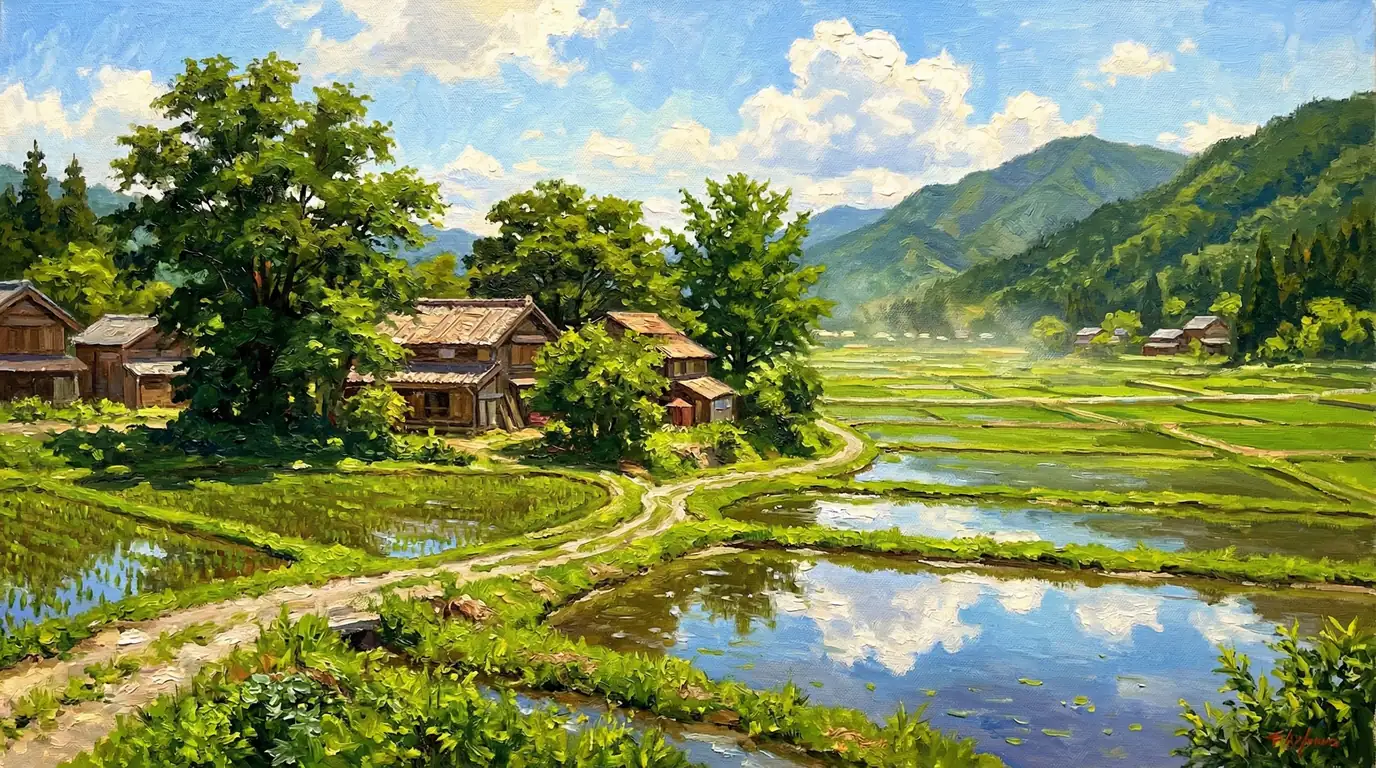 Summer's Gentle Embrace
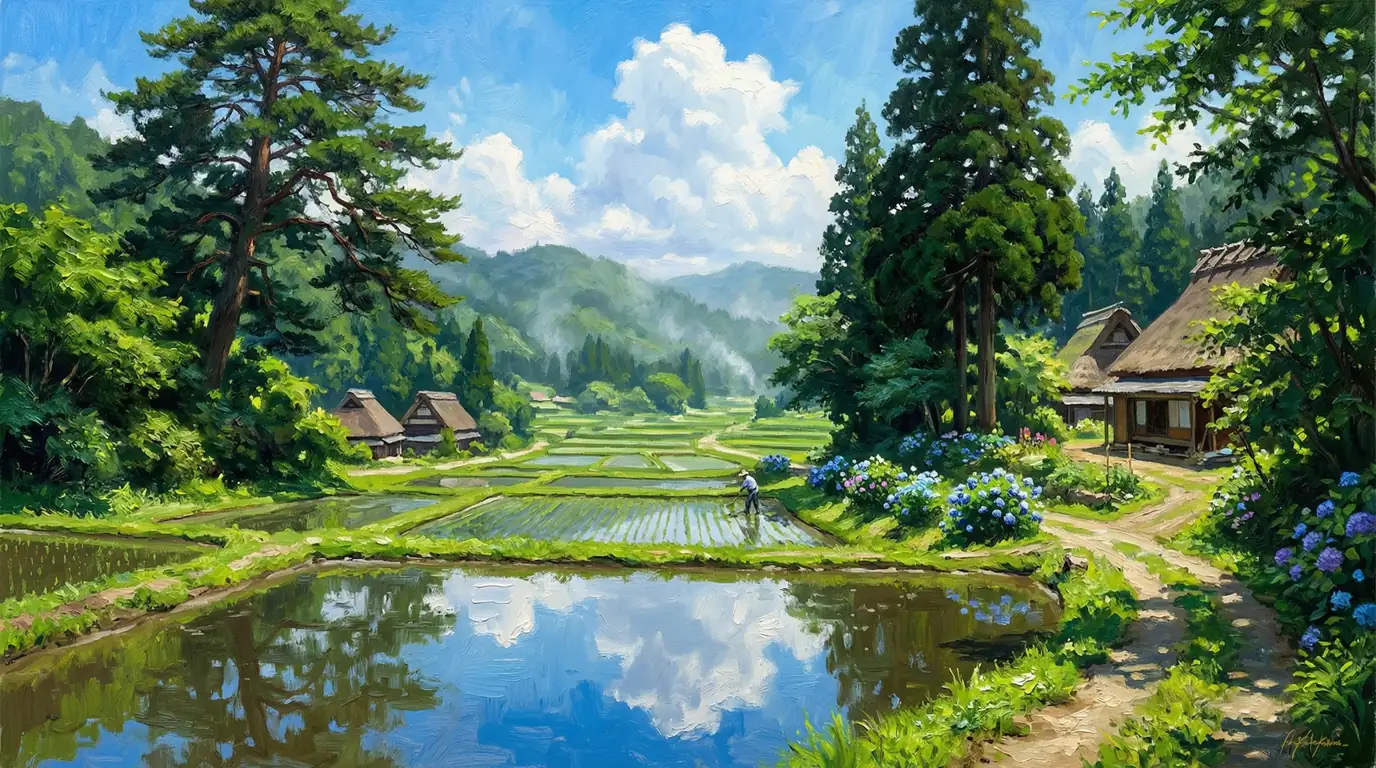 Whispers of the Green Earth: The Eternal Satoyama
 Where the Mist Whispers
 Morning Mist in the Cradle of Mountains