
Echoes from the Sacred Void
Critique
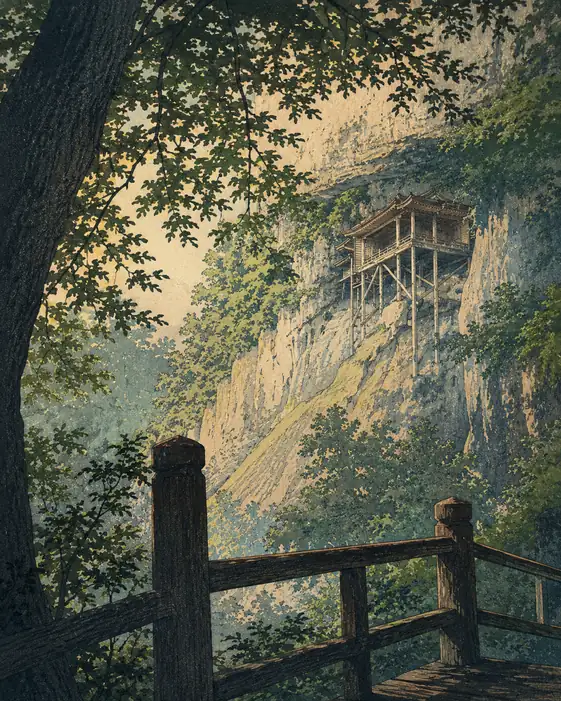
1. Introduction This painting depicts a serene mountain scene featuring a traditional wooden temple or pavilion built precariously onto a steep cliff face. The artwork captures a sense of profound stillness and seclusion, inviting the viewer into a world far removed from the clamor of modern life. Through the expert use of atmospheric perspective and light, the artist creates a space that feels both physically real and spiritually significant. The composition emphasizes the harmony between human architecture and the rugged beauty of the natural environment. 2. Description The focal point of the piece is an aged wooden structure supported by long, vertical stilts that rest on the craggy surface of a mountain. Its weathered walls and layered tiled roof suggest a long history of integration with its surroundings. The building is nestled within a dramatic rocky indentation, surrounded by lush green foliage and vines. Below, a deep valley is filled with thick, swirling mist that obscures the ground, while soft light filters through the canopy of trees in the upper left, illuminating the scene with a gentle glow. 3. Analysis The artist employs a strong vertical composition that mirrors the height of the mountain and the soaring nature of the architecture. The use of light and shadow is particularly effective, with the bright, hazy area in the upper left contrasting with the deep, shadowed recesses of the cliff. Atmospheric perspective is achieved through the fading details in the misty valley, which creates a vast sense of depth. The intricate rendering of the leaves in the foreground provides a tactile contrast to the softer, more ethereal qualities of the distant mountains. 4. Interpretation and Evaluation This work can be interpreted as an exploration of the connection between spirituality and nature. The choice of a cliffside temple suggests a desire for elevation and detachment from the mundane world. Technically, the artist demonstrates exceptional skill in depicting diverse textures, from the rough grain of the wood and stone to the delicate translucency of the leaves. The color palette is harmonious, dominated by earthy browns, cool grays, and a variety of mossy greens, which reinforces the peaceful and organic mood of the painting. 5. Conclusion The painting successfully evokes a feeling of awe and contemplation through its masterful depiction of a hidden sanctuary. What initially appears as a simple architectural study reveals itself to be a complex meditation on balance and endurance. The interplay between the solid, man-made structure and the fluid, ever-changing elements of mist and light creates a dynamic yet tranquil whole. This piece is an exquisite example of landscape art that transcends mere representation to touch upon themes of serenity and permanence.
Same Subcategory
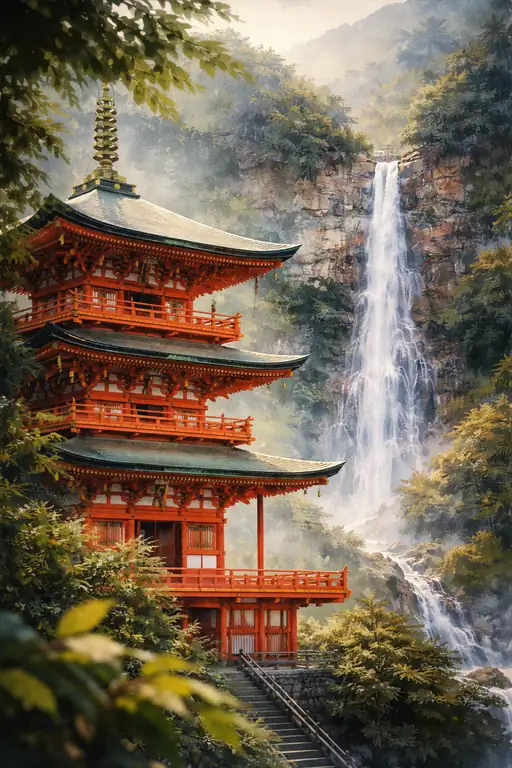 Harmony of the Sacred Falls
 Sanctuary of the Emerald Cavern
Similar Artworks
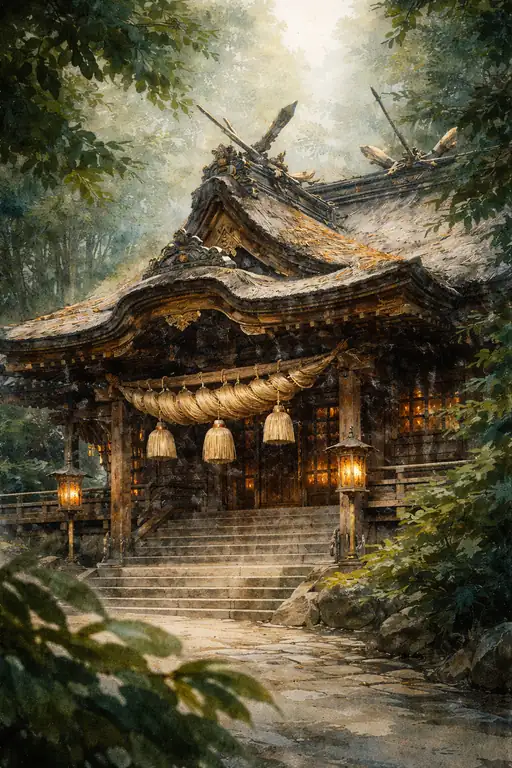 The Sacred Silence of the Moss-Covered Hall
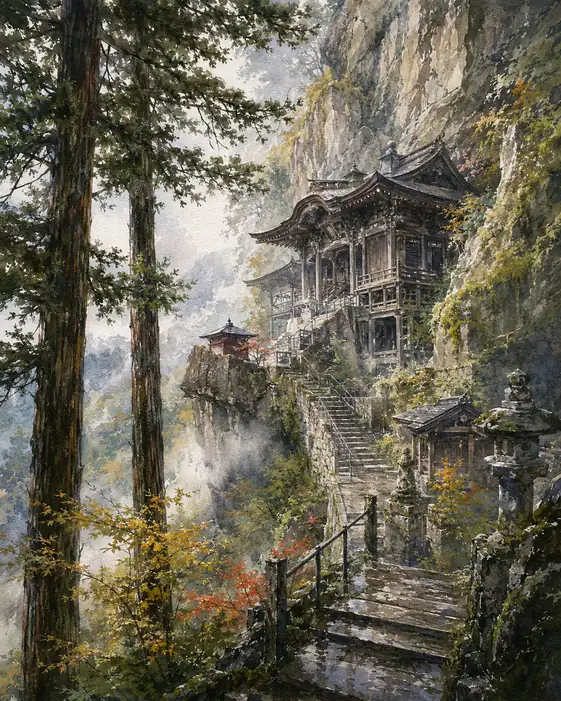 Prayer in the Mountain Mist
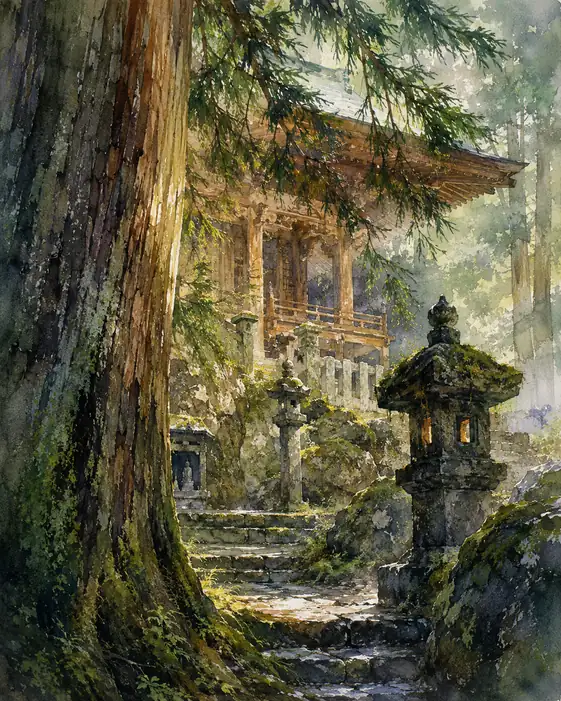 Sanctuary of the Ancient Cedars
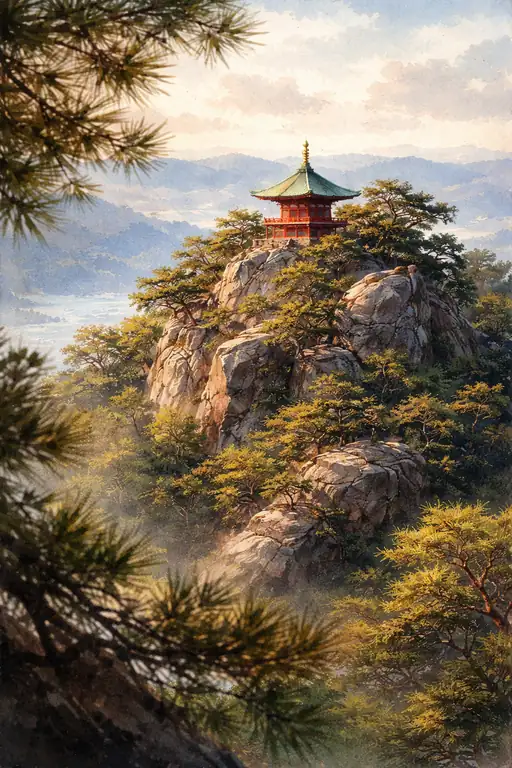 Sanctuary Above the Clouds
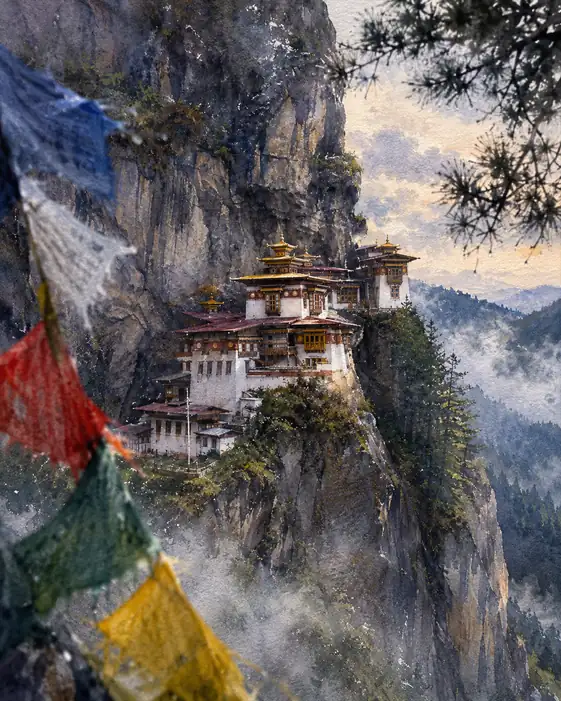 Sanctuary in the Sky
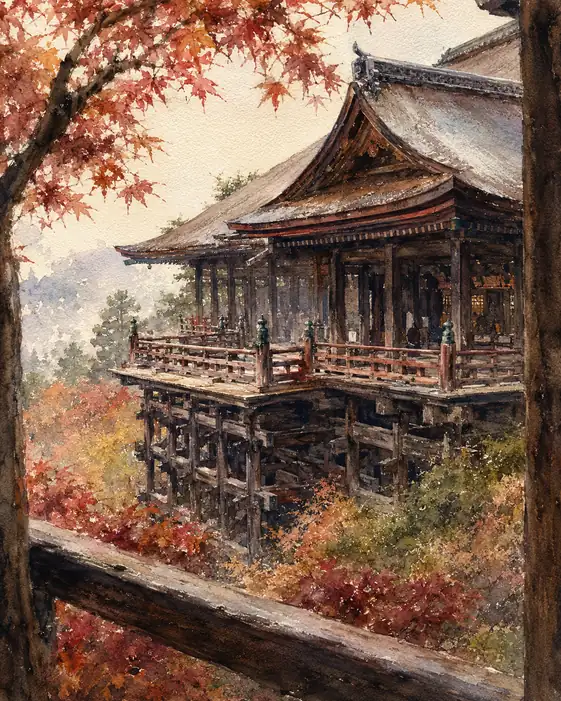 Where the Autumn Wind Rests
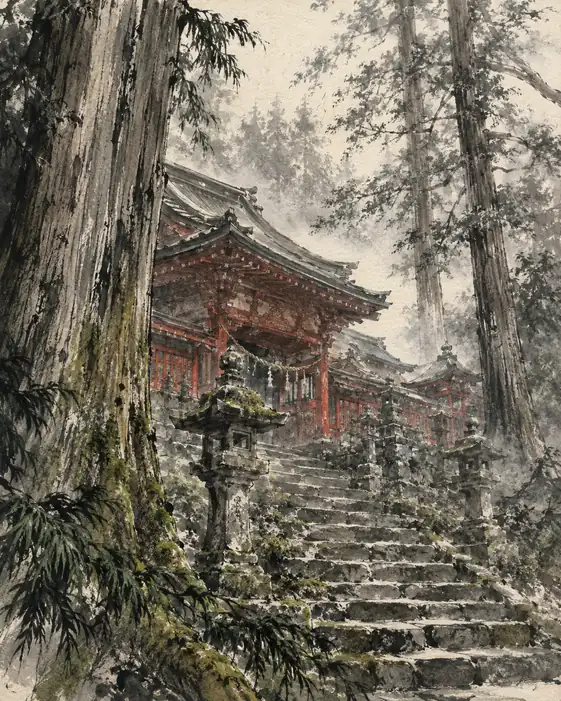 Threshold of the Ancient Silence
 Echoes from the Misty Heights
 Incense and Solitude at the Mountain Shrine
 Sanctuary Suspended in the Silent Heights