
The Sacred Silence of the Moss-Covered Hall
Critique
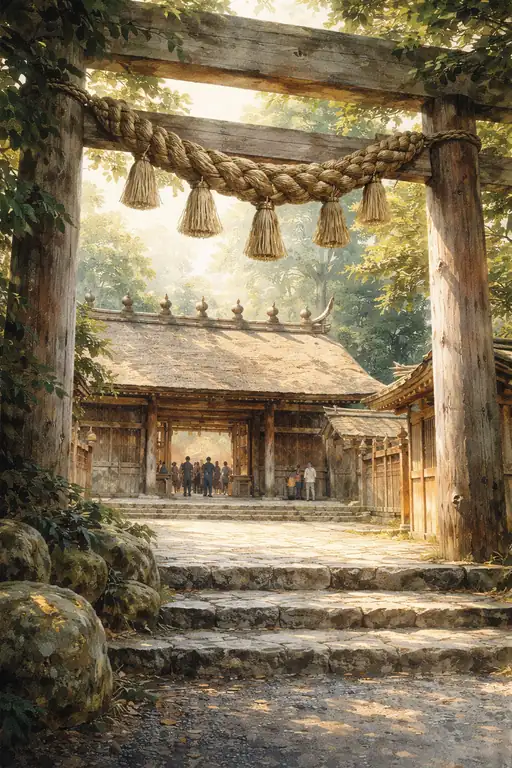
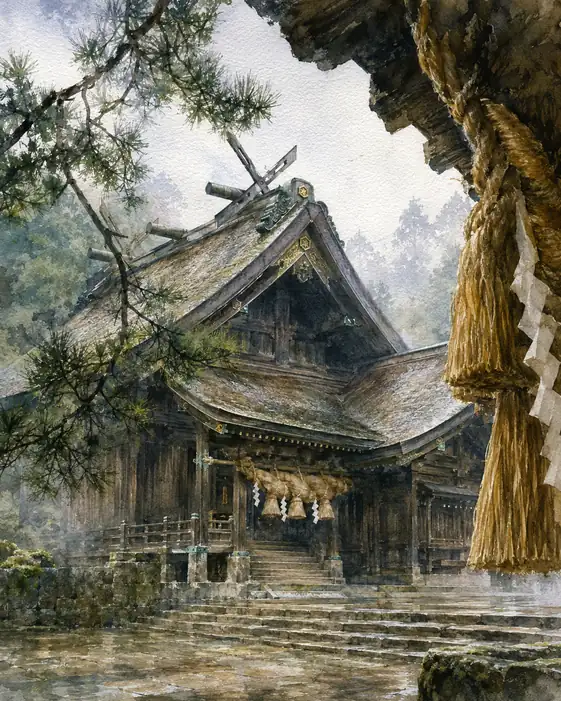
1. Introduction This vertical painting depicts a traditional Shinto shrine nestled within a dense, sun-dappled forest. The composition focuses on the architectural details of the shrine's main hall, viewed from a slightly low angle to emphasize its presence and sanctity. The work utilizes a palette of muted earthy tones, creating a solemn and mystical atmosphere that reflects the spiritual significance of the subject matter. 2. Description The shrine is characterized by its heavy wooden structure, intricate carvings, and a weathered thatched roof adorned with traditional roof fins. A large, thick sacred rope known as a shimenawa, decorated with tassels, hangs prominently across the entrance. Stone steps lead up to the building, flanked by glowing lanterns that cast a warm light against the shadowed interior. The background consists of tall trees with light filtering through the leaves from above. 3. Analysis The artist employs a central, symmetrical composition that reinforces the shrine’s stability and importance. The contrast between the dark, shadowed areas of the wooden architecture and the bright, ethereal light filtering through the canopy creates a strong focal point. Textural variety is achieved through the detailed rendering of the rough stone path, the fibrous sacred rope, and the layered foliage in the foreground. 4. Interpretation and Evaluation The painting successfully conveys a sense of ancient tradition and deep-rooted spirituality. The choice of lighting evokes a feeling of "komorebi," or sunlight filtering through trees, which adds a transcendent quality to the scene. The meticulous attention to architectural accuracy and natural textures demonstrates a high level of technical skill, while the overall mood invites quiet contemplation and respect for the sacred space depicted. 5. Conclusion In conclusion, the work is a masterful representation of Japanese sacred architecture within its natural environment. The initial impression of mystery and reverence is sustained through the expert use of light and shadow. It serves as a compelling visual exploration of the harmony between human-made structures and the surrounding wilderness, achieving a balance that is both aesthetically pleasing and spiritually evocative.
Same Subcategory
 Spring Celebration at the Vermilion Gate
Similar Artworks
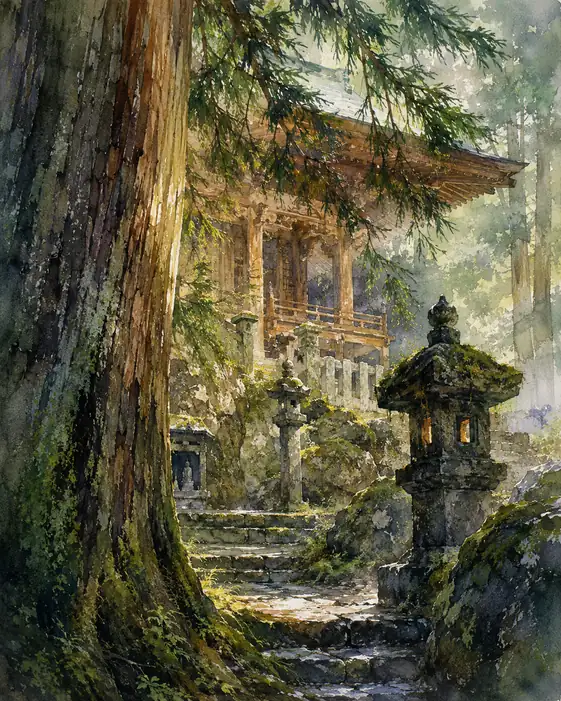 Sanctuary of the Ancient Cedars
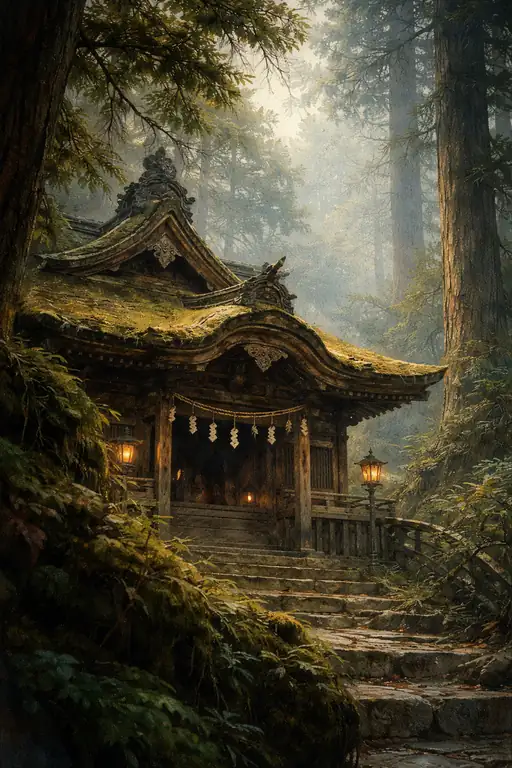 Sanctuary in the Shadows
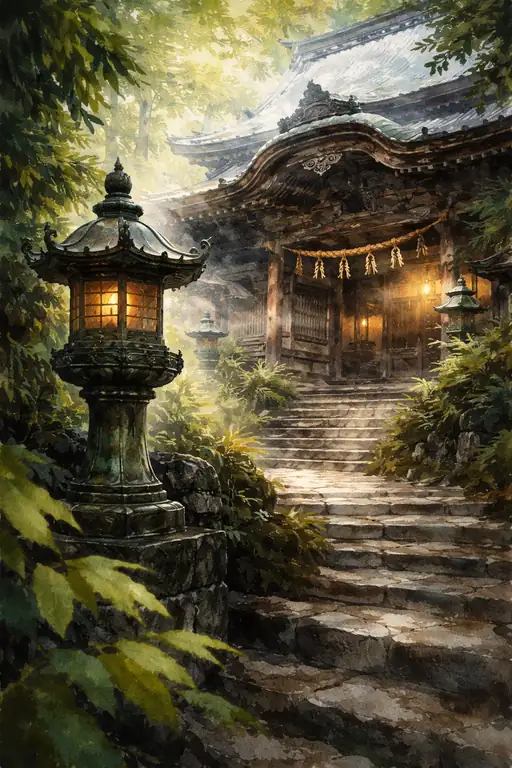 Sanctuary of the Silent Forest
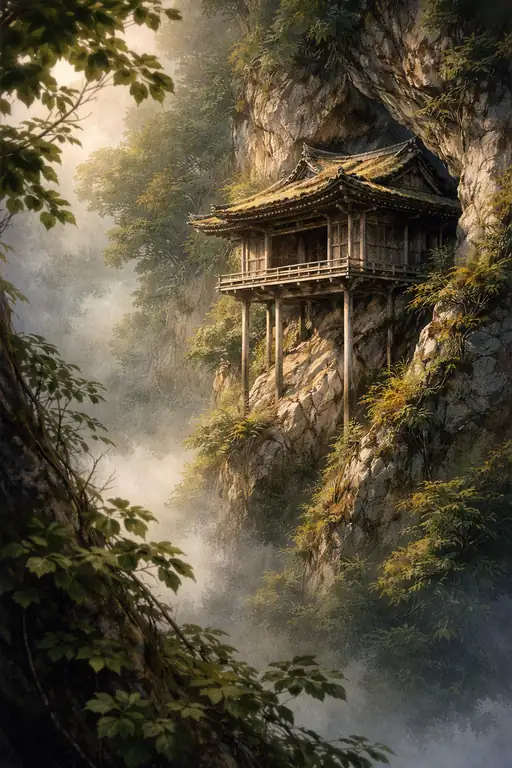 Echoes from the Sacred Void
 Awakening the Sacred Path
 Incense and Solitude at the Mountain Shrine
 Echoes of Eternity in the Mossy Mist
 Sunlight Upon the Vermilion Pillars
 Threshold of the Sacred Mist
 Eternity in the Moss-Covered Hall