
Whispers of the Sacred Silence
Critique
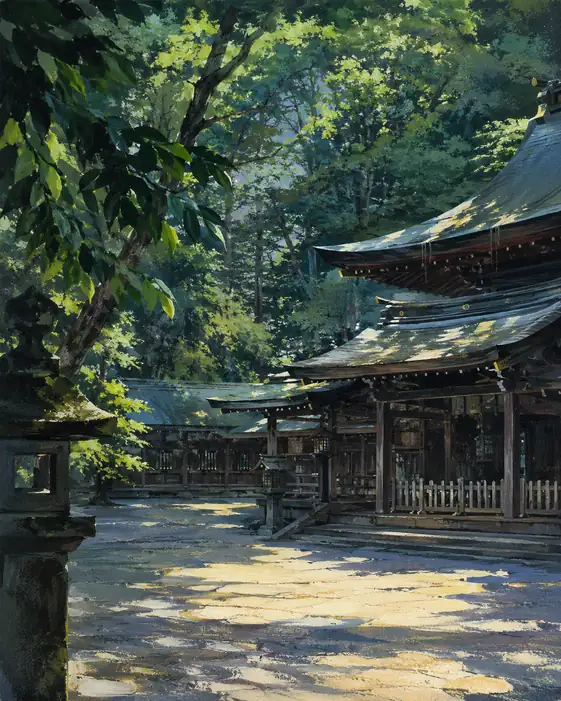
1. Introduction This watercolor landscape depicts a traditional Japanese shrine building nestled deep within a lush, verdant forest. The central focus is a sacred structure with a thatched roof, partially covered in moss, suggesting the passage of much time. The artwork captures a serene and mystical atmosphere through soft brushstrokes and a harmonious color palette. This scene invites the viewer into a space where nature and spiritual traditions coexist in perfect silence. 2. Description A sacred shimenawa rope with white paper tassels hangs across the front of the shrine entrance, marking the boundary of the holy ground. On either side, two stone komainu statues sit on pedestals, serving as majestic guardians of the sanctuary. In the foreground, a stone water basin with a bamboo pipe provides a refreshing element, with water depicted as flowing steadily. The wooden textures of the building and the intricate details of the roof tiles are rendered with careful attention to historical accuracy. 3. Analysis The artist effectively utilizes the contrast between light and shadow to create depth and a sense of realism. Dappled sunlight filters through the dense canopy above, casting bright spots on the thatched roof and the paved pathway. The color composition relies on various shades of forest green and earthy browns, which provide a grounded and natural feel to the piece. The large tree trunk in the left foreground acts as a natural frame, successfully guiding the viewer’s eye toward the central architecture. 4. Interpretation and Evaluation This artwork can be interpreted as a visual representation of the ancient Japanese spirit of nature worship. The way the man-made structure appears to be reclaimed by the forest illustrates a profound harmony between humanity and the environment. The artist’s technical skill is evident in the delicate handling of watercolors, which manage to convey both the weight of the stone and the lightness of the air. This piece stands out for its ability to evoke a specific cultural mood while maintaining universal aesthetic appeal. 5. Conclusion In conclusion, the painting serves as a powerful reminder of the enduring beauty found in traditional sacred spaces. The meticulous depiction of textures and the masterful control of light work together to elevate the subject matter beyond a simple landscape. While the initial impression is one of peaceful solitude, a closer look reveals the vibrant life inherent in the natural world. This work successfully captures the essence of a sanctuary, offering a timeless reflection on the sacredness of the forest.
Same Subcategory
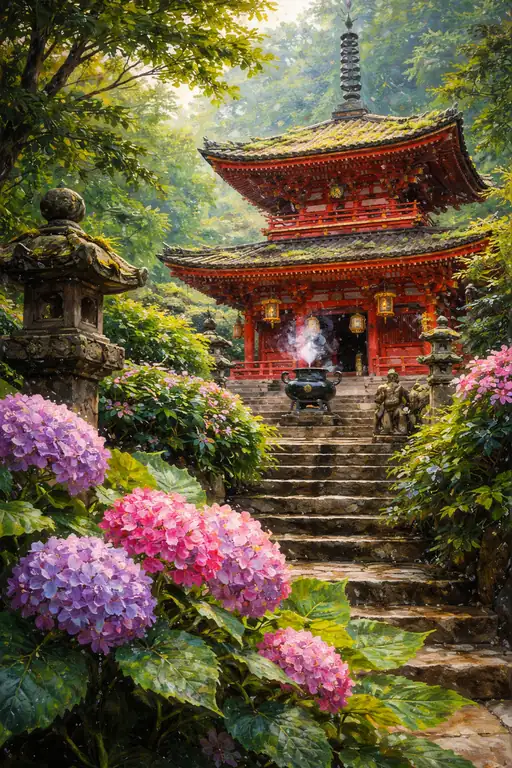 Rain's Blessing on the Vermilion Sanctuary
Similar Artworks
 Where Crimson Meets the Emerald Wilds
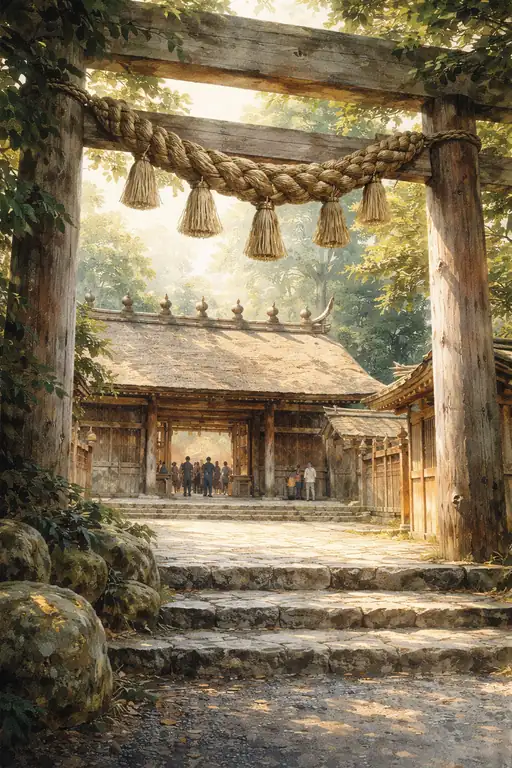 Awakening the Sacred Path
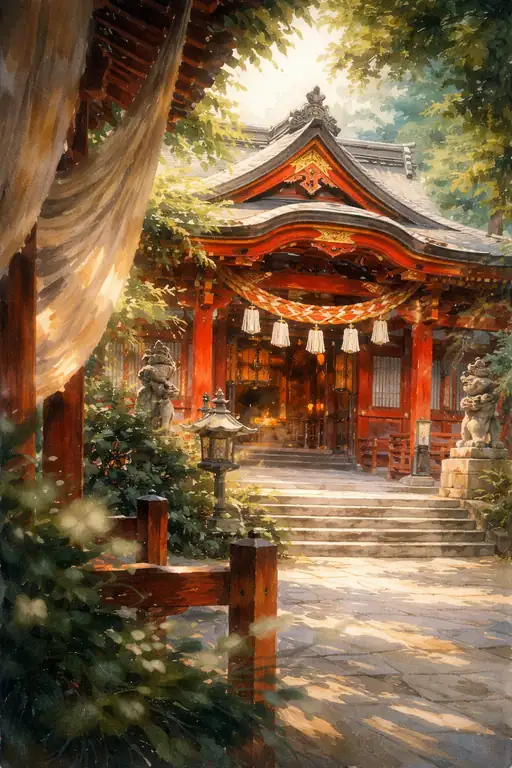 Sunlight Upon the Vermilion Pillars
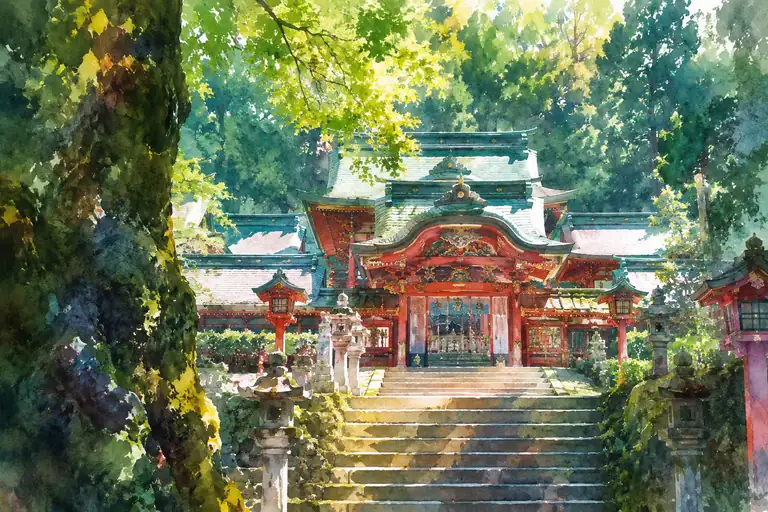 Sunlight on the Sacred Path
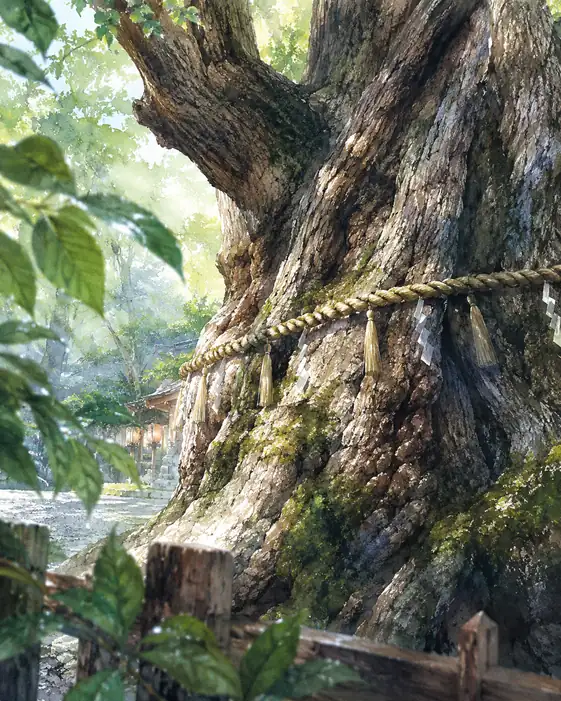 Sentinel of a Thousand Seasons
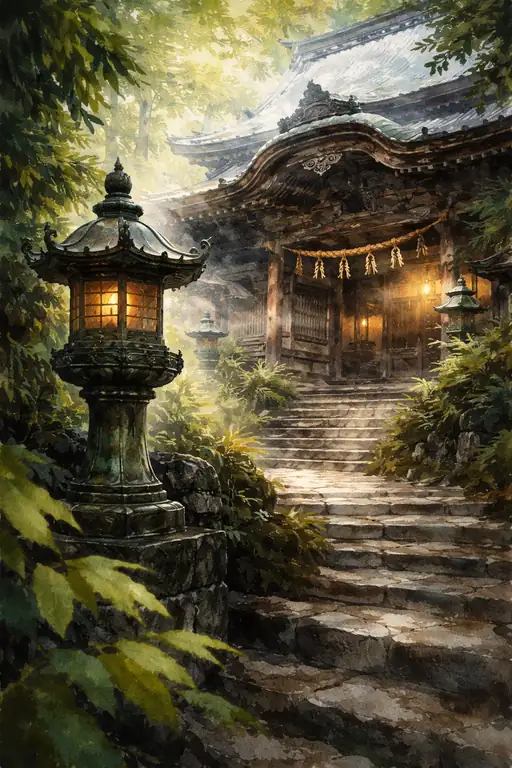 Sanctuary of the Silent Forest
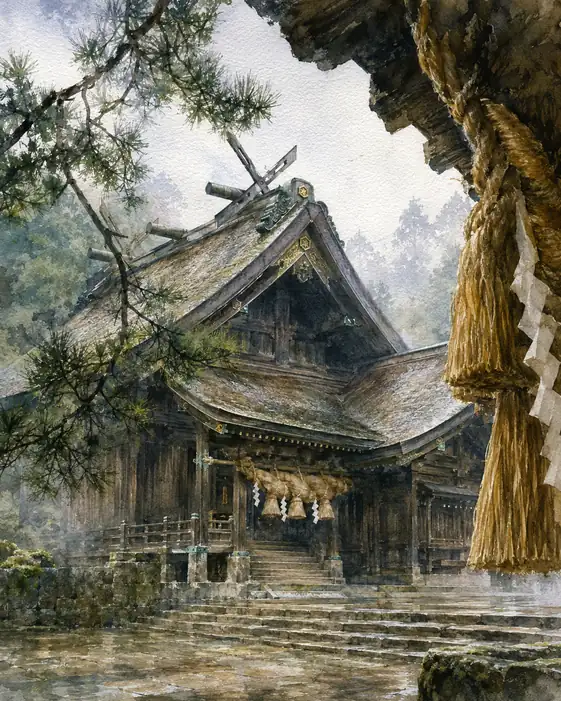 Threshold of the Sacred Mist
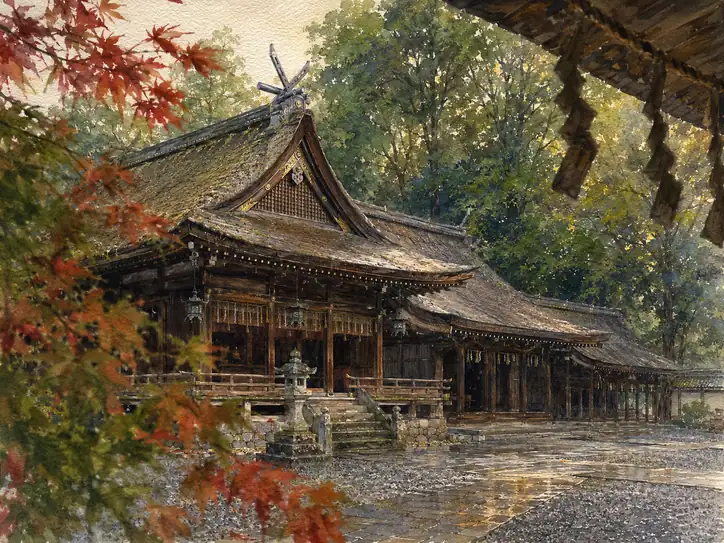 Sanctuary of the Whispering Leaves
 Guardian of the Glimmering Portal
 Whispers of the Sunlit Sanctuary