
The Infinite Ripples of Stillness
Critique
1. Introduction This watercolor painting offers a tranquil and meditative view of a traditional Japanese Zen garden, specifically a karesansui or dry landscape arrangement. The work focuses on a singular, massive rock surrounded by meticulously raked white gravel, set against a backdrop of lush greenery and a quiet pond. Through its soft color palette and delicate handling of the medium, the piece captures the essence of mindfulness and the profound beauty found in simplicity and order. 2. Description The composition is anchored by a large, moss-covered stone positioned slightly to the right of center. Radiating from this stone are precise, concentric circles swept into the fine gravel, creating a visual ripple effect that suggests water. On the left, the edge of a dark wooden veranda or temple pillar frames the scene, while a cluster of ferns and a delicate bamboo branch in the upper right corner add layers of natural detail. The background features a misty, sun-dappled forest and a still pool that reflects the surrounding foliage. 3. Analysis The artist demonstrates a sophisticated understanding of texture and light. The moss on the central rock is rendered with dappled, organic brushstrokes that contrast sharply with the rhythmic, linear patterns of the sand. The lighting is soft and diffused, casting gentle shadows within the ridges of the gravel and highlighting the velvety surface of the moss. A harmonious color scheme of earthy browns, deep greens, and subtle greys creates a cohesive and calming atmosphere, while the framing elements provide a strong sense of architectural depth. 4. Interpretation and Evaluation This artwork successfully evokes the spiritual and aesthetic principles of Japanese garden design. The technical skill required to render the subtle variations in the "white" sand using the watercolor medium is impressive, showing great restraint and precision. The piece is not merely a depiction of a place but an exploration of the relationship between stillness and movement. The balance between the heavy, static presence of the rock and the dynamic flow of the raked lines creates a compelling visual tension that encourages prolonged observation. 5. Conclusion In summary, the painting is a masterful tribute to the art of the Zen garden. While the initial impression is one of overwhelming peace, a closer inspection reveals a wealth of technical complexity in the rendering of stone, moss, and light. It is a work that invites the viewer to slow down and appreciate the subtle interplay of nature and human intent, leaving a lasting sense of clarity and mental repose.
Same Subcategory
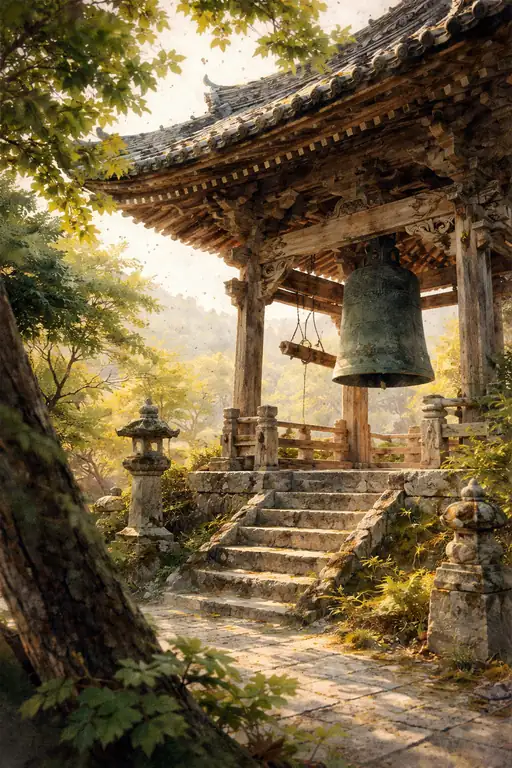 The Silent Wait of the Majestic Temple Bell
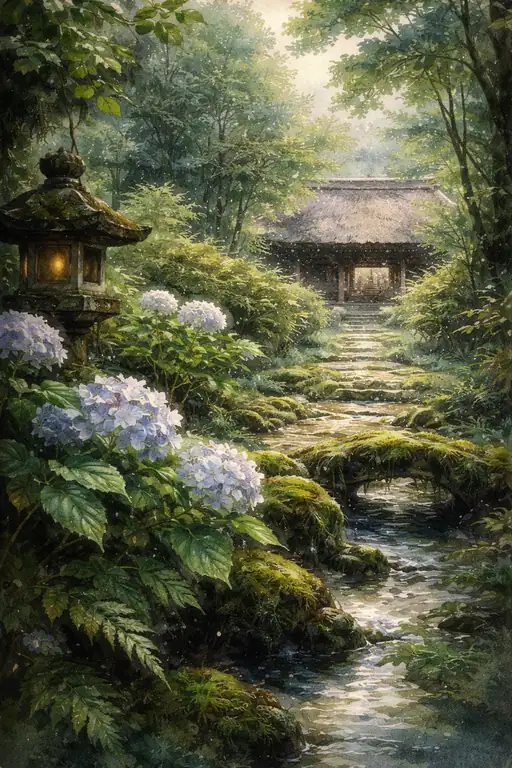 Serenity Nurtured by the June Rain
Similar Artworks
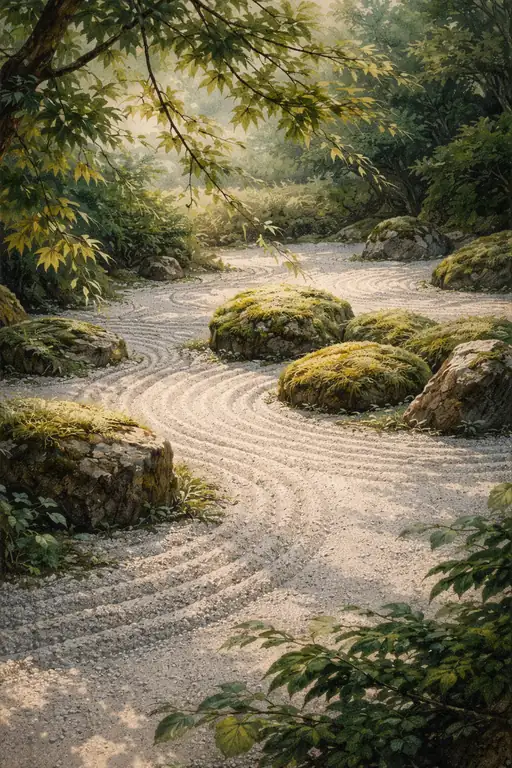 Rhythms of the Raked Sand
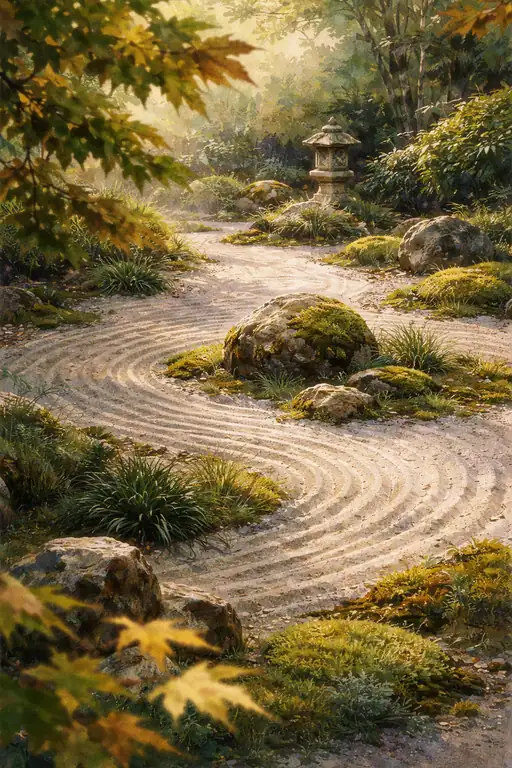 The Golden Harmony
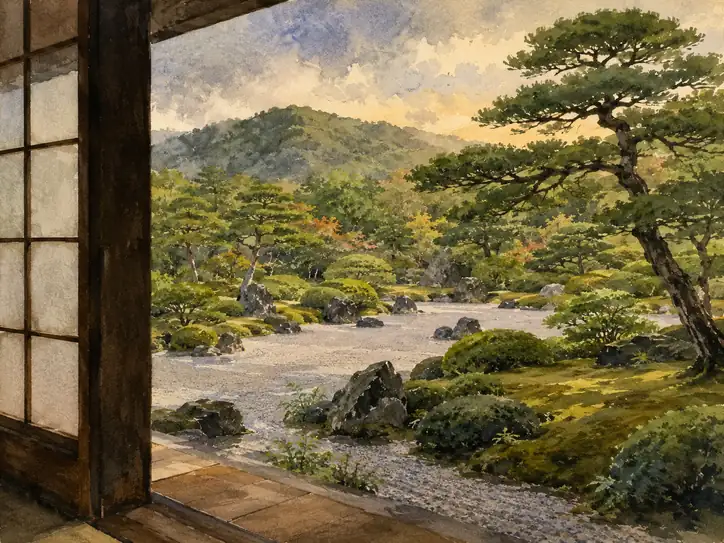 The Silent Threshold: A Window into Zen
 The Rhythms of Raked Silence
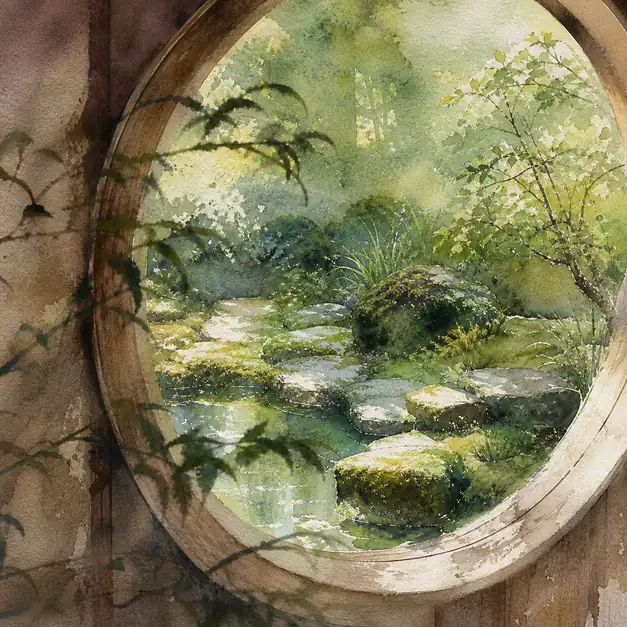 Universe Within the Circle
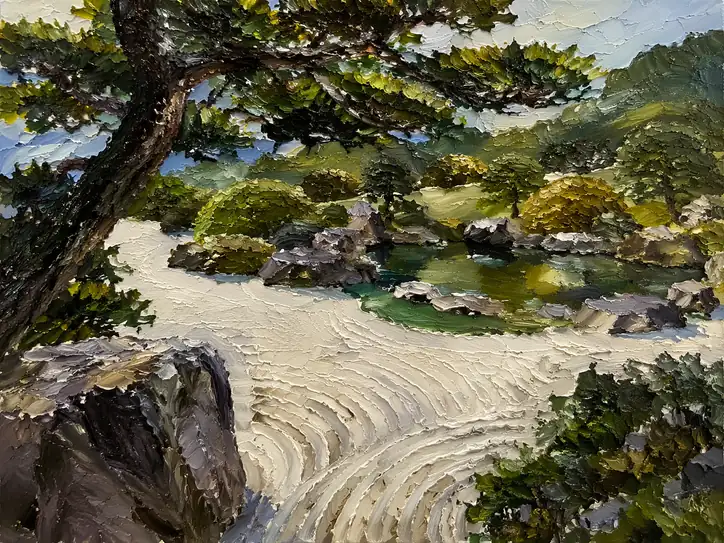 Ripples of the Raked Earth
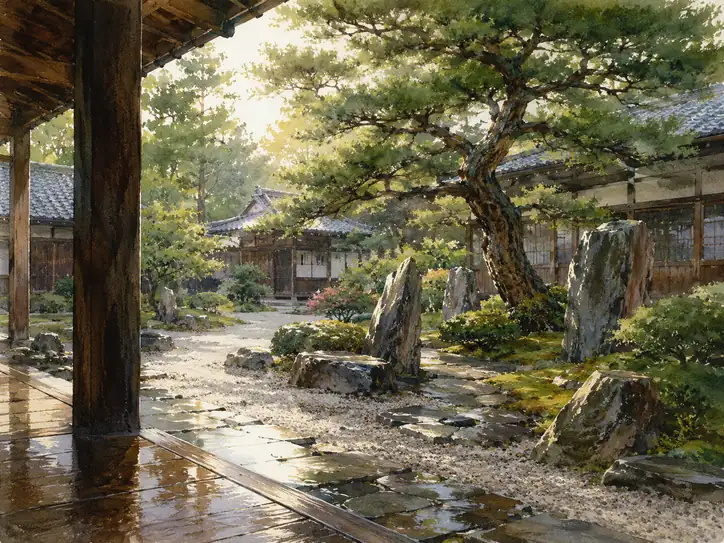 Reflections of Tranquility: Sunlight on the Wet Engawa
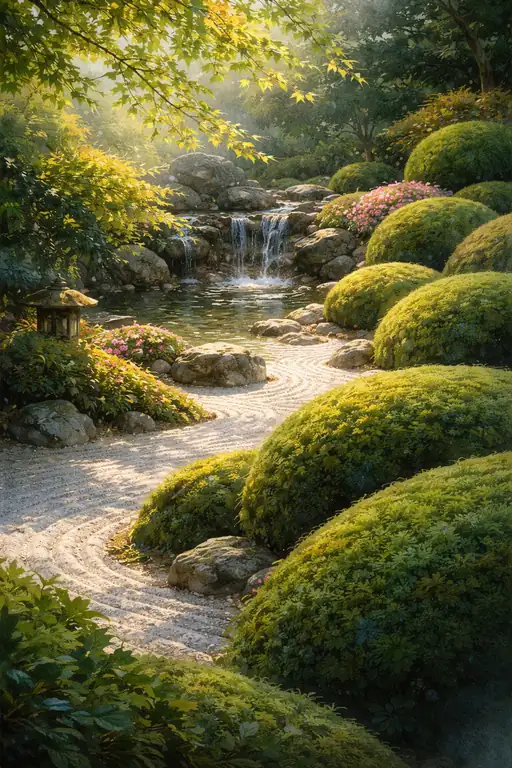 Ripples of the Raked Zen Sea
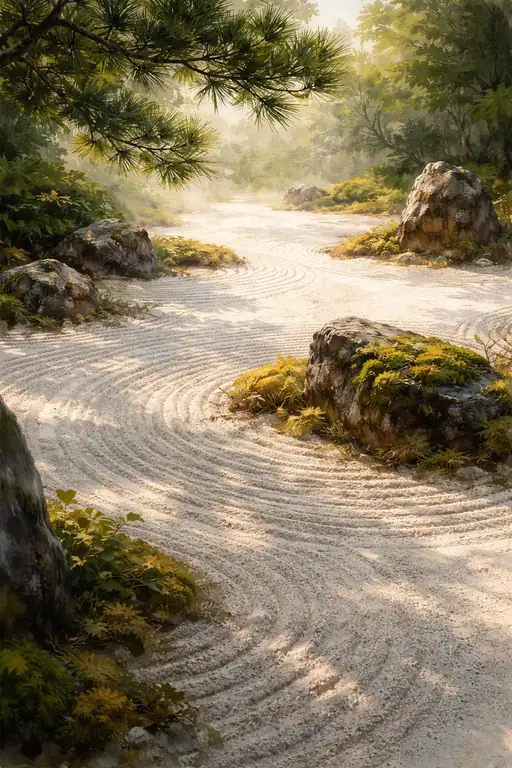 Meditative Silence: The Karesansui Cosmos
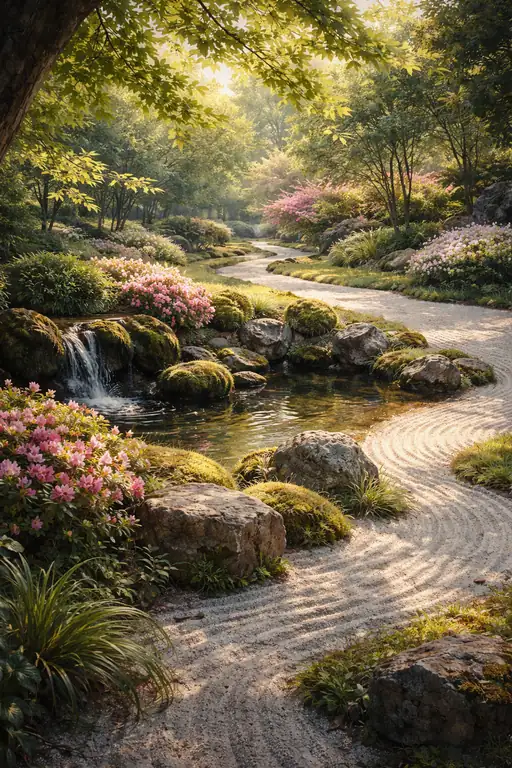 Serene Harmony: The Water's Gentle Path