
A Warm Hearth in the Misty Valley
Critique
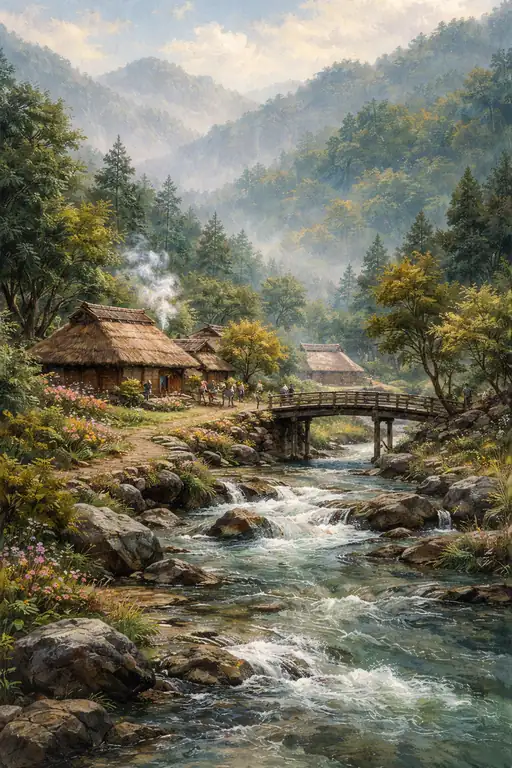
1. Introduction This landscape painting captures a quintessential scene of rural Japan, centered on two traditional houses with steep, thatched roofs. Bathed in warm, golden sunlight, the scene evokes a profound sense of tranquility and nostalgia. The vertical orientation guides the viewer’s eye from vibrant wildflowers toward the hazy, autumn-colored peaks in the distance. 2. Description In the foreground, pink and yellow flowers bloom alongside a shallow stream flowing over smooth stones. The two central dwellings, with their massive thatched roofs and weathered wooden frames, are depicted with remarkable detail. Behind them, layers of mountains are partially obscured by mist, with trees displaying a tapestry of autumnal foliage. 3. Analysis The artist employs a warm palette of ochres and earthy browns, punctuated by the brilliant hues of the flowers. Lighting cascades from the upper right, catching the rooflines and creating a dynamic interplay between highlight and shadow. Atmospheric brushwork in the periphery enhances the overall sense of depth and perspective. 4. Interpretation and Evaluation The integration of traditional architecture and the environment reflects a deep respect for a lifestyle harmonized with nature. The contrast between sturdy buildings and delicate flora creates a space both peaceful and vibrant. Technically, the painting excels in depicting light scattering, allowing the viewer to almost feel the cool mountain air. 5. Conclusion The initial impression is one of a serene rural landscape, but closer examination reveals meticulous intent in every play of light. By capturing a fleeting moment of beauty and heritage, the artwork serves as a powerful testament to the countryside. It is an accomplished piece that transforms a traditional subject into an evocative narrative.
Same Subcategory
 A Haven of Roses and Dreams
Similar Artworks
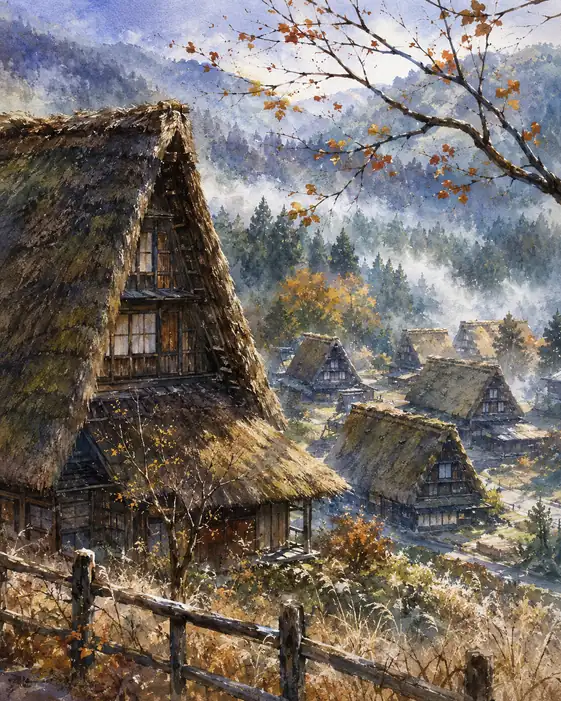 Echoes of the Thatch: A Misty Autumn Memory
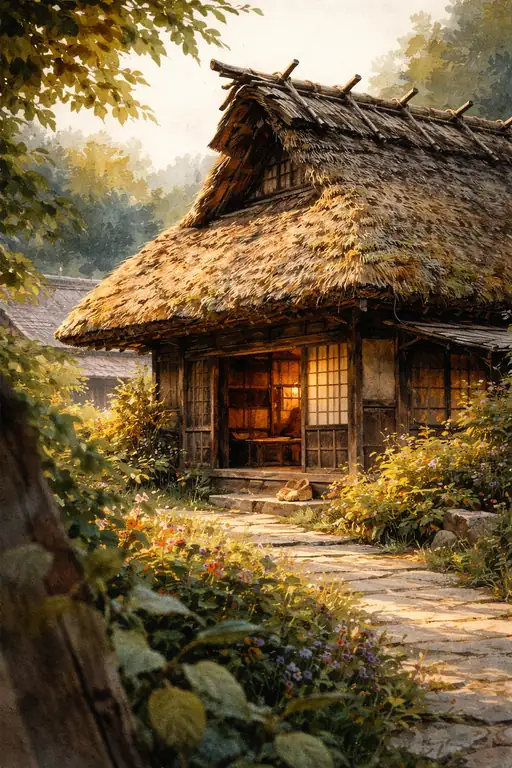 Whispers of the Evening Sun on the Stone Path
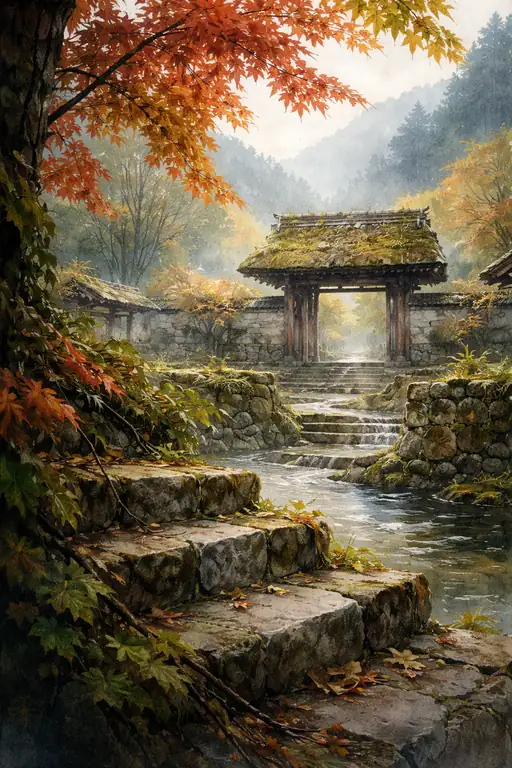 Whispers of Autumn: The Mossy Gate in the Mist
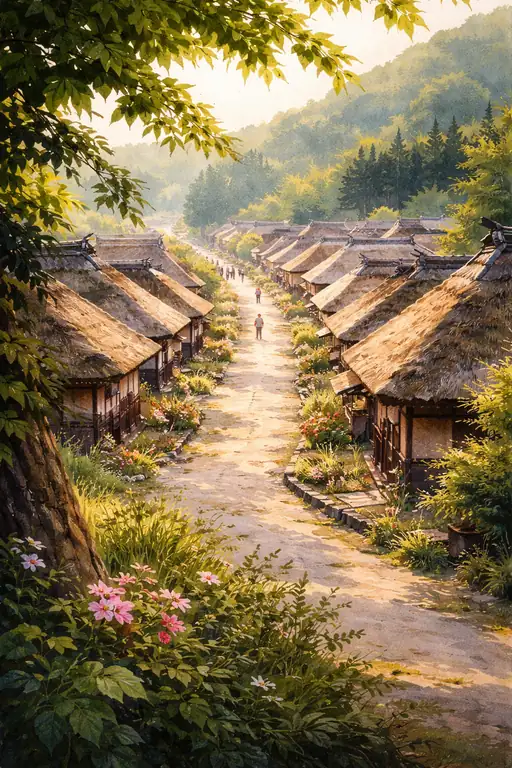 Tranquil Shadows Along the Thatched Village Road
 Where the River Meets the Thatch
 The Solitude of Moss and Thatch
 Sanctuary of the Eternal Mountain
 Echoes of the Thatched Village
 The House of Weathered Dreams
 Rustic Harvest Harmony