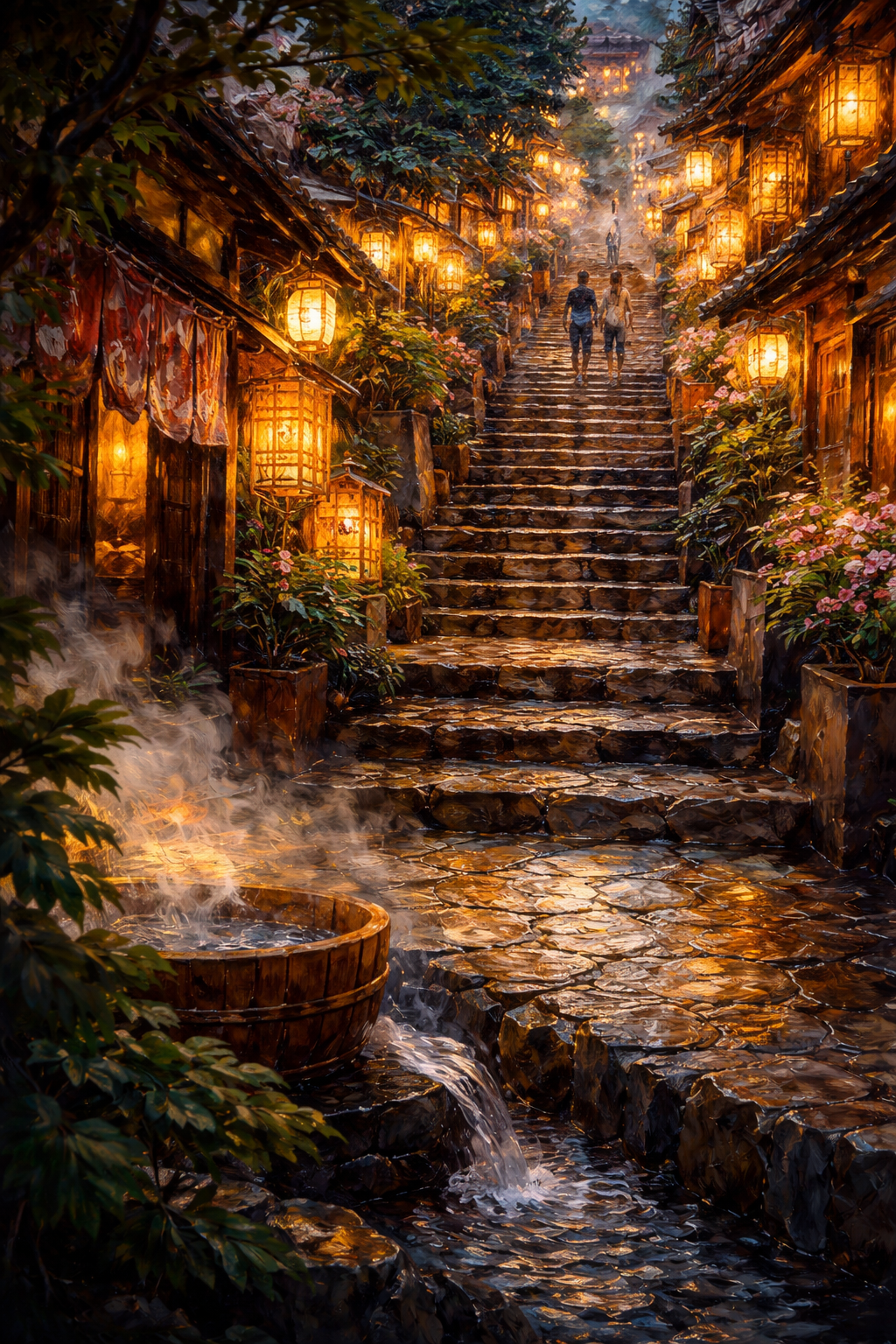
Whispers of the Golden Twilight
Critique
1. Introduction This evocative oil painting transports the viewer to a mystical Japanese townscape at twilight, where history and fantasy intertwine. A long, central stone staircase, flanked by traditional wooden structures and illuminated by a sea of glowing lanterns, creates a powerful sense of nostalgia and wonder. The work masterfully captures the transition from day to night, celebrating the warmth of human habitation amidst the deepening shadows of the evening. 2. Description In the foreground, a steaming wooden tub overflows, sending a small stream of water across the glistening cobblestones. A grand stone staircase ascends through the center of the frame, occupied by several silhouetted figures moving toward the distant summit. On either side, ancient buildings are adorned with numerous paper lanterns that cast a brilliant golden glow over the scene. Lush plants with pink blossoms and green foliage tuck into the corners, while the distant background dissolves into a soft, misty haze dotted with faint lights. 3. Analysis The composition utilizes a strong one-point perspective to draw the eye upward and into the distance, emphasizing the town's vertical complexity. The color palette is dominated by the vibrant, saturated oranges and yellows of the lantern light, which contrast beautifully with the deep browns and cool grays of the stone and wood. Bold, textured brushstrokes provide a tactile sense of weight to the architecture, while the ethereal rendering of the rising steam adds a layer of fluid movement. 4. Interpretation and Evaluation The painting excels in its poetic orchestration of light and shadow, achieving a remarkable balance between technical precision and emotional resonance. The artist demonstrates exceptional skill in depicting the atmospheric glow, which seems to vibrate against the dark recesses of the street. By imbuing a traditional setting with such luminous intensity, the work transcends mere documentation to become a profound meditation on peace and cultural continuity. Its originality lies in the synthesis of impressionistic fervor with a deeply rooted sense of place. 5. Conclusion While the initial impression is one of breathtaking brilliance, further contemplation reveals a quiet, rhythmic beauty in the flow of water and the journey of the travelers. This is a masterful work that captures the soul of a place, lingering in the mind like a cherished memory.
Same Subcategory
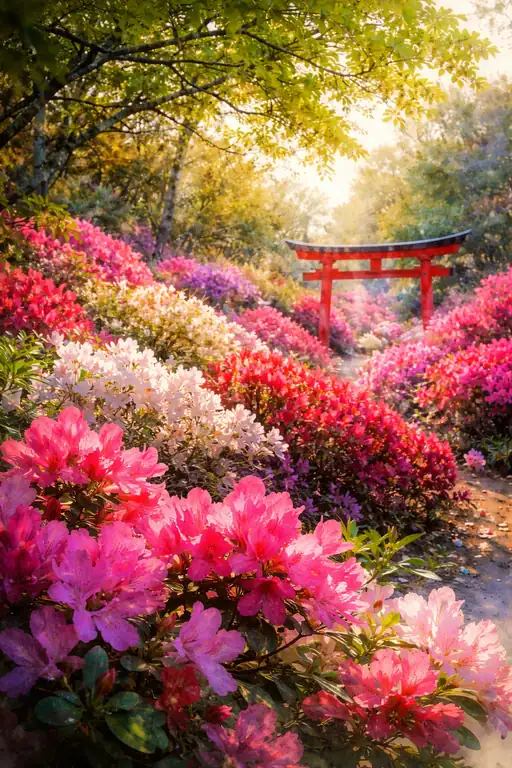 Threshold of the Blooming Sanctuary
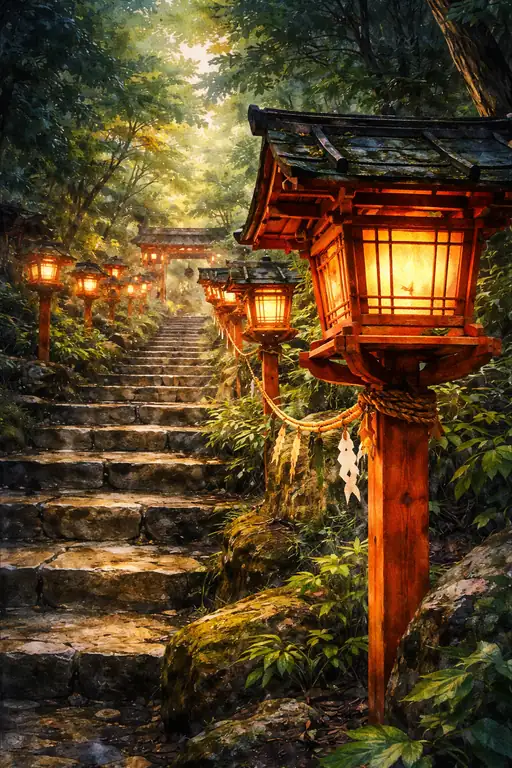 Guiding Light on the Ancient Ascent
Similar Artworks
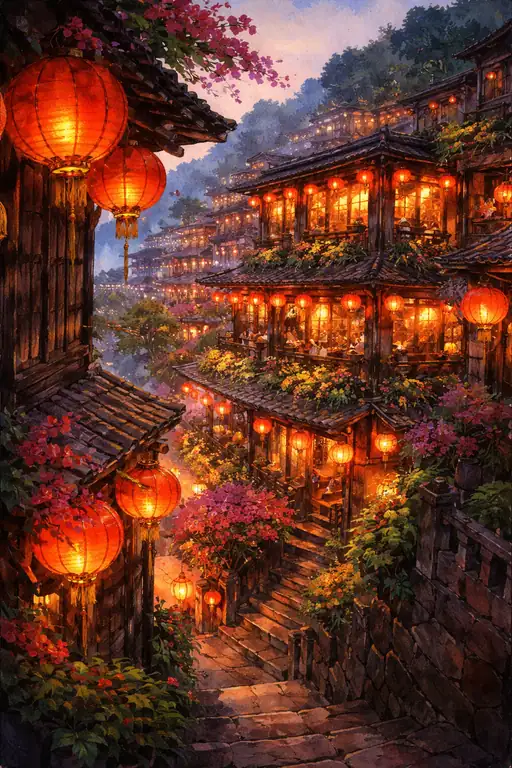 The Festive Glow of the Tiered Village
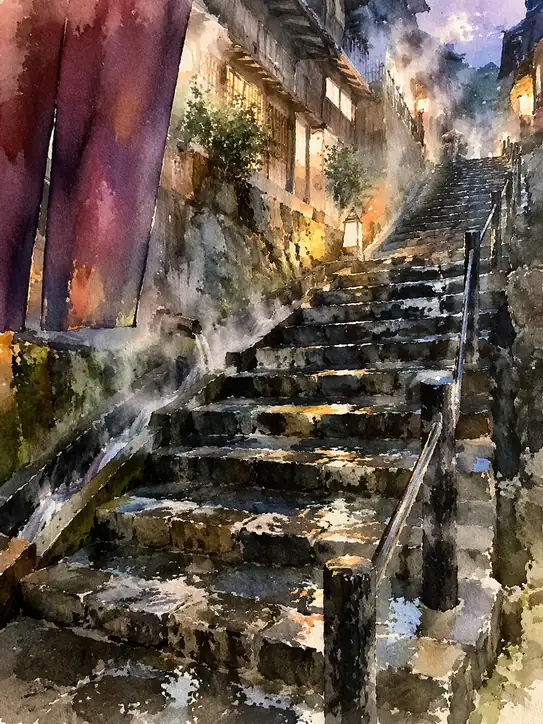 Dusk Settles on the Stone Steps
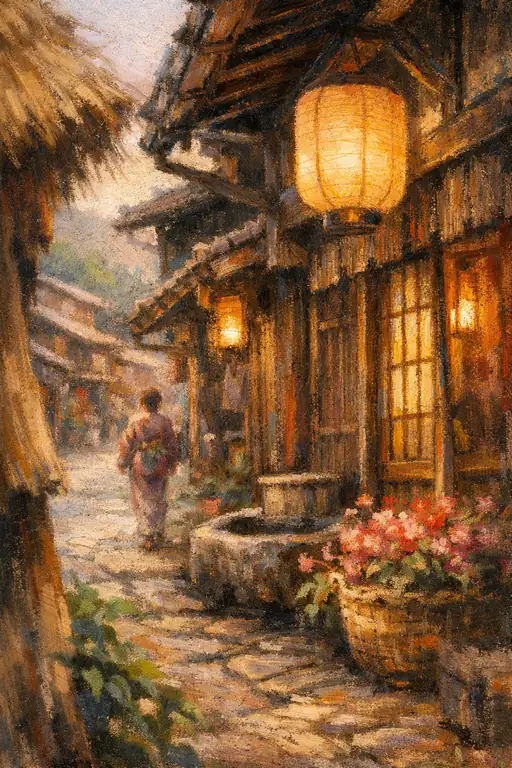 Nostalgia in the Amber Glow
 The Night the Lanterns Spoke
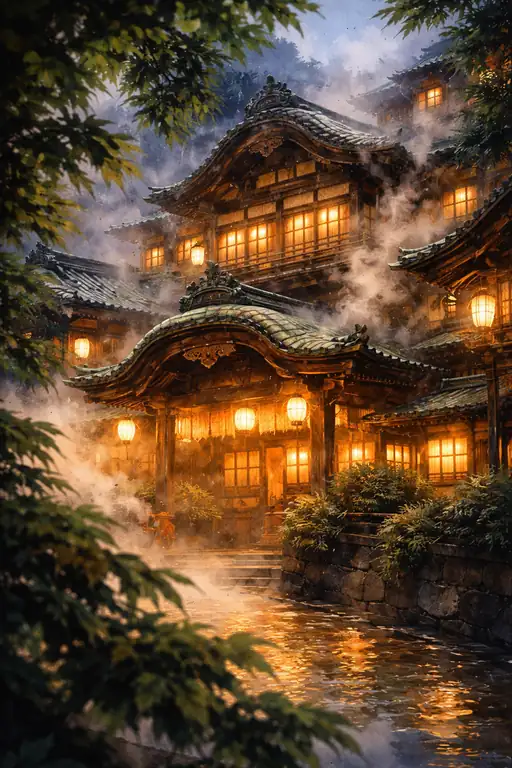 Mystic Vapors of the Evening Lanterns
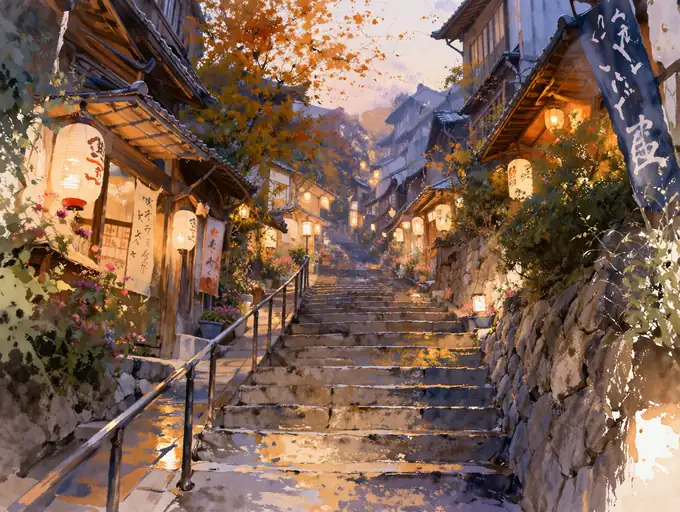 Nostalgic Dusk on the Stone Steps
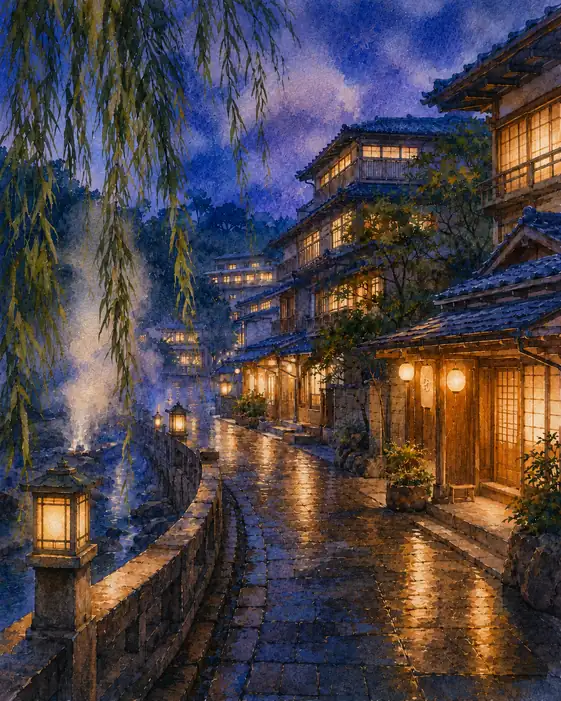 A Lullaby of Lanterns and Willow Whispers
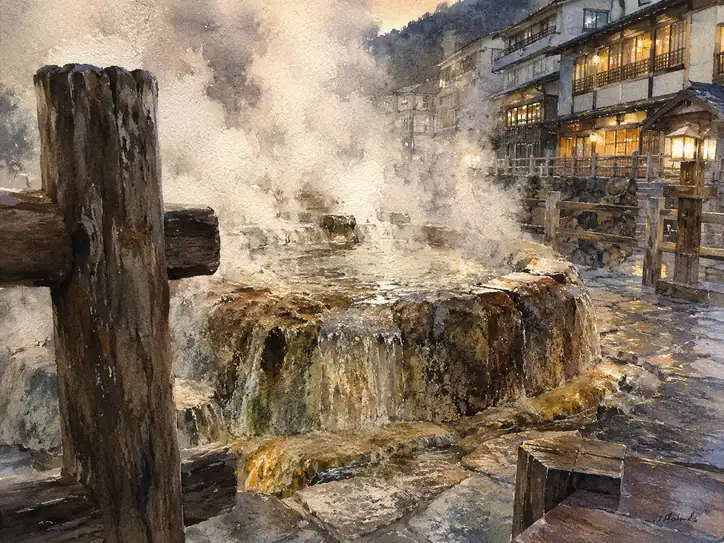 A Warm Whisper in the Twilight Mist
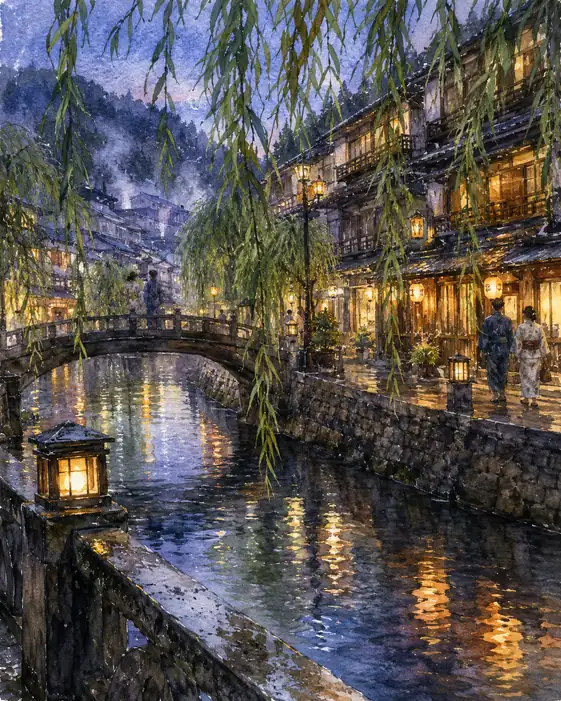 Whispers of the Rain-Washed Evening
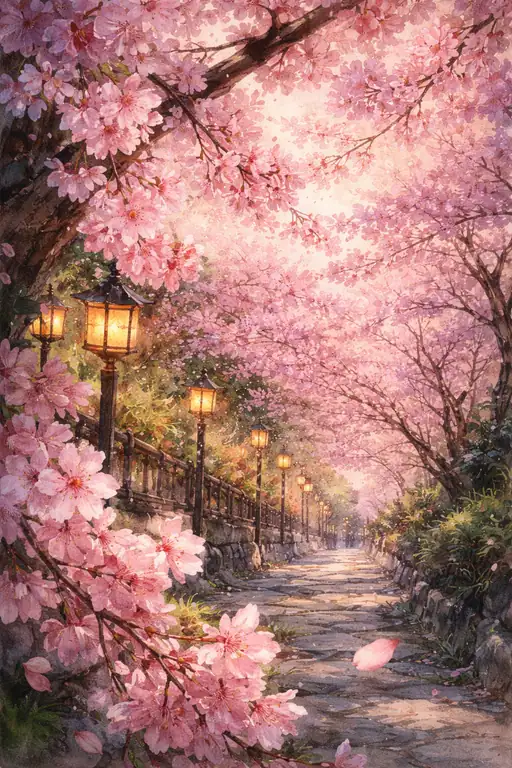 Lanterns and Falling Petals in the Spring Dusk