
The Silent Roar of the Abyss
Critique
1. Introduction This oil painting presents a powerful depiction of a rugged mountain landscape, emphasizing the raw majesty of nature. The vertical composition draws the viewer into a deep valley where stone, water, and mist converge. It stands as a testament to the sublime beauty found within the untamed reaches of high-altitude environments. 2. Description At the center, a cascading waterfall descends from invisible heights, feeding a turbulent stream that winds through rocky debris. Massive, dark cliffs flank the valley, their surfaces rendered with textured layers that suggest weathered stone. Wisps of white mist partially obscure the distant ridges, adding atmospheric depth. In the lower right, a few green leaves introduce a subtle touch of life amidst the stark surroundings. 3. Analysis The vertical format heightens the sense of scale and dramatic descent. A high contrast between deep shadows and brilliant whites of the water creates a dynamic rhythm. The brushwork is vigorous, utilizing impasto techniques to convey the tactile roughness of the rocks and the fluid motion of the torrent. A muted palette of cool blues and earthy browns captures the chilly, serene atmosphere effectively. 4. Interpretation and Evaluation The work captures the essence of the sublime through a balance of form and atmosphere. The technical execution shows a profound understanding of light, particularly in the way the water reflects the ambient sky. While the composition follows traditional motifs, the expressive strokes provide a modern vitality. The artist’s ability to evoke silence through the depiction of roaring water is a remarkable feat of creative synthesis. 5. Conclusion What initially appears as a formidable landscape eventually reveals itself as a harmonious interplay of energy. It is a compelling study of nature's enduring power and the quiet beauty residing within its most desolate corners.
 The Roar that Whispers Silence
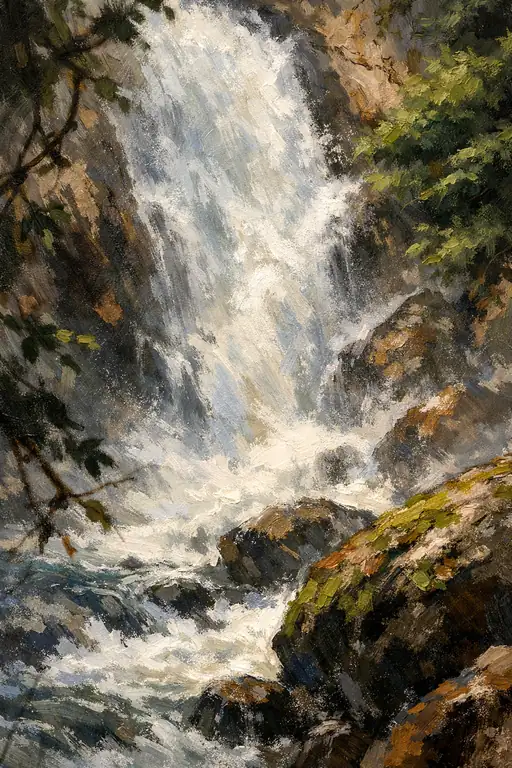 Crashing White Energy
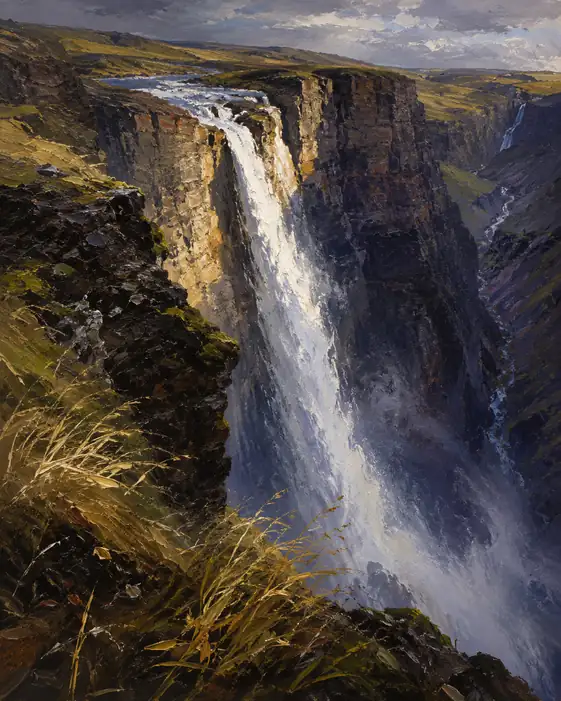 Thunder of the Ancient Gorge
 Frozen Symphony of the Gorge
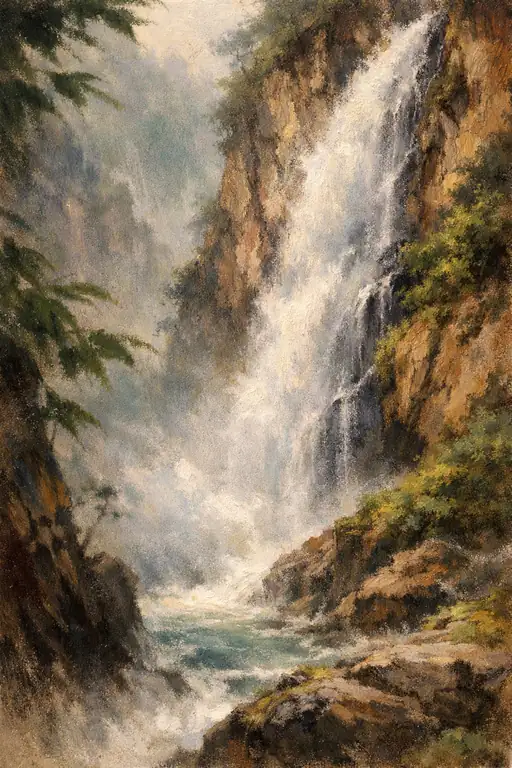 Thunderous Majesty in the Secluded Canyon
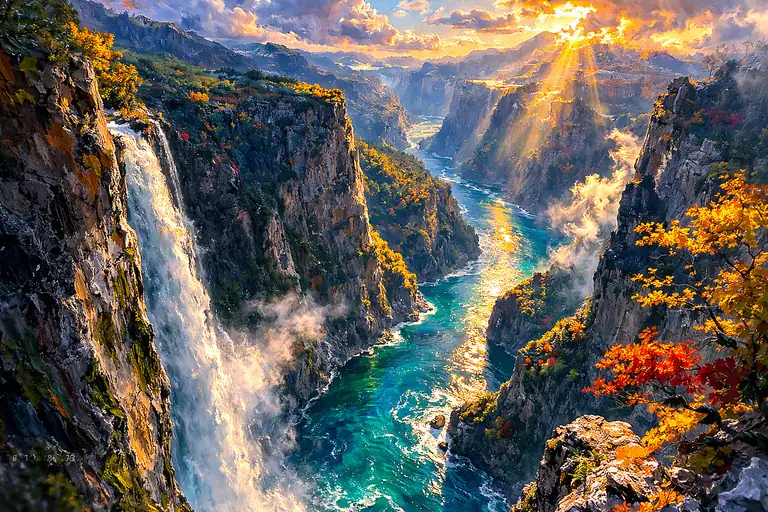 Descent of the Sacred Light
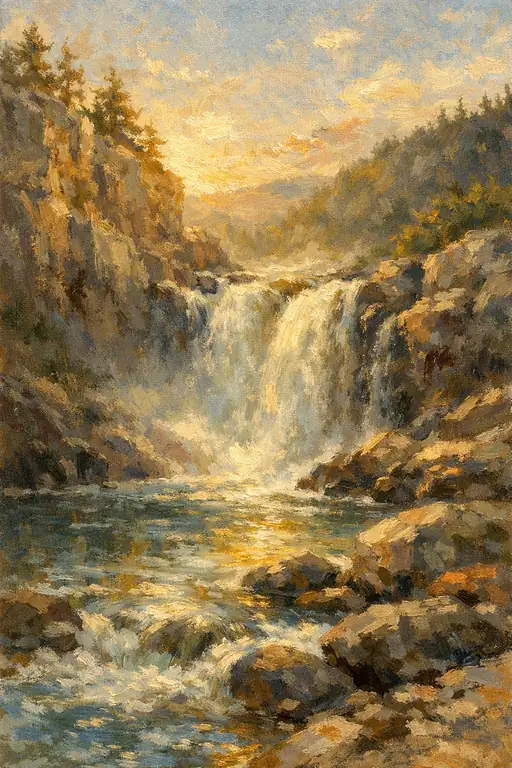 Roar of the Golden Cascade
 The Eternal Song of the Chasm
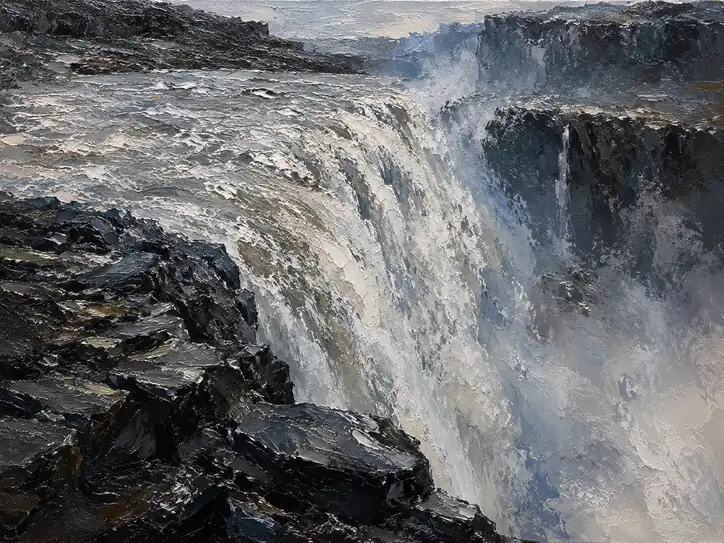 The Roar of the Abyss
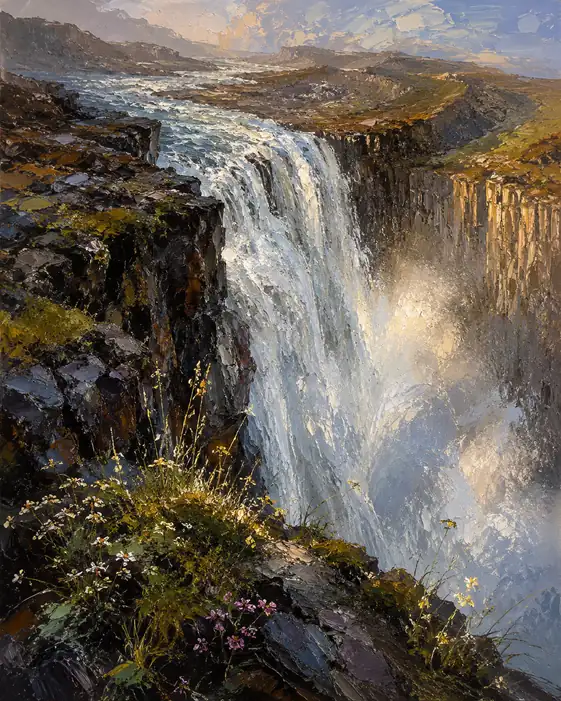 Wildflowers by the Thundering Abyss
 Cathedral of the Mist
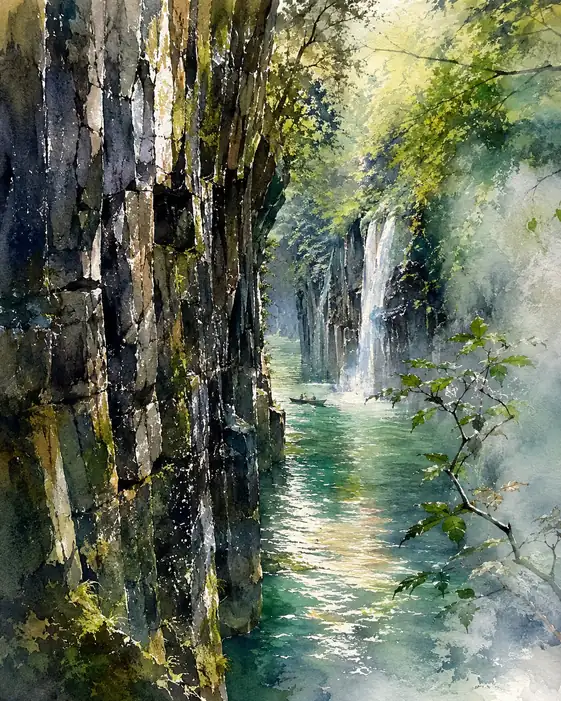 Breath of the Emerald Gorge