
Threshold of the Sacred Sun
Critique
1. Introduction This luminous watercolor painting depicts the majestic entrance to a Shinto shrine, centered around a grand vermilion torii gate that stands as a threshold to a sacred forest. The work captures a moment of profound tranquility, where sunlight filters through a dense canopy of leaves to illuminate a weathered stone path leading toward a traditional shrine building. By focusing on the interplay between architectural grandeur and natural light, the artist evokes a powerful sense of sanctity. 2. Description The foreground is anchored by the massive pillars of a red torii gate, adorned with a thick, braided shimenawa rope and golden tassels. On either side, stone lanterns stand guard, partially obscured by lush green foliage that frames the composition. A paved stone path, mottled with the shadows of overhead branches, draws the eye toward the main haiden building in the distance, rendered with intricate architectural detail. Small figures of visitors can be seen walking along the path, providing a sense of scale. 3. Analysis The painting utilizes a strong central perspective and symmetrical framing to create a sense of balance and stability. The vibrant vermilion of the torii provides a sharp chromatic contrast against the multifaceted greens of the surrounding forest, immediately identifying the gate as the focal point. Technical mastery is evident in the depiction of "komorebi," or sunlight filtering through trees; the artist uses varying values and soft edges to simulate the flickering quality of dappled light as it falls upon the stone surfaces. 4. Interpretation and Evaluation This work successfully conveys the concept of the torii as a boundary between the mundane and the sacred. The transition from the bright, open foreground into the shaded, mysterious depths of the forest suggests a spiritual journey towards inner peace. The harmony between the man-made structures and the ancient trees reflects a deep respect for nature, a core tenet of Shinto belief. The artist's ability to capture the specific quality of forest light adds a layer of realism that elevates the scene. 5. Conclusion Through its expert handling of light and composition, the painting offers an evocative exploration of a traditional Japanese sacred space. The integration of meticulous detail with a broader, atmospheric perspective results in a work that is both grounded in reality and spiritually resonant. Initially struck by the bold color of the torii, the viewer is gradually drawn into the quiet, dappled beauty of the shrine's interior path. It stands as a sophisticated tribute to the serene intersection of culture and nature.
Same Subcategory
 Where the Gods Sleep in the Rock
 Reflection of the Sacred Sanctuary
Similar Artworks
 Awakening the Sacred Path
 Sanctuary of the Ancient Cedars
 Sanctuary in the Emerald Mist
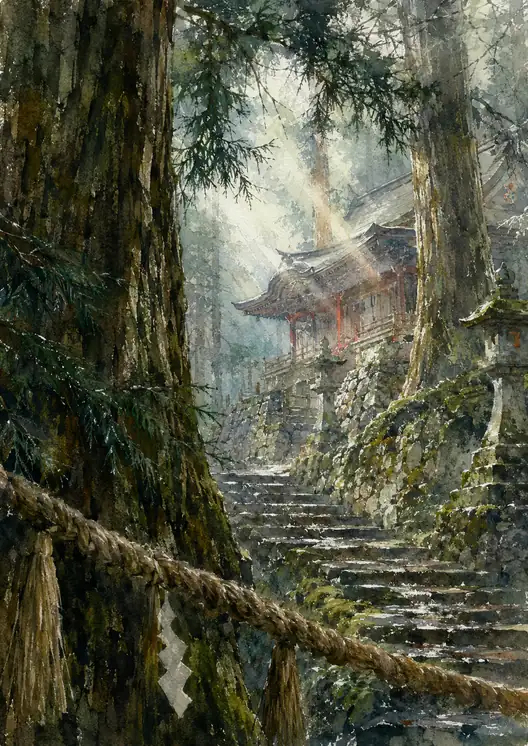 Sanctuary of the Piercing Light
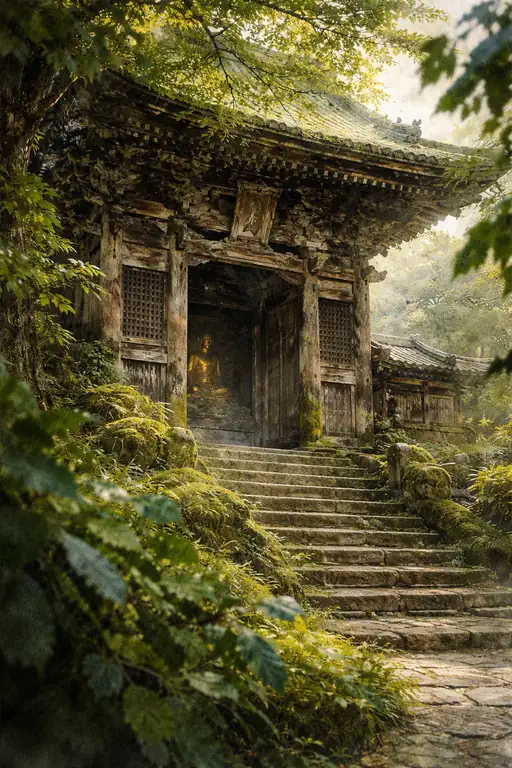 Golden Echoes in the Ancient Forest
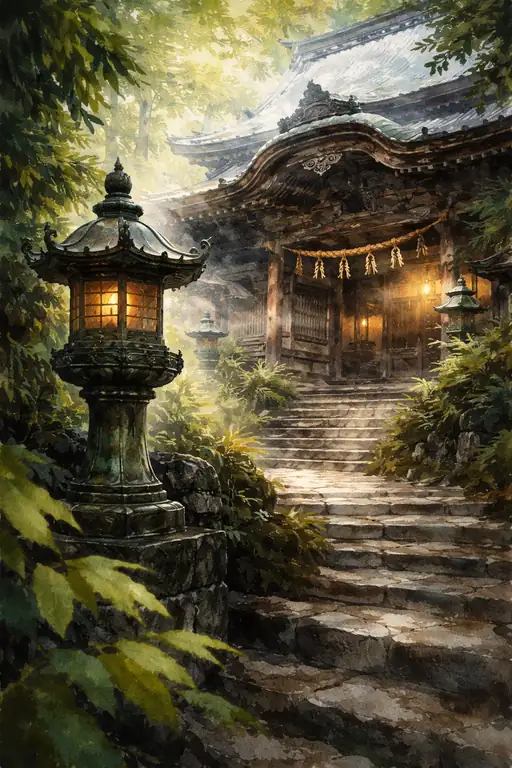 Sanctuary of the Silent Forest
 Where Crimson Meets the Emerald Wilds
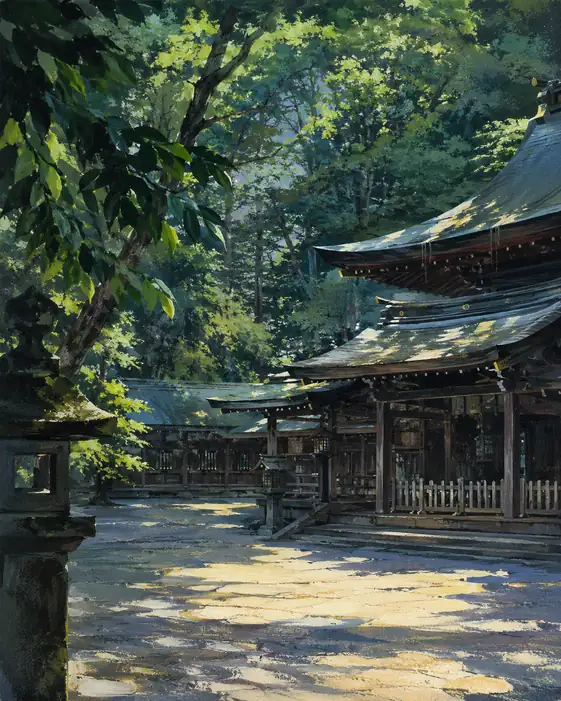 Whispers of the Sunlit Sanctuary
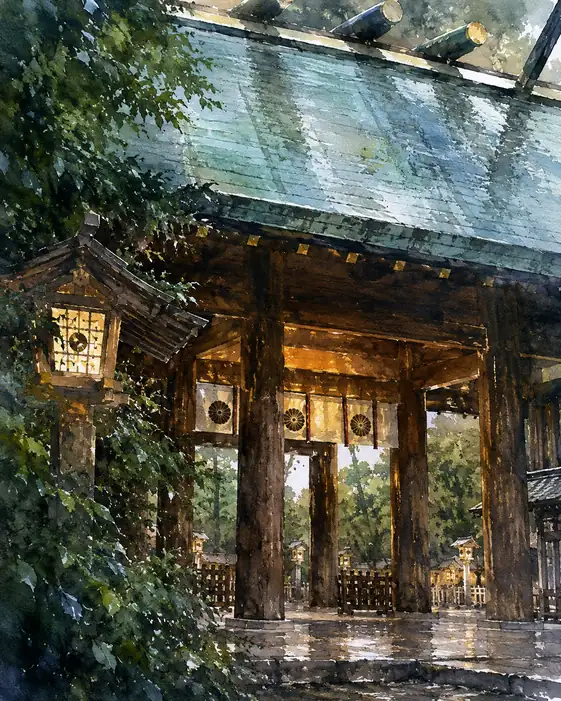 The Silent Breath of the Shrine
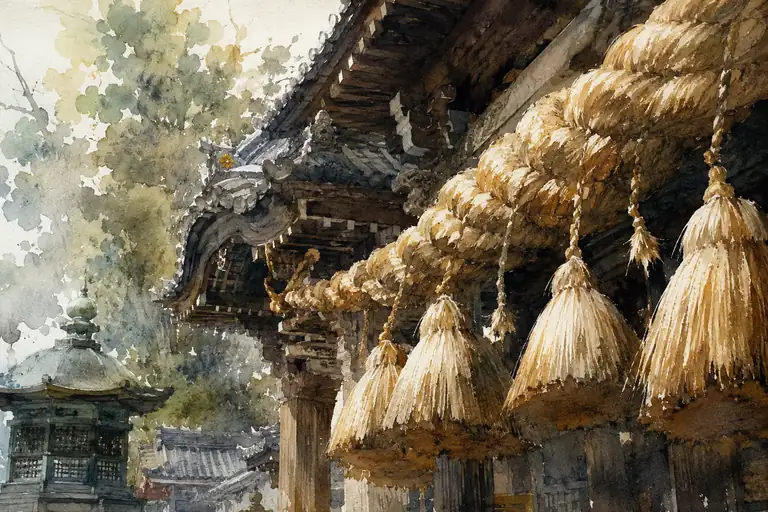 Whispers of the Sacred Boundary