
Eternal Silence within the Sacred Grove
Critique
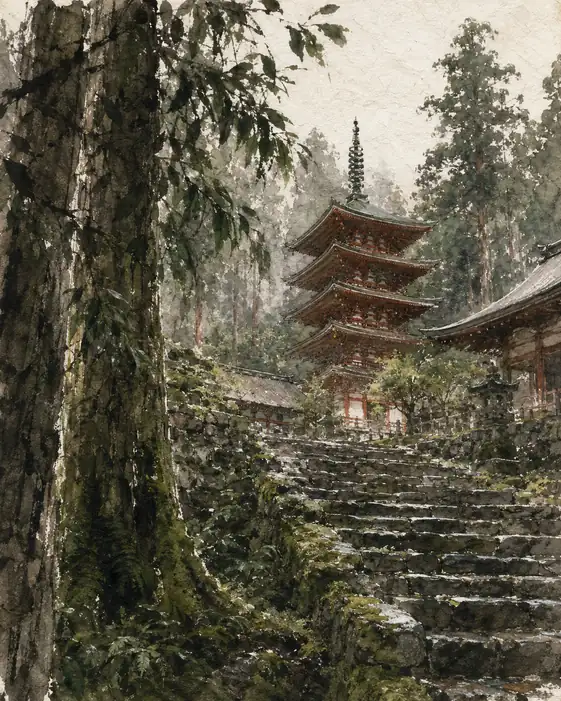
1. Introduction This oil painting presents a traditional five-story pagoda standing silently within a dense forest. The central architectural structure has integrated perfectly with the surrounding nature over many years, emanating a sense of solemn beauty. The composition emphasizes verticality, guiding the viewer's eyes naturally from the base up to the finial at the top. 2. Description A thick tree trunk frames the left side of the canvas, while a stone lantern is partially visible in the bottom right foreground. The layered roofs of the pagoda are expressed through heavy impasto, creating a sharp contrast between the white highlights reflecting light and the deep brown shadows. The background forest is rendered with blurred strokes, suggesting a faint, mystical light filtering through the foliage. 3. Analysis Technically, the work is characterized by powerful impasto applied with a palette knife or broad brushes. This emphasis on texture effectively highlights the weathered quality of the wooden architecture and the ruggedness of the tree bark. Color-wise, the restrained palette of earthy browns, ochres, and deep greens creates a unified, tranquil space filled with a heavy atmosphere. 4. Interpretation and Evaluation The painting is an ambitious work that reinterprets the theme of harmony between man-made structures and nature through modern, vigorous brushwork. By prioritizing the play of light and shadow over intricate detail, the artist successfully captures the mass and structural integrity of the pagoda. This ability to evoke power within silence is a testament to the work's originality and artistic value. 5. Conclusion While the viewer is initially struck by the bold, raw brushstrokes, they soon discover a quiet, prayer-like presence pervading the entire piece. It is a masterful work that crystallizes the eternity of historical architecture into a compelling visual form. Ultimately, the painting leaves a profound sense of peace and reverence for the enduring past in the mind of the observer.
Same Subcategory
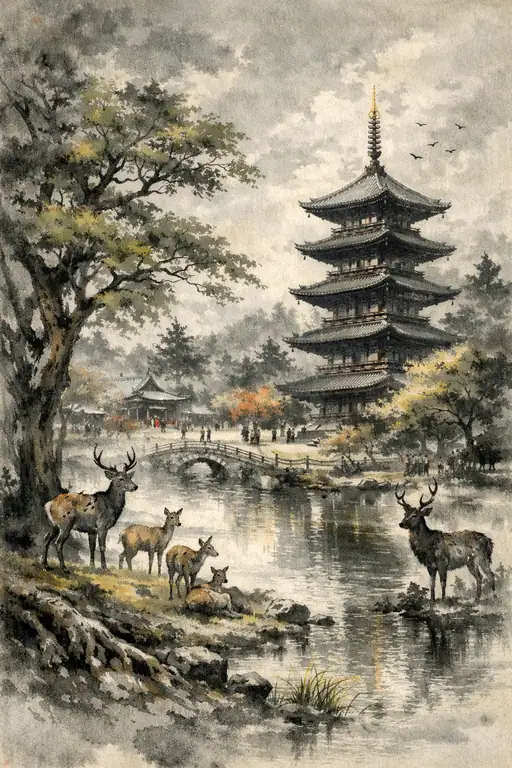 Ancient Peace, Divine Companions
 The Radiant Echoes of the Celestial Fall
Similar Artworks
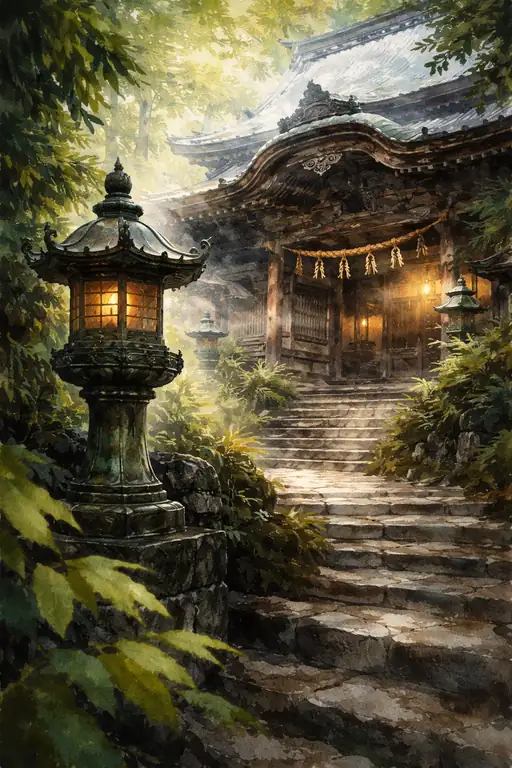 Sanctuary of the Silent Forest
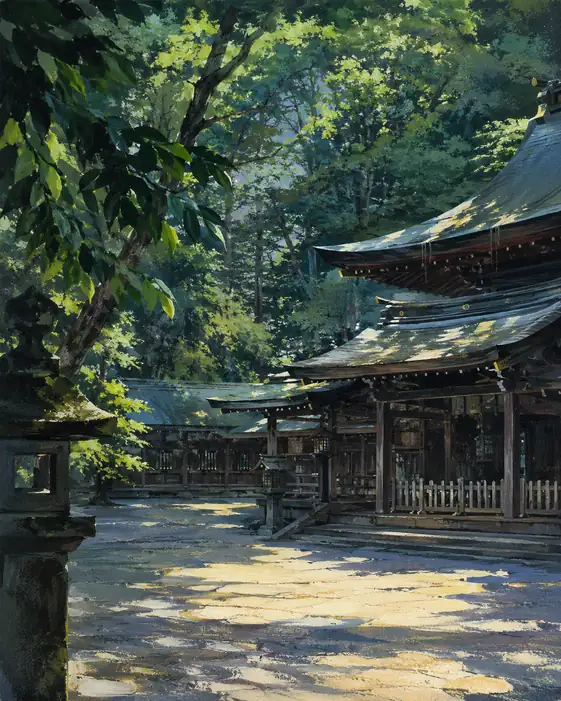 Whispers of the Sunlit Sanctuary
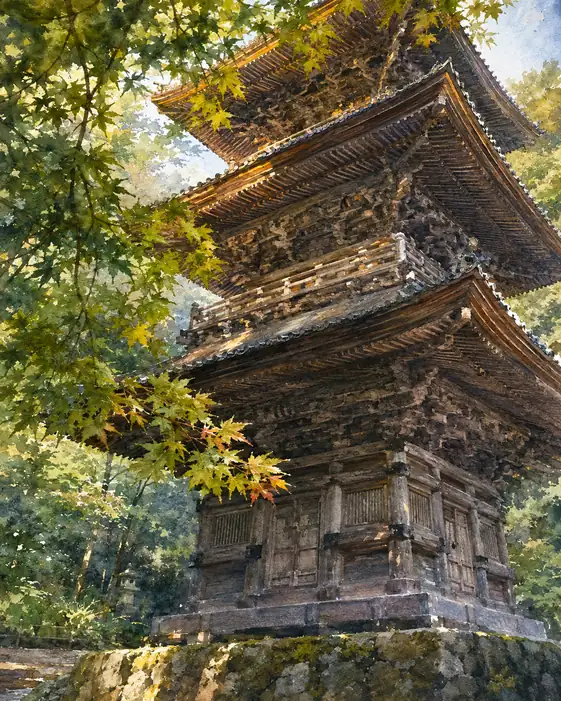 A Forest Three-Story Pagoda Through Maples
 The Sanctuary of Eternal Stillness
 Autumn twilight, the Pagoda’s Silent Prayer
 The Silent Watch of the Crimson Tier
 Echoes of Eternity in the Mossy Mist
 Guardian of the Ethereal Mist
 Eternity in the Moss-Covered Hall
 Eternal Prayer in the Vermilion Woods