
Pulse of the Ancient Path
Critique
1. Introduction This artwork depicts a bustling traditional Japanese town from an elevated vantage point, characterized by its remarkably tactile and textural surface. The painting employs a heavy impasto technique, where thick applications of paint create a physical presence that enhances the historical scene. It offers a unique blend of structural architectural detail and bold, expressive medium handling. 2. Description The composition features a wide, unpaved thoroughfare teeming with small figures dressed in period clothing. In the foreground, a rustic wooden fence and lush green foliage frame the lower left, while a prominent wooden gate structure stands to the right. Numerous traditional buildings with dark tiled roofs line the streets, leading the eye toward a dense forest and a range of distant mountains under a cloud filled sky. 3. Analysis The most striking element of this work is the artist's use of a palette knife or heavy brush to build up the paint's surface. This is particularly evident in the sky, where the clouds are rendered as distinct, physical ridges of white and pale blue, and on the ground, which possesses a weathered, stony quality. Despite the rugged texture, the artist maintains a clear sense of perspective and architectural rhythm, using the converging lines of the rooftops to create depth. 4. Interpretation and Evaluation The choice of such a tactile technique suggests a desire to emphasize the raw, grounded nature of historical life. By giving the air and earth a physical weight, the artist transforms a standard landscape into a more sensory and immediate experience. The technical execution is impressive; the thick paint does not obscure the small, lively figures but rather gives them a more integrated presence within their environment. 5. Conclusion This piece stands out for its bold material experimentation within the context of a traditional subject. The visual journey begins with the coarse texture of the foreground elements and expands into the meticulously arranged village and beyond. Ultimately, the painting successfully harmonizes a rugged, modern technique with a serene historical atmosphere, leaving a lasting impression of both form and substance.
Same Subcategory
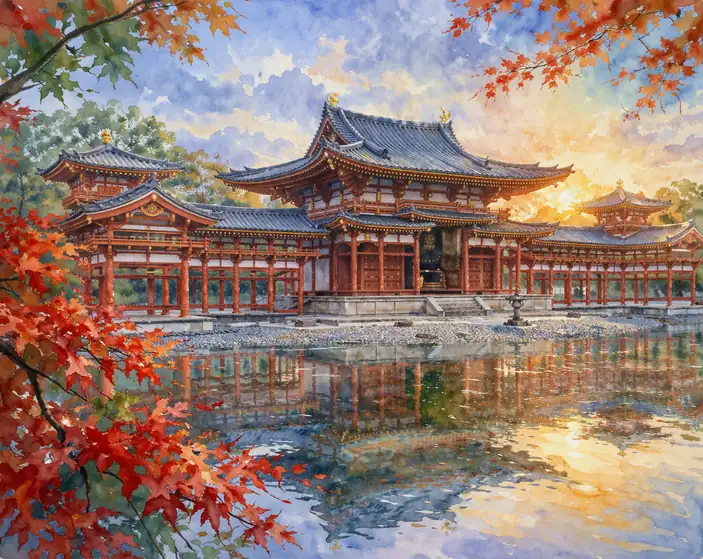 Crimson Reflections of an Ageless Hall
Similar Artworks
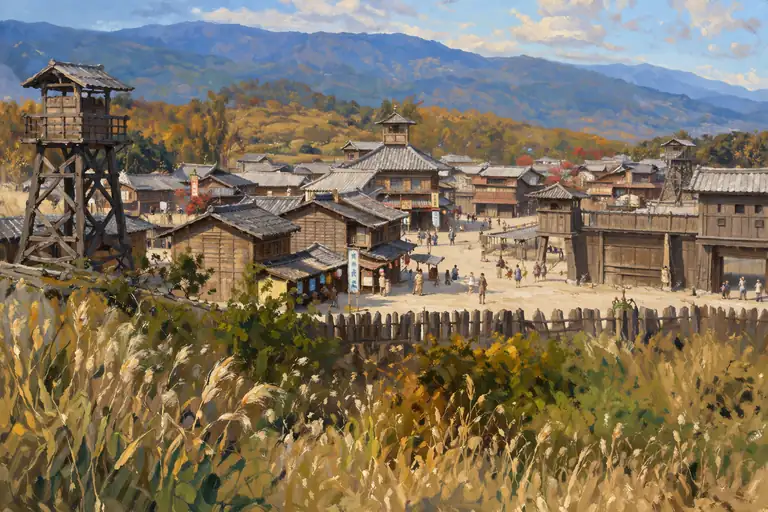 Golden Echoes of a Forgotten Village
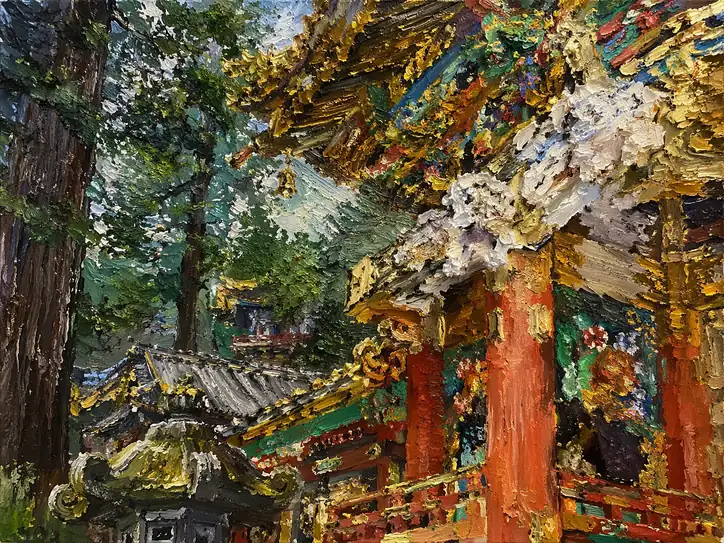 The Gilded Heart of the Forest
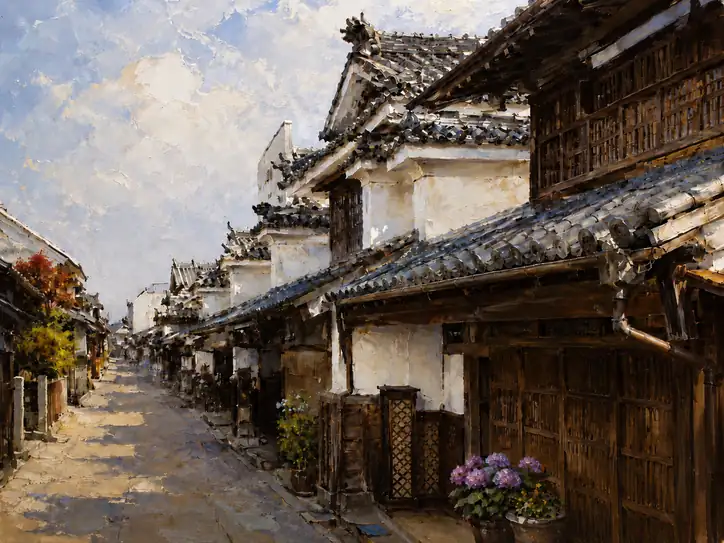 Hydrangeas in the Whispering Alley
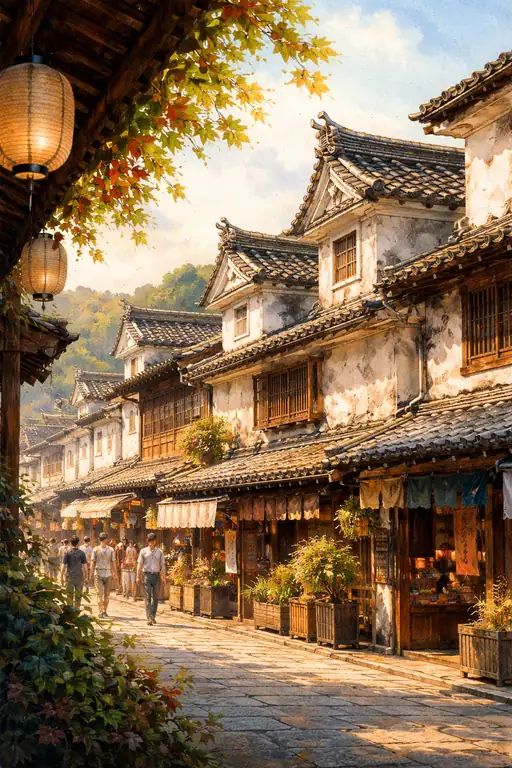 Sunset Glow on the Ancient Road
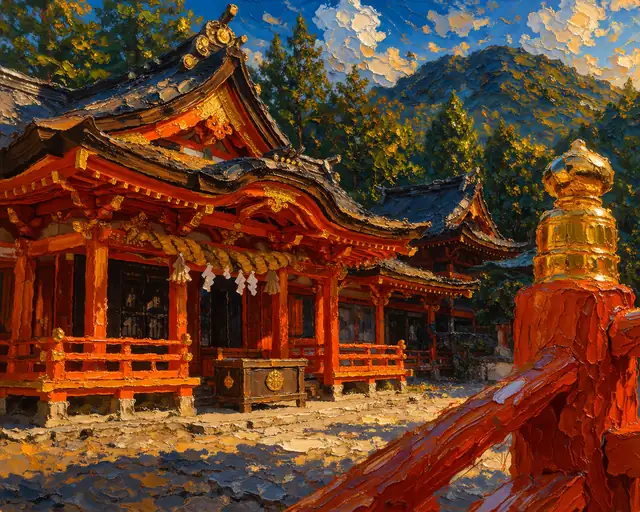 Vermilion Splendor in the Sacred Woods
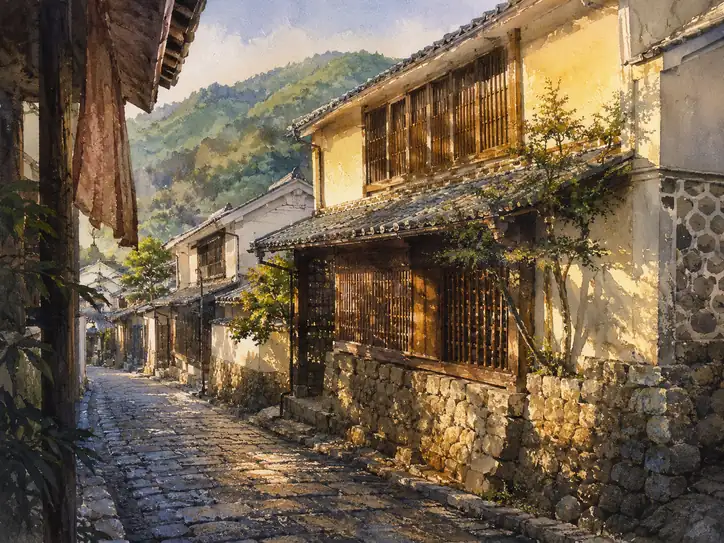 Sun-Drenched Memories of the Old Street
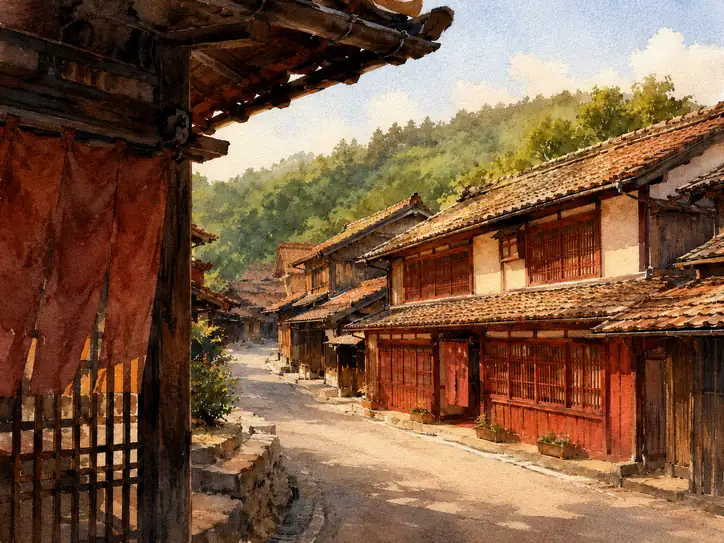 Golden Shadows on the Post Town
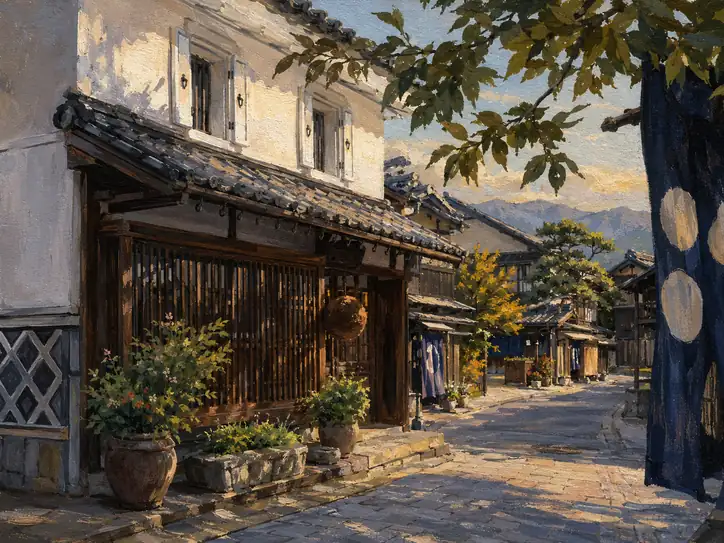 The Golden Hour in a Hidden Village
 Summer Radiance: The Luminous Path to the Sacred
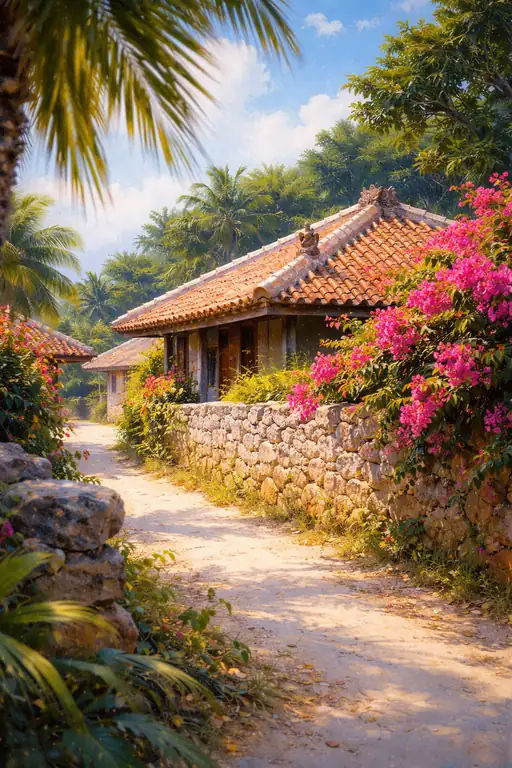 Bougainvillea by the Stone Wall