
Golden Echoes of a Forgotten Village
Critique
1. Introduction The artwork is an expansive landscape painting depicting a traditional Japanese village during the autumn season. Viewed from an elevated perspective, the scene captures the intricate layout of a historical town nestled against a backdrop of distant mountains. The piece evokes a sense of nostalgia and the bustling life of a bygone era, presented through a warm and earthy color palette. 2. Description The foreground is dominated by tall, golden pampas grass and dense greenery, with a prominent wooden watchtower rising on the left. In the middle ground, numerous wooden structures with grey tiled roofs are clustered around a central sandy plaza where small figures of people can be seen going about their daily activities. A fortified gate stands to the right, while the background transitions into forested hills with autumn colors and hazy blue mountain ranges. 3. Analysis The artist uses a dynamic range of brushwork to differentiate between textures. The foreground foliage is rendered with loose, rhythmic strokes that suggest movement in the wind, contrasting with the more precise, geometric lines of the village architecture. Light plays a crucial role, as the golden afternoon sun casts soft shadows and highlights the warm tones of the wood and thatched roofs, creating a cohesive atmospheric depth. 4. Interpretation and Evaluation This painting serves as a vivid historical reconstruction that prioritizes atmosphere over rigid detail. The composition effectively balances the man-made elements of the village with the vastness of the natural landscape, suggesting a harmonious relationship between the community and its environment. Technically, the use of atmospheric perspective is excellent, as the receding mountains shift into cooler blue tones to emphasize the scale of the scene. 5. Conclusion The work succeeds in capturing the essence of a specific time and place through its evocative use of color and light. The visual journey from the tactile pampas grass in the foreground to the distant, misty peaks provides a comprehensive view of the settlement's geographic context. Ultimately, the painting stands as a beautiful tribute to traditional Japanese architecture and the quiet beauty of the autumn landscape.
Same Subcategory
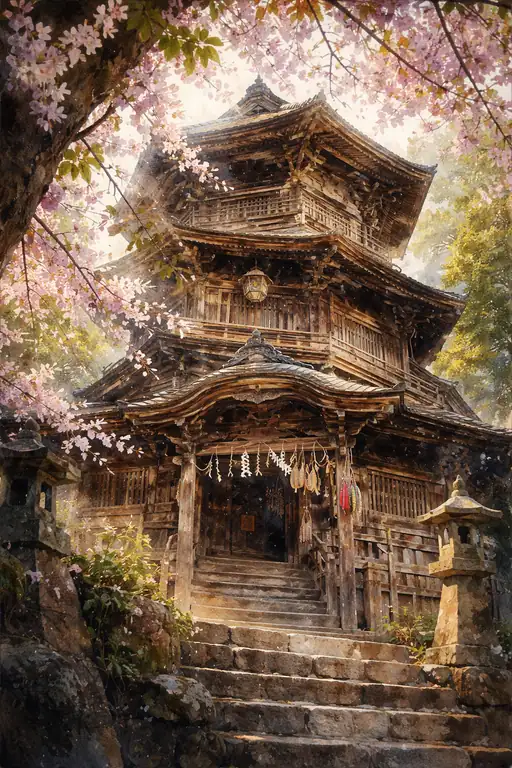 Spring's Quiet Benediction
Similar Artworks
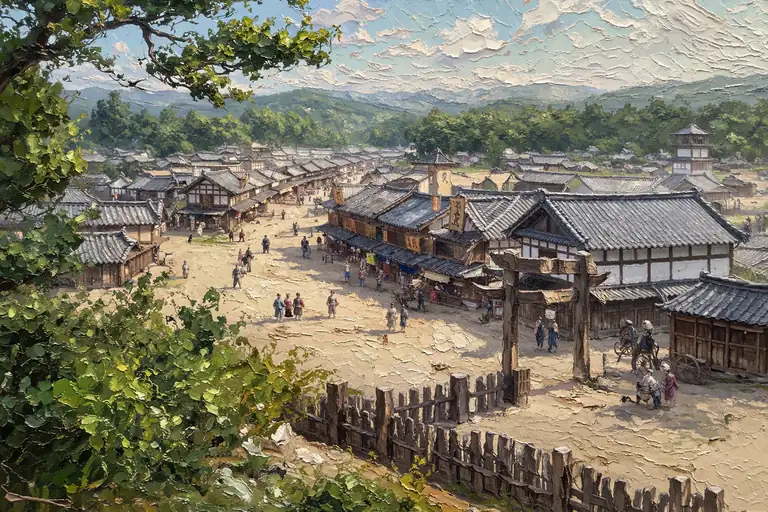 Pulse of the Ancient Path
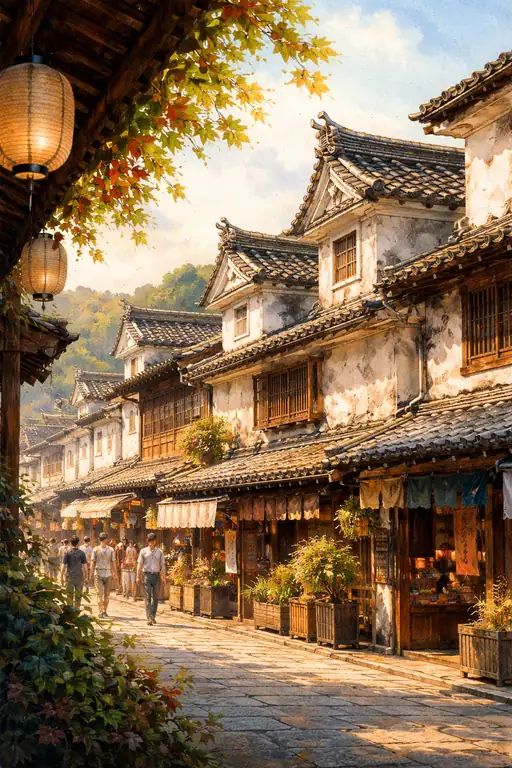 Sunset Glow on the Ancient Road
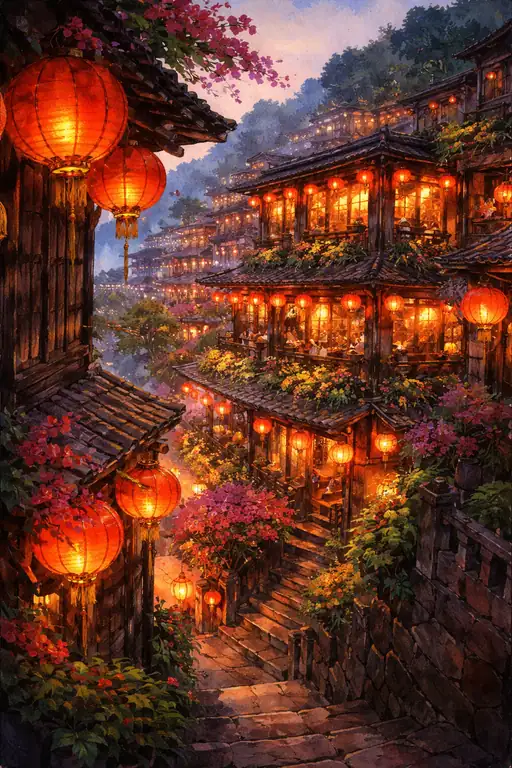 The Festive Glow of the Tiered Village
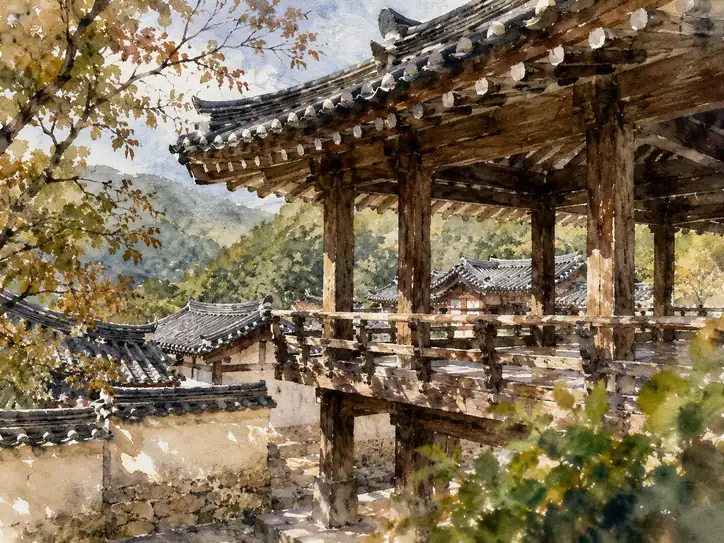 Serene Sanctuary of Autumn
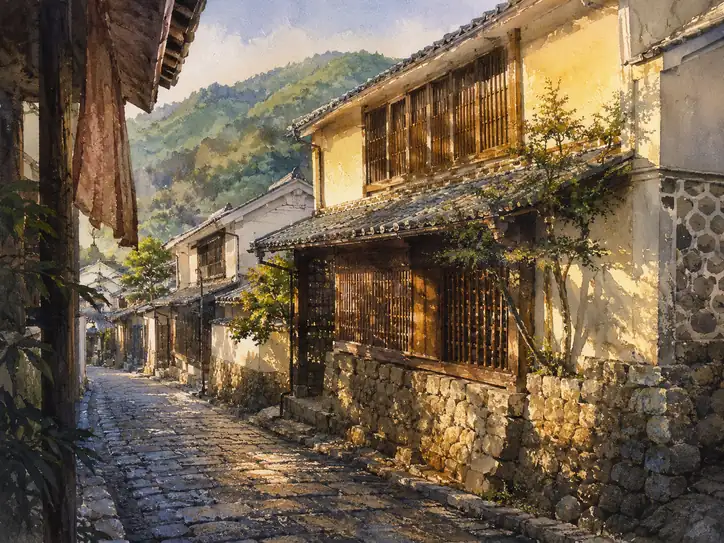 Sun-Drenched Memories of the Old Street
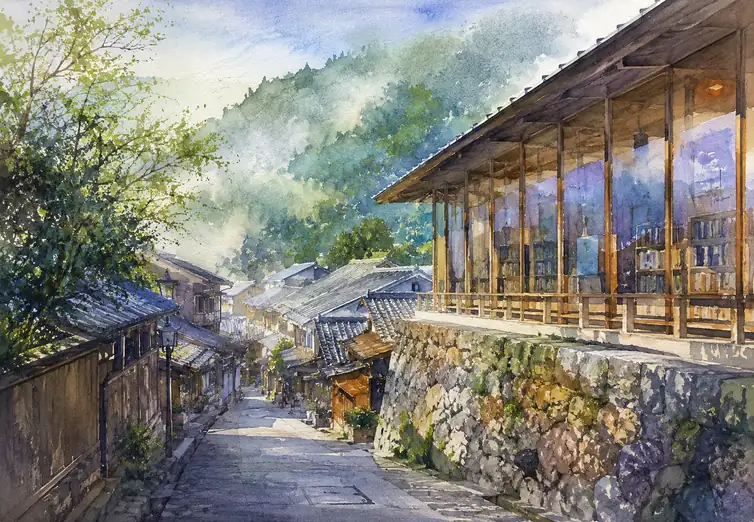 A Dialogue Between Stone and Glass
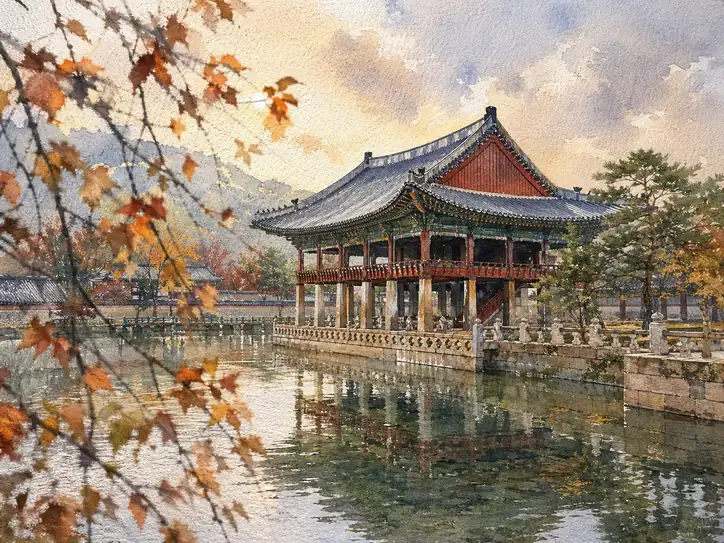 Golden Leaves, Timeless Waters
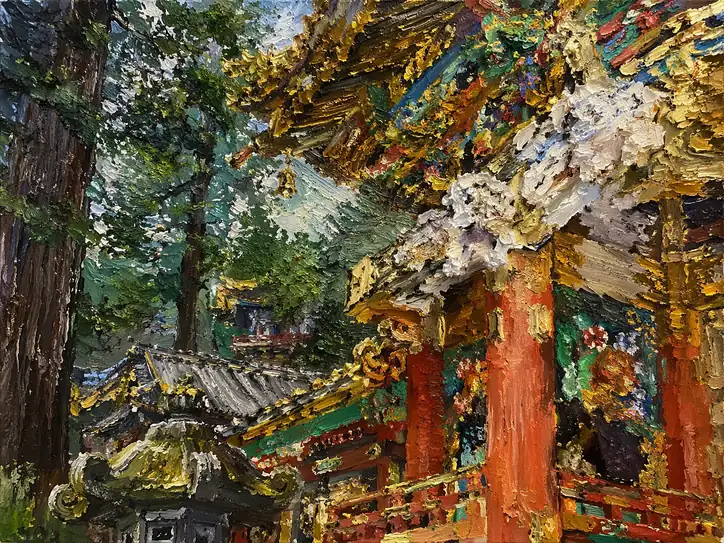 The Gilded Heart of the Forest
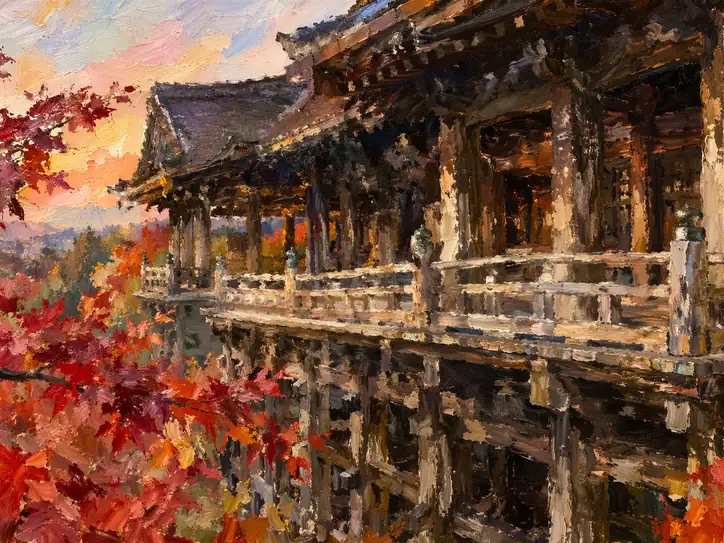 Autumn's Embrace
 Radiance of the Autumn Pagoda