
Spring's Quiet Benediction
Critique
1. Introduction This painting depicts a multi-tiered traditional Japanese wooden temple, nestled within a canopy of blooming cherry blossoms. The vertical composition draws the eye upward along the intricate architectural details of the structure, which stands as a silent witness to the changing seasons. The overall atmosphere is one of serene beauty, enhanced by a soft, diffused light that filters through the petals and branches. 2. Description The central focus is a complex, octagonal wooden building with weathered brown planks and ornate eaves. A set of stone stairs leads up to the entrance, flanked by traditional stone lanterns (toro) on either side. Above the entrance, sacred straw ropes (shimenawa) and paper tassels hang, indicating the spiritual significance of the site. Pink and white cherry blossoms frame the scene from the top and left, their delicate forms contrasting with the solid, dark wood of the temple. 3. Analysis The color palette is dominated by warm, earthy browns and soft pinks, which create a harmonious and inviting tone. Light is used effectively to highlight the textures of the old wood and the translucency of the cherry petals, suggesting a specific time of day like late morning. The composition is balanced, with the heavy mass of the temple grounded by the solid stone steps at the bottom, while the light-filled sky and blossoms provide a sense of openness at the top. 4. Interpretation and Evaluation This work successfully captures the essence of "mono no aware," a Japanese aesthetic concept relating to the transience of beauty. The contrast between the enduring, weathered architecture and the fleeting blossoms evokes a profound sense of the passage of time. Technically, the artist demonstrates impressive skill in rendering the structural complexity of the building while maintaining a poetic, painterly quality throughout the landscape. 5. Conclusion Upon initial viewing, one is struck by the romantic charm of the spring landscape, but further study reveals a deeper appreciation for the architectural precision and atmospheric depth. The painting effectively transports the viewer to a place of quiet reflection and natural splendor. It remains a poignant celebration of cultural heritage and the cyclical beauty of the natural world.
Same Subcategory
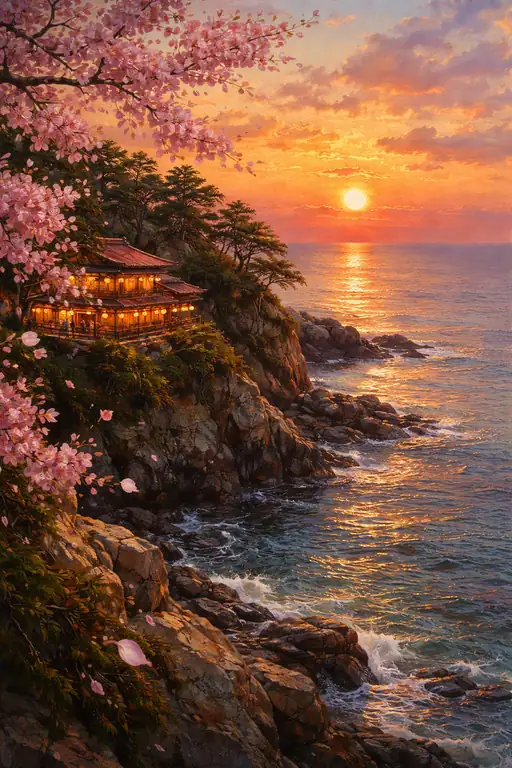 Golden Hour at the Cliff's Edge
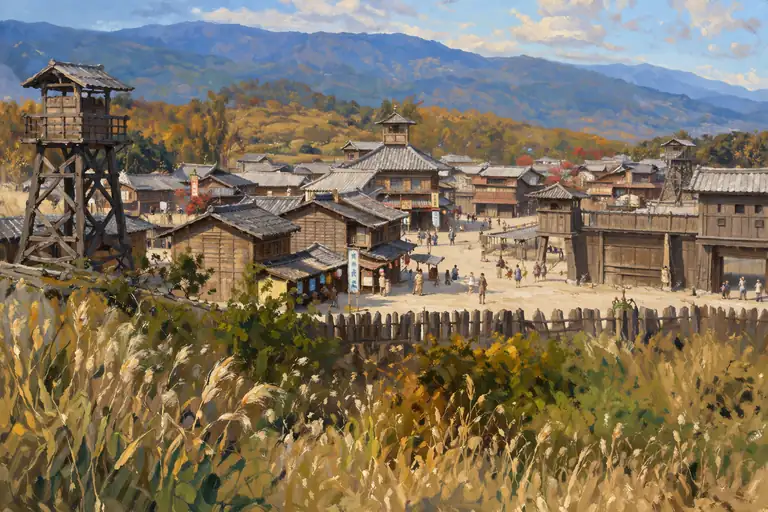 Golden Echoes of a Forgotten Village
Similar Artworks
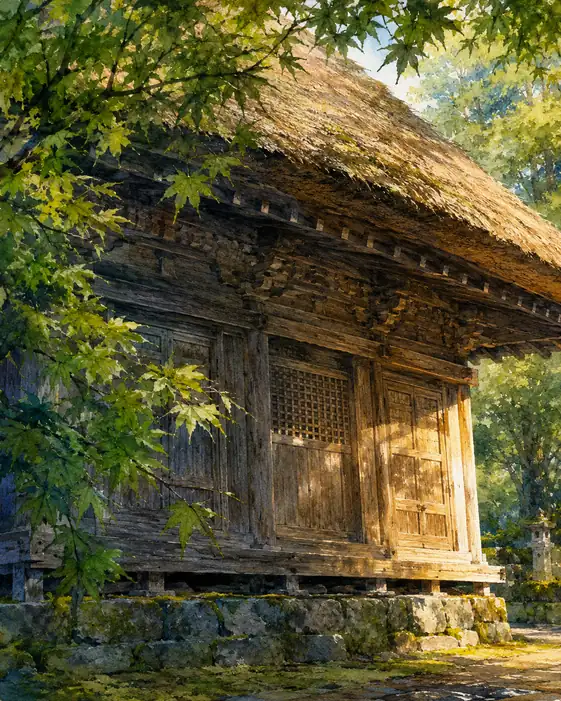 Memory of the Sun-Drenched Leaves
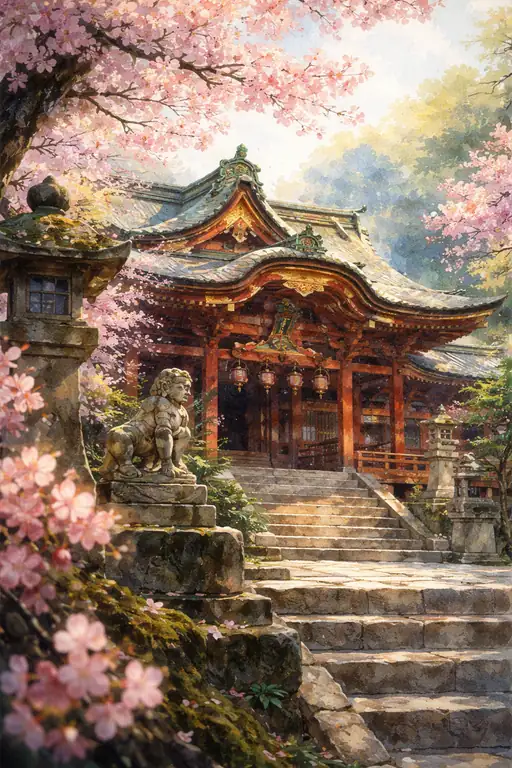 Whispers of the Spring Sanctuary
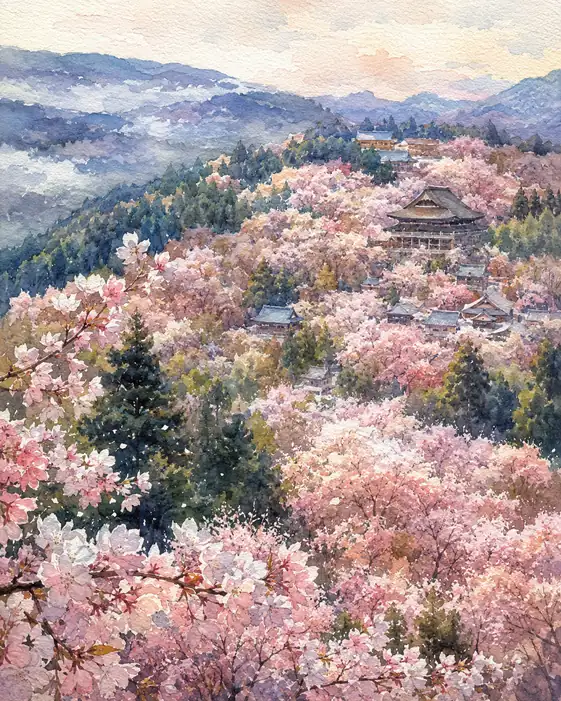 Oceans of Petals in the Mountain Mist
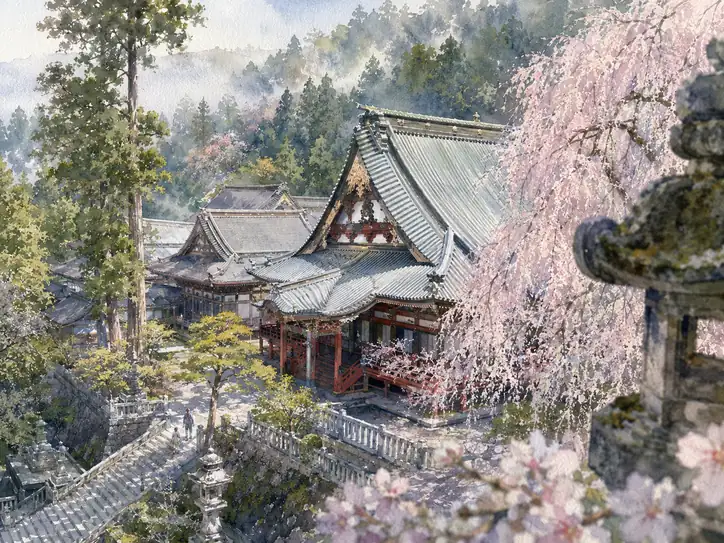 Whispers of the Weeping Sakura
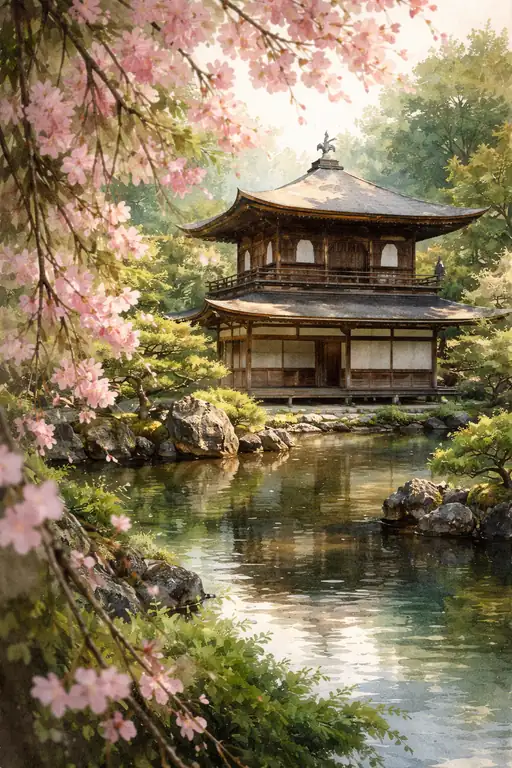 Spring's Gilded Reflection
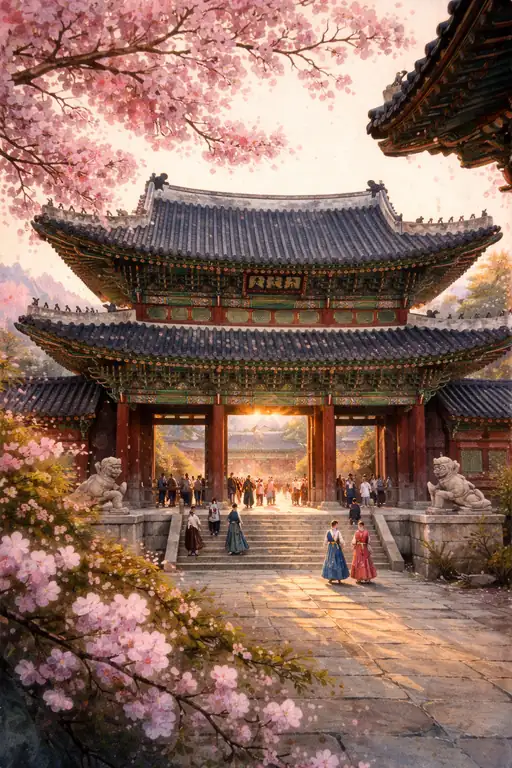 Spring Steps at the Ancient Gate
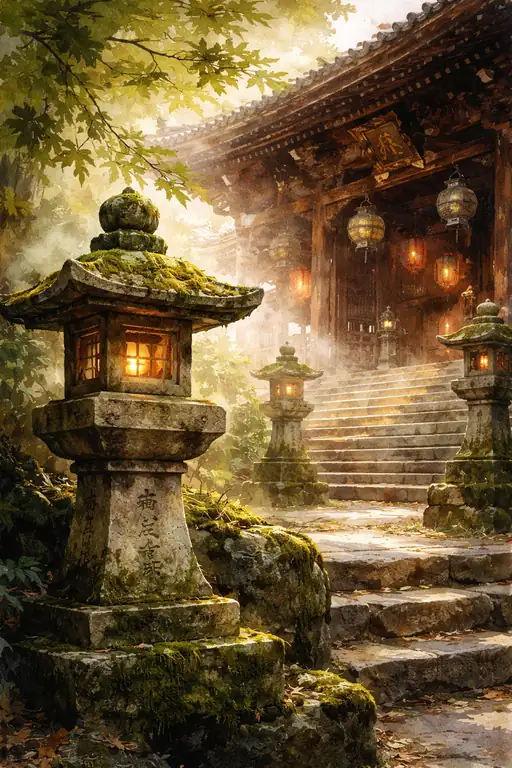 Following the Red Lantern's Glow: Footsteps in a Kyoto Dusk
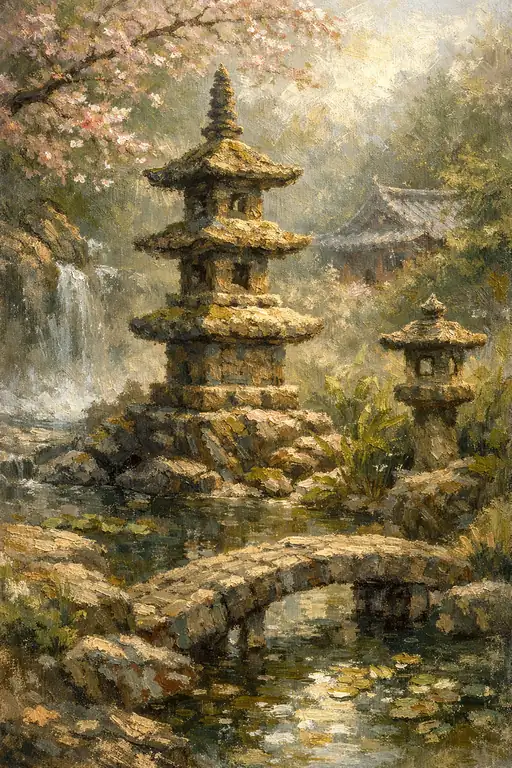 Zen in the Cherry Blossom Garden
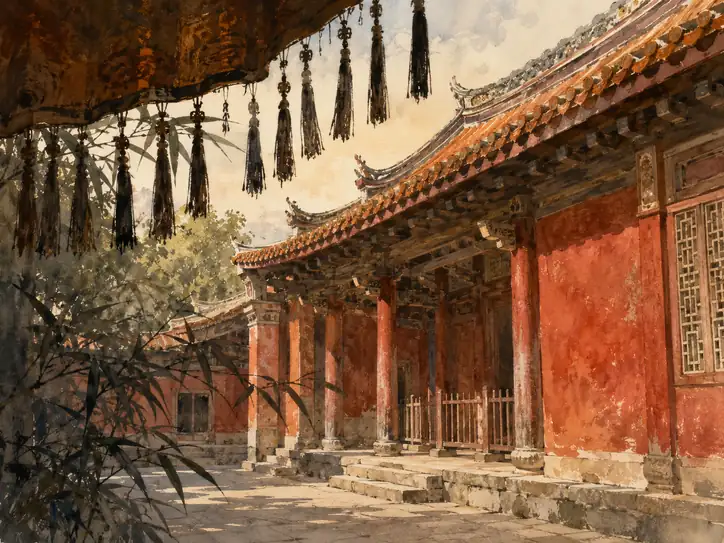 Where Sunlight Whispers to Vermilion
 Sacred Spring at Dazaifu