
The Fragrant Breath of Spring Peaks
Critique
1. Introduction This oil painting presents a delicate and poetic depiction of spring in Japan, featuring blooming plum blossoms set against a distant mountain range. The composition emphasizes the contrast between the detailed, close-up blossoms in the foreground and the soft, atmospheric rendering of the peaks in the background. It captures the fleeting beauty of early spring with a gentle and sophisticated artistic touch. 2. Description The right side of the canvas is dominated by several large, white-and-pink plum blossoms in full bloom, accompanied by numerous tightly closed reddish buds. A twin-peaked mountain, rendered in soft blue and lavender tones, sits on the horizon under a hazy sky. Below the mountain, a sprawling landscape of blurred pink and green suggests a valley filled with countless more flowering trees. 3. Analysis The artist uses a soft, blended technique that gives the painting a dreamlike quality, reminiscent of traditional Nihonga or pastel works. The color palette is dominated by muted pinks, whites, and blues, creating a harmonious and tranquil atmosphere. The brushwork is expressive yet controlled, using quick, dabbing strokes to represent the countless blossoms in the distance while maintaining clarity in the foreground petals. 4. Interpretation and Evaluation This work successfully evokes the Japanese concept of "mono no aware," a poignant awareness of the transience of all things. The fragile beauty of the plum blossoms, which bloom even in the lingering cold, serves as a symbol of resilience and the arrival of new life. The choice of a twin-peaked mountain as a backdrop adds a sense of place and permanence that contrasts beautifully with the seasonal flowers. 5. Conclusion By combining a classic seasonal subject with a soft, atmospheric style, the painting offers a deeply meditative viewing experience. The technical ability to suggest vast distances through color and focus is particularly impressive. One finishes the viewing with a sense of quiet joy and a renewed appreciation for the subtle changes that define the Japanese seasons.
Same Subcategory
 Spring's Vibrant Awakening Below the Peak
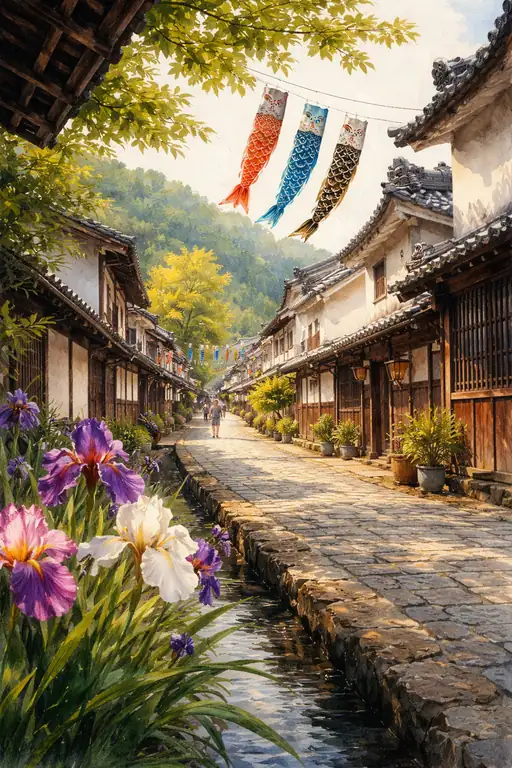 Dreams Soaring on the Vernal Wind
Similar Artworks
 Spring Symphony on the Flower Slope
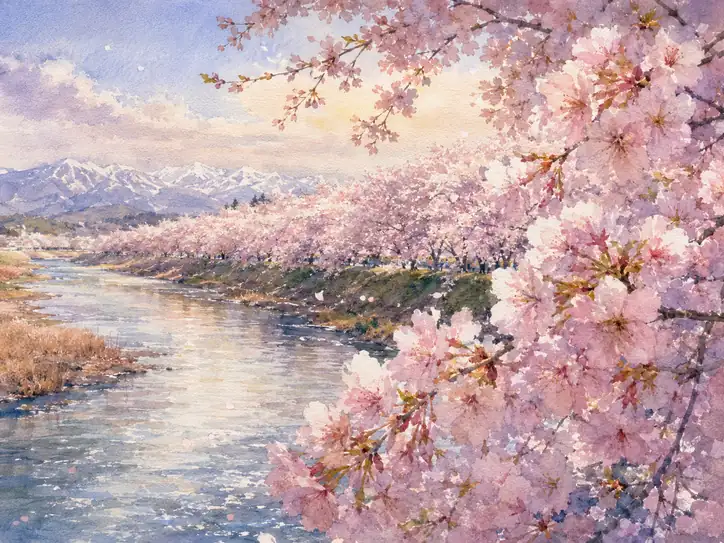 Spring Reflections by the Snowy Peaks
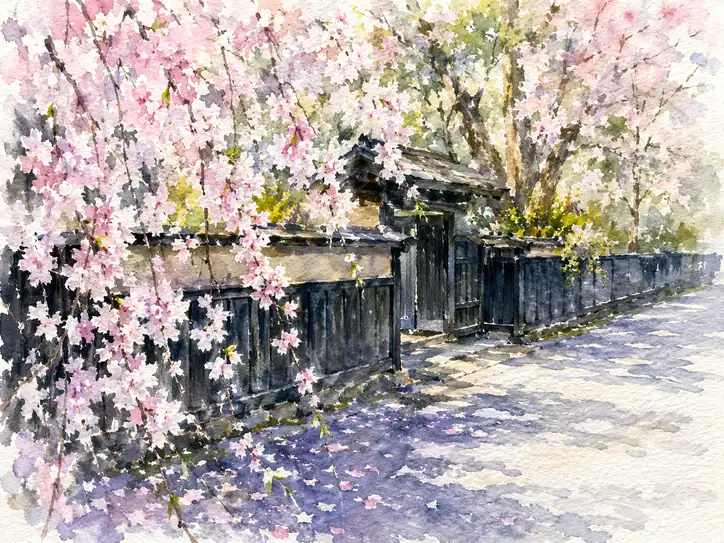 Whispers of the Weeping Spring
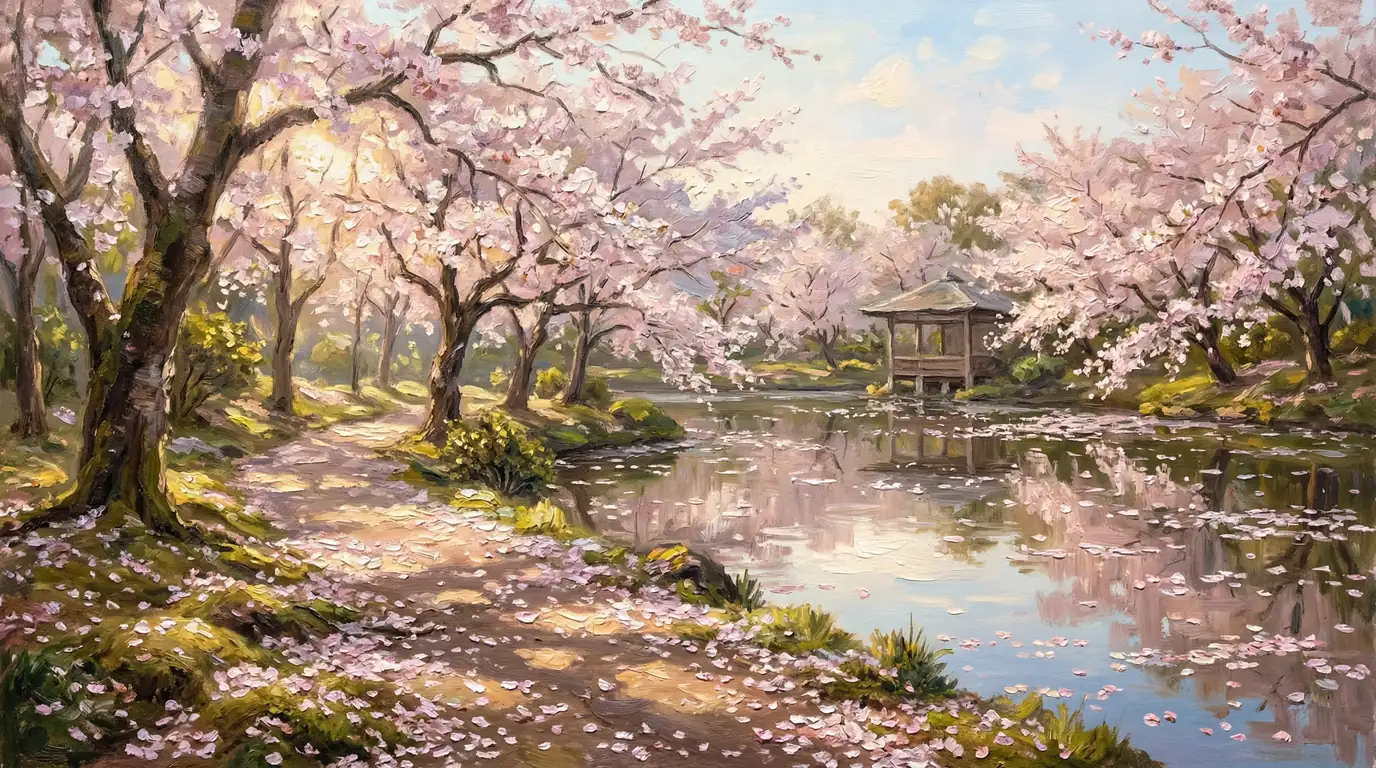 Petals on the Peaceful Pond
 Eternal Bloom in a Fleeting Spring
 Drifting Through a World of Pink Mist
 Whispers of Sakura in the Vernal Light
 Reflections of a Petal's Sigh
 Innocence in Pastel Light
 Spring's Breath at the Foot of Eternity