
The Silent Vow of the Stone Lantern
Critique
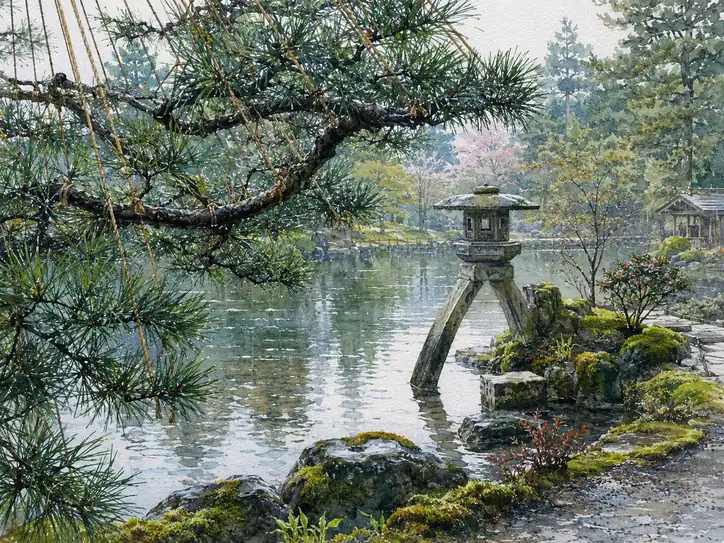
1. Introduction This oil painting presents a traditional Japanese garden scene, rendered with luminous, impressionistic brushwork that captures a sense of ephemeral light. The composition features a stone lantern standing on a rocky bank, an arched stone bridge crossing a pond, and a rustic thatched-roof structure nestled among the trees in the background. By skillfully blending soft sunlight with the shimmering reflections on the water, the artist creates a poetic atmosphere where nature and human artifice coexist in perfect harmony. 2. Description In the middle-left area, a sturdy stone lantern sits atop a craggy outcrop, accompanied by a meticulously pruned pine tree. An elegant stone arch bridge spans the pond in the mid-ground, leading the eye toward a wooden building with a traditional thatched roof partially obscured by foliage. The lower-right foreground is filled with layers of vibrant pink blossoms, which add a sense of seasonal beauty and visual richness to the frame. The surface of the pond is alive with reflections of the surrounding landscape and the bright sky, rendered through a series of delicate, rhythmic strokes. 3. Analysis The color palette is dominated by lush greens, the soft pink of the flowers, and the muted grays of the stone elements, all unified by a golden glow that permeates the entire scene. Rather than focusing on sharp details, the artist employs a technique of layering small dabs of color to define forms and the quality of light, resulting in a dynamic visual texture. Particularly notable is the treatment of the water's surface and the filtered sunlight, where the physical texture of the paint enhances the effect of light particles dissolving into the atmosphere. 4. Interpretation and Evaluation By applying Western impressionistic techniques to a quintessentially Japanese subject, this work achieves a unique and evocative mood. It transcends mere landscape documentation, instead capturing the transitory nature of light and the quiet progression of time within the garden. The multi-layered composition—moving from the vibrant flowers in the foreground to the symbolic lantern and bridge, and finally to the distant structure—effectively draws out the spiritual depth and spatial complexity of the garden design, demonstrating a high level of artistic maturity. 5. Conclusion Ultimately, the painting transforms a familiar garden view into a dreamlike moment of beauty through the mastery of light and color. As the viewer's focus shifts from the initial brilliance of the blossoms to the serene water and the hidden architecture beyond, they are invited to experience a profound sense of timelessness and harmony. This work, a successful union of technical skill and lyrical sensibility, leaves a lasting impression of tranquility and offers a fresh perspective on the enduring allure of Japanese aesthetics.
Same Subcategory
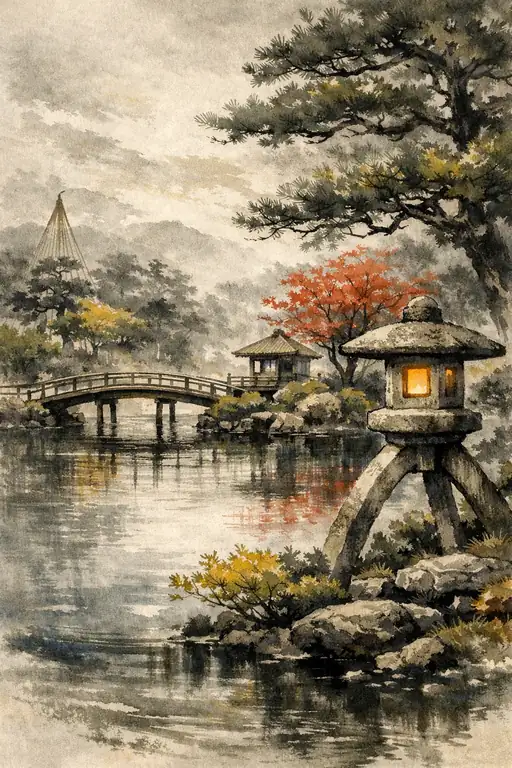 Quiet Light in the Autumn Sanctuary
Similar Artworks
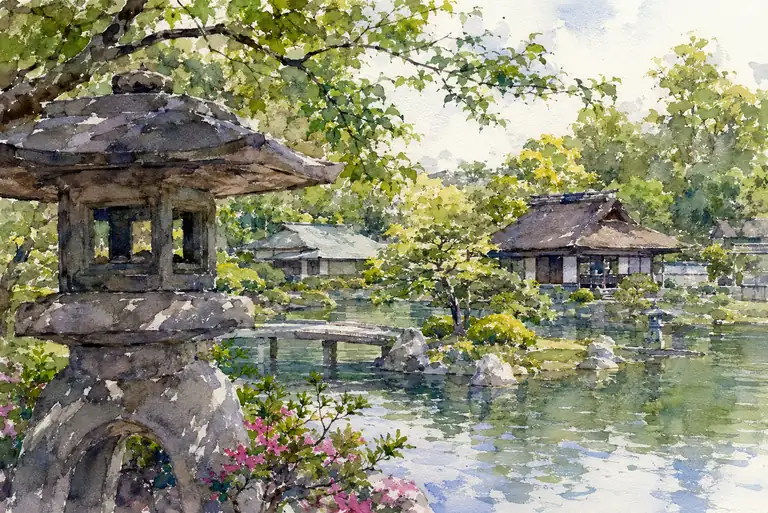 Where Time Rests in Stillness
 The Silent Guardian of the Blossom Path
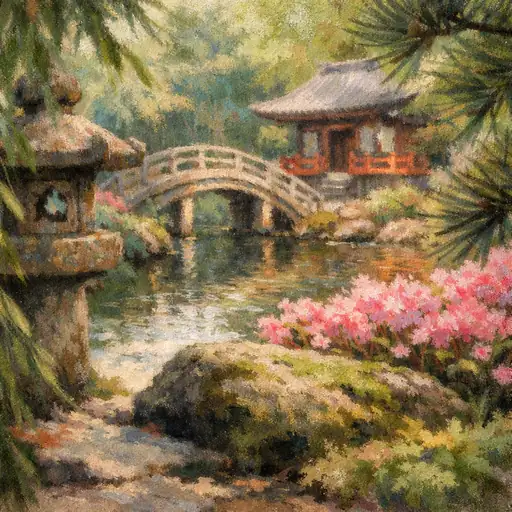 Quiet Bridge
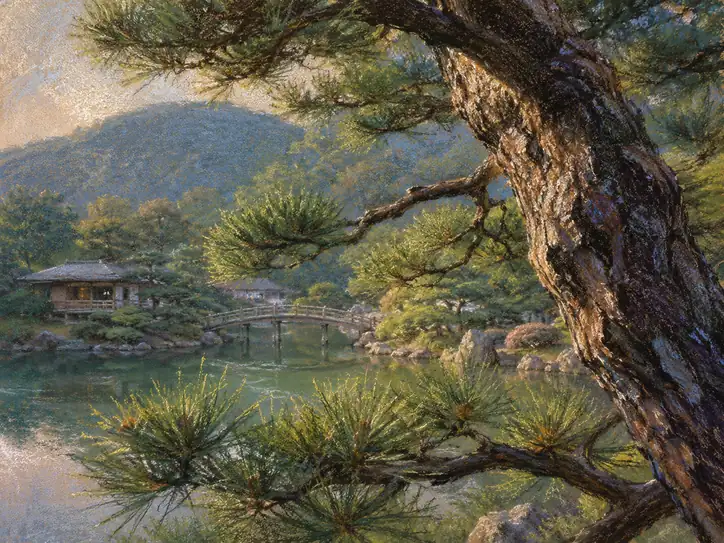 Golden Peace in the Pine-Framed Garden
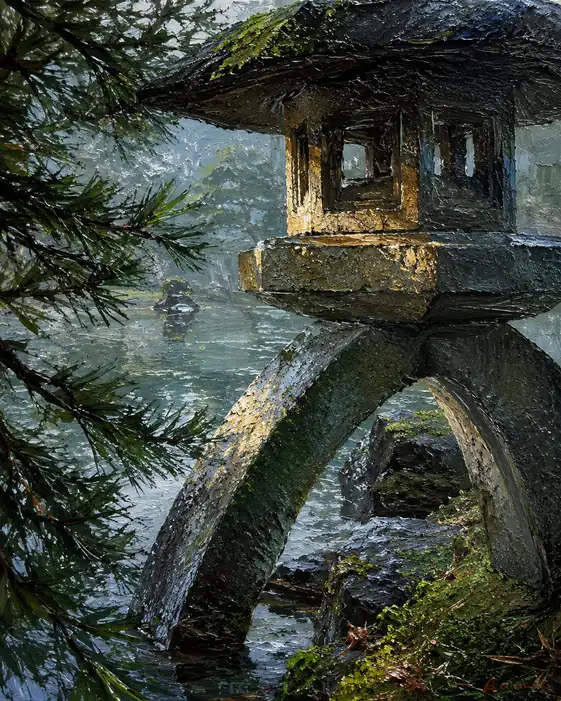 The Silent Watcher of the Garden
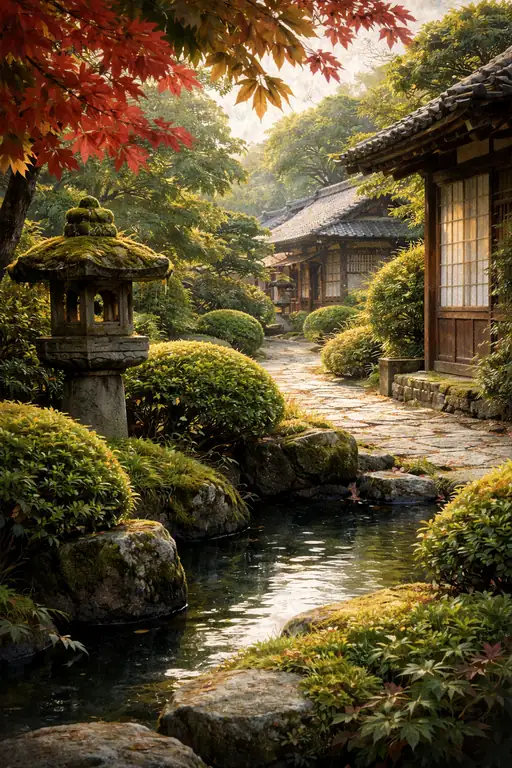 Autumn's Quietude: Reflections of a Timeless Garden
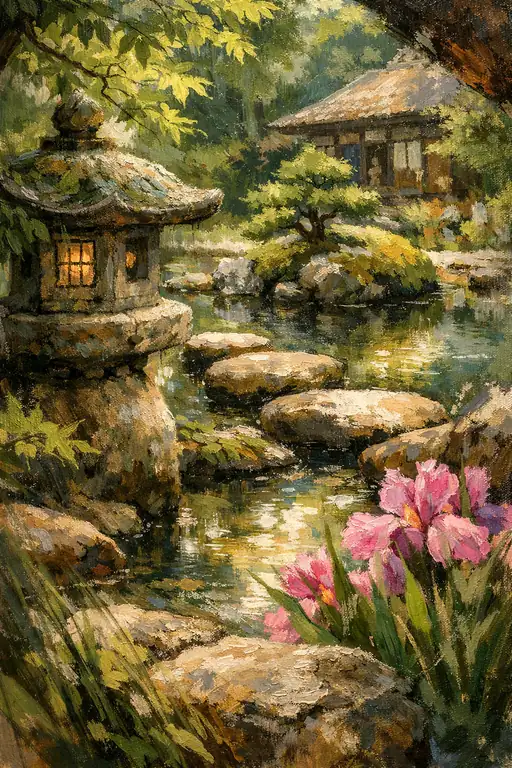 Whispers of Summer in the Garden
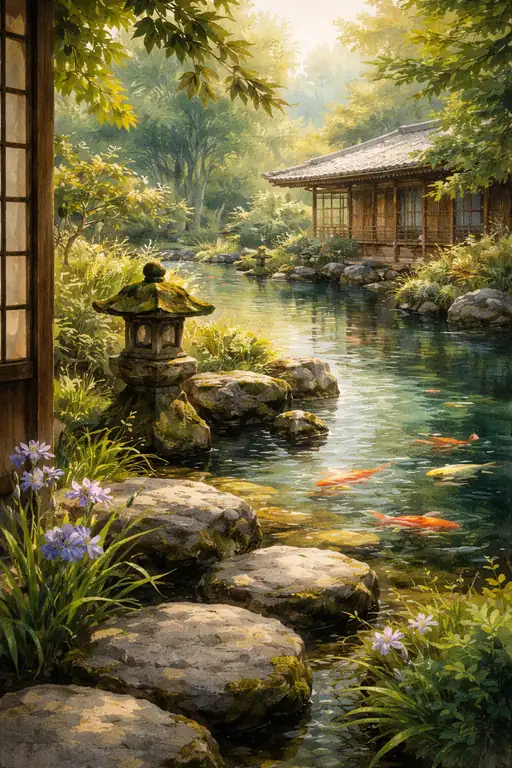 The Gentle Pulse of Stillness
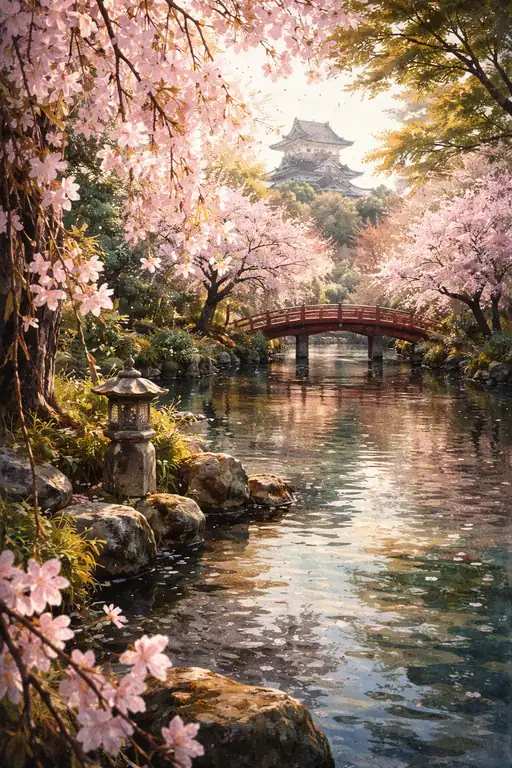 Echoes of Spring by the Crimson Bridge
 Harmony of the Seasons: The Whispering Pine and Cherry Snow