
Where the Sun Sleeps in the Reeds
Critique
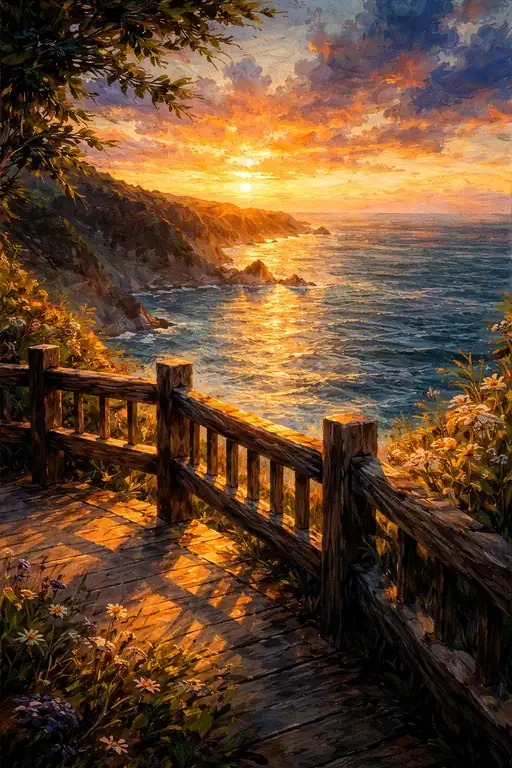
1. Introduction This vibrant landscape painting captures the fleeting beauty of a coastal sunset, viewed through a screen of swaying pampas grass. The scene depicts a marshy estuary where a narrow stream meanders toward the horizon, reflecting the brilliant, fiery glow of the setting sun. The work is characterized by its rich, textured application of paint and a warm, nostalgic color palette that evokes a deep sense of tranquility and seasonal transitions. It successfully transports the viewer to a specific moment where the natural world is bathed in an extraordinary, transformative light. 2. Description In the immediate foreground, large, feathery plumes of pampas grass dominate the left side of the composition, their light-colored stalks rendered with thick, visible brushstrokes. A small waterway winds through the grassy wetland in the middle ground, its surface shimmering with a golden-orange reflection. In the distance, the silhouette of a harbor town is visible, featuring a prominent tower that resembles a lighthouse against the deepening purple and orange sky. The sun itself is a bright, concentrated orb positioned just above the horizon, serving as the primary source of illumination for the entire landscape. 3. Analysis The artist utilizes a sophisticated impasto technique, where the heavy texture of the paint adds a physical dimension to the organic forms of the grass and the rippling water. The composition is cleverly framed by the pampas grass on the left and darker foliage on the right, which draws the viewer's eye toward the luminous center of the painting. The color harmony is exceptional, contrasting the intense oranges and yellows of the sun with the cool lavender and blue tones of the upper sky and distant water. This contrast emphasizes the warmth of the sunset while grounding the scene in the deepening shadows of twilight. 4. Interpretation and Evaluation This artwork can be interpreted as a meditation on the passage of time and the quiet majesty of nature's daily cycles. The presence of the pampas grass, often associated with autumn in many cultures, reinforces a theme of seasonal change and the beauty found in maturity and decline. The technical skill required to capture the specific quality of sunset light—how it dissolves edges and creates long, dramatic shadows—is displayed with great confidence. The resulting mood is one of contemplative peace, inviting a slow, appreciative gaze that rewards the viewer with a sense of emotional resonance. 5. Conclusion Through its bold use of texture and its evocative portrayal of light, the work offers a powerful and moving vision of the natural landscape. The viewer is encouraged to look beyond the literal representation and feel the warmth and atmosphere of the coastal evening. It stands as a masterful example of atmospheric landscape painting, where the artist's subjective experience of the scene is successfully communicated through a vibrant and expressive medium. This piece effectively demonstrates how a traditional subject can be revitalized through a dynamic and highly personal technical approach.
Same Subcategory
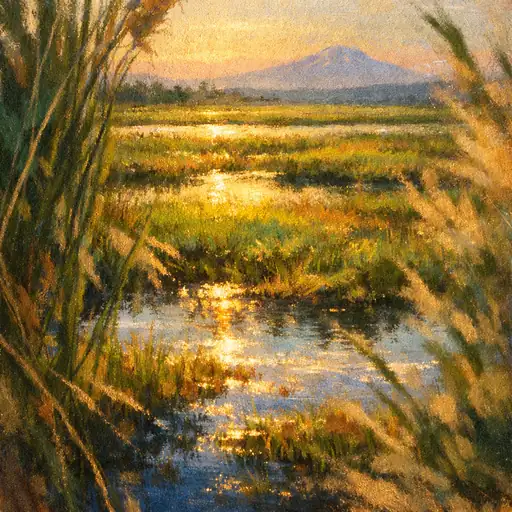 Golden Marshland Sunrise
Similar Artworks
 Celestial Intersection
 Symphony of the Evening Star
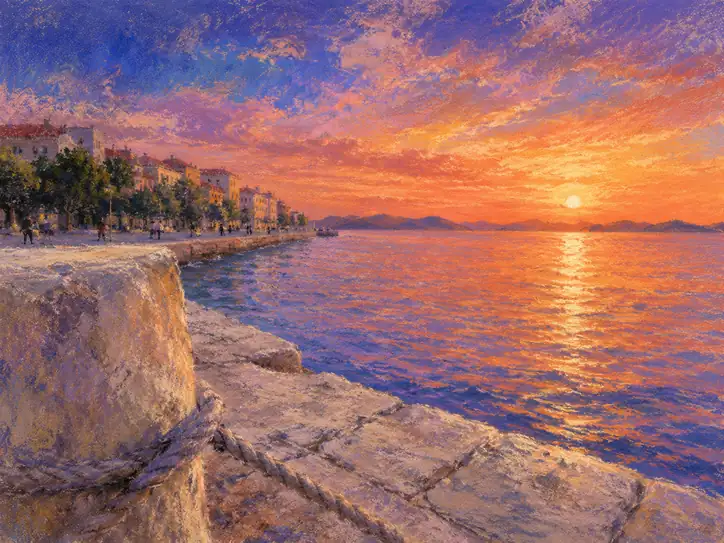 Radiance at the Edge of Day
 My Heart Set Afire by the Evening Light
 Twilight Reverie on the Still Water
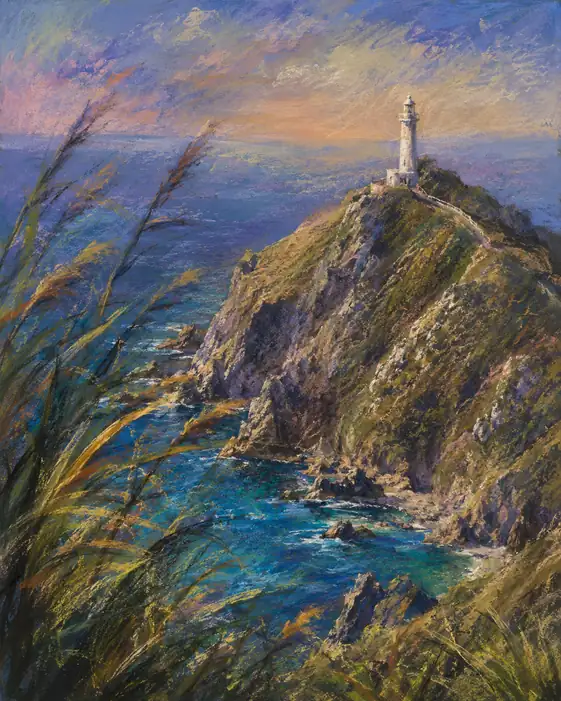 The Beacon over the Wind-Swept Ridge
 Eternal Refrains of the Golden Shore
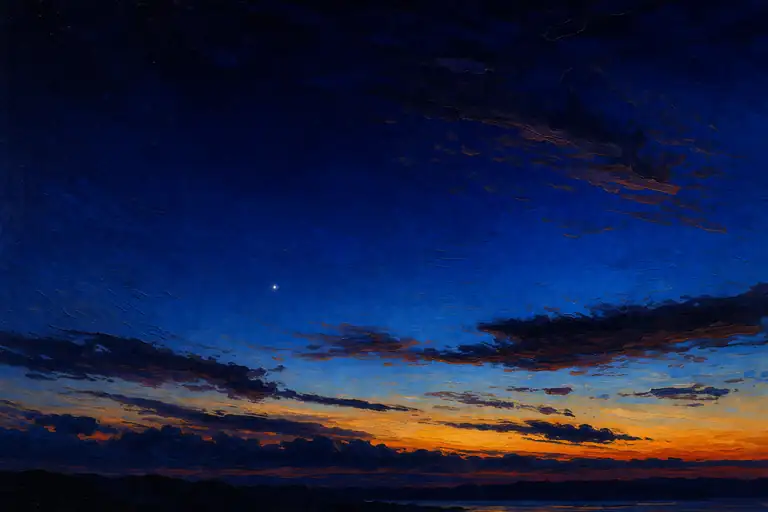 Whispers of the Infinite Sky
 The Golden Echo of Day's End
 Golden Hour Over the Tranquil Marsh