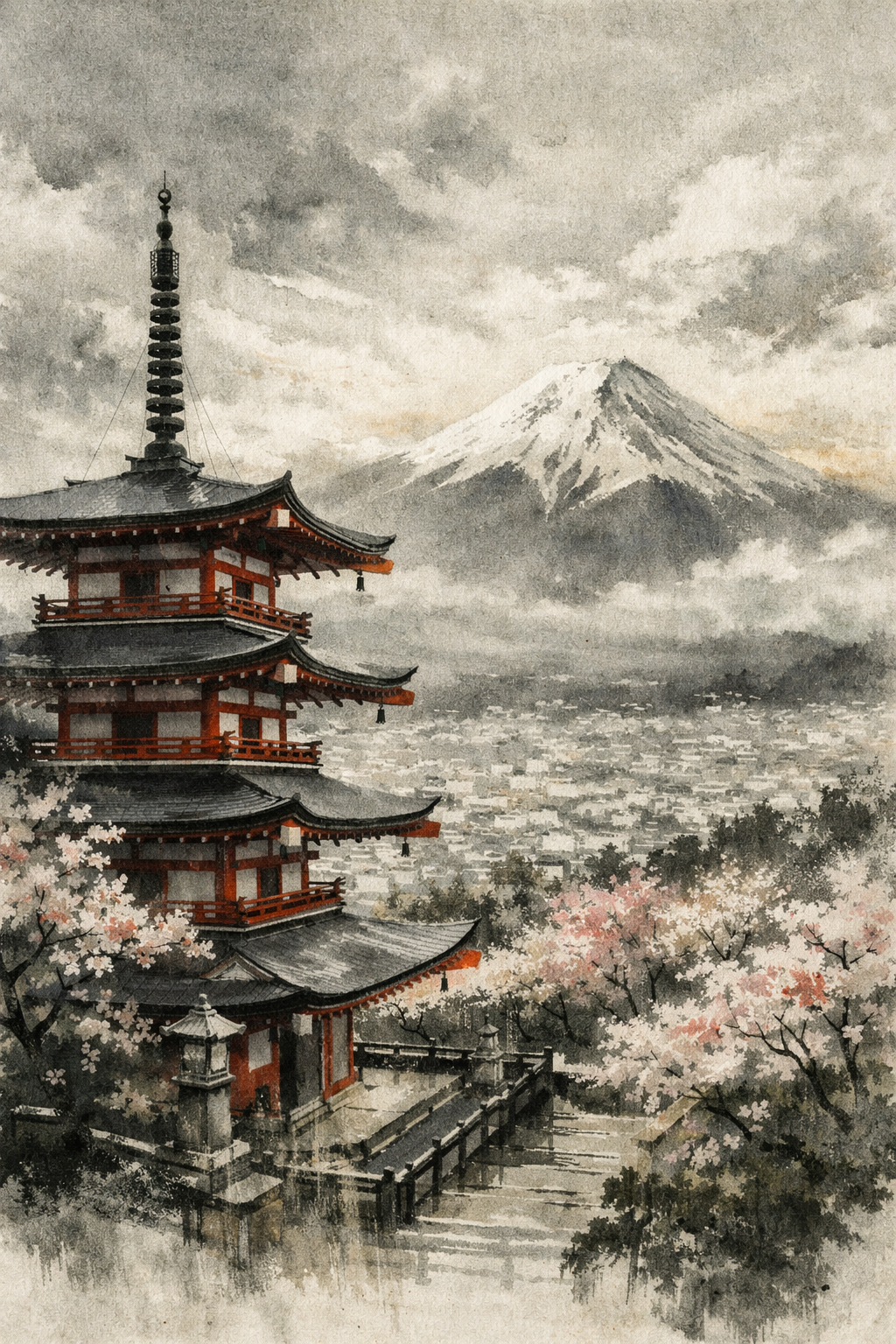
Where Spring Touches Eternity
Critique
1. Introduction This painting is an artwork whose basic information, such as its title, creation date, and dimensions, remains unconfirmed. Nevertheless, it presents an iconic scenery in perfect harmony, offering a deeply moving visual experience for any observer. This critique will examine its artistic value from several academic perspectives. 2. Description In the left foreground, a striking five-storied pagoda painted in vermilion and black rises beside stone steps and lanterns. Delicate cherry blossoms in full bloom surround the structure, extending across the lower half of the frame. In the distance, Mount Fuji, capped with snow, towers majestically above a misty city. 3. Analysis The visual characteristics of this work lie in its combination of precise ink lines and bold spatial composition. The vertical format beautifully balances the heavy monumentality of the pagoda with the distant, triangular silhouette of the mountain. Soft gray tones dominate the scene, making the vibrant vermilion and pale pink stand out effectively. 4. Interpretation and Evaluation This painting can be interpreted as a symbolic meditation on the permanence of nature contrasted with transient human creations. While Mount Fuji symbolizes eternal stability, the seasonal cherry blossoms and the historic pagoda represent the fleeting passage of time. The artist showcases outstanding brushwork, capturing complex architectural details and natural textures with high proficiency. 5. Conclusion Although the initial impression was of a familiar cultural motif, closer inspection reveals a profound spiritual quietude embedded within the brushstrokes. The integration of traditional ink aesthetics and modern balance elevates the work's emotional impact. Ultimately, this masterpiece stands as a timeless representation of classical beauty, preserving its artistic value for generations.
Same Subcategory
 Serene Watch of the Snow-Crowned Peak
Similar Artworks
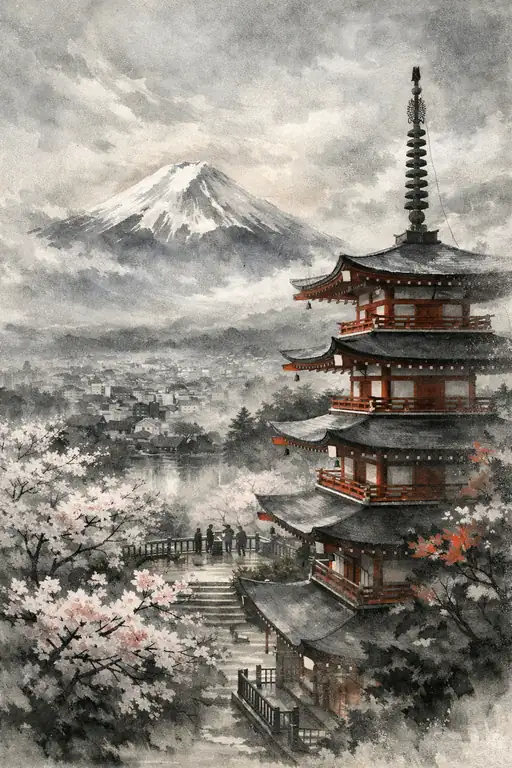 A Vermilion Spring Beneath the Snowy Peak
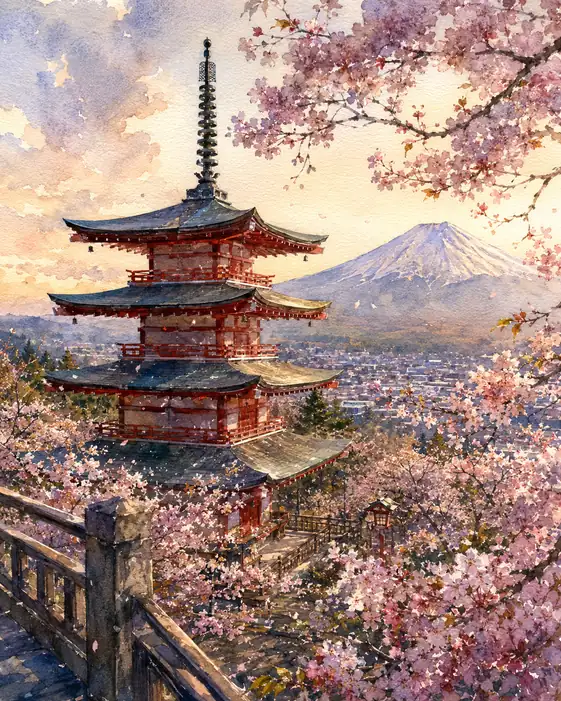 Echoes of the Gilded Spring
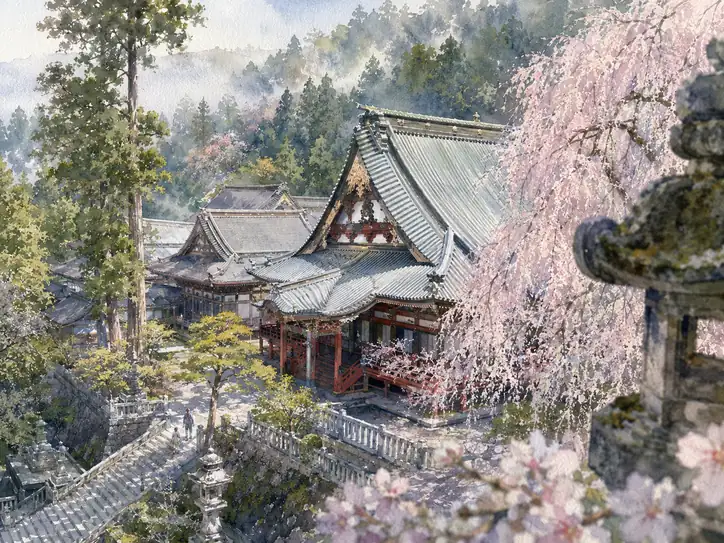 Whispers of the Weeping Sakura
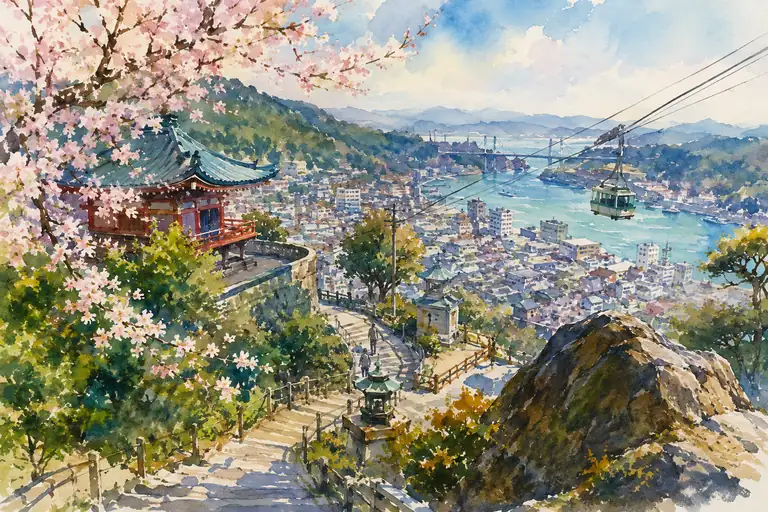 Spring's Ascent: Cherry Blossoms Over the Harbor City
 Spring Light and Shadows: Fuji's Awakening
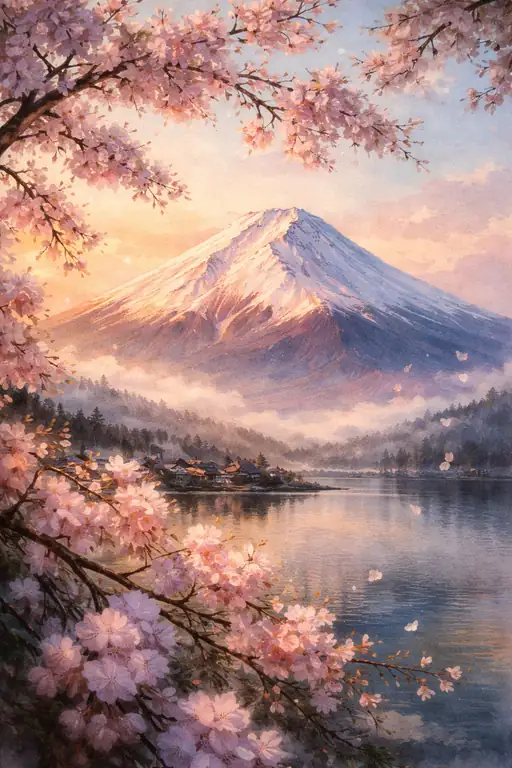 Sakura's Embrace of the Golden Fuji
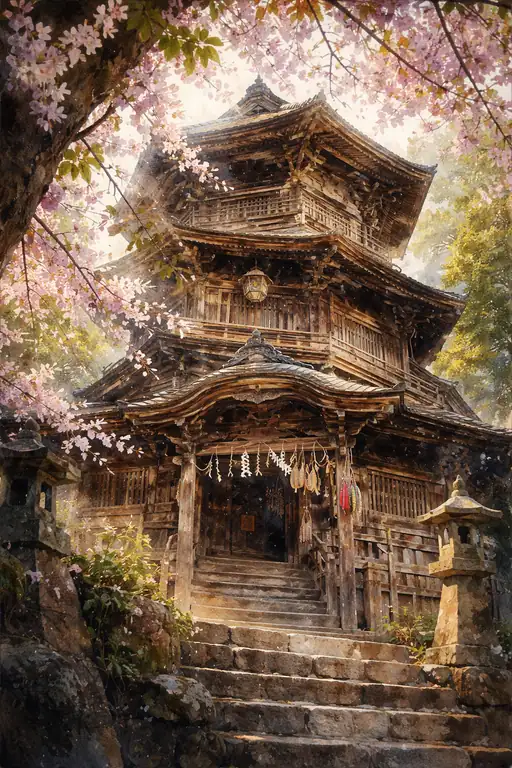 Spring's Quiet Benediction
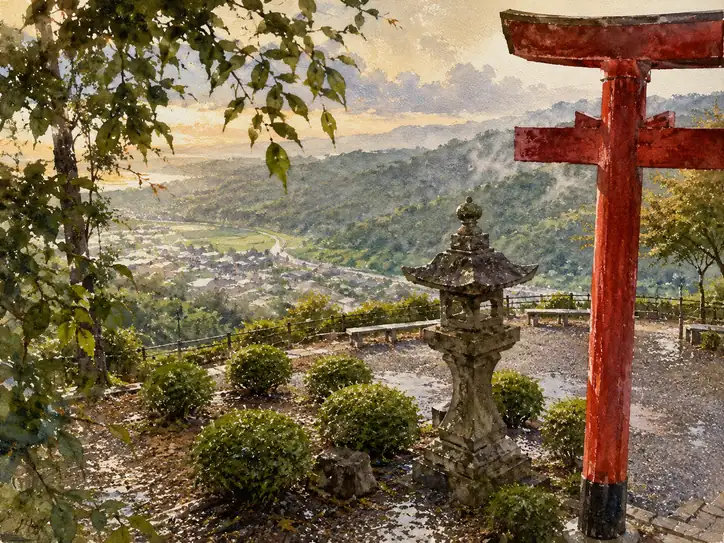 Eternal Peace in the Golden Glow
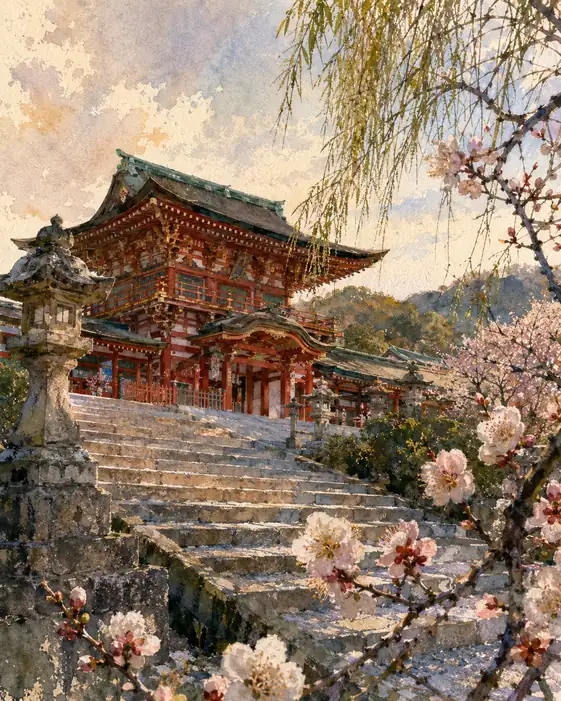 Eternal Glow of the Sacred Spring
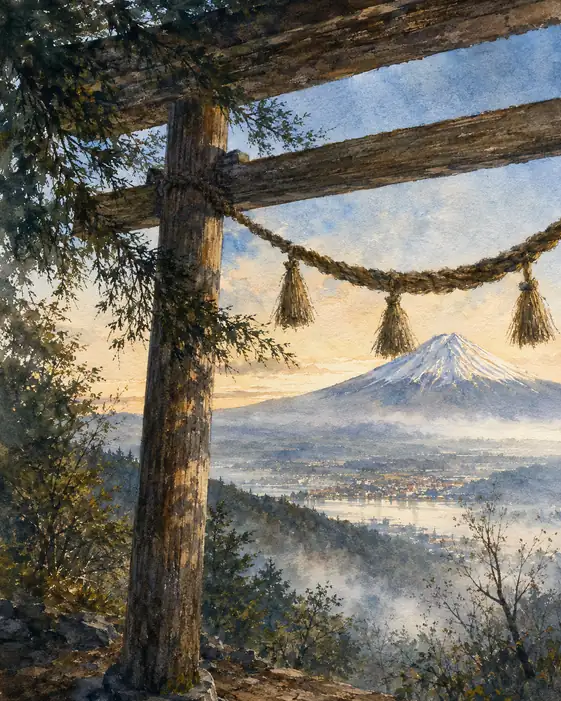 Threshold to the Divine Peak