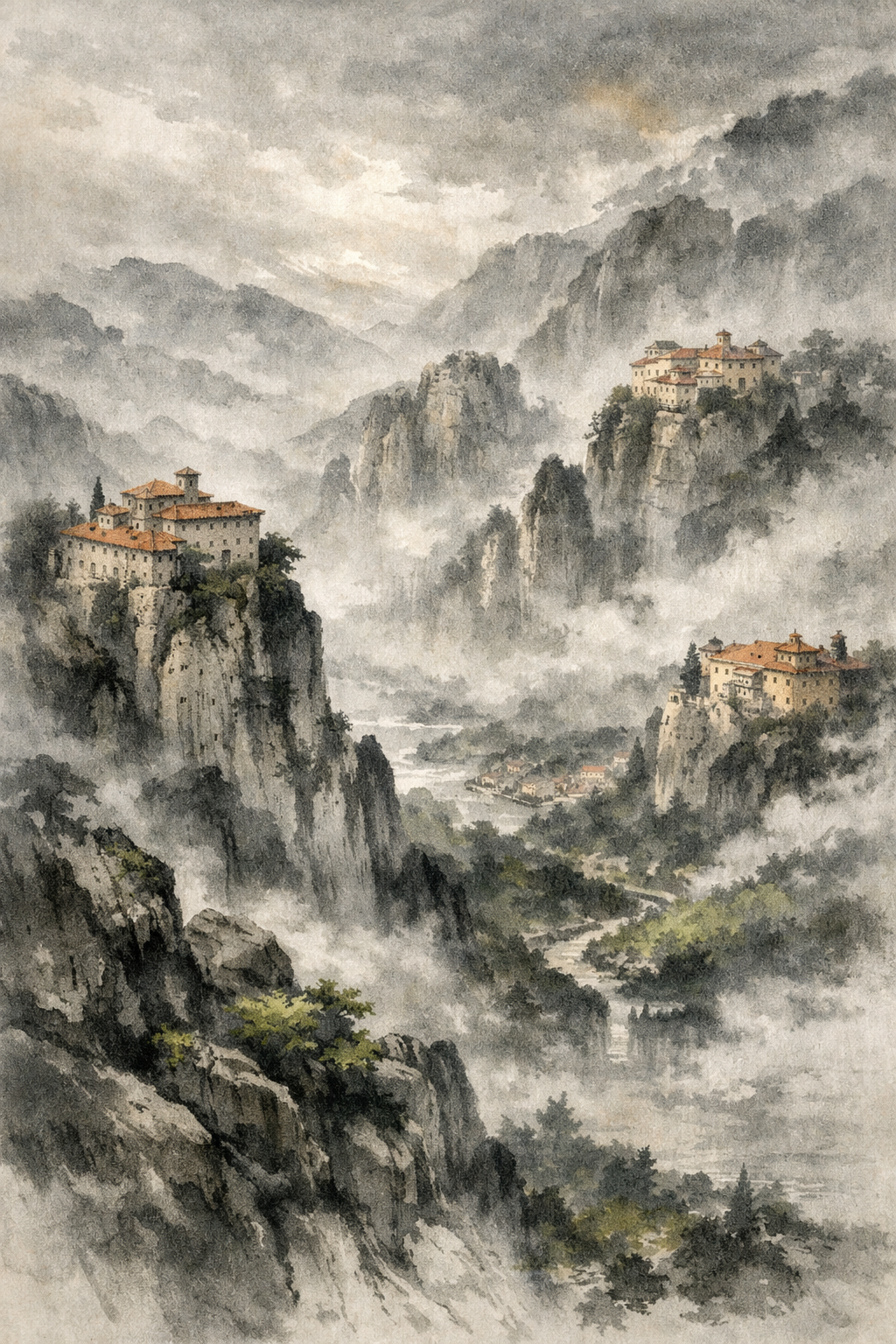
Where Solitude Meets the Sky
Critique
1. Introduction This landscape painting presents a breathtaking view of majestic mountains shrouded in thick, swirling fog. Several historic monasteries or castles are perched precariously on top of steep, rocky cliffs. The scene captures a mystical sense of spiritual isolation and dramatic natural beauty. 2. Description In the foreground, rugged dark rocks lead the viewer's eyes into a deep valley. Three main architectural complexes, featuring white walls and terracotta-tiled roofs, stand atop separate high cliffs. A gentle river winds through the valley below, where a tiny, remote village is nestled. Heavy clouds fill the sky, filtering a soft, ethereal light over the entire landscape. 3. Analysis The artist blends traditional European watercolor techniques with a style reminiscent of East Asian ink wash paintings. A mostly desaturated color palette of greys and browns is punctuated by the warm orange roofs and patches of green vegetation. The misty atmosphere blurs distance, creating a vast sense of scale and infinite depth. 4. Interpretation and Evaluation By positioning human architecture on these inaccessible heights, the painting symbolizes the search for the divine and the sublime. The masterful use of empty space and soft transitions beautifully expresses the impermanence of human structures compared to nature. This outstanding composition demonstrates brilliant design and exceptional control of atmospheric effects. 5. Conclusion At first glance, the painting seems to represent a fantastical, imaginary world of legends. However, the delicate rendering of the buildings grounds the scene in a historical reality. Ultimately, this work is a powerful and serene contemplation of solitude, nature, and human aspiration.
Same Subcategory
 Sacred Serenity at the Edge of the Sky
Similar Artworks
 Faith Clinging to the Stone
 Majestic Solitude of Sumela
 Sanctuary Clinging to the Clouds
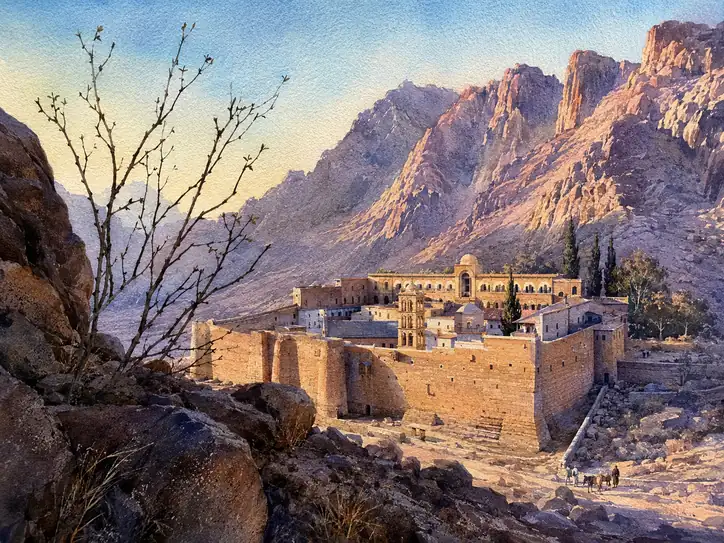 Sanctuary in the Sinai Valley
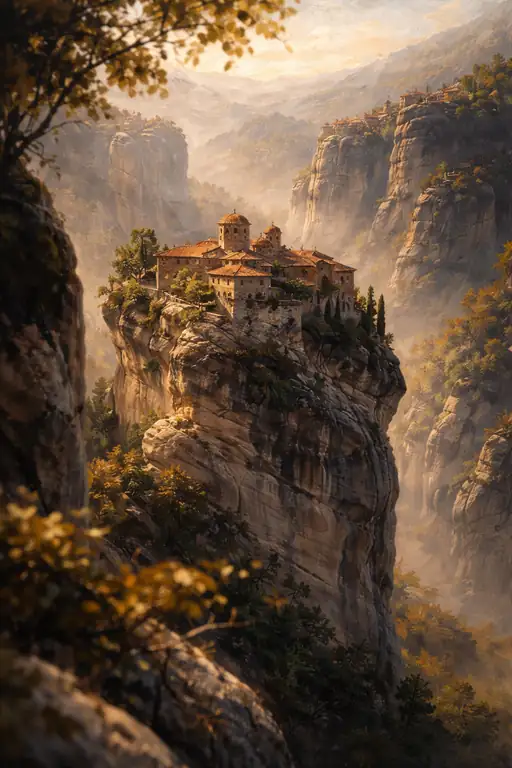 Sanctuary Above the Clouds
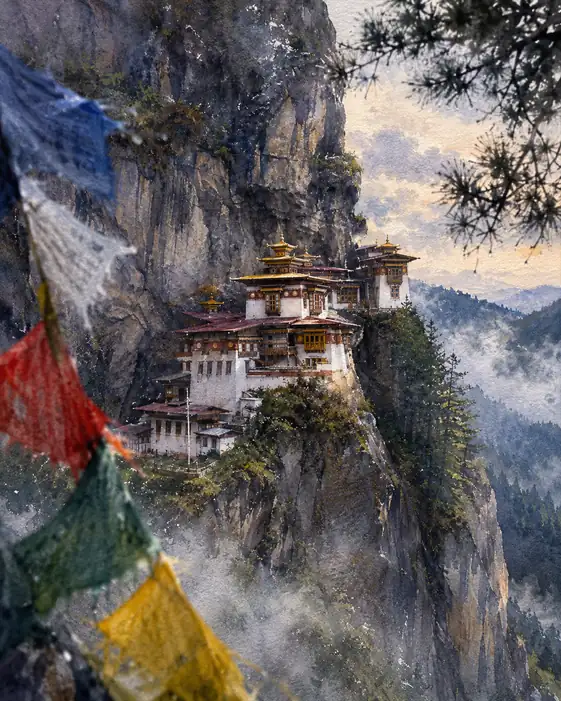 Sanctuary in the Sky
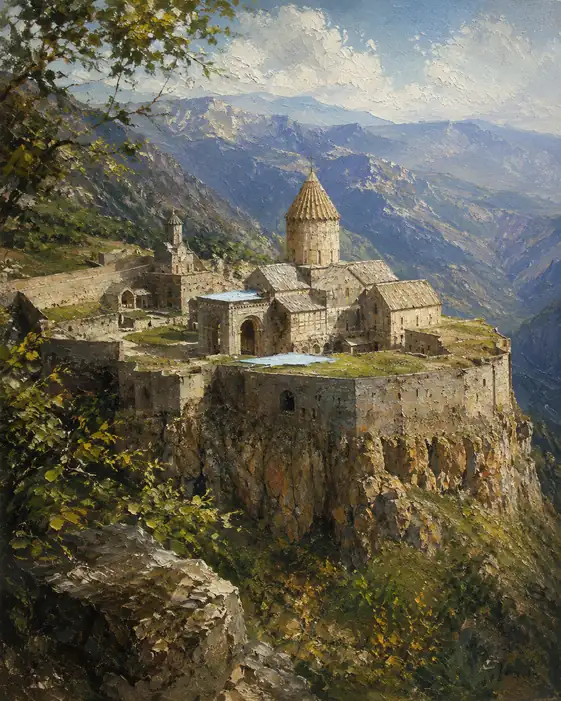 Fortress of Faith in the Azure Sky
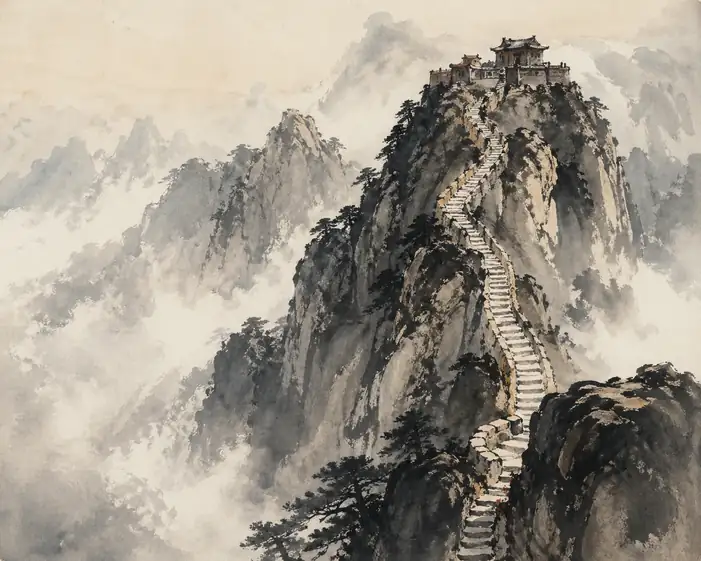 Stairway to the Sacred Sky
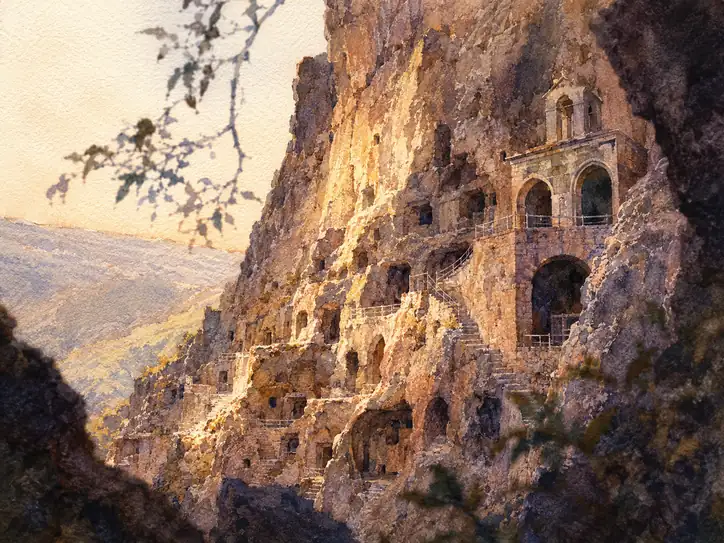 Gilded Passages of the Cliffside Temple
 Where Prayers Dance with the Wind