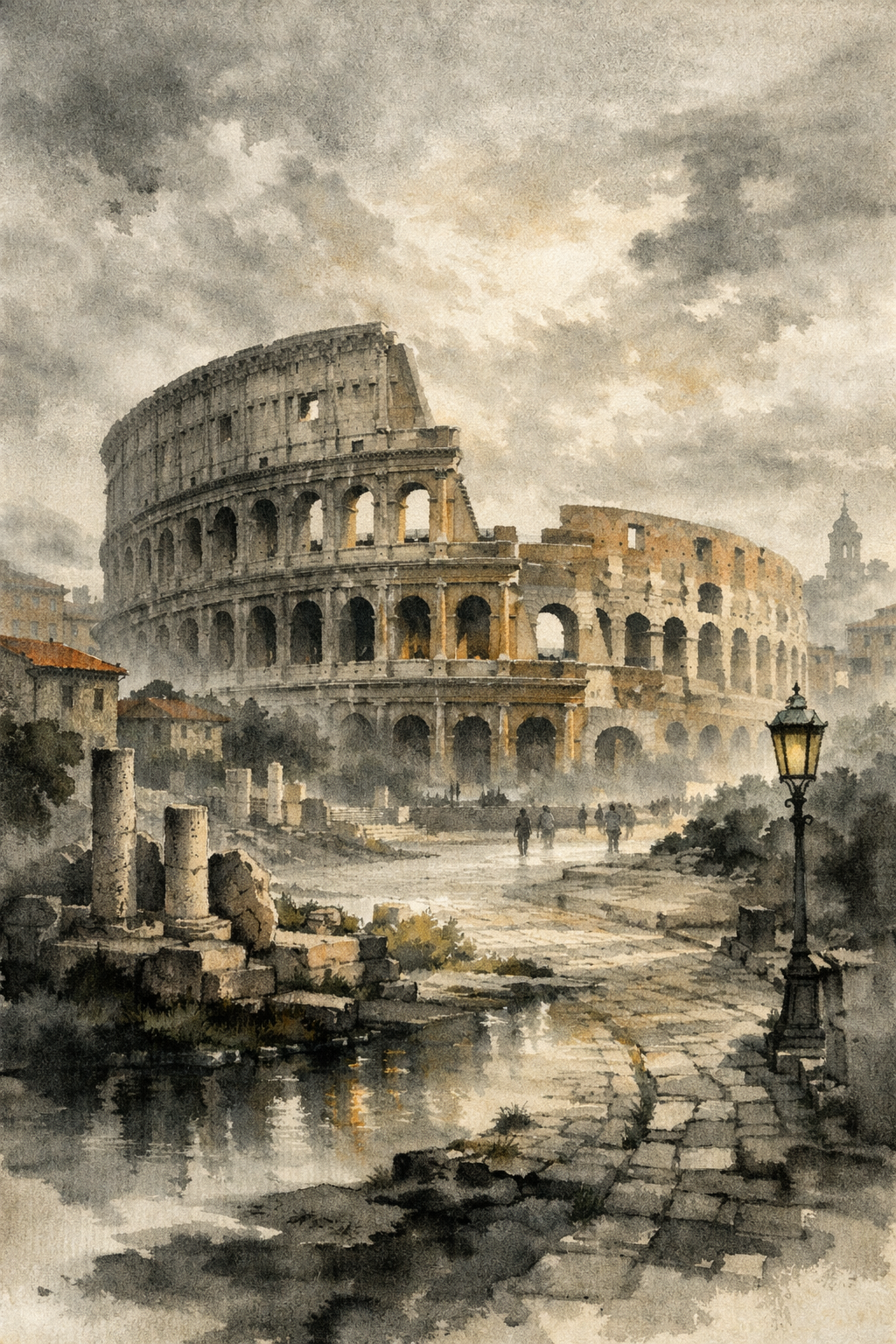
The Lantern That Outlived Empires
Critique
1. Introduction This planar painting gently depicts a majestic ancient amphitheater and the tranquil ruins surrounding it. The exact creation date, specific title, and current location remain unknown. Unified with calm sepia and ochre colors, this piece evokes a sense of deep nostalgia and romanticism in the viewer. 2. Description In the center-left, a massive stone amphitheater stands partially ruined, showing overwhelming presence. In the foreground, an old cobbled path winds forward, with reflections beautifully appearing in water puddles. Ancient column ruins stand on the left, while a classic streetlamp glows warmly on the right as small silhouettes of pedestrians walk. 3. Analysis The work is constructed with highly detailed line drawings of architectural structures and soft watercolor gradients of atmosphere. The numerous arches and crumbling textures are rendered with sharp lines, while the low mist, reflections on the wet stones, and dramatic clouds are expressed with delicate washes to render atmospheric depth. 4. Interpretation and Evaluation This painting warmly captures the silence of the massive ruins and the passage of time. The delicate reflections on the wet cobbled street and the warm light of the streetlamp are outstanding, creating a beautiful color harmony with the cold stones. Structurally, the curves of the ruins demonstrate high originality and clever perspective. 5. Conclusion While the first impression is a powerful landscape of ancient ruins, careful observation reveals the quiet poetry of natural change. The static quality of the decaying stones and the dynamics of light exist in a harmonious balance. Ultimately, this masterpiece succeeds in elegantly preserving the aesthetics of passing time, rather than merely recording scenery.
Same Subcategory
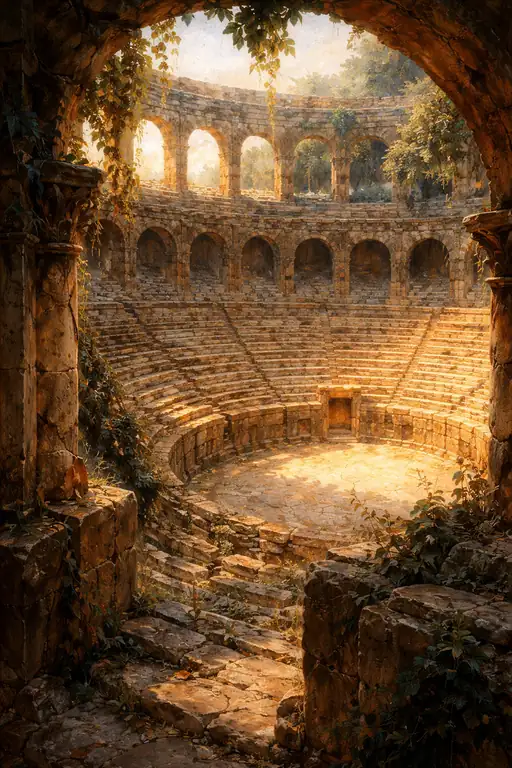 Whispers of the Ancient Arena
Similar Artworks
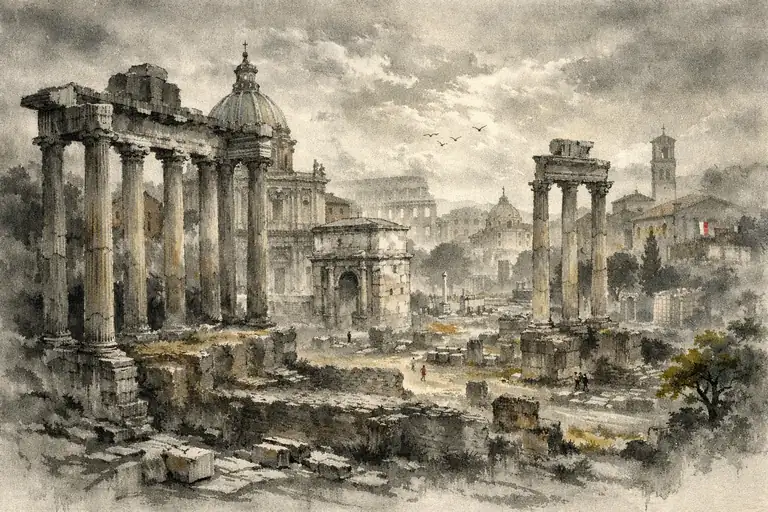 The Silence of Shattered Grandeur
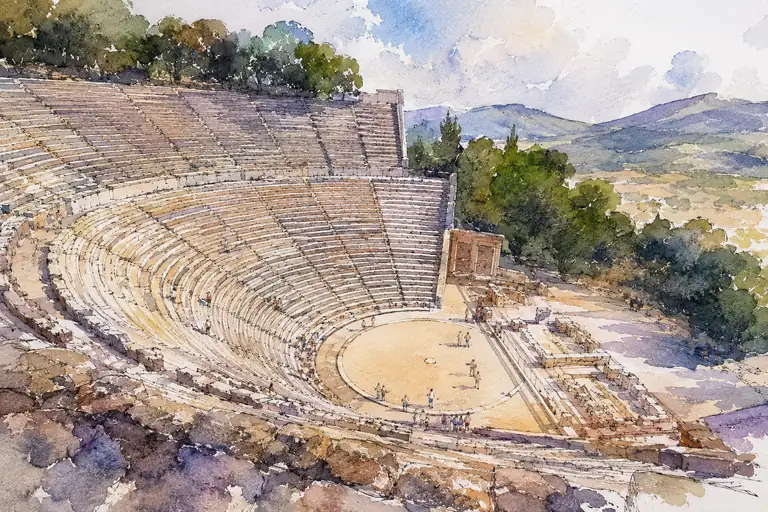 Whispers from the Ancient Tiers
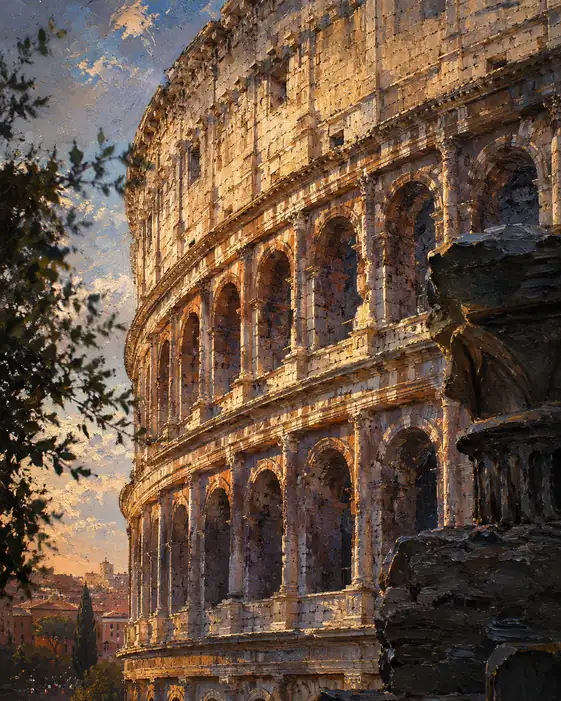 The Stone That Remembers the Sun
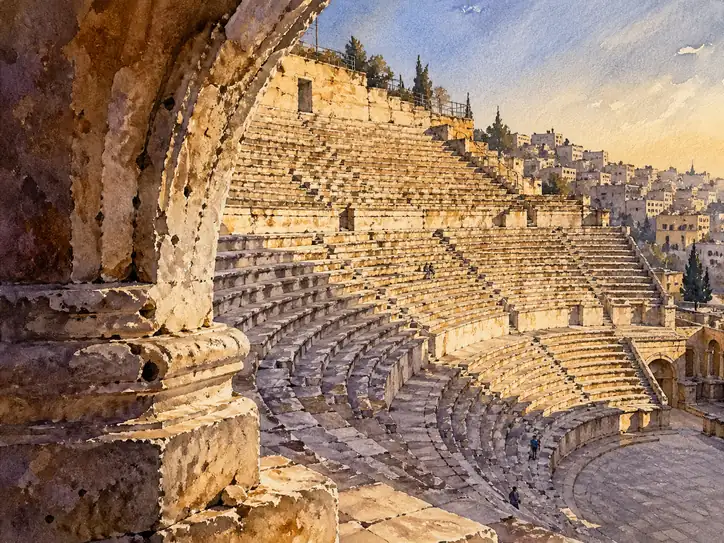 Echoes of the Arena: Where Silence Meets Past Glory
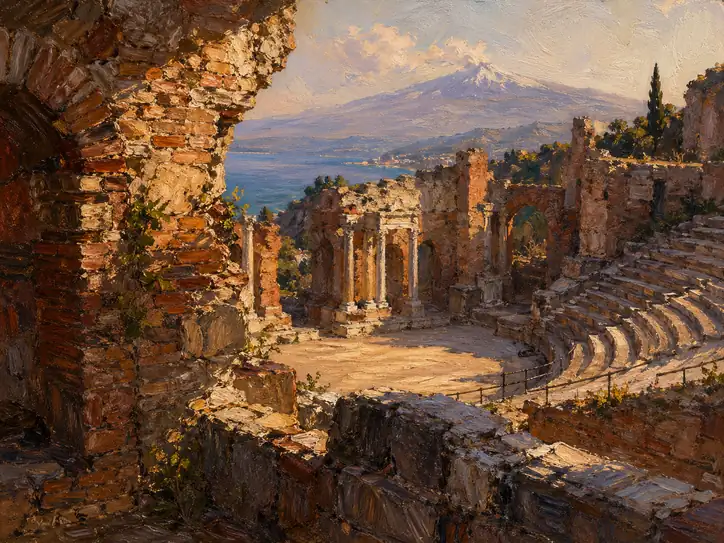 Twilight Over the Eternal Stage
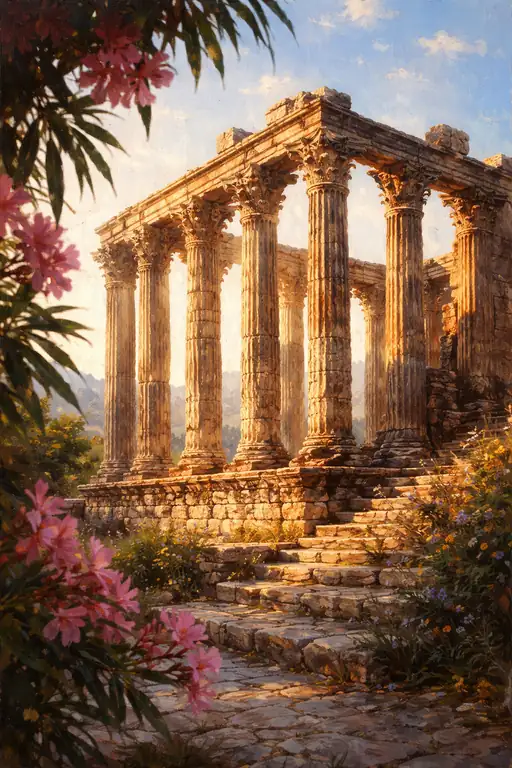 Pillars of Antiquity Awash in Gold
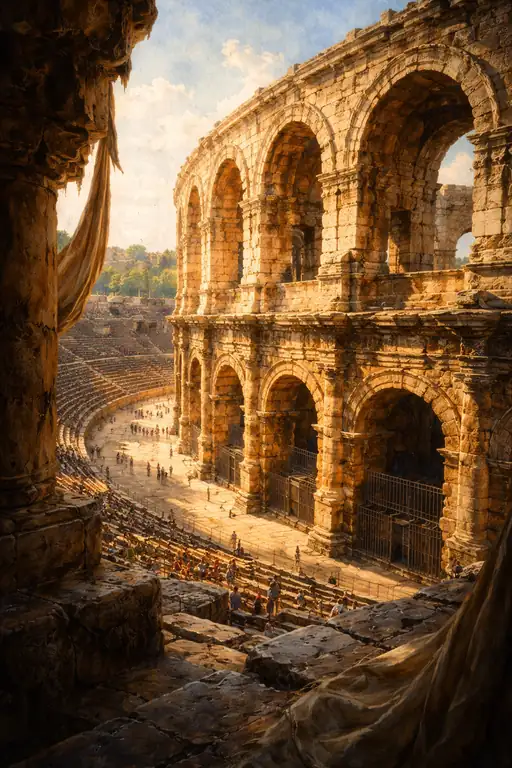 A Glimpse Through Time's Window
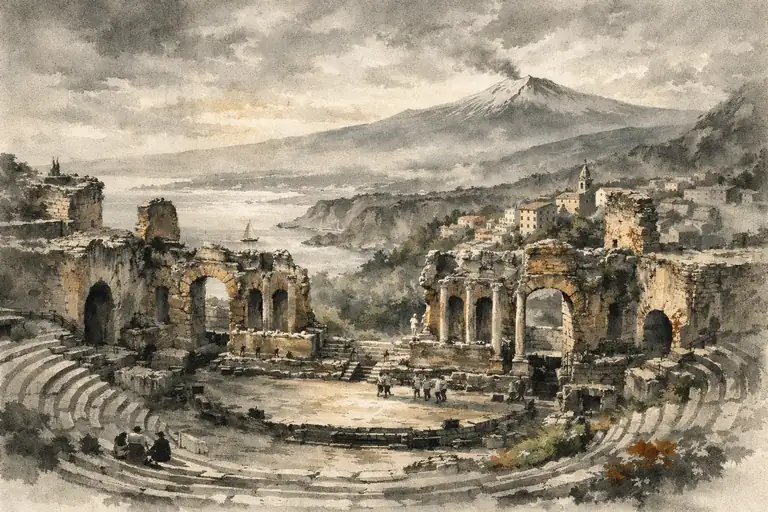 Where the Echo of the Stage Meets the Eternal Peak
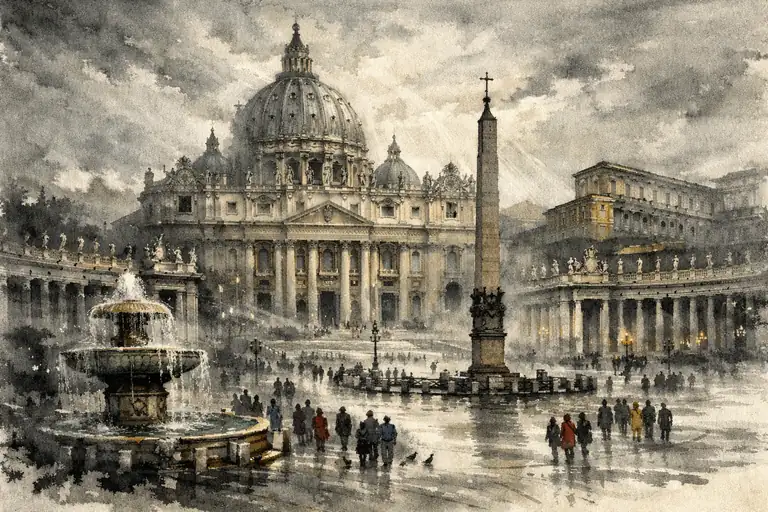 Echoes of a Shimmering Prayer
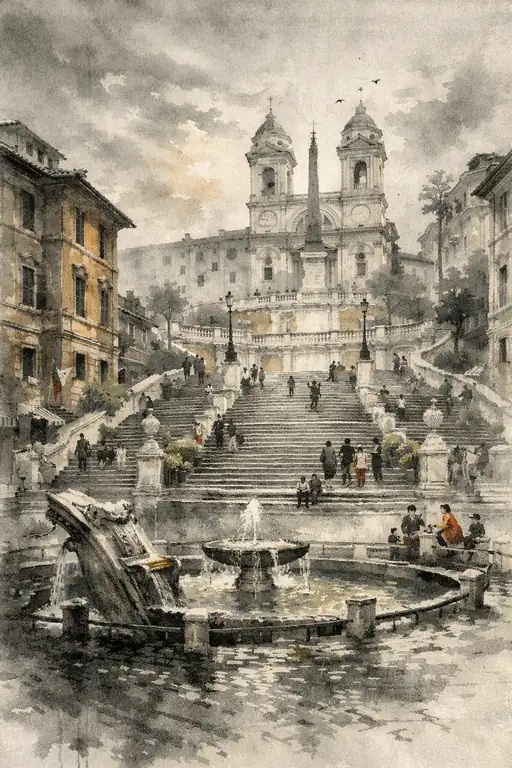 Ascending the Light of Memory