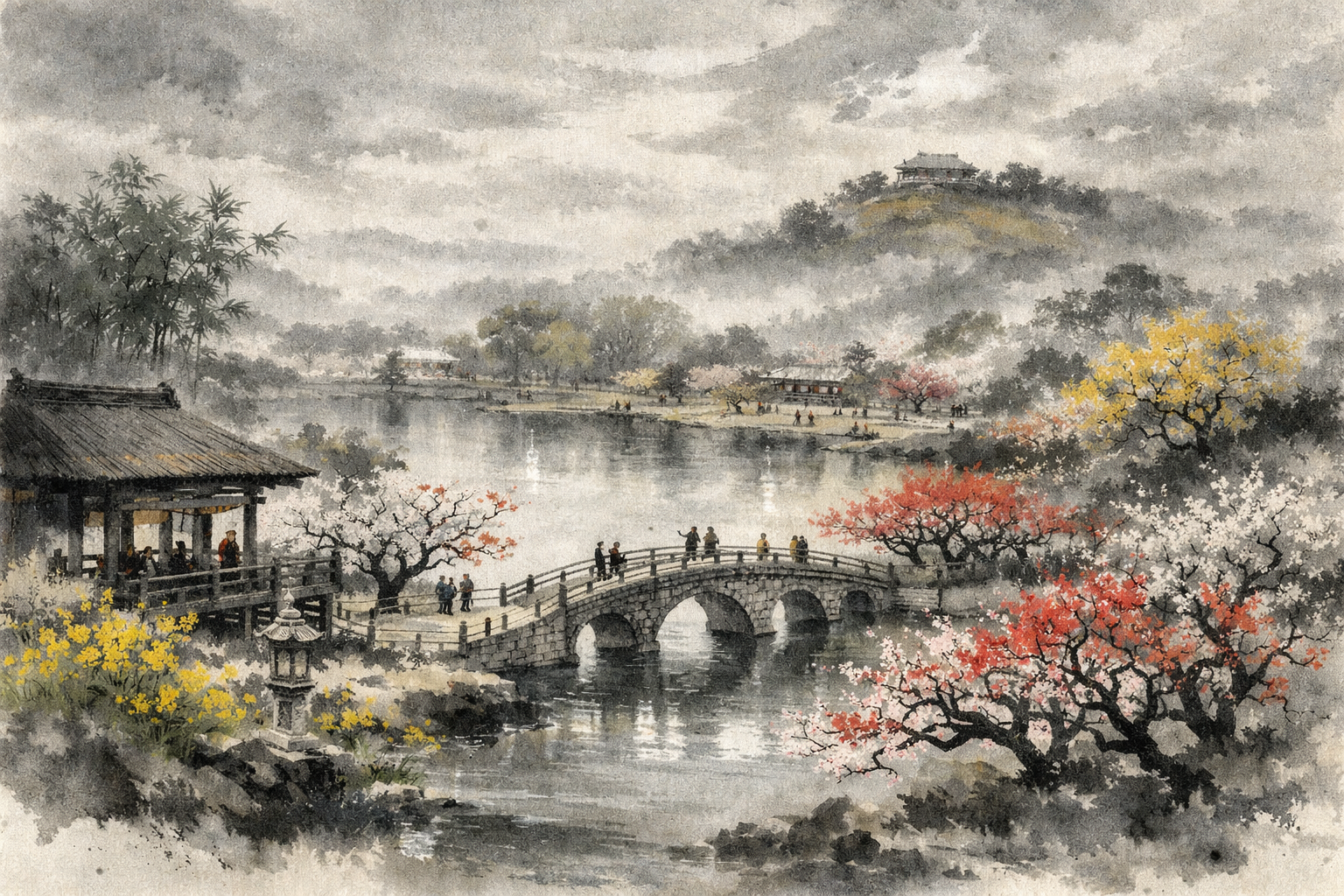
When Blossoms Wake the Silent Mist
Critique
1. Introduction This painting presents a serene landscape rendered in a style reminiscent of traditional East Asian ink wash art. The scene combines delicate monochrome washes with selective bursts of vibrant color to create an evocative environment. It invites viewers into a timeless garden space where nature and human presence harmoniously coexist. 2. Description In the foreground, a wooden pavilion stands on the left, sheltering several figures. A stone arch bridge spans a calm river, populated by walking figures in historical attire. On the right, plum blossoms in white, pink, yellow, and red bloom profusely. In the misty distance, a hill rises, crowned by a traditional temple pavilion. 3. Analysis The composition utilizes a strong diagonal flow from the pavilion to the distant hilltop structure. The detailed foreground gradually softens into ethereal misty layers in the background. The monochromatic ink washes establish a somber atmospheric depth. Meanwhile, the localized applications of bright colors create focal points that guide the observer's eye. 4. Interpretation and Evaluation This work balances the stillness of traditional ink landscapes with the transient vitality of spring blossoms. The meticulous execution of the architectural elements demonstrates exceptional technical skill. The integration of bright color into a monochrome framework is highly innovative, symbolizing the renewal of life. It elevates the landscape to a poetic meditation on existence. 5. Conclusion Initially perceived as a quiet classical study, the painting gradually reveals a dynamic play of color. It stands as a masterful synthesis of traditional techniques and modern sensibilities. The tranquil atmosphere leaves a lasting impression of peace and artistic refinement.
Same Subcategory
Similar Artworks
 Under the Canopy of Pink Clouds
 Autumn Panorama of the Thatched Village
 Eternal Glow of the Sacred Spring
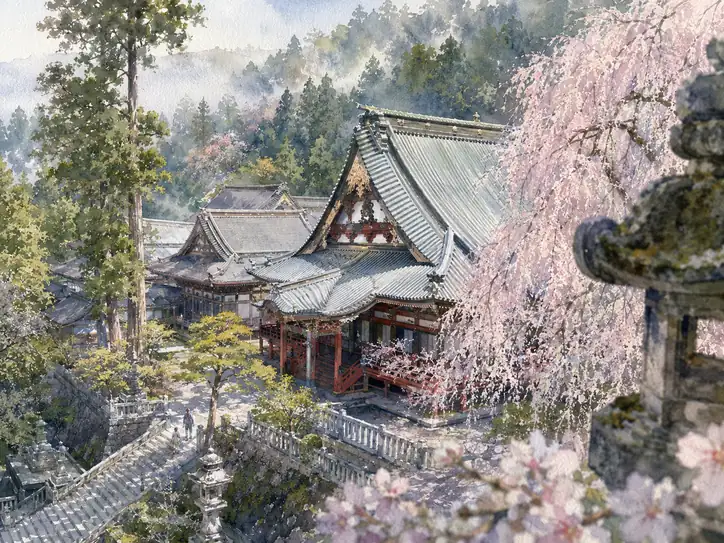 Whispers of the Weeping Sakura
 Springtime Stroll by the Pagoda
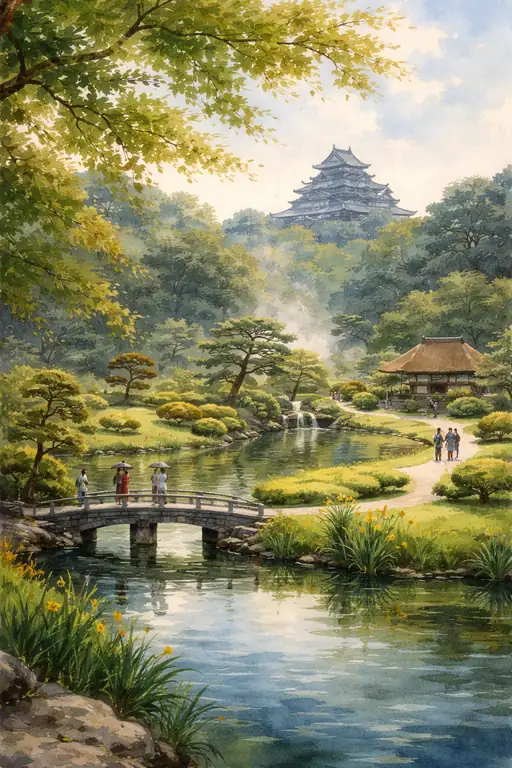 Serenity Under the Castle's Watch
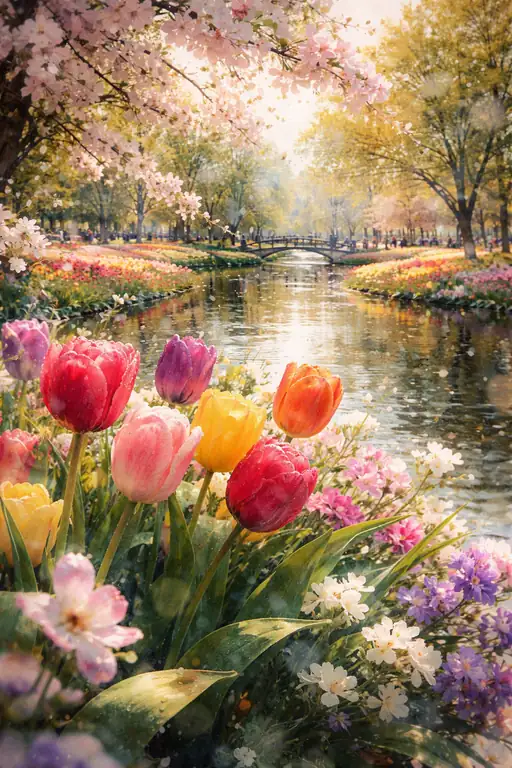 Symphony of Spring
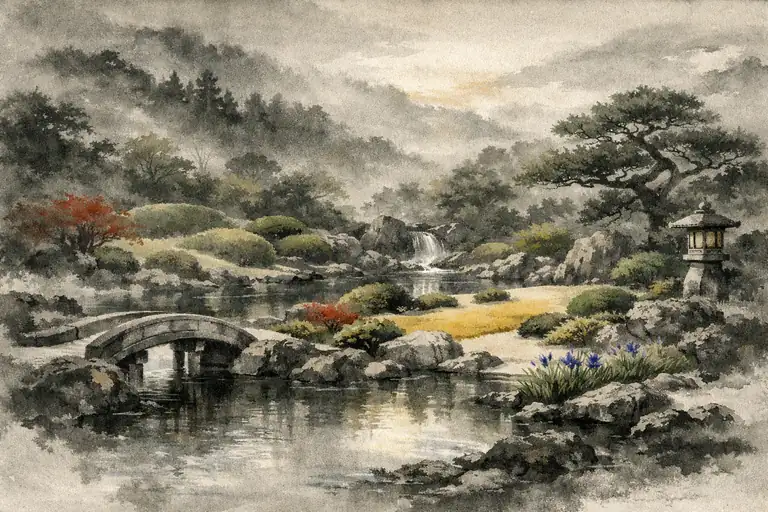 Crossing into the Spiritual Garden
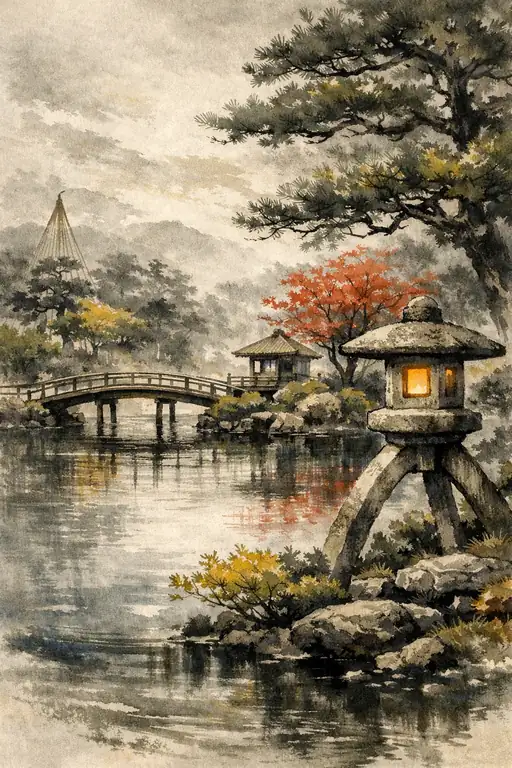 Quiet Light in the Autumn Sanctuary
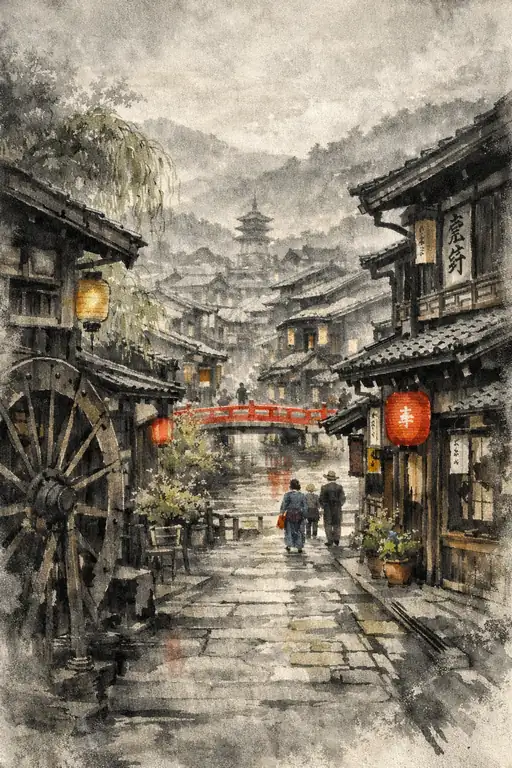 Nostalgia Painted in Sepia and Crimson