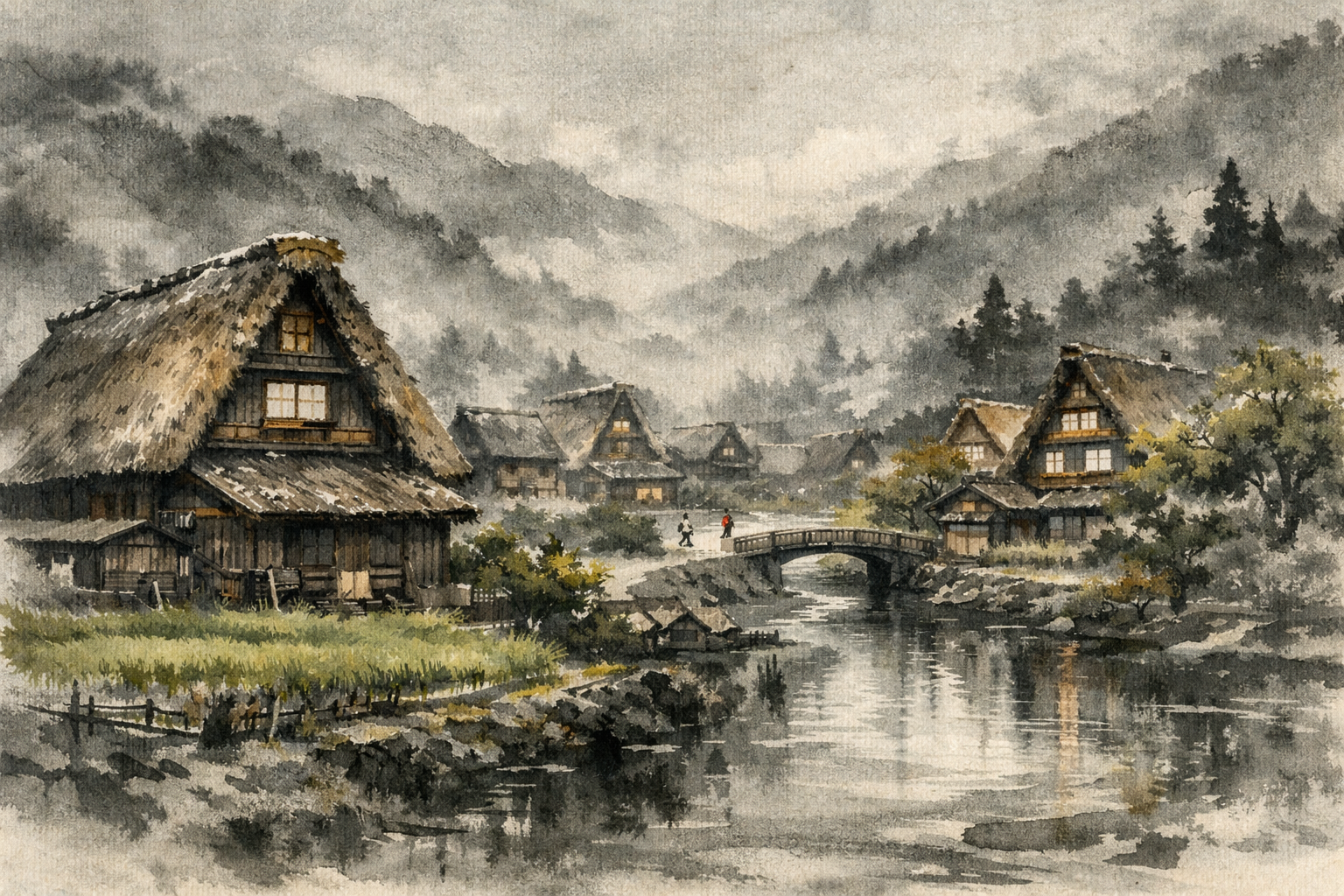
Quiet Breath of the Sacred Valley
Critique
1. Introduction This contemplative watercolor painting beautifully depicts a tranquil, traditional Japanese mountain village characterized by steep thatched-roof houses. The quiet river flowing through the center of the community evokes a strong sense of rustic peace. This serene introduction prepares the viewer for a journey into a harmonious rural landscape. 2. Description In the left foreground, a large Gassho-style house stands prominently next to a small, green cultivation plot. A graceful arched stone bridge spans the river, with two tiny human figures walking across it toward the opposite bank. In the background, layers of soft, misty mountains fade gradually into the gray, cloudy sky. 3. Analysis The artist employs a highly restrained color palette, dominated by monochromatic grays, earth tones, and subtle hints of mossy green. Through delicate watercolor washes and blending, the wet, humid atmosphere of the mountainous region is masterfully captured. The diagonal line of the river provides a natural depth that leads the eye inward. 4. Interpretation and Evaluation This artwork serves as a profound meditation on the humble coexistence of humanity and nature within historic Japan. The preservation of these traditional architectural forms represents the resilience and quiet dignity of rural life. The exquisite atmospheric execution and balanced composition deserve high acclaim for their poetic quality. 5. Conclusion At first glance, the painting appears subdued, yet it slowly reveals a rich sensory experience of cool, damp mountain air. Ultimately, the work succeeds in reminding the audience of a simple, spiritually abundant connection with the earth. It remains a stunning and deeply evocative masterpiece of cultural and artistic expression.
Same Subcategory
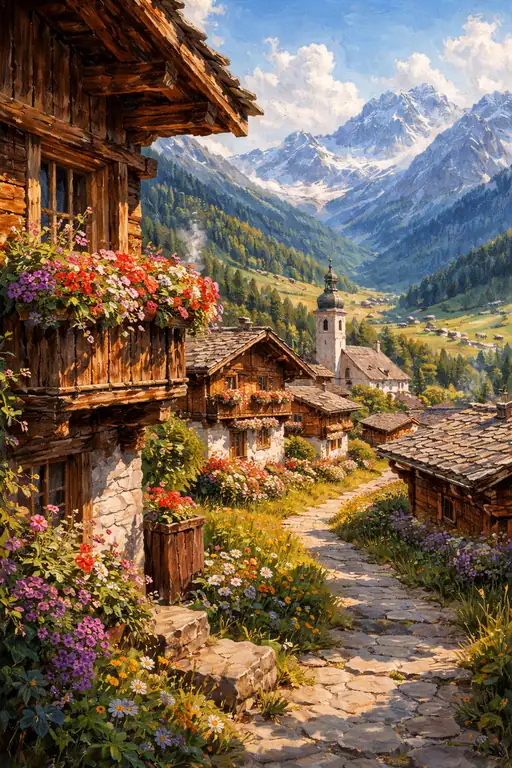 Awakening in Pink and White: The Majestic Peak Above the Clouds
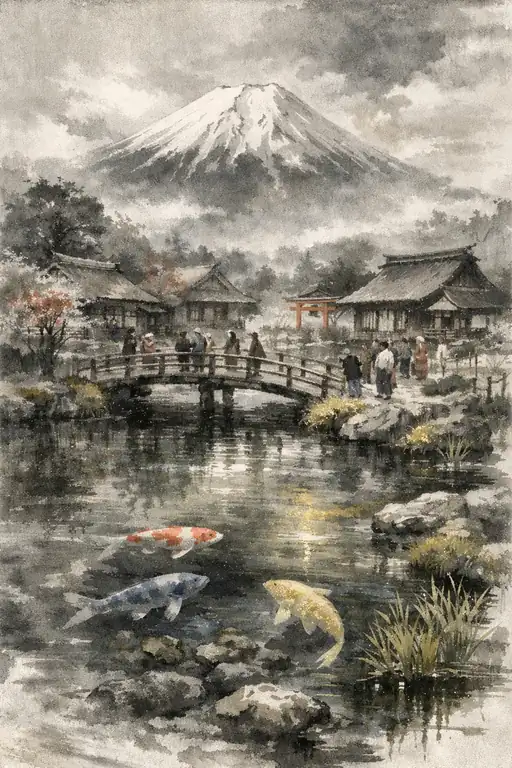 Colors Dancing in the Crystal Spring
Similar Artworks
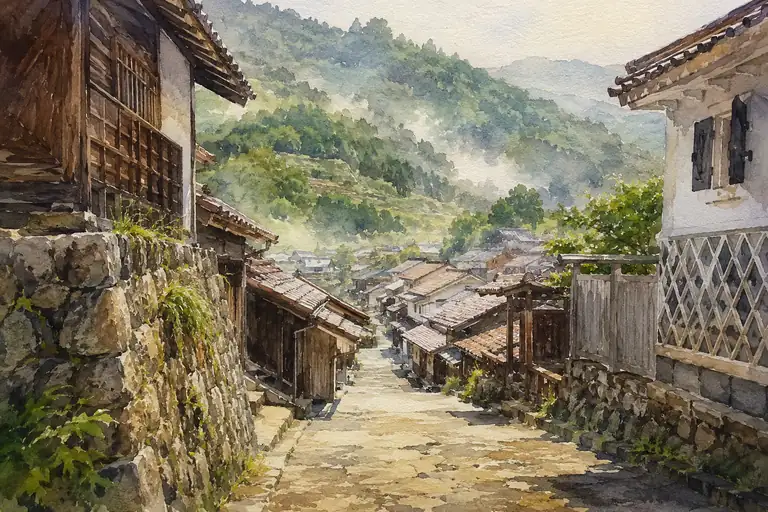 Echoes of the Ancient Path
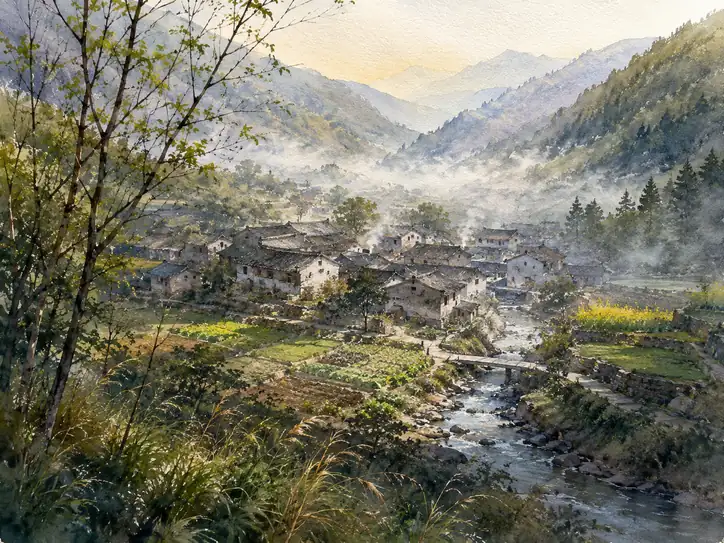 Morning Mist in the Cradle of Mountains
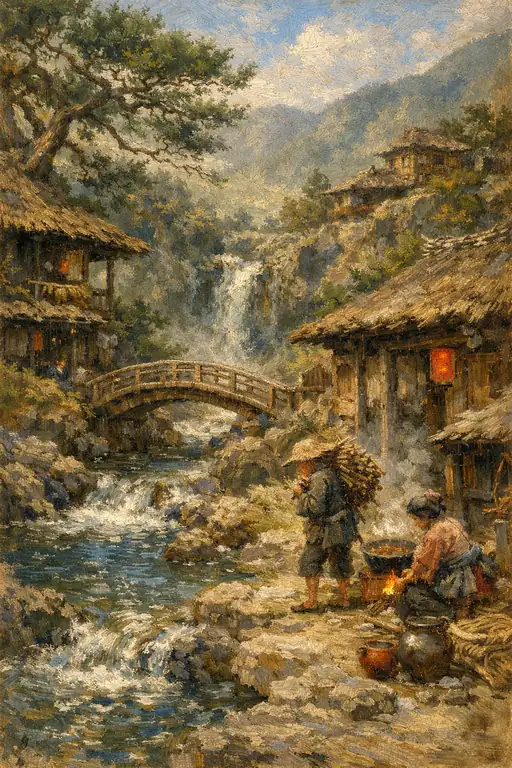 Warmth of the Evening Village
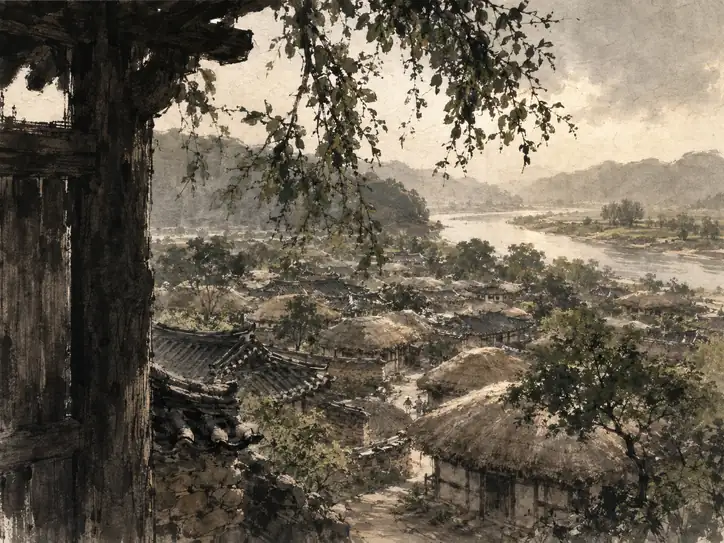 Sanctuary in Sepia
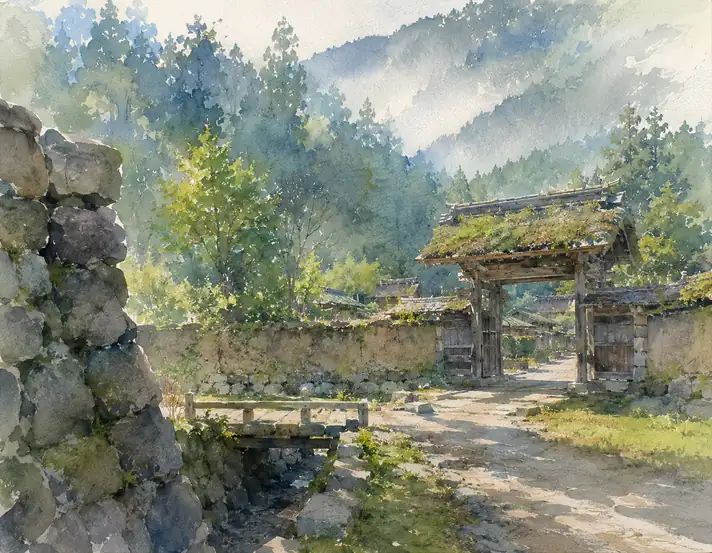 The Silent Gate Where Time Lingers
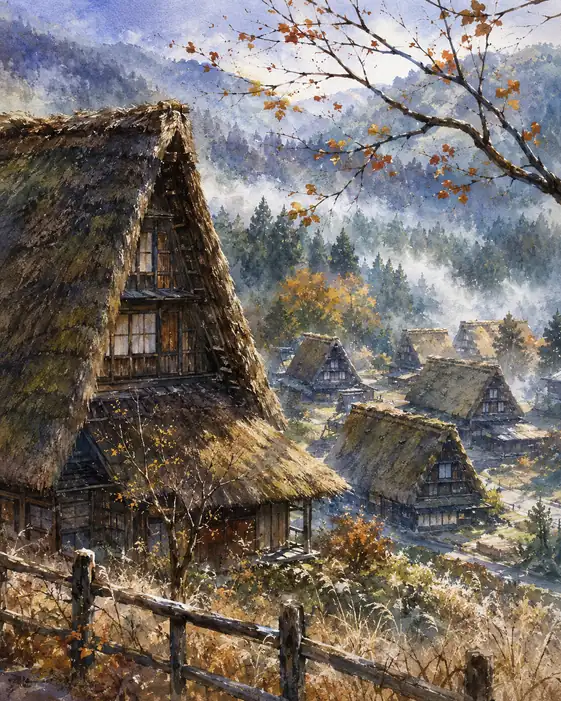 Echoes of the Thatch: A Misty Autumn Memory
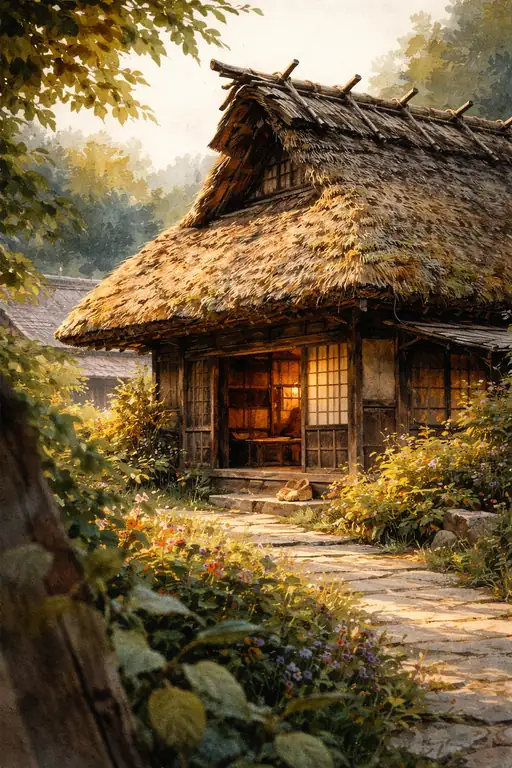 Whispers of the Evening Sun on the Stone Path
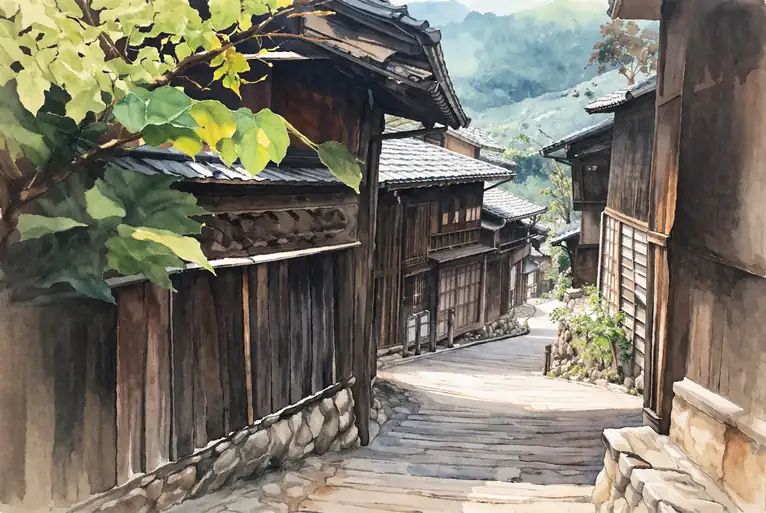 Echoes of the Sloping Town
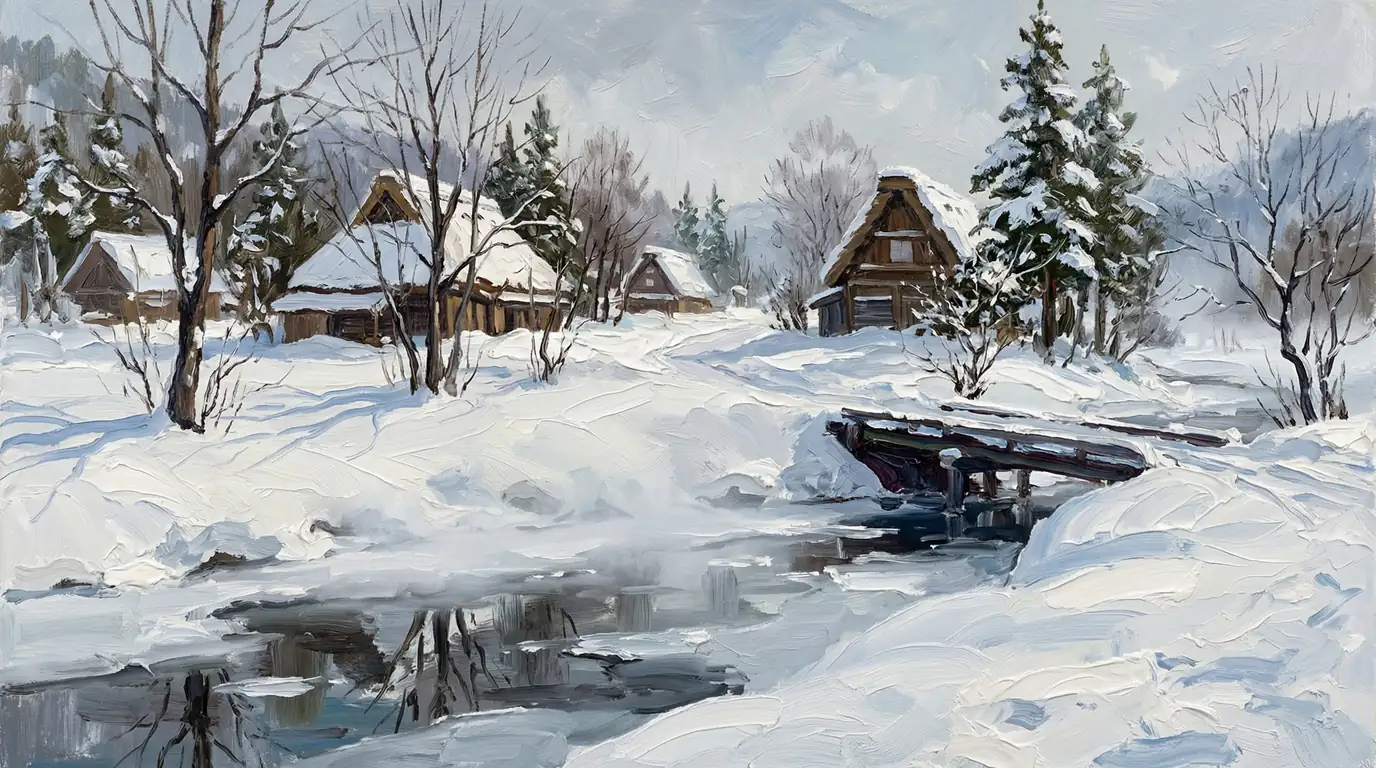 Nostalgic Slumber of the Snowy Hamlet
 The Silence of White Dreams