
The Breath of Winter's Heart
Critique
1. Introduction This vertical oil painting depicts a dramatic, partially frozen waterfall within a rugged wintry canyon. The work captures the raw, primal energy of water and ice through a highly expressive and textural approach. By utilizing thick impasto and energetic brushwork, the artist conveys the physical weight of the snow and the relentless movement of the stream. It presents a scene where the forces of nature are frozen in time yet still pulse with latent power. 2. Description At the center of the composition, a cascade of water plunges between massive, translucent blue icicles that hang from the surrounding cliffs. The base of the waterfall churns into a dark pool of teal-colored water, where fragments of ice float on the surface. To the left and right, rocky outcrops are heavily laden with sculpted mounds of white snow, with dark, skeletal branches protruding on the left side. Bright light filters from above, illuminating the central spray and the icy vertical forms. 3. Analysis The artist employs a bold and energetic technique, with visible palette knife marks and thick layers of paint that create a three-dimensional surface. The color palette is restricted to a range of cool tones, including brilliant whites, deep indigos, and emerald teals, which emphasizes the sub-zero temperature. The composition is structured around the strong vertical lines of the falling water and the hanging ice, which are balanced by the horizontal ripples in the pool at the bottom. The contrast between the matte snow and the glossy water is effectively rendered. 4. Interpretation and Evaluation This work successfully captures the sensory qualities of ice and moving water. The heavy application of paint gives the scene a palpable sense of gravity and material presence, making the cold feel almost physical. The technical execution of the translucent icicles is particularly noteworthy, as the artist manages to suggest depth within the ice using subtle tonal shifts. The painting balances the chaotic energy of the waterfall with the absolute stillness of the surrounding frozen cliffs, creating a compelling tension. 5. Conclusion Ultimately, the painting is a masterful exploration of the tactile beauty found in nature's harshest environments. The initial impression of a cold, forbidding landscape evolves into an appreciation for the complex textures and light effects created by the ice. The piece stands as a powerful example of expressionistic landscape art, successfully capturing the spirit of a wild, winter torrent. It leaves the viewer with a deep respect for the enduring, unyielding beauty of the natural world in midwinter.
 Frozen Silence of the Winter Cascade
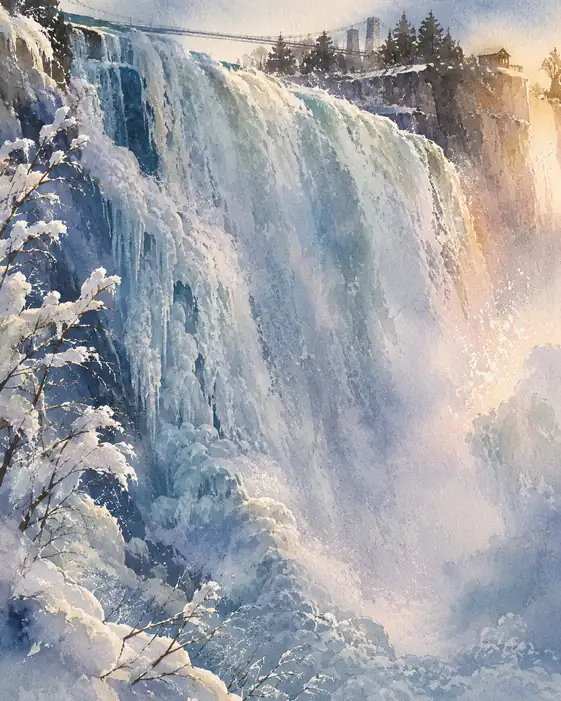 Where the Torrent Sleeps in Gold
 Frozen Symphony of the Gorge
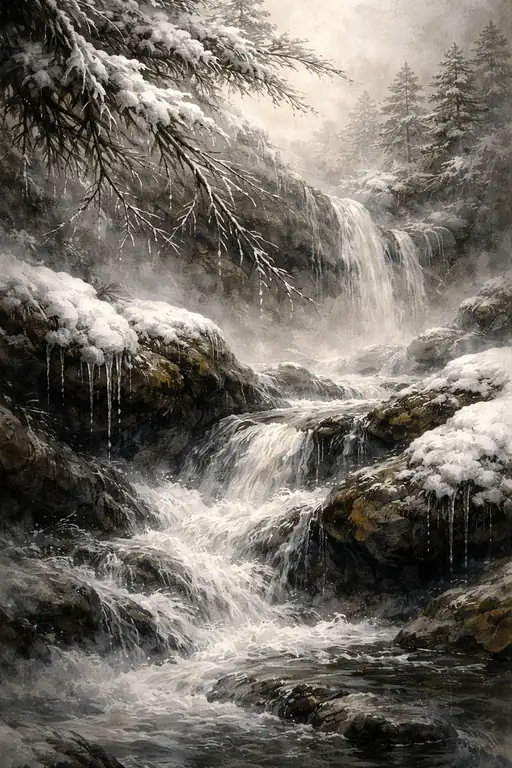 Shadows in the Mist
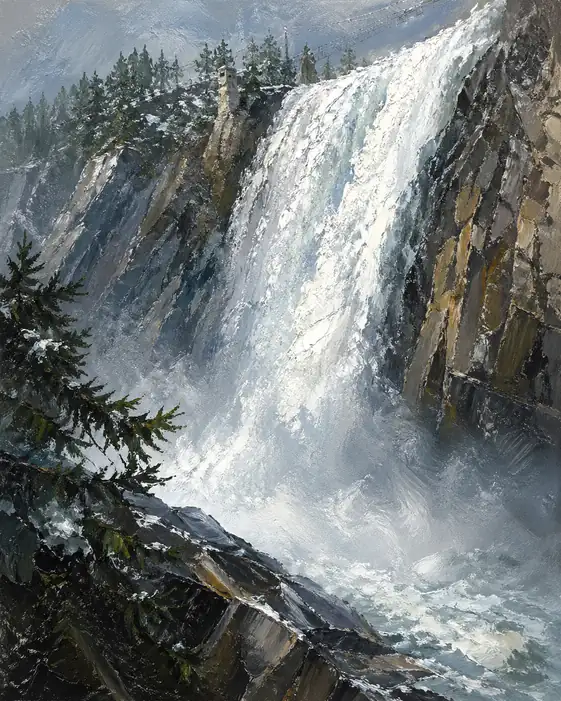 The Roar of Eternity
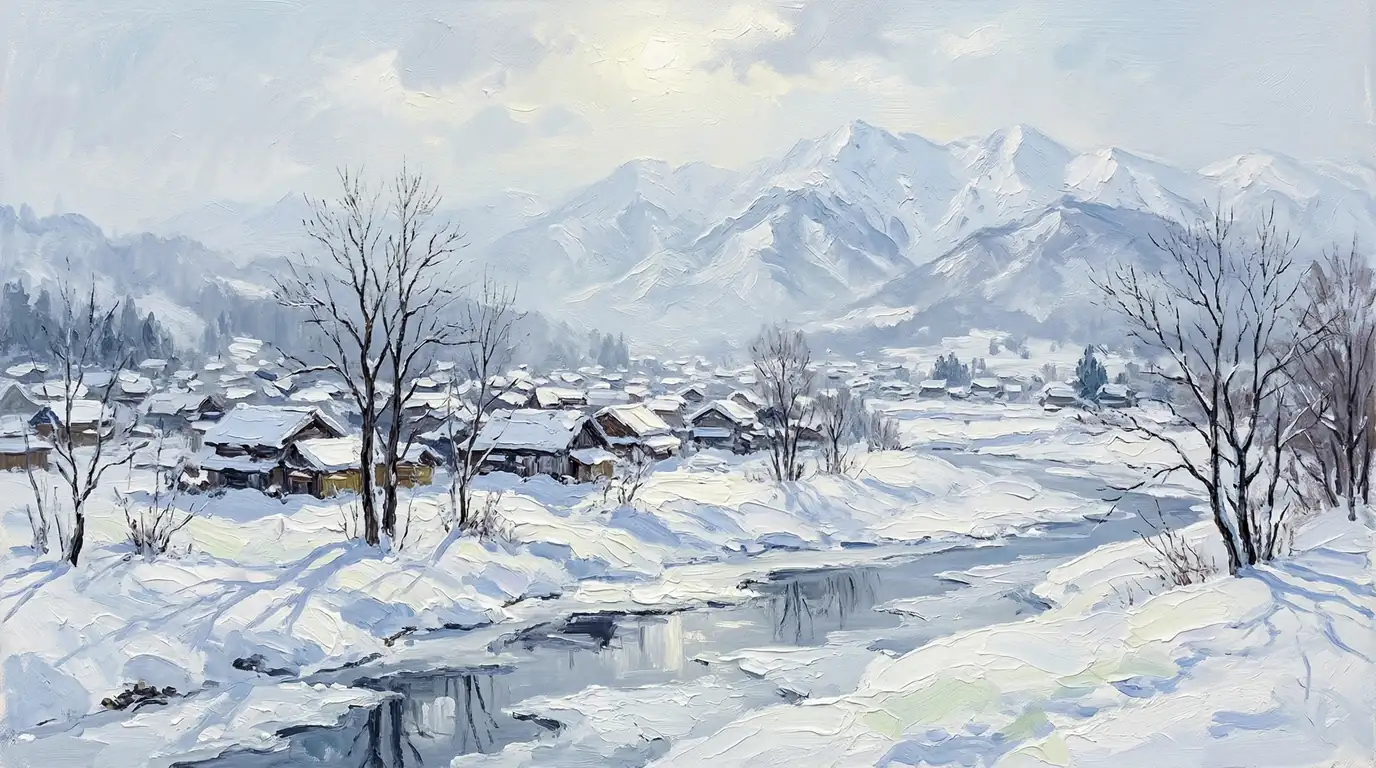 Silent Winter in the Hidden Valley
 The Eternal Song of the Chasm
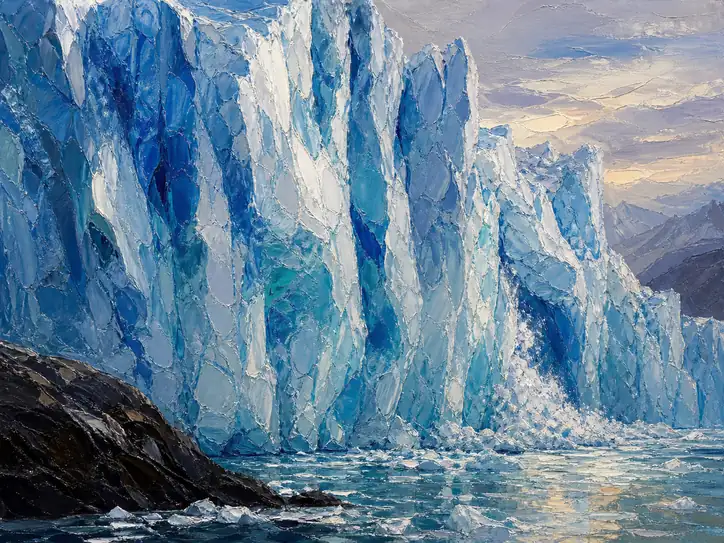 The Awakening of the Ancient Blue
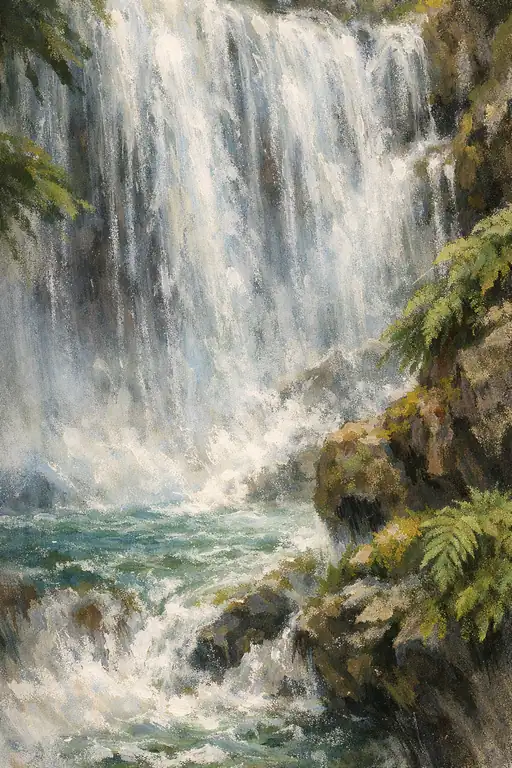 Veil of the Emerald Force
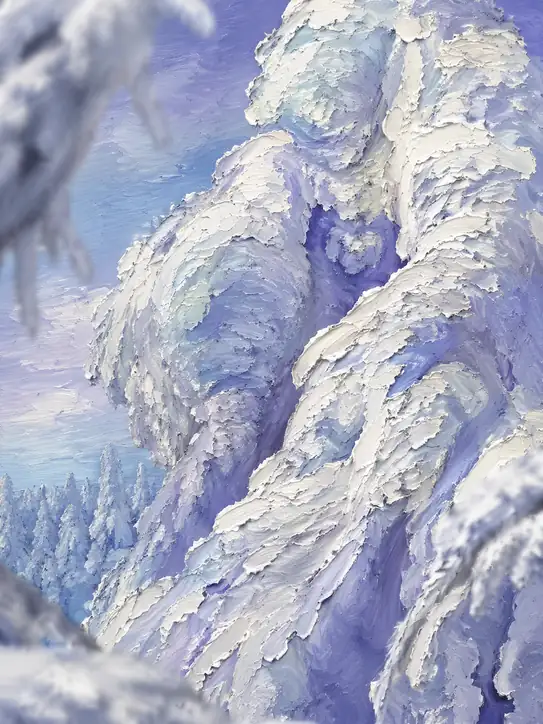 The Solitude of Frost