
The Light of Ancient Wonders
Critique
1. Introduction This evocative oil painting depicts an elderly artisan deeply absorbed in the delicate work of repairing or examining a jeweled artifact. The piece is a masterful exploration of light and texture, drawing inspiration from the dramatic chiaroscuro of the 17th-century Dutch masters. It focuses on the intimate relationship between the craftsman and his object, emphasizing the patience and precision required for such painstaking labor. The overall atmosphere is one of quiet intensity and historical depth, inviting a close reading of every weathered detail. 2. Description The composition features a close-up of an old man with a grey beard and a thick, fur-trimmed hat. He holds a brass magnifying glass to his eye with his right hand, while his left hand uses a slender tool to work on a small, ornate golden box encrusted with pearls and colorful gemstones. A single, guttering candle in the lower right foreground provides the primary illumination, its flickering flame casting long shadows and highlighting the deep wrinkles and rough texture of the man’s large, experienced hands. 3. Analysis Technically, the artist employs a heavy impasto technique, using thick layers of paint to build up the physical presence of the subject. This approach is particularly effective in rendering the coarse fabric of the hat, the aged skin of the hands, and the glittering facets of the gems. The lighting is masterfully handled, with the warm candle glow creating a focused pool of light that draws the eye directly to the center of the action. The background remains dark and indistinct, further concentrating the viewer's attention on the interplay between the artisan and the artifact. 4. Interpretation and Evaluation The painting can be interpreted as a meditation on the passage of time and the preservation of beauty. The contrast between the fragile, sparkling jewels and the rugged, aging hands of the artisan suggests a narrative of enduring skill and the weight of tradition. The artist’s ability to convey a sense of profound concentration through the man’s partially obscured face is exceptional. This work is highly successful in its emotional resonance, capturing the dignity of manual labor and the mysterious allure of ancient treasures. 5. Conclusion In conclusion, this painting is a powerful and technically accomplished tribute to the world of traditional craftsmanship. It succeeds in creating a world that feels both ancient and immediate, grounded in the tactile reality of paint and subject matter. While the initial impression is one of dark, dramatic shadows, closer inspection reveals a wealth of color and detail within the jewelry and the artisan’s features. It stands as a compelling example of figurative art’s ability to explore the depths of human experience and the beauty of focused endeavor.
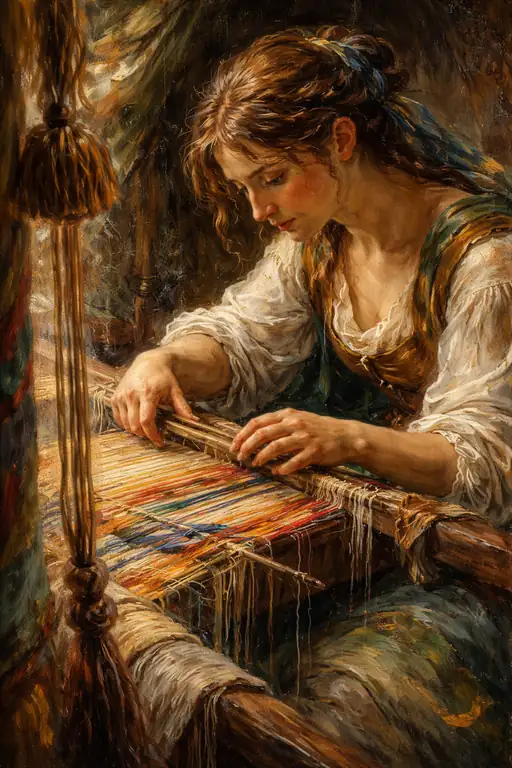 Threads of a Silent Song
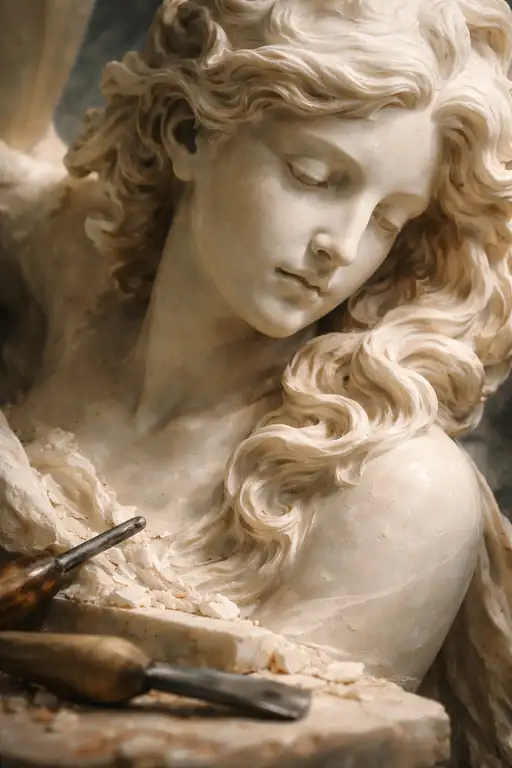 Goddess Awakening from Stone
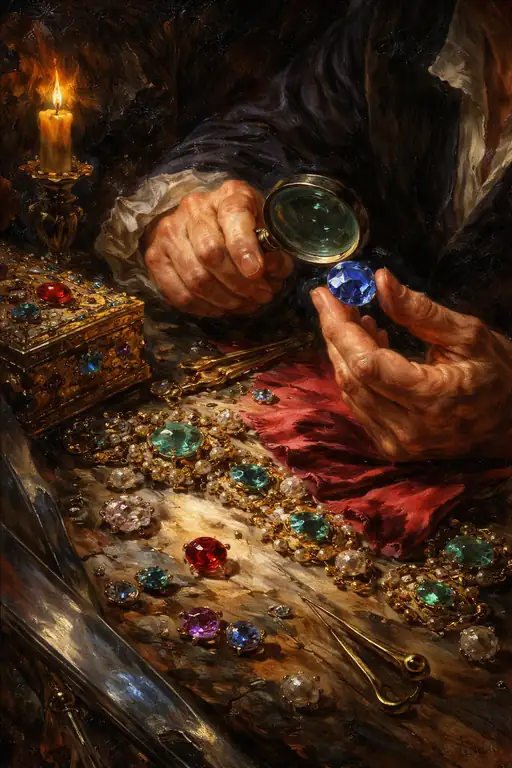 The Master's Intimate Gaze
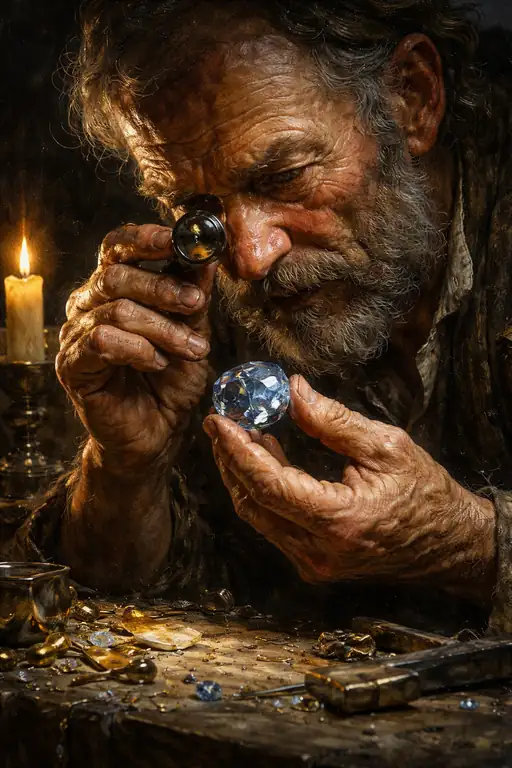 The Heart of the Blue Gem
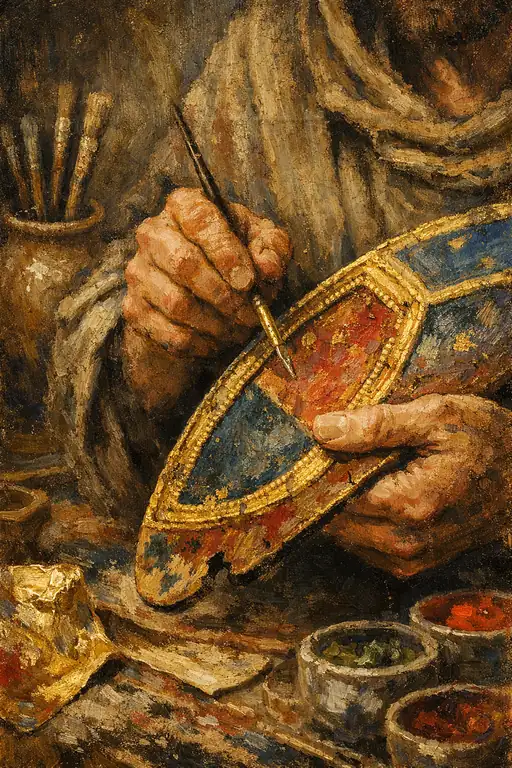 The Devotion of an Artisan's Touch
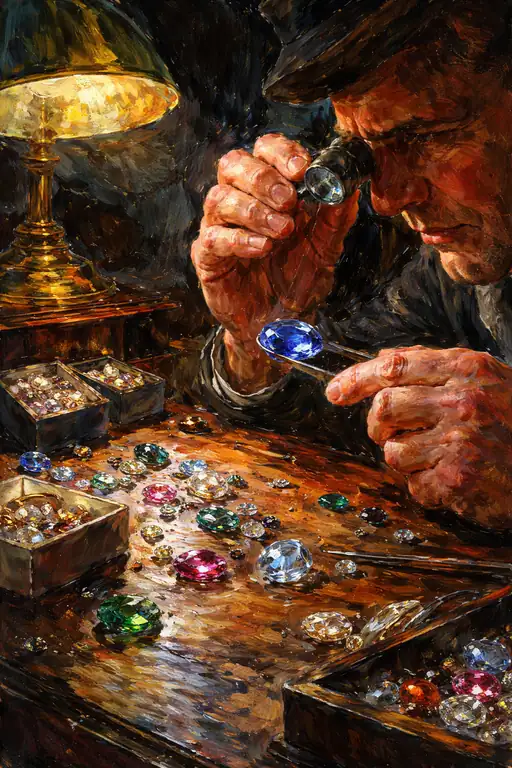 The Jeweler's Immersive Focus
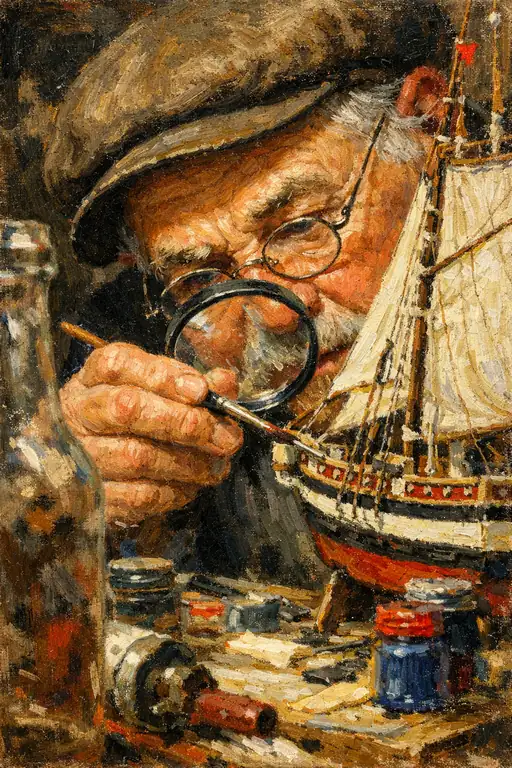 Sailing Seas Within a Glass Bottle
 Hands That Weave the Fabric of Time
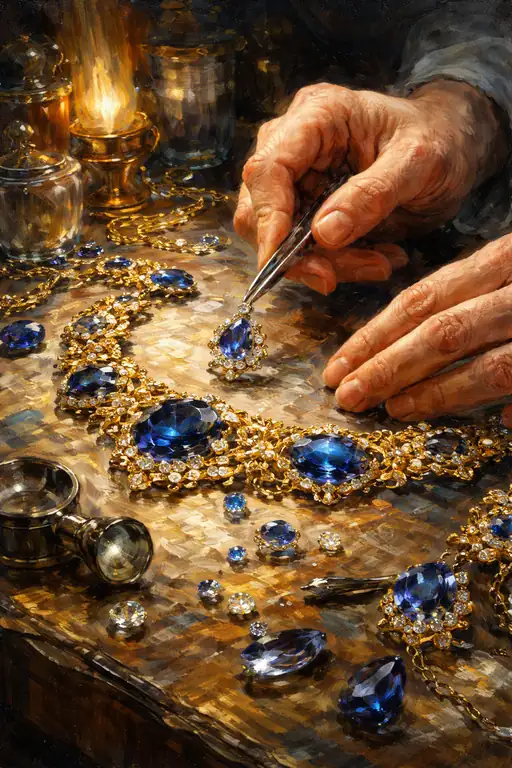 Weaving Starlight into Gold
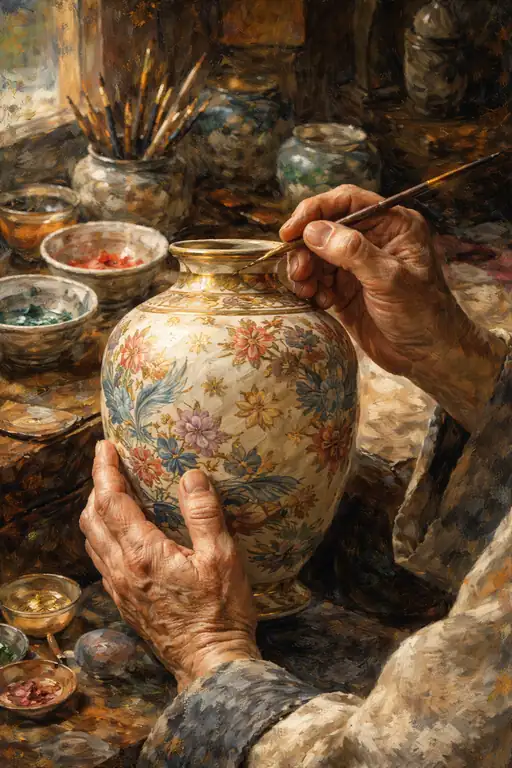 Wisdom in the Clay
 Carving the Silence
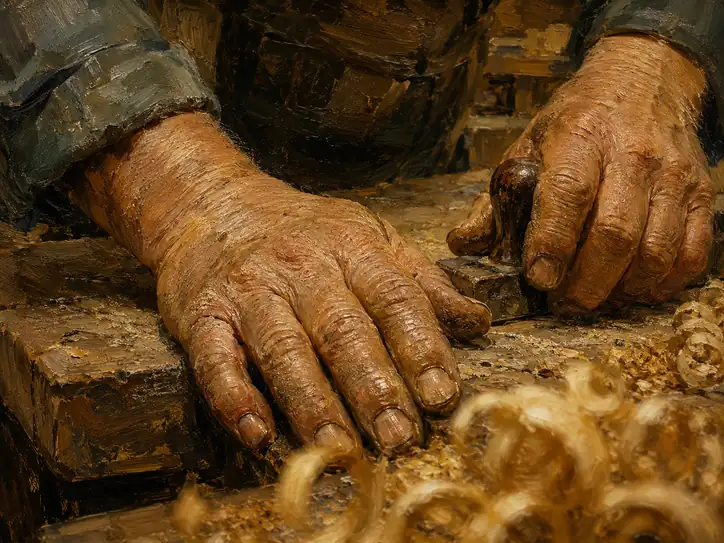 Prayer in the Grain