
Threads of a Silent Song
Critique
1. Introduction This vibrant oil painting captures a woman deeply engrossed in the traditional craft of weaving. The work celebrates the intersection of human labor and artistic creation, emphasizing the tactile nature of the process. Through a combination of rich textures and dramatic lighting, the scene is elevated from a simple domestic task to a powerful study of focus and dedication. The artist successfully conveys the rhythmic energy inherent in the act of weaving, inviting the viewer to appreciate the beauty found in artisanal work. 2. Description The central figure is a young woman with wavy brown hair, partially secured by a long blue ribbon that cascades down her back. She leans over a horizontal loom, her hands positioned precisely as she manages a multitude of colorful threads. The threads themselves are a riot of hues, including brilliant oranges, deep reds, and vivid blues, creating a striking contrast against the darker wood of the loom. She wears a white chemise with voluminous sleeves and a bodice in shades of gold and green, her expression one of intense concentration. 3. Analysis The painting is characterized by its bold, expressive brushwork, which adds a sense of movement and vitality to the scene. The artist uses a thick application of paint to create tangible textures, particularly in the rendering of the fabric, the wooden loom, and the individual strands of thread. The lighting is warm and directional, casting strong highlights on the woman's face and hands while leaving the background in a soft, atmospheric shadow. This selective illumination draws immediate attention to the point of interaction between the weaver and her work. 4. Interpretation and Evaluation The work can be interpreted as an allegory for the creative process, where individual threads are woven together to form a complex and beautiful whole. The woman’s diligent posture suggests a deep respect for her craft, reflecting a timeless connection to ancestral traditions. Technically, the artist demonstrates exceptional skill in balancing the intricate details of the loom with the broader, more impressionistic treatment of the environment. The composition is dynamic, using the diagonal lines of the loom to guide the eye through the colorful tapestry being created. 5. Conclusion In conclusion, this painting is a masterful tribute to the enduring spirit of craftsmanship and the beauty of manual labor. It succeeds in capturing both the physical effort and the quiet dignity of the weaver, making the ordinary appear extraordinary. The initial impact of the vibrant colors is followed by an appreciation for the artist's technical prowess and emotional depth. This work stands as a poignant reminder of the value of patience and skill in a world often dominated by mass production and haste.
 The Master's Intimate Gaze
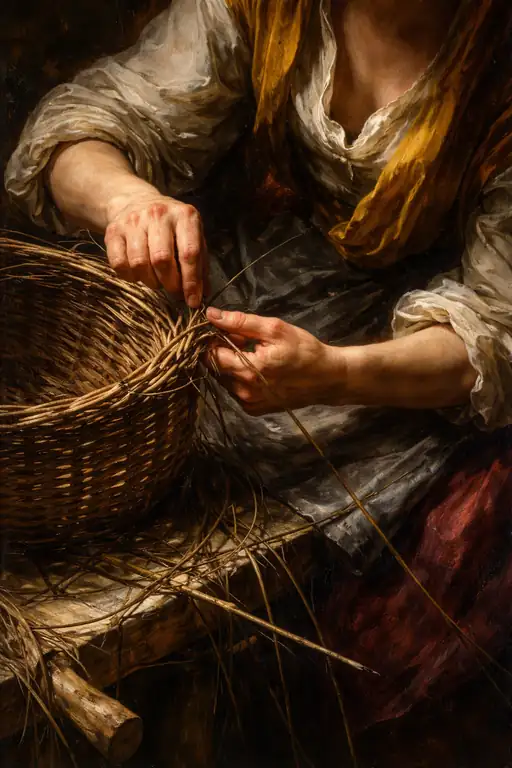 The Nimble Weave of Time
 Symphony of Threads
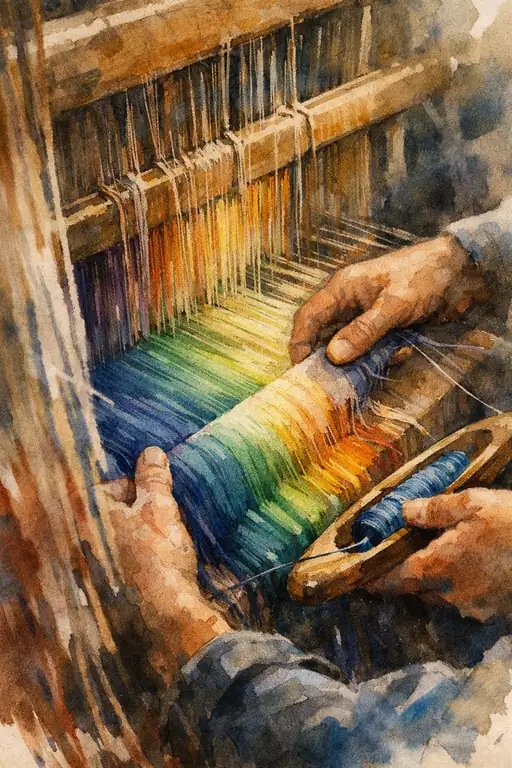 Rainbow Threads: The Weaver's Devotion
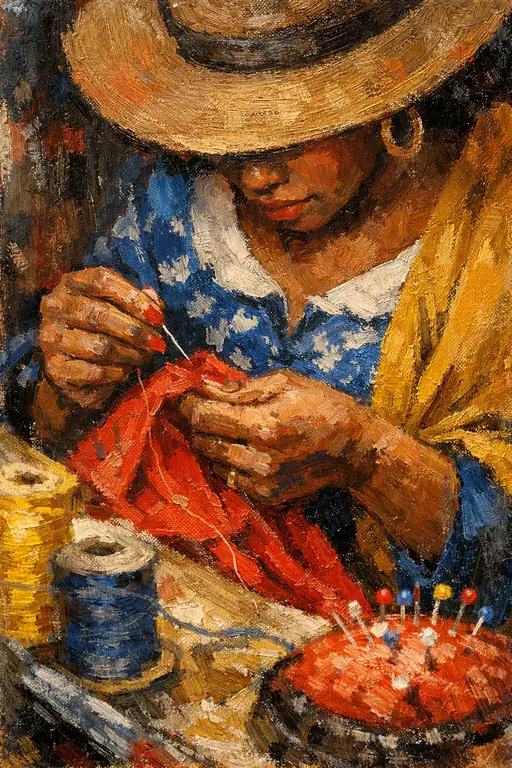 A Quiet Devotion Spun in Red Thread
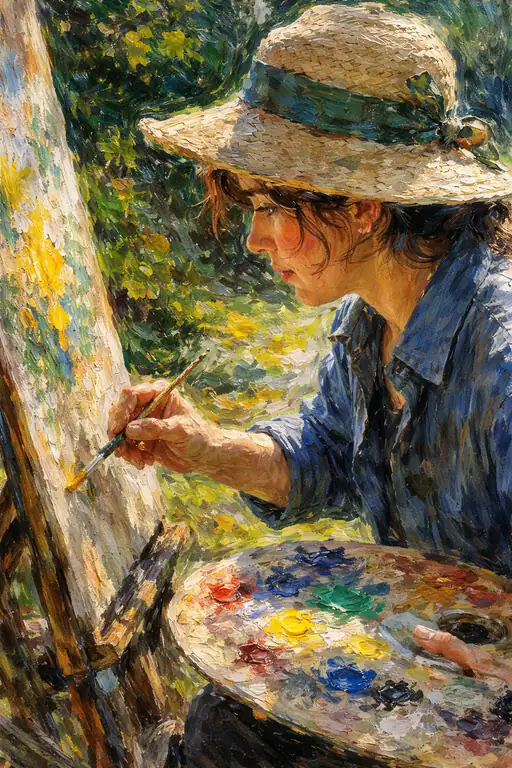 The Canvas of Light and Soul
 The Silent Spin of Woven Time
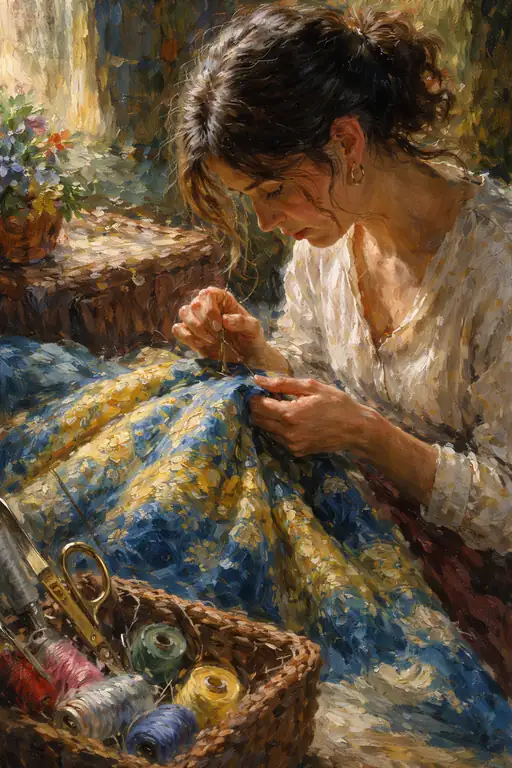 Golden Threads of Solitude
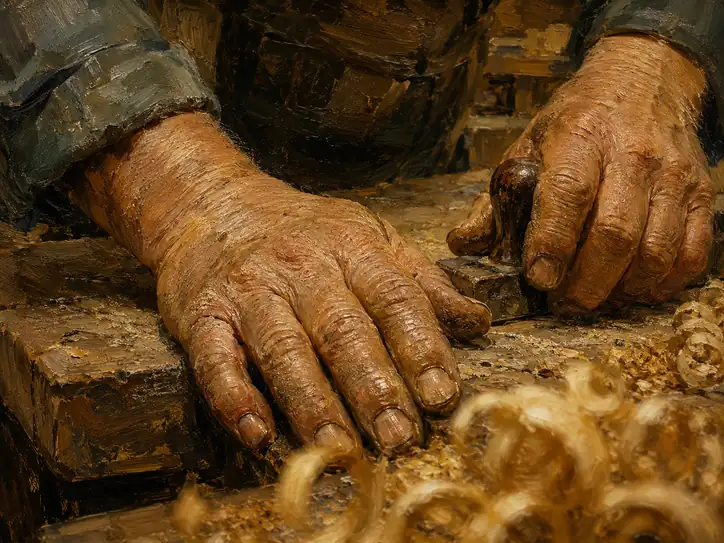 Prayer in the Grain
 Vibrant Vats: The Color Catcher
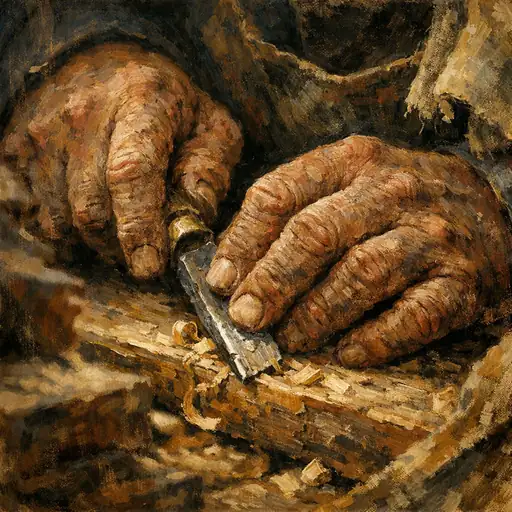 The Chisel's Path