
The Silent Resonance of a Rainy Glow
Critique
1. Introduction This visual composition presents a traditional Japanese setting enveloped in a gentle yet persistent rainfall. The scene is dominated by glowing paper lanterns and a glass wind chime suspended from the eaves of a weathered, thatched-roof structure. The juxtaposition of the warm, interior-like light against the cool, damp exterior environment creates a compelling atmospheric study. This work effectively captures a specific seasonal moment, inviting the viewer into a space that feels both serene and melancholically beautiful. 2. Description The foreground is occupied by a large, spherical paper lantern adorned with intricate red floral patterns, emitting a soft amber radiance. Below the thatched roof, a delicate glass wind chime with a patterned paper strip hangs, catching the light and reflecting the surrounding rain. Further into the background, a series of similar lanterns recede into the distance, their forms becoming increasingly blurred by the heavy rain and mist. Water droplets are visible clinging to the edges of the roof and the surfaces of the hanging objects, emphasizing the tactile quality of the wet environment. 3. Analysis The composition utilizes a strong diagonal line formed by the row of receding lanterns, which provides a sense of depth and leads the eye through the misty space. There is a masterful contrast between the warm color palette of the lanterns and the cool, desaturated tones of the rain and dark foliage. The lighting is centralized within the lanterns, creating localized glows that illuminate the texture of the paper and the surrounding raindrops. This focused illumination emphasizes the three-dimensionality of the objects while leaving much of the background in a state of atmospheric mystery. 4. Interpretation and Evaluation This artwork evokes a profound sense of "mono no aware," a Japanese aesthetic concept relating to the beauty of transience. The fragility of the glass and paper elements in the face of the relentless rain serves as a metaphor for the delicate nature of human-made beauty within the natural world. The technical execution is exceptional, particularly in the rendering of light diffusion through paper and the realistic depiction of water droplets. The artist successfully balances detailed realism with an evocative, almost dreamlike quality that elevates the scene beyond simple documentation. 5. Conclusion Through its careful arrangement of light, color, and subject matter, the work offers a poetic meditation on a rainy day in a traditional setting. The viewer's perception shifts from observing individual details to appreciating the overall harmony of the contrasting elements. It stands as a sophisticated example of atmospheric storytelling, where the weather itself becomes a primary character. This piece effectively demonstrates how light can transform a mundane, damp environment into a space of exceptional warmth and visual interest.
Same Subcategory
 Twilight Whispers through the Rain
 Whispering Rain: The Sky's Double Promise
Similar Artworks
 Crimson Tears on an Autumn Eve
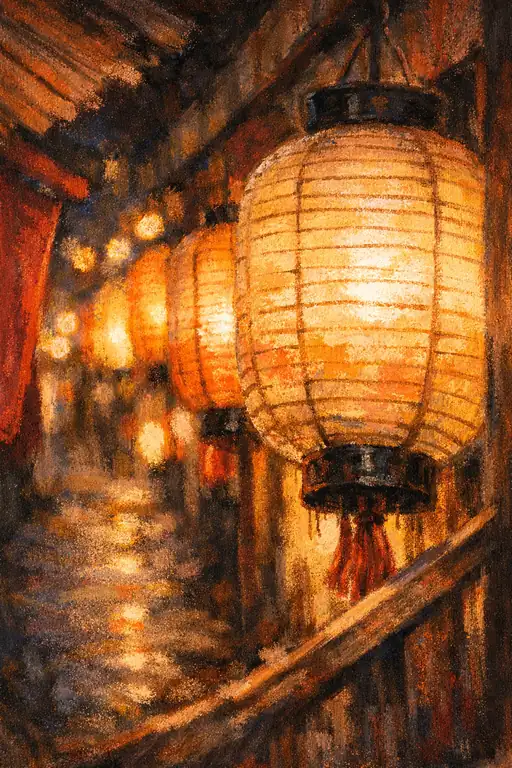 Warm Glowing Alley Paper Lantern
 Tears on the City Window
 Tears of the City
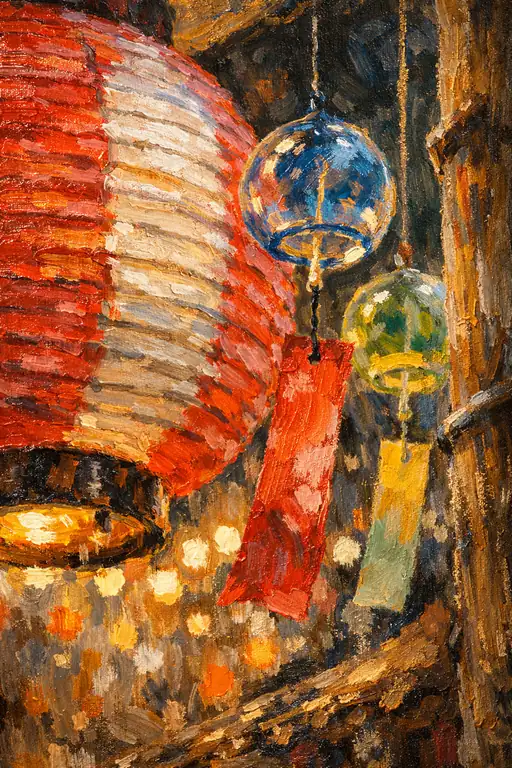 Whispers of the Golden Sun
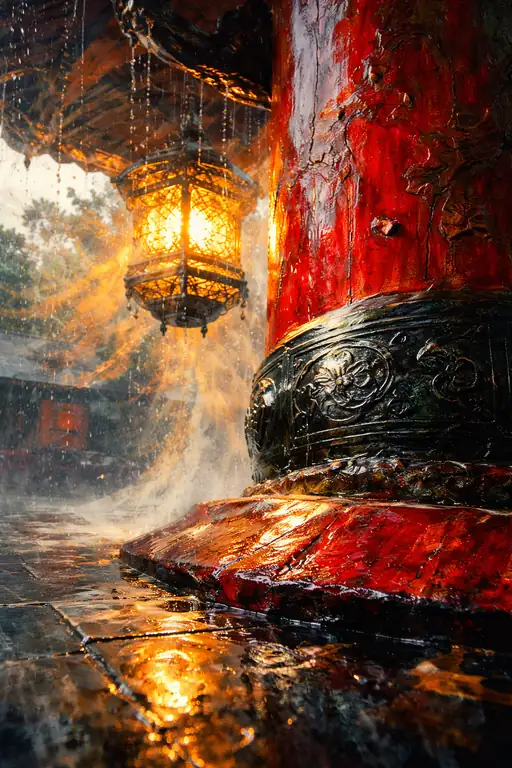 A Warm Glow Cutting Through the Tears of the Evening Rain
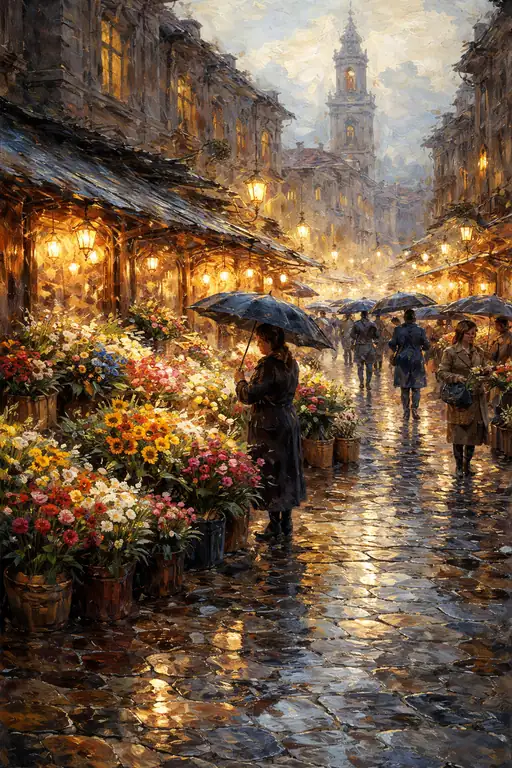 Tears of the Glowing City
 A Rainy Afternoon's Solace
 The Glow of Silent Memories
 Night Garden Golden Lantern