
Whispers of the Thaw
Critique
1. Introduction This oil painting presents a focused, intimate view of a common tabletop scene, rendered with a dynamic and expressive technique. The composition centers on a single, large ice cube resting within a glass, accompanied by a stirrer or straw. The artist employs a heavy impasto style that transforms a simple subject into a complex study of light, texture, and transparency. 2. Description The central subject is a crystalline ice cube, characterized by sharp angles and multifaceted surfaces that reflect and refract the surrounding light. It sits partially submerged in a liquid within a glass, whose rim is suggested by a curved line of bright highlights. To the right, a slender, golden-brown object, likely a straw, extends diagonally toward the upper edge. The background and foreground are composed of thick, rhythmic brushstrokes in shades of deep blue, earthy brown, and brilliant gold, creating a shimmering atmosphere. 3. Analysis The painting's visual power stems from its sophisticated use of color and texture. The palette is dominated by the contrast between cool blues and whites against warm ochre and gold tones. The application of paint is exceptionally tactile; the thick ridges of the impasto capture the light physically, adding a three-dimensional quality to the two-dimensional surface. This texture mimics the varying densities of ice and water, while the vertical strokes on the left suggest moisture or condensation on the exterior of the glass. 4. Interpretation and Evaluation This work demonstrates a high level of technical proficiency in capturing the fleeting nature of light and reflection. The artist successfully elevates an everyday object to the status of a monumental form through bold composition and vigorous brushwork. The composition is tightly cropped, which forces the viewer to confront the materiality of both the subject and the medium. The use of gold highlights is particularly effective, imbuing the scene with a sense of warmth and luxury that transcends the coldness of the ice. 5. Conclusion While the initial impression is one of a simple still life, a closer examination reveals a profound exploration of optical phenomena. The painting ultimately serves as a testament to the artist's ability to find extraordinary beauty in the ordinary through a unique and forceful stylistic approach.
Same Subcategory
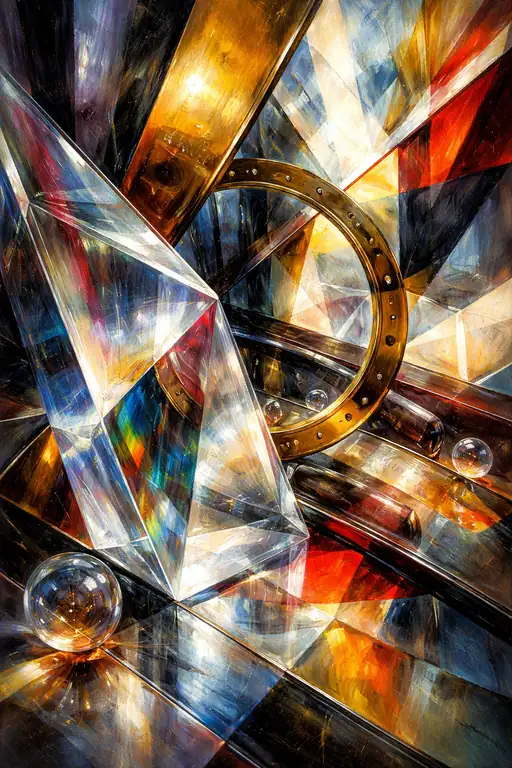 The Golden Ring and the Prism
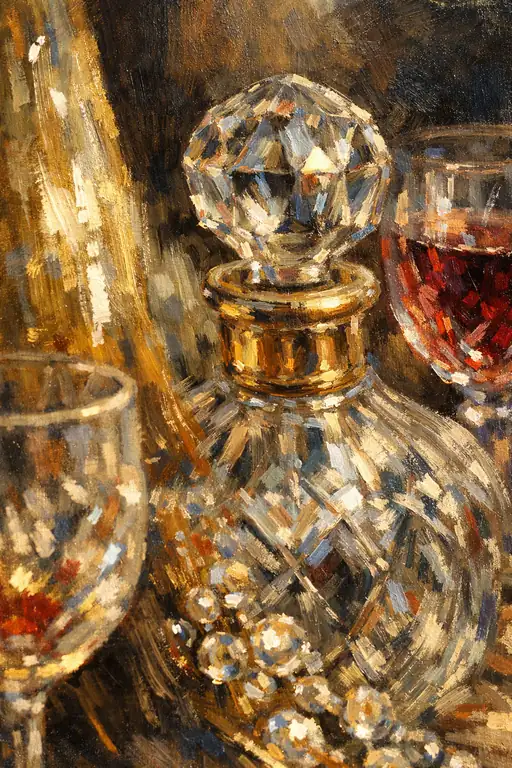 Echoes of Elegance in Crystal
Similar Artworks
 Crystal Clear Refreshment
 A Fragile Eternity
 A Chilly Trickle of Light, Oasis on the Table
 A Microcosm in Glass and Water
 Glowing Cyan Crystalline Structure in the Dark
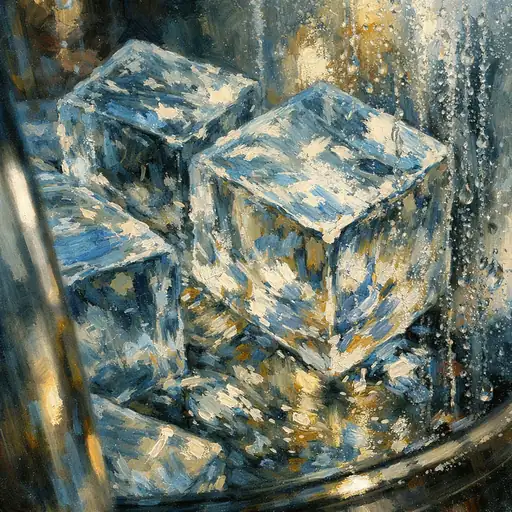 Frozen Whispers of Time
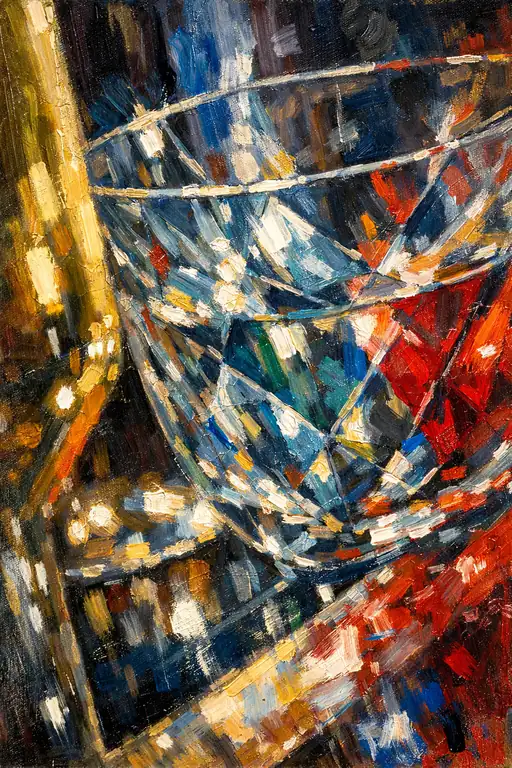 The Fractured Light of Memory
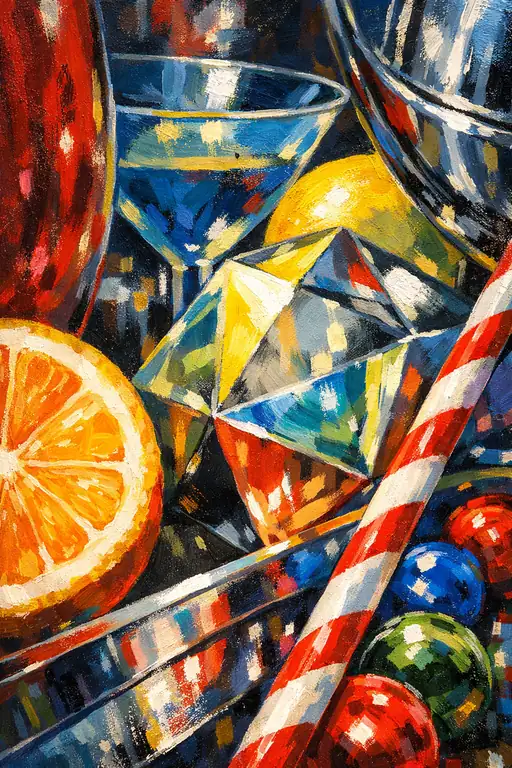 Shattered Light and Citrus Dreams
 Luminous Viscosity: A Study in Refraction
 Refracted Celebrations: Amber and Azure