
Horizons Yet Unseen
Critique
1. Introduction This evocative still life transports the viewer to the private study of an explorer or scholar, capturing a moment of intense scrutiny and discovery. The composition is centered on a weather-beaten hand holding a magnifying glass over an ancient, detailed map spread across a wooden desk. By surrounding this focal point with various tools of learning—such as a quill pen, spectacles, and gold coins—the work establishes a narrative of intellectual pursuit and the quest for knowledge. The atmosphere is thick with a sense of history, suggesting a world where every detail on a parchment could lead to a new horizon. 2. Description The primary focus is a large, brass-rimmed magnifying glass held by a mature hand entering from the right, positioned directly over a segment of a worn map. Below the glass, several sheets of aged paper overlap, revealing faded lines and symbols characteristic of historical cartography. On the left side of the desk, a white quill pen rests in a dark inkwell, flanked by leather-bound books and a rolled scroll. A pair of wire-rimmed spectacles and a small stack of gold coins are placed near the foreground, while a red ribbon provides a sharp contrast to the dominant brown tones of the aged wood. 3. Analysis The artist utilizes a dramatic chiaroscuro effect, with deep shadows in the background and a strong, focused light illuminating the map and the hand. The circular frame of the magnifying glass creates a secondary composition within the painting, drawing the viewer's eye to the most critical area of detail. This structural choice emphasizes the act of seeing and the precision required for scholarly work. The color palette is restricted to warm earth tones, ambers, and golds, which reinforces the antique feel of the scene and creates a unified, somber mood that honors the gravity of the subject matter. 4. Interpretation and Evaluation The work is a masterful exploration of texture and the passage of time, evident in the cracked lens of the magnifying glass and the frayed edges of the maps. The rendering of the human hand, with its visible veins and weathered skin, adds a personal, lived-in quality that suggests a lifetime dedicated to study. By choosing objects that symbolize navigation and record-keeping, the artist invites a reflection on the human desire to document and understand the physical world. The technical execution of the light reflecting off the glass and metal surfaces is particularly noteworthy, providing a realistic depth to the entire arrangement. 5. Conclusion In summary, the painting is a compelling tribute to the era of discovery and the meticulous nature of historical research. The initial impression of a cluttered desk evolves into a focused narrative about the relationship between the observer and the observed. It stands as a refined example of how still life can be used to convey complex themes of ambition and intellectual curiosity. The harmonious balance of light and shadow ensures that the central act of magnification remains the enduring image in the viewer's mind.
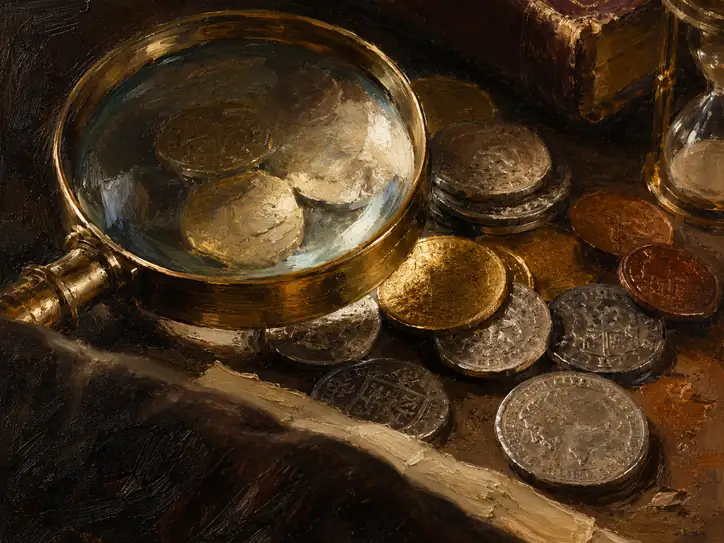 Time Beneath the Lens
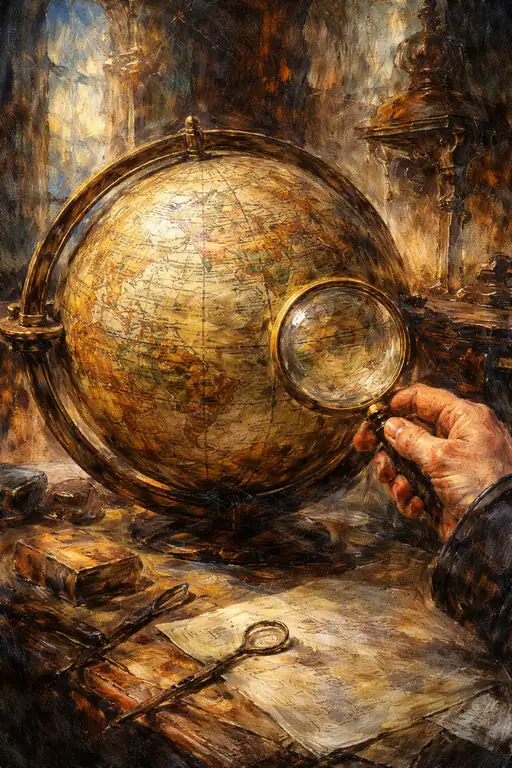 Whispers of the Old Cartographer
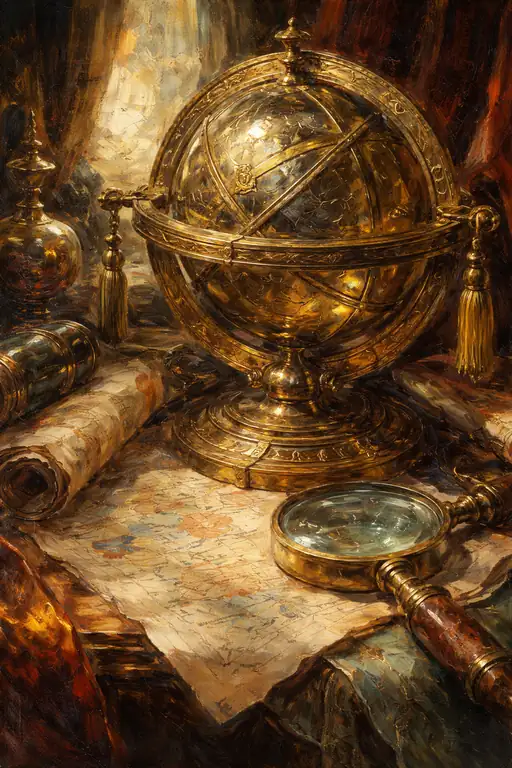 The Golden Map
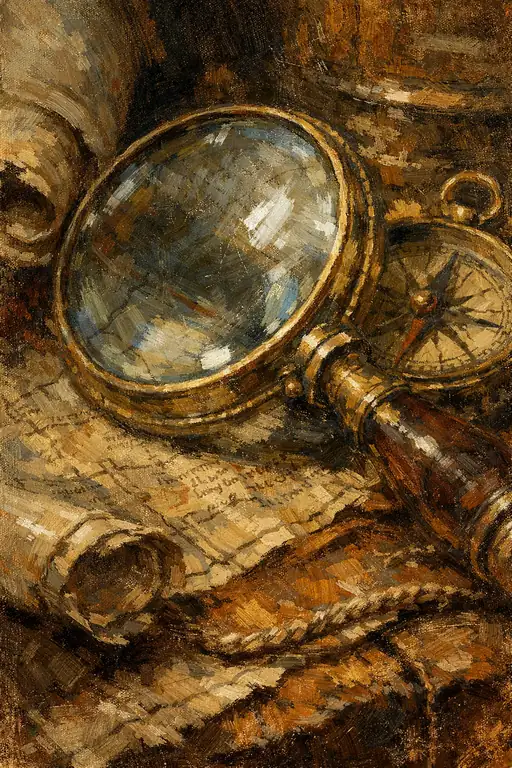 The Navigator's Golden Dream
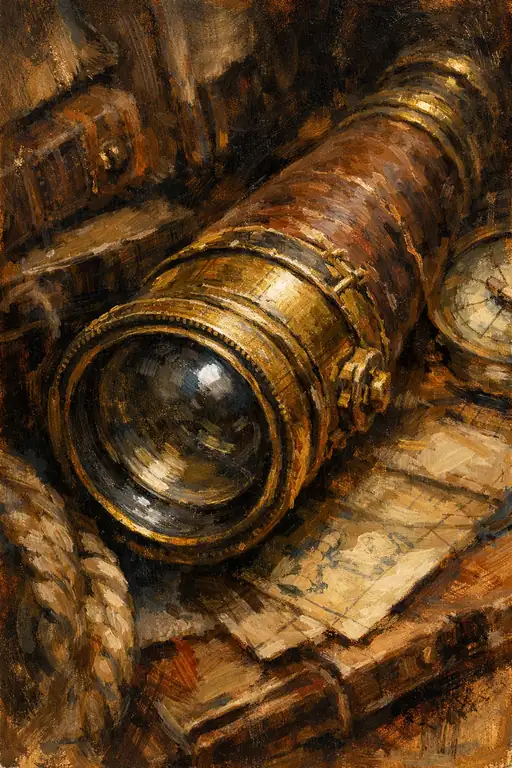 Echoes of the Uncharted Sea
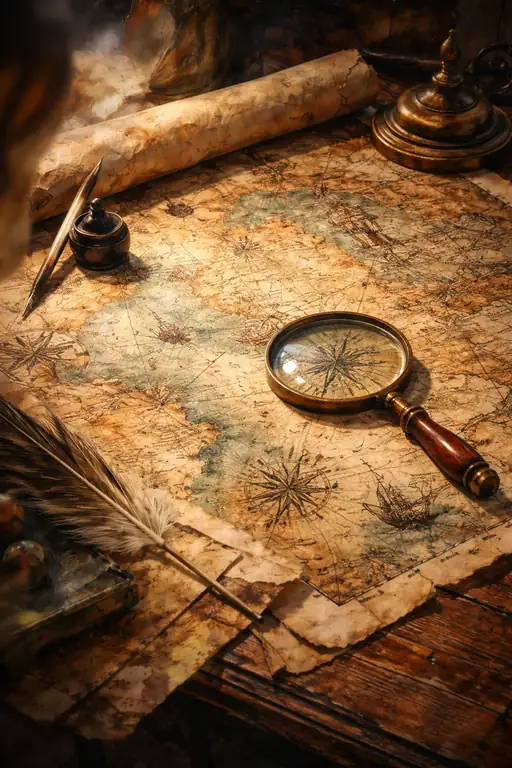 Navigating the Unknown
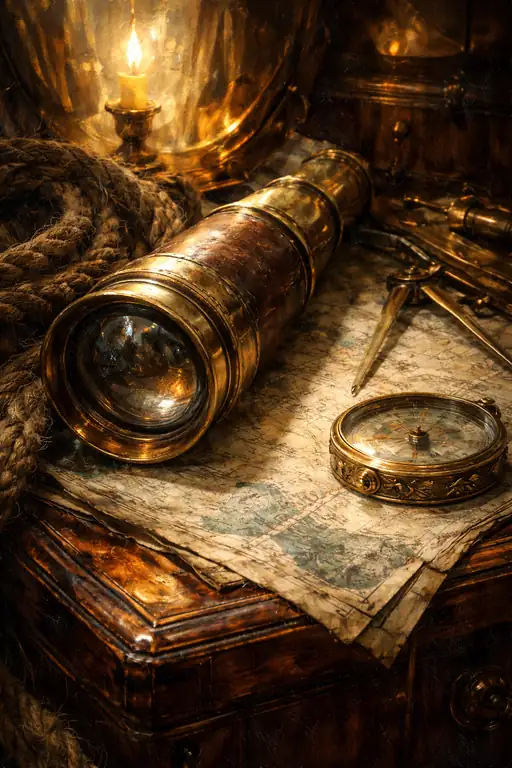 Whispers of the Uncharted Sea
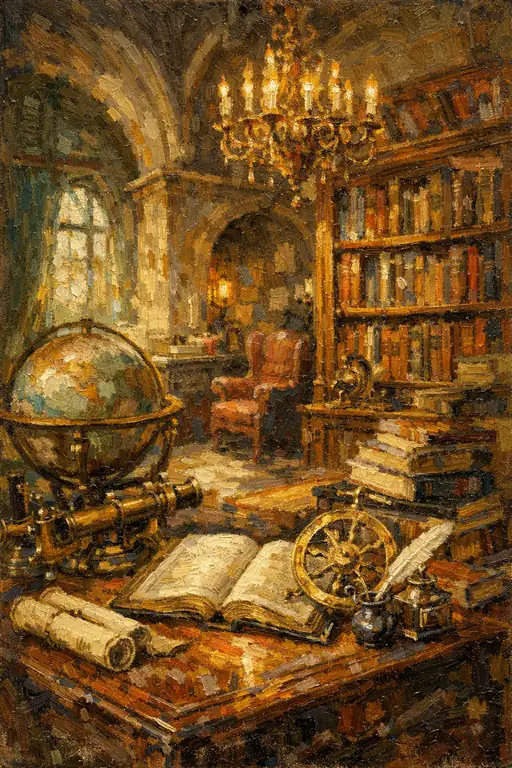 The Warm Embrace of Endless Knowledge
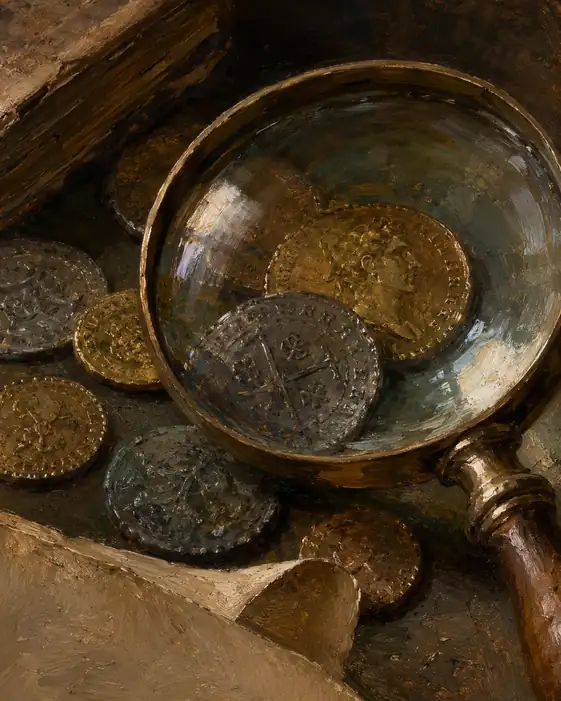 Through the Lens of Time
 Illumination of Distant Lands
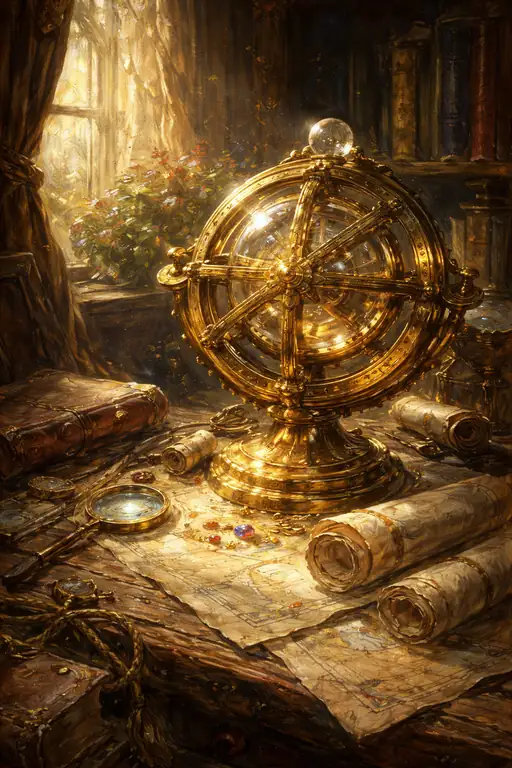 Wandering Through the Celestial Spheres