
The Lens That Loved the Light
Critique
1. Introduction This vibrant oil painting presents a sophisticated still life composition, focusing on the interplay between vintage technology and luminous glass objects. The work captures a collection of classic rangefinder cameras arranged alongside three brightly colored glass bottles, all resting upon a surface covered with paint-splattered sketches or papers. The overall atmosphere is one of creative energy and nostalgic appreciation for mechanical precision. 2. Description In the foreground, a prominent silver and black camera is rendered with meticulous detail, its lens catching the light and reflecting the surrounding environment. To the left, a second camera is partially visible, while behind them stand three glass bottles in distinct shades of amber-yellow, cerulean blue, and ruby red. The entire scene is set against a background and surface that vibrate with thick, gestural brushstrokes of varied colors, suggesting a studio or an artist’s workspace. 3. Analysis The artist employs a heavy impasto technique, where thick layers of paint create a tangible texture that mimics the tactile quality of the subjects. High-contrast lighting is used to define the metallic edges of the cameras and the translucent volumes of the bottles. The composition is balanced by the verticality of the bottles against the horizontal arrangement of the cameras, while the chaotic splashes of color on the papers provide a dynamic counterpoint to the solid forms. 4. Interpretation and Evaluation This work successfully bridges the gap between the rigid structure of mechanical devices and the fluid, expressive nature of oil painting. By placing the tools of photography within a heavily textured, painterly context, the artist explores the different ways in which we capture and interpret visual reality. The technical execution is exceptional, particularly in how the reflections on the glass and metal surfaces are achieved through bold, confident strokes. 5. Conclusion Through its rich palette and energetic application of paint, the composition transforms everyday objects into a celebration of light and form. The initial impression of a cluttered desk evolves into a profound study of the artist's relationship with the tools of observation. This piece stands as a compelling testament to the enduring beauty of analog objects in a digital world.
Same Subcategory
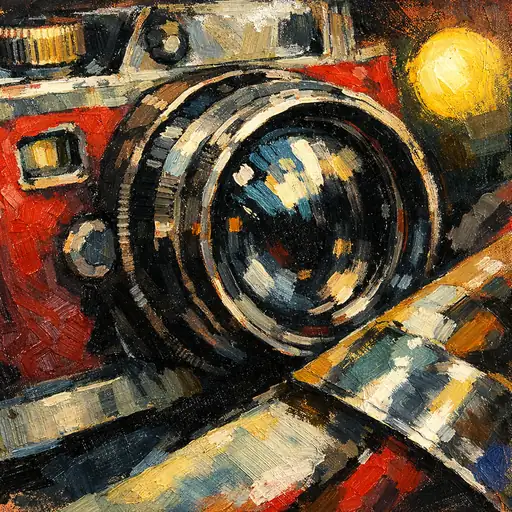 The Red Eye of Memory
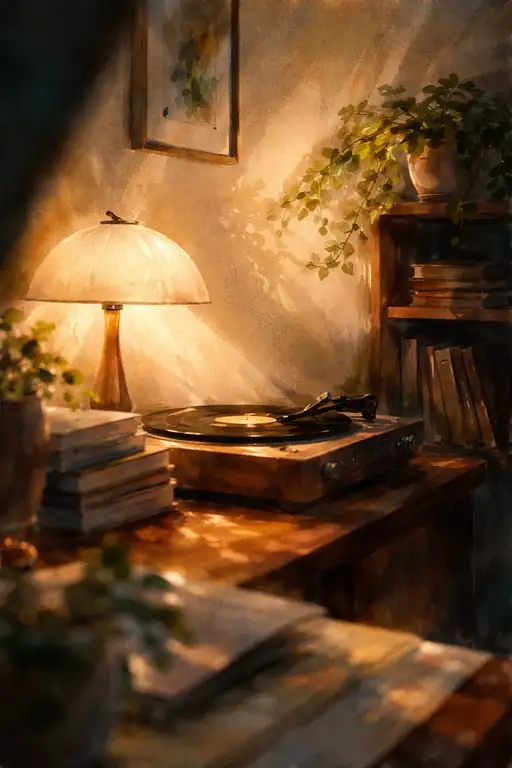 Echoes in the Amber Light
Similar Artworks
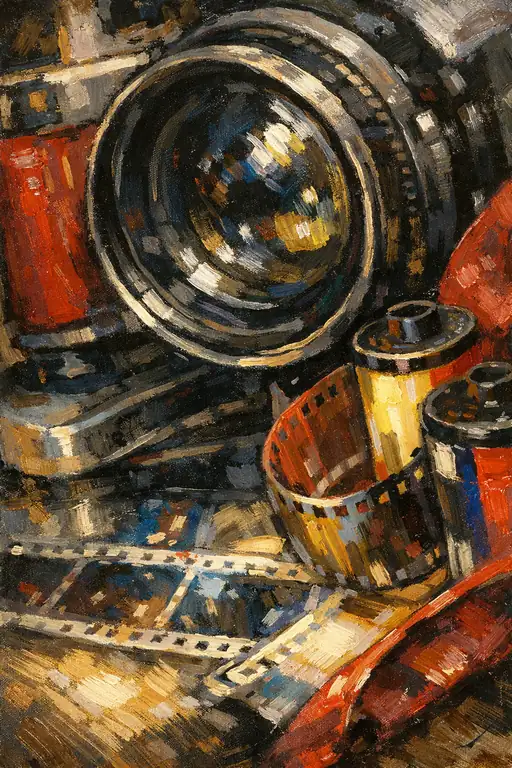 The Pulse of Tangible Memories
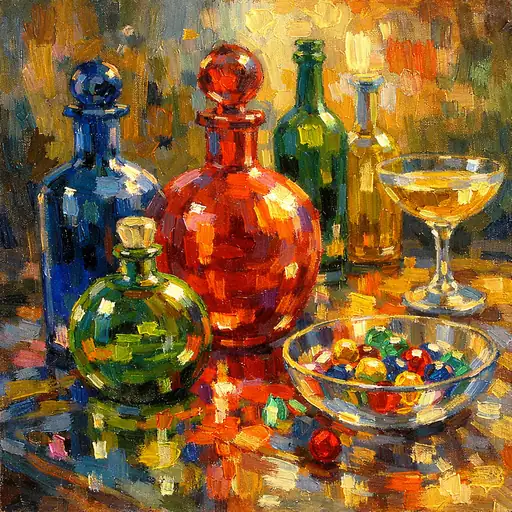 Symphony of Glass and Sugar
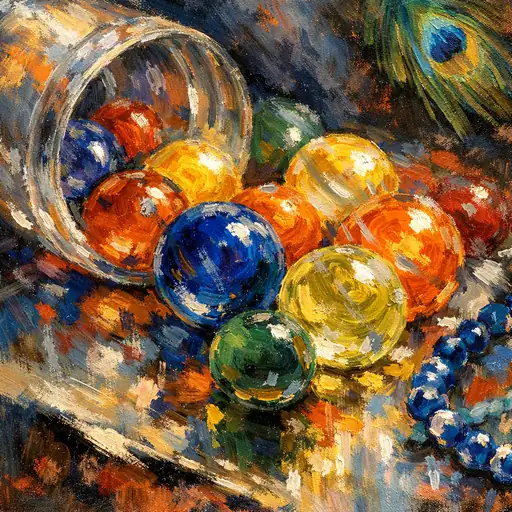 Chromatic Cascade: A Celebration of Light
 Fizzy Pulse of a Painted Era
 Galaxy of Childhood Memories
 Kaleidoscope of Consumption
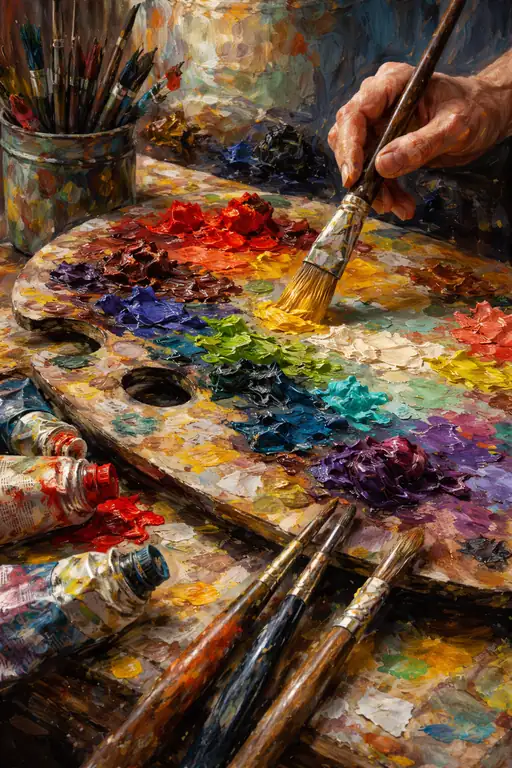 The Vibrant Pulse of the Artist's Soul
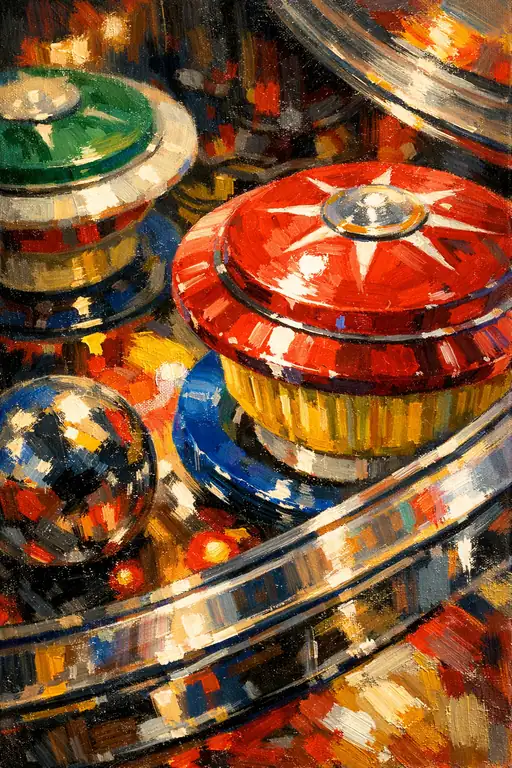 Electric Pulse: Symphony of Light and Steel
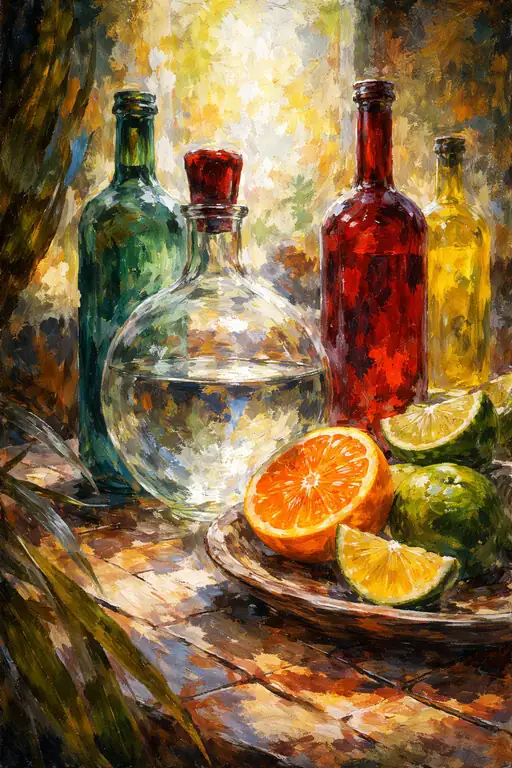 Luminous Whispers in Glass
 A Prism of Childhood Memories