
Radiant Tears of the Night
Critique
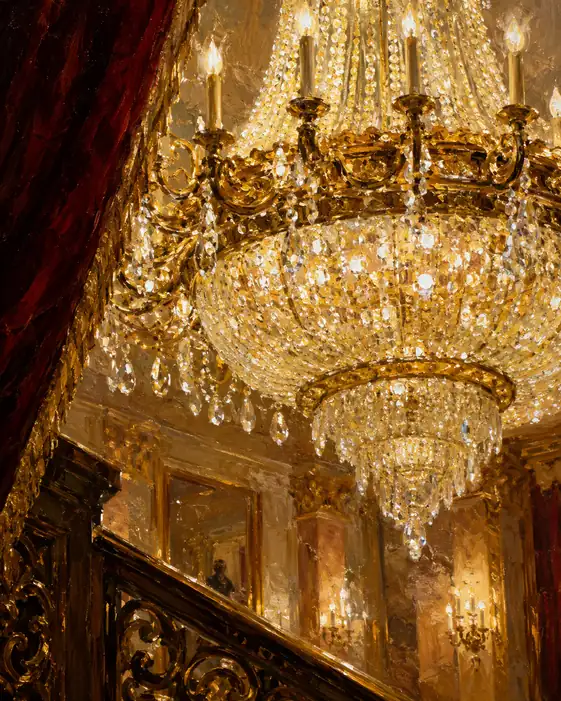
1. Introduction This oil painting presents a sophisticated study of light, glass, and metal, focusing on the intricate details of a baroque-style chandelier. Utilizing a heavy impasto technique, the work explores the complex optical phenomena of reflection and refraction, transforming a functional object into a luminous spectacle. The composition is characterized by an opulent color palette and a dramatic perspective that emphasizes the tactile quality of the surface. 2. Description The subject is a series of large, teardrop-shaped crystal prisms suspended from an ornate golden armature. The crystals are multi-faceted, each surface catching and splitting light into a spectrum of colors. To the right, small bulbs cast a warm, golden glow that illuminates the intricate scrollwork of the frame. The background is a tapestry of dark and vibrant hues, providing a contrast that allows the shimmering foreground elements to stand out. 3. Analysis Formally, the artist demonstrates a mastery of impasto to represent contrasting materials. Golden metal is rendered with thick, linear strokes that suggest weight and sheen, while the crystals are defined by sharp, angular dabs of white, blue, and violet to simulate prismatic light. The use of diagonal lines in the lower-left creates a sense of depth, guiding the eye through the layered arrangement of hanging glass elements. 4. Interpretation and Evaluation The work can be interpreted as an exploration of the transformative power of light and the allure of luxury. By isolating a section of a grand object, the artist invites the viewer to appreciate the beauty found in reflections and the interplay of textures. Technically, the painting is successful in its ability to convey transparency and brilliance using opaque paint—a feat that showcases a sophisticated understanding of color and value. 5. Conclusion In conclusion, this painting is a dazzling display of virtuosity. The impression of brilliance gives way to an appreciation for the precise handling of texture and light that gives the scene its structure. It is a powerful example of how oil paint can capture ephemeral visual experiences, such as the flash of light through a crystal, with an enduring physical presence.
 The Dance of Prismatic Tears
 Cascading Brilliance
 Eternal Dance of the Crystal Light
 Prisms of a Golden Dream
 Splendor in the Stillness
 A Toast to the Fleeting Splendor
 Tears of the Golden Epoch
 Refractions of a Golden Dream
 Symphony of Crystal and Gold
 Prismatic Melodies of a Summer Afternoon
 Tears of the Grand Chandelier
 Captured Sunbeam