
The Radiant Promise of a Rainy Afternoon
Critique
1. Introduction This oil painting presents a compelling still life that bridges the gap between vibrant floral representation and atmospheric environmental conditions. The composition features a lush bouquet of anemones in a ceramic vase, positioned on a windowsill overlooking a rain-swept landscape. The work is notable for its dynamic use of texture and its ability to evoke a specific, bittersweet mood through the contrast of color and weather. 2. Description The bouquet is composed of anemones in a diverse range of colors, including crimson, yellow, blue, and white. Each flower is rendered with thick, expressive brushstrokes that provide a physical presence. The vase sits upon a dark sill where fallen petals and puddles of water are visible, reflecting diffused light. In the background, the window pane is covered in translucent streaks and droplets of rain, through which a blurred view of the outdoors can be glimpsed. 3. Analysis Formally, the painting relies on a contrast between the high-saturation colors of the flowers and the muted tones of the rainy exterior. The artist employs a varied application of paint, using impasto for the volume of petals and thin, vertical washes to simulate water flowing down the glass. Reflections on the wet sill are effective, utilizing small dabs of bright color to suggest light on a liquid surface, thereby enhancing the depth of the foreground. 4. Interpretation and Evaluation The work can be interpreted as an exploration of resilience and the persistence of beauty amidst a melancholic environment. The flowers represent a pocket of vitality juxtaposed against the cold reality of the rainy day. The technical execution is exceptional, specifically in the rendering of rain droplets which appear both realistic and expressive. The artist successfully balances detailed observation with gesture, resulting in a scene that feels both observed and felt. 5. Conclusion In conclusion, this painting is a sophisticated study in contrast and atmosphere. The draw of the bright, textured flowers leads the viewer toward an appreciation of the subtle, expertly rendered weather effects. It is a powerful example of how a traditional still life can be elevated into a narrative piece that captures the emotional intersection of nature's beauty and its more somber moods.
Same Subcategory
 Sanctuary of the Luminous Bloom
Similar Artworks
 Sunlit Bloom
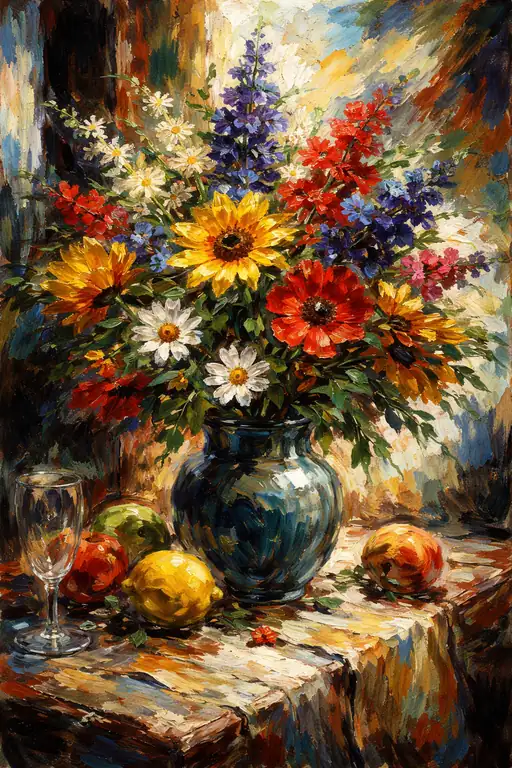 Symphony of the Bountiful Bloom
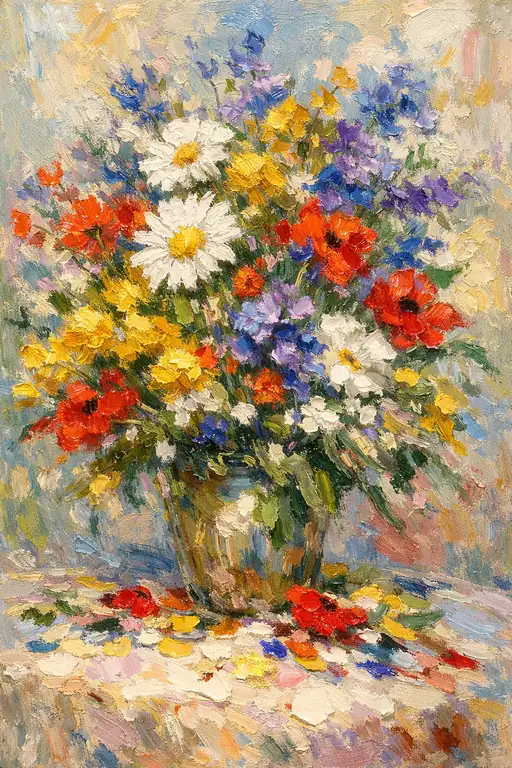 Eulogy in Wild Blooms
 The Fragrant Silence of a Spring Morning
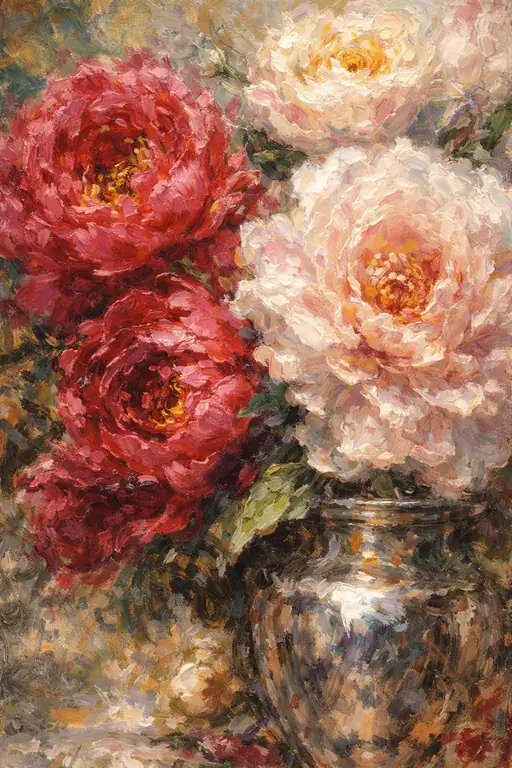 Symphony of the Crimson Bloom
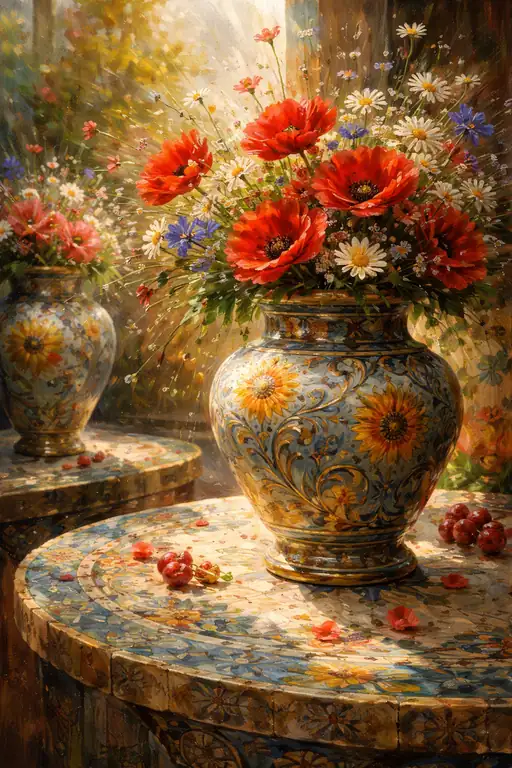 Golden Light Bathing the Floral Life
 Golden Rays Kissing the Morning Petals
 Crimson Vitality Against the Rain
 Wild Heart's Crimson Bloom
 Breeze Through the Hydrangeas