
Serenade of the Blooming Light
Critique
1. Introduction This oil painting presents a classical interior scene featuring a young woman interacting with an ornate floral arrangement. The work adheres to the traditions of late nineteenth-century realism, emphasizing elegance and domestic refinement through a detailed depiction of a private moment. 2. Description A woman dressed in a flowing, lace-trimmed gown leans toward a large golden vase filled with a variety of lush flowers, including peonies and roses. The scene is set upon a marble-topped table adorned with a silver platter of peaches and grapes, a delicate teacup, and scattered petals. The background consists of a textured, neutral-toned wall that catches a strong beam of light from an unseen window above. 3. Analysis The artist utilizes a warm color palette dominated by golds, creams, and vibrant floral reds to create a sense of opulence. Dramatic chiaroscuro is employed, with the primary light source illuminating the woman's face and the translucent fabric of her dress while casting deep shadows in the room's corners. The brushwork varies from the smooth, precise rendering of the woman's skin to the more expressive, painterly strokes used for the bouquet and the falling drapery. 4. Interpretation and Evaluation The composition successfully guides the viewer’s eye along the diagonal line formed by the woman’s arm toward the central bouquet, creating a balanced yet dynamic arrangement. The meticulous attention to texture, particularly the contrast between the cold marble and the soft petals, demonstrates high technical proficiency. The piece captures a sense of quiet contemplation, elevating a mundane act into a celebratory display of light and form. 5. Conclusion Through its sophisticated use of light and rich materiality, the painting achieves a harmonious balance between classical portraiture and still-life traditions. The technical execution of the drapery and the floral elements ensures a lasting impression of beauty and skillful craftsmanship.
 The Ethereal Dialogue of White Roses
 A Quiet Encounter with Blooming Opulence
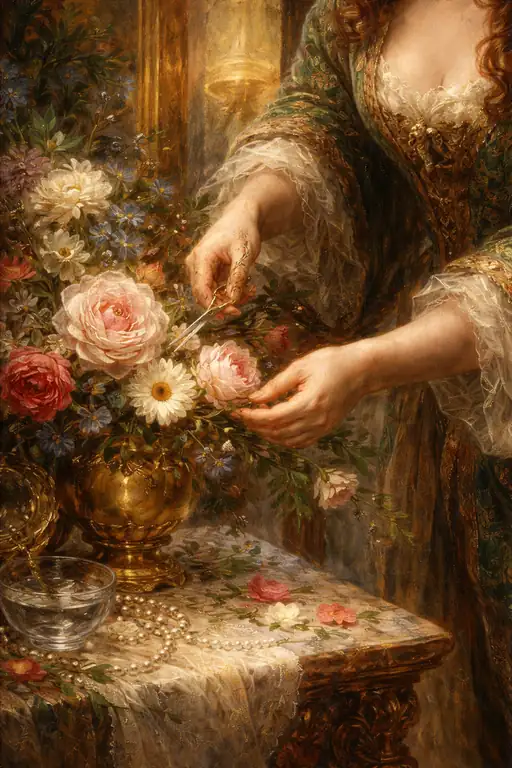 Opulence in the Parlor
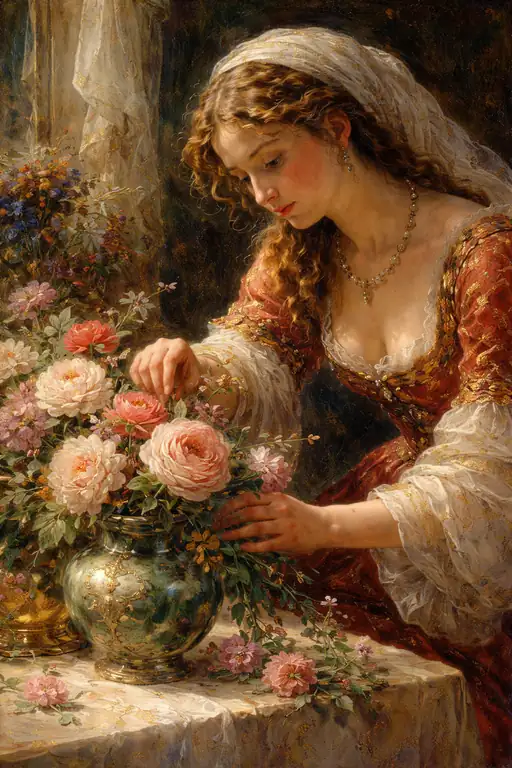 A Quiet Moment with Roses
 A Gaze Upon Blooms: The Fragrance of Fleeting Peace
 Whispering Petals
 Veiled Grace among the Roses
 Golden Whispers in the Loggia
 Grace in Bloom
 The Golden Harmony of Grace
 Tender Grace of the Morning Light