
Fragments of a Luminous Dream
Critique
1. Introduction This still life oil painting presents a focused, macro perspective on a collection of contrasting objects, emphasizing the interplay of light and texture. The composition centers on the relationship between geometric and organic forms, rendered with a bold, expressive hand. It invites the viewer to examine the intricate details of light reflection on various surfaces. The artist avoids traditional realism in favor of a more energetic and tactile interpretation of the subjects. 2. Description The left side of the canvas is dominated by a large, multifaceted object resembling a cut gemstone or diamond. To its right, a curved, reflective surface suggests a metallic or glass vessel, echoing the surrounding colors. In the lower right corner, two vibrant red spherical shapes provide a sharp chromatic contrast to the cooler tones. The entire scene is set against a dark, ambiguous background that enhances the luminosity of the primary elements. 3. Analysis The work is characterized by a vigorous impasto technique, where thick layers of paint create a rich, physical topography. The brushwork is deliberate and fragmented, using short, rhythmic strokes to define the facets of the gem and the curves of the vessel. The color palette is complex, juxtaposing cool cerulean and cobalt blues with warm cadmiums and ochres. These hues are masterfully blended through the reflections, creating a unified sense of atmosphere despite the fragmented application. 4. Interpretation and Evaluation The painting explores the concept of light as a transformative force that dissolves solid forms into patterns of color. The depiction of transparency and reflection is handled with great skill, capturing the essence of the materials without relying on fine lines. The composition feels dynamic and slightly off-balance, which adds a sense of immediacy to the scene. The contrast between the rigid geometry of the gem and the soft curves of the spheres demonstrates a sophisticated understanding of formal relationships. 5. Conclusion Ultimately, the piece succeeds in elevating a simple arrangement of objects into a compelling study of light and movement. The tactile quality of the surface adds a layer of depth that encourages prolonged observation beyond the initial visual impact. My understanding of the work evolved from seeing a mere representation to appreciating a complex orchestration of color and texture. This painting stands as a strong example of how expressive technique can reveal the hidden vitality within inanimate subjects.
Same Subcategory
 Beacon in the Deep Earth
 A Frozen Tear of Infinite Mystery
Similar Artworks
 Luminous Geometry
 The Sparkle of Life
 A Prism of Childhood Memories
 The Pulse of Prismatic Passion
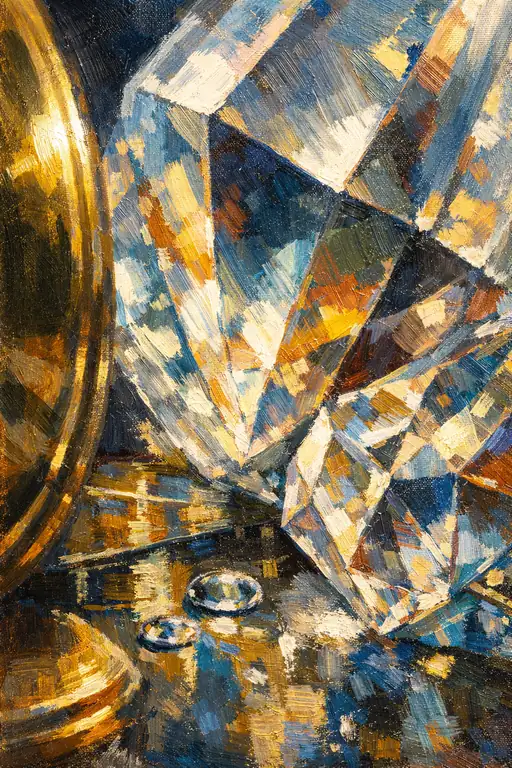 Shattered Light of Eternity
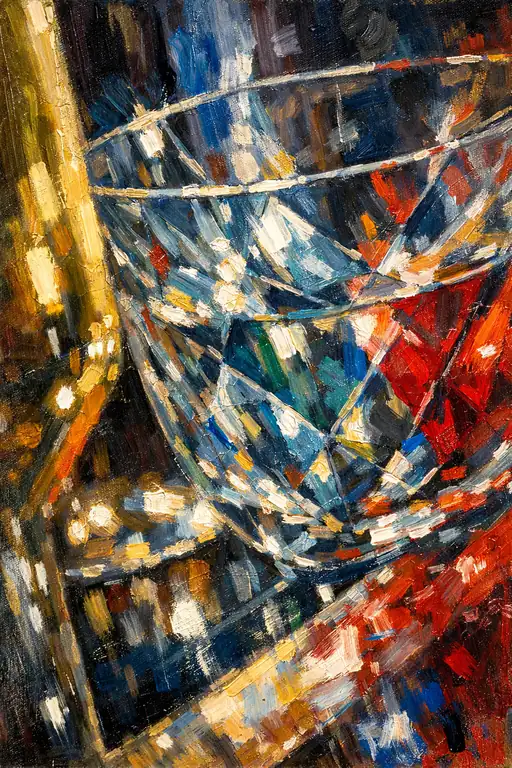 The Fractured Light of Memory
 A Sphere of Hidden Desires
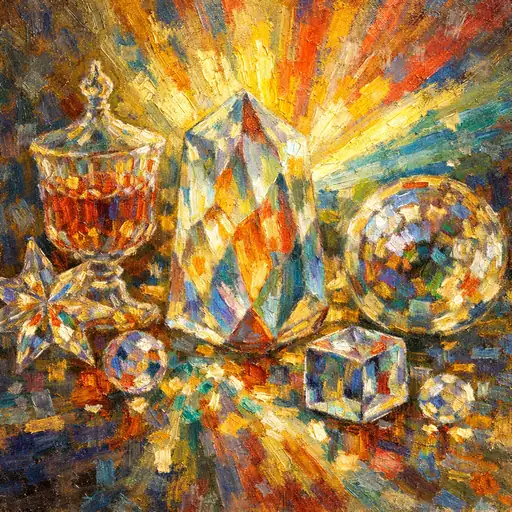 Prismatic Radiance: A Symphony of Refracted Light
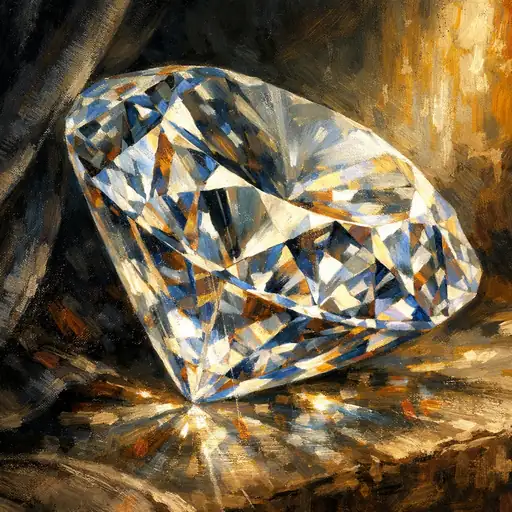 The Fire Within the Crystalline Heart
 Frozen Time: Reflections in Blue