
Honor Bound in Steel and Gold
Critique
1. Introduction This powerful oil painting presents a detailed study of a suit of medieval armor, focusing on the textures of metal, fabric, and ornate decoration. The composition is a tight, vertical close-up that emphasizes the solidity and presence of the subject. A sense of historical weight and martial dignity permeates the scene, rendered through a highly expressive and textural application of paint. 2. Description The central focus is the steel helmet and gorget, which exhibit multiple layers of reflective highlights and deep shadows. A golden lion crest is prominently displayed on the breastplate, surrounded by laurel-like wreaths. To the right, a hilt of a sword with a golden pommel is visible, wrapped in dark leather and accented with red fabric that drapes across the composition. The background is dark and indistinct, further highlighting the armor. 3. Analysis The artist employs a sophisticated palette of metallic greys, burnished golds, and deep reds. A heavy impasto technique is used throughout the work, with thick, visible brushstrokes defining the form of the metal and the richness of the red cloth. This textural approach creates a tactile quality that suggests the weight of the armor, while the dynamic highlights convey the play of light across its polished and battle-worn surfaces. 4. Interpretation and Evaluation The work explores themes of protection, honor, and the enduring legacy of chivalric traditions. The technical skill in rendering the different reflective properties of the steel and gold is exceptional, as is the handling of the rich, expressive red fabric. By choosing a close-up perspective, the artist transforms the functional object of the armor into a compelling symbol of strength and individual identity. 5. Conclusion In summary, the painting is a masterful display of technical proficiency and emotive power within the genre of historical still-life. The initial impression of cold metal is tempered by the warmth of the gold and red elements, creating a balanced and visually arresting composition. It stands as a profound exploration of the intersection between craftsmanship and the symbolic weight of historical artifacts.
 The Grip of Honor and Ceremony
 Dewdrops on Steel
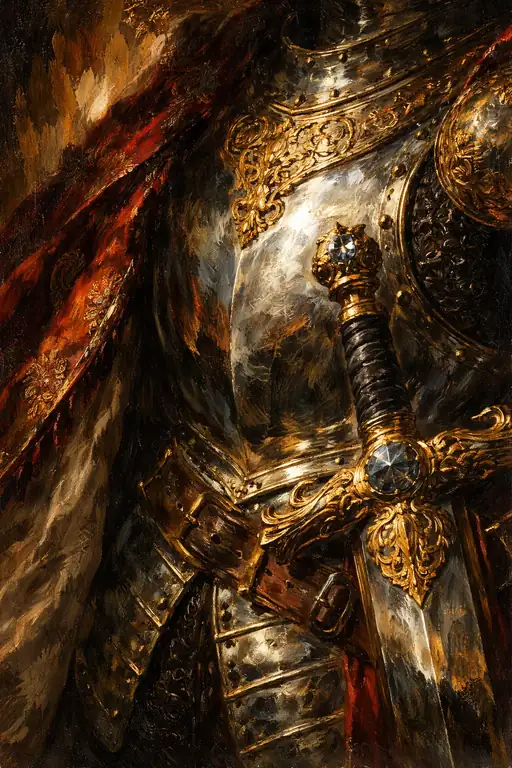 Steel Resolve in Golden Light
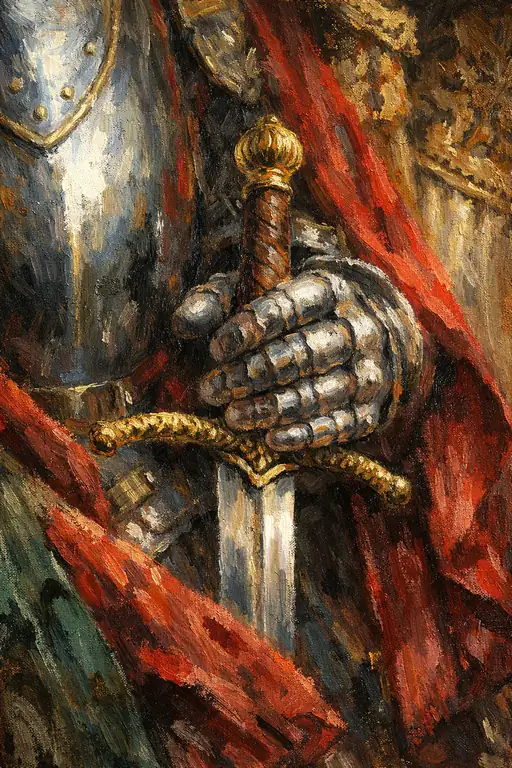 The Iron Resolve
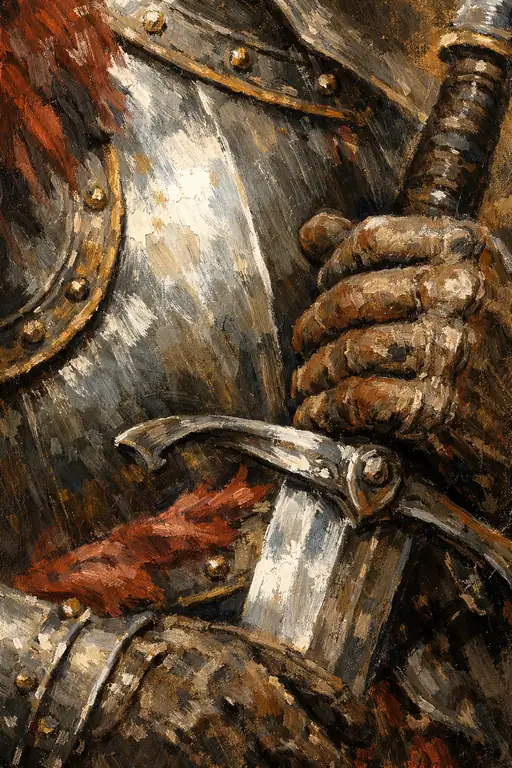 Echoes of a Forgotten Vow
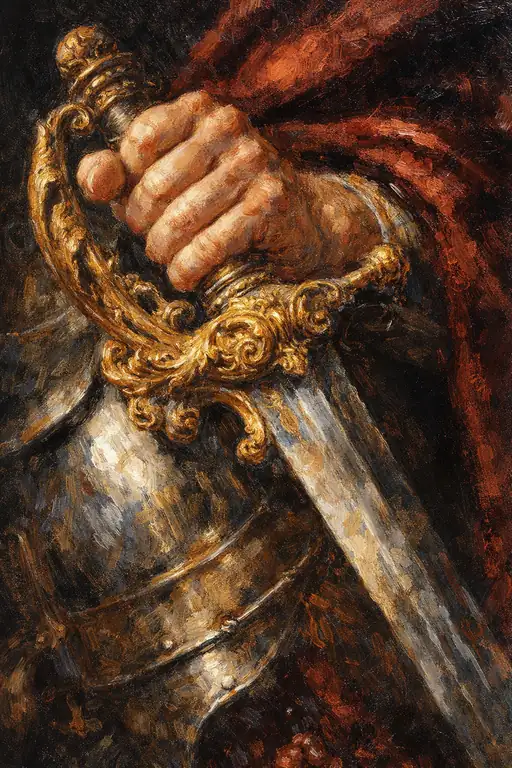 Grip of the Sovereign
 The Silent Oath
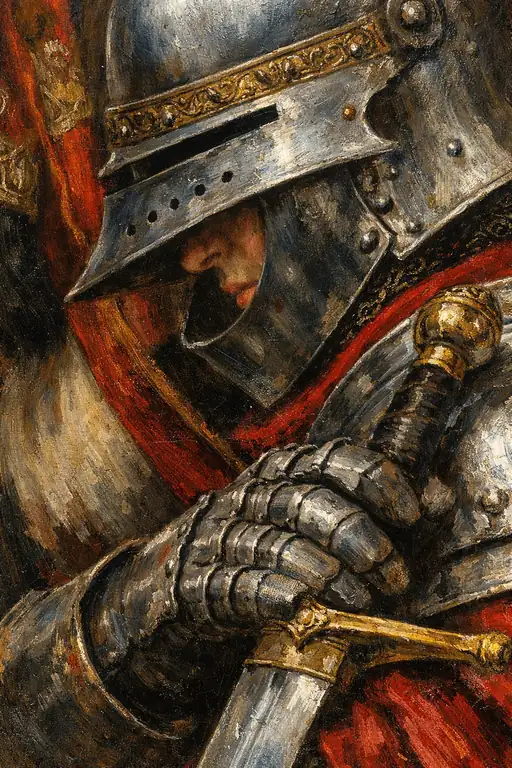 Grip of the Valiant Knight
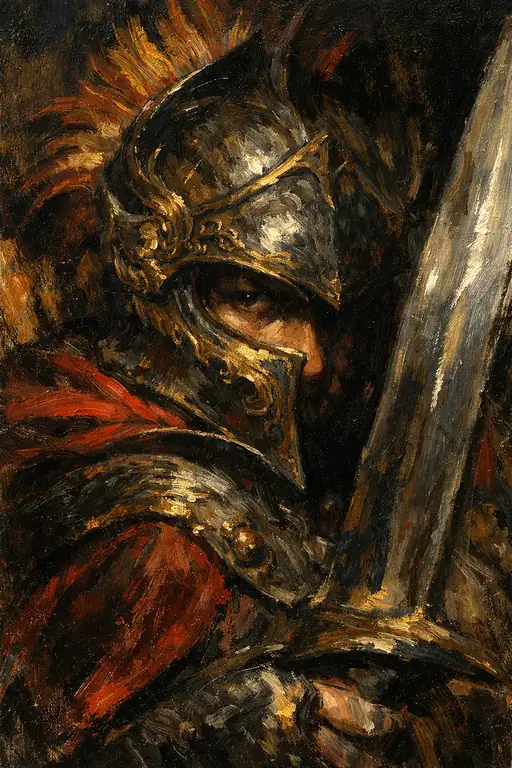 Steadfast Resolve in Iron
 Iron Will and Fading Echoes
 Weight of Steel
 Aura of the Golden Vanguard