
Refractions of a Golden Dream
Critique
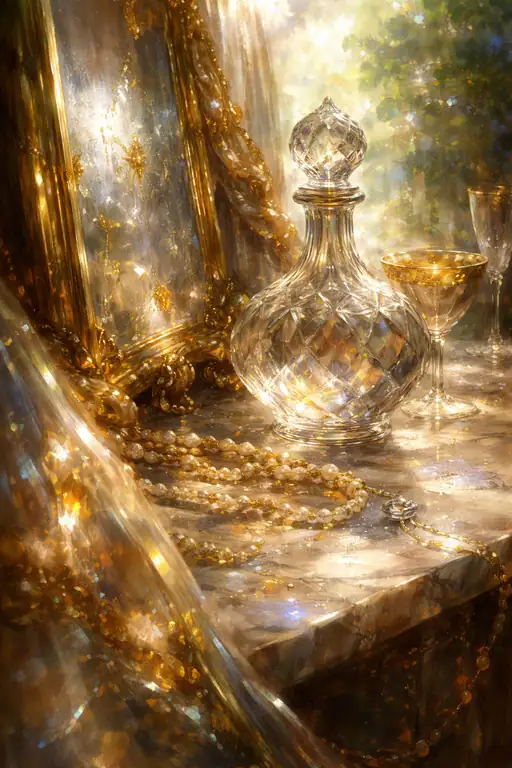
1. Introduction This oil painting presents a meticulous still-life study centered on the interplay of light and glass. The composition features a primary crystal decanter accompanied by smaller vessels, all resting upon a highly reflective surface. The scene is enveloped in a warm, golden atmosphere that emphasizes a sense of luxury and refined aesthetic taste. 2. Description In the foreground, a prominent decanter with intricate diamond-cut patterns stands as the focal point, its surface catching and refracting intense light. To its left, a small matching glass is positioned on a gold-rimmed base, while other blurred vessels occupy the background. The reflective base mirrors the objects with prismatic clarity, creating a complex web of highlights and shadows across the entire lower half of the frame. 3. Analysis The artist utilizes a warm color palette dominated by ambers, golds, and deep ochres to create a cohesive sensory experience. Sharp, impasto-like brushstrokes define the specular highlights on the crystal edges, contrasting with the soft, out-of-focus bokeh effects in the background. The vertical orientation and tight framing draw the viewer’s eye through the layered depths of refractive glass and luminous reflections. 4. Interpretation and Evaluation The work explores themes of brilliance and the transformative power of light on material objects. The technical execution of the complex reflections demonstrates a high degree of skill in capturing transparency and depth. While the subject matter is traditional, the dynamic use of light and the slightly expressive application of paint provide a modern energy that transcends mere academic representation. 5. Conclusion Ultimately, the painting serves as a celebration of visual radiance and the intricate beauty found in crafted objects. The initial impression of simple luxury evolves into a deeper appreciation for the technical mastery required to render such a complex optical environment. It stands as a compelling testament to the enduring appeal of light as a primary subject in the still-life genre.
Same Subcategory
Similar Artworks
 Symphony of Amber and Crystal Shadows
 Tears of Faceted Dreams
 Crystalline Dreams
 Vials of Memory: The Radiance of Timeless Elegance
 Reflections of Elegance
 Luminous Reflections of Antiquity
 Whispers of Elegance Caught in Glass
 Echoes of a Gilded Accumulation
 Luminous Elegance
 The Silence After the Toast