
The Pulse of Tangible Memories
Critique
Introduction This dynamic and expressive still-life painting focuses on the tools of analog photography, featuring a large camera lens, film canisters, and unspooled strips of 35mm film. The work is characterized by its bold, energetic brushwork and a fragmented approach to light and shadow, reminiscent of post-impressionist styles. Rather than a clean, technical depiction, the artist presents these objects as vibrant, almost living entities, capturing the spirit of a bygone era of mechanical image-making. The composition is tightly cropped, forcing the viewer to confront the physical presence and tactile quality of the photographic equipment. Description The central focal point is a massive, dark camera lens, its glass surface reflecting a kaleidoscope of warm and cool tones through thick, deliberate strokes of paint. Below and to the right, several film canisters are depicted, one of which has a strip of film unspooling from it. The film strips, with their distinctive sprocket holes, snake across the foreground and background, creating a sense of movement and depth. The camera body itself is suggested by dark, heavy forms on the left. The color palette is a rich mix of deep reds, ochres, and silvers, all applied with a heavy impasto technique that gives the surface a rugged, physical texture. Analysis Technically, the painting relies on the power of the stroke to define form and light. The circular shape of the lens provides a strong geometric anchor, contrasted by the linear, ribbon-like quality of the film strips. The artist uses a wide range of values, from deep blacks to bright, creamy highlights, to create a sense of shimmering light on metallic and glass surfaces. The impasto technique is particularly effective here, as the physical thickness of the paint mimics the layered nature of film and the heavy construction of vintage cameras. The composition follows a diagonal path, leading the eye from the lens down through the cascading film. Interpretation and Evaluation The work can be interpreted as a tribute to the "mechanical eye" and the tactile nature of capturing time on film. There is a strong sense of nostalgia and reverence for the physical processes of photography, standing in contrast to the ephemeral nature of the digital age. The evaluation of this piece must highlight the successful balance between abstraction and representation; while the objects are clearly identifiable, the focus remains on the expressive quality of the paint itself. The composition is energetic and engaging, avoiding the stillness often found in traditional still lifes. Its originality lies in the raw, visceral handling of a subject typically associated with precision and clarity. Conclusion In conclusion, the painting is a powerful and evocative exploration of photographic history through a highly personal and expressive lens. It successfully transforms technical equipment into a subject of profound artistic interest, capturing both the form and the spirit of analog media. The final impression is one of energy, weight, and a deep appreciation for the materiality of the image. This work leaves the viewer with a renewed sense of the beauty found in the tools of creation, reminding us of the physical labor and mechanical ingenuity that underpin our visual history. It is a bold statement on the enduring power of the tangible.
 Fizzy Pulse of a Painted Era
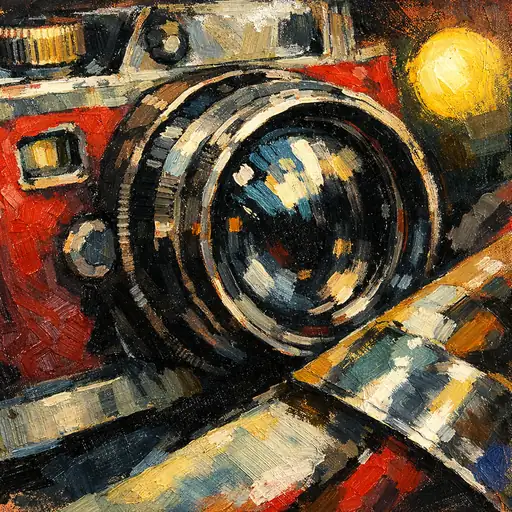 The Red Eye of Memory
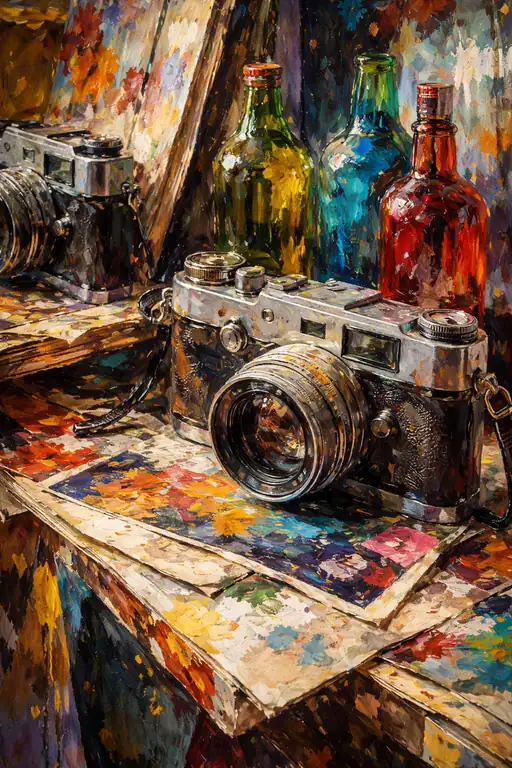 The Lens That Loved the Light
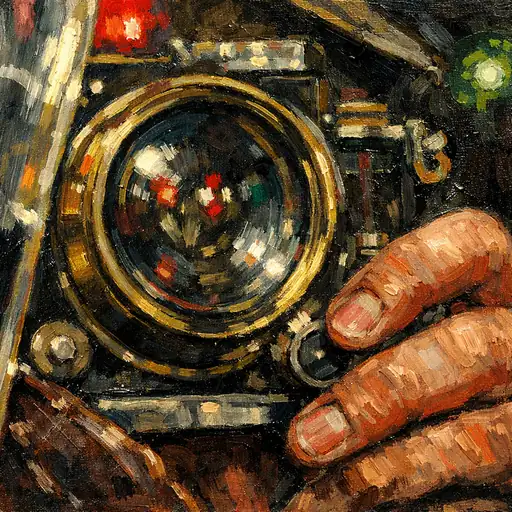 The Touch of Time
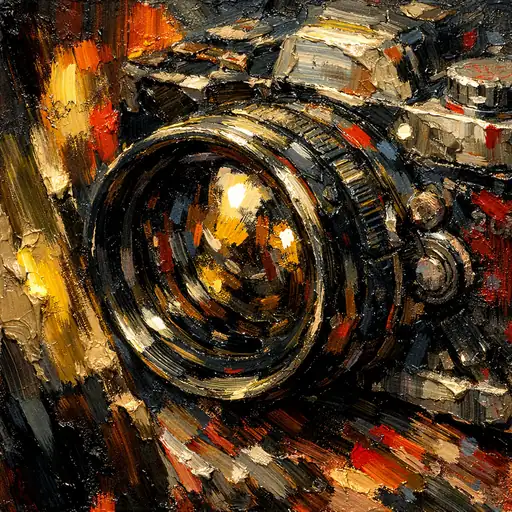 The Mechanical Eye That Captures Time
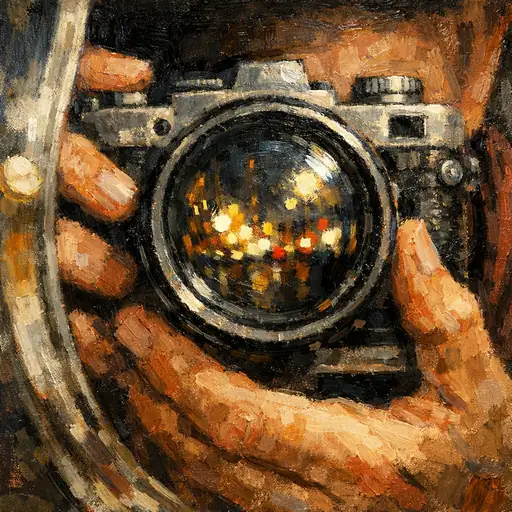 Cradling the Eye of Memory
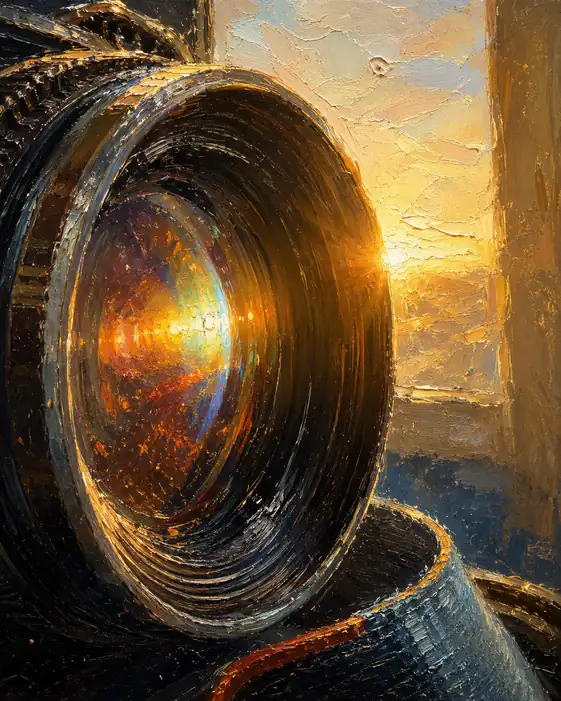 The Eye that Swallows the Sun
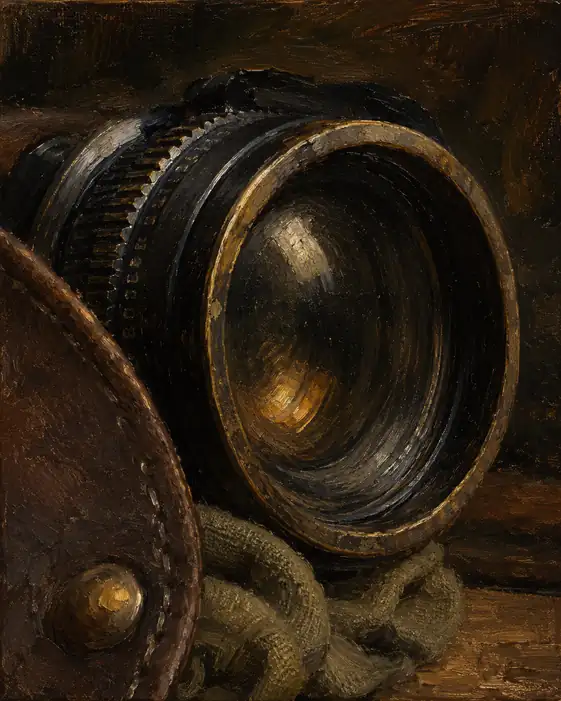 The Silent Witness of the Gaze
 The Groove of Nocturnal Rhythms
 Echoes of a Vibrant Thirst
 Symphony of Glass and Sugar