
Hands of the Earth: A Silent Symphony of Clay
Critique
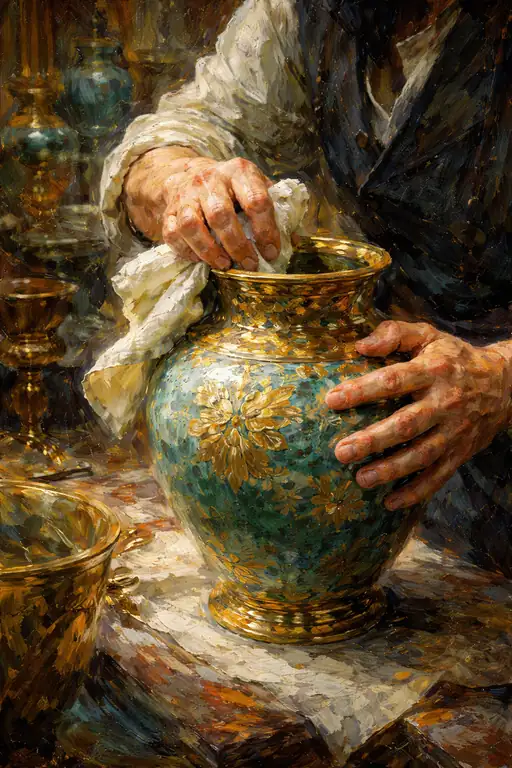
1. Introduction This powerful vertical painting captures the primal and creative act of pottery, focusing on a pair of rugged, clay-covered hands shaping a large vessel. Set in a rustic, tool-filled studio, the scene is a testament to the physical labor and artistic dedication inherent in craft. The artist uses an intense impasto technique that mirrors the very texture of the clay being formed. This critique explores how the tactile application of paint and the earthy color palette evoke a deep sense of connection between the artist and their medium. 2. Description At the center, two strong, weathered hands are shown in the process of smoothing the rim of a tall clay pot on a rotating wheel. The potter wears a simple white shirt and a dark apron, both splattered with the marks of their trade. In the background, a ceramic jar overflowing with brushes and a shallow bowl of water sit on a rough-hewn workbench. The lighting is focused and dramatic, highlighting the muscularity of the hands and the wet sheen of the unbaked clay, while the rest of the studio remains in shadow. 3. Analysis The most striking element of the work is the heavy, physical application of paint. Broad, confident strokes with a palette knife create a rugged texture that brings the clay and the potter's skin to life with extraordinary realism. The color scheme is almost entirely monochromatic, relying on various shades of ochre, burnt sienna, and umber to create a warm, unified atmosphere. The composition is tightly focused on the interaction between the hands and the pot, creating a powerful focal point that radiates outward through the scattered tools. 4. Interpretation and Evaluation This painting can be interpreted as a celebration of the human spirit and the transformative power of manual labor. The potter’s hands are not just tools but the instruments of a spiritual practice, turning raw earth into a functional and beautiful object. The thick paint itself becomes a metaphor for the clay, bridging the gap between the act of painting and the act of potting. The work is highly successful in its emotional impact, conveying a sense of timelessness and the enduring value of traditional craftsmanship in a modern world. 5. Conclusion Initially struck by the sheer physicality of the brushwork, one soon begins to feel the rhythmic movement of the potter's wheel and the concentration required for such a task. The painting masterfully captures the essence of creation, where the boundaries between the creator, the tool, and the object become blurred. It demonstrates a profound understanding of light, texture, and human anatomy, resulting in a work that is both visceral and deeply moving. This piece stands as a tribute to the dignity of work and the beauty found in the simplest of materials.
Same Subcategory
 The Magic Flowing From My Fingertips
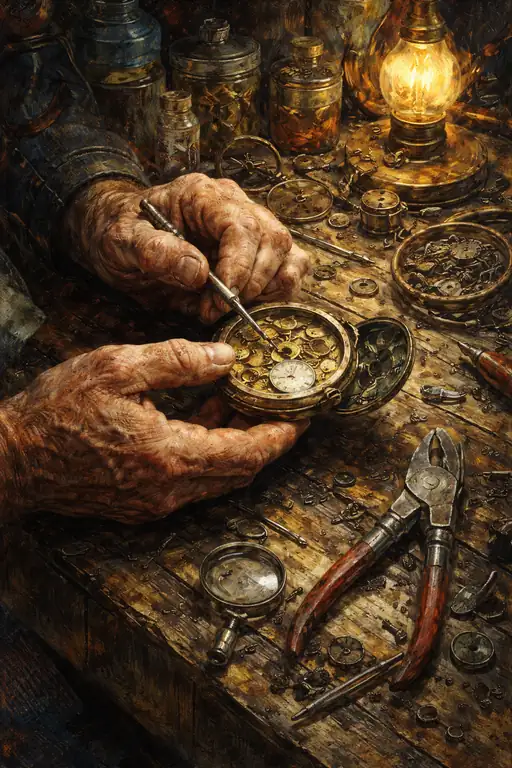 The Watchmaker's Infinite Patience
Similar Artworks
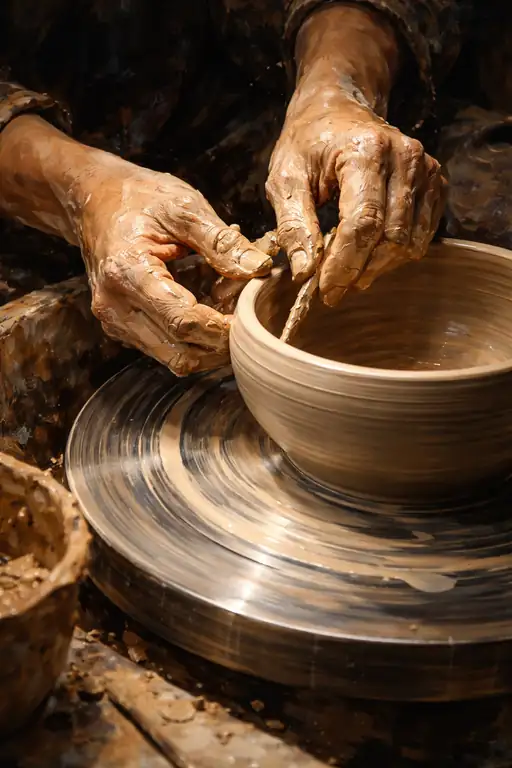 Earthly Genesis: Form from Formless Clay
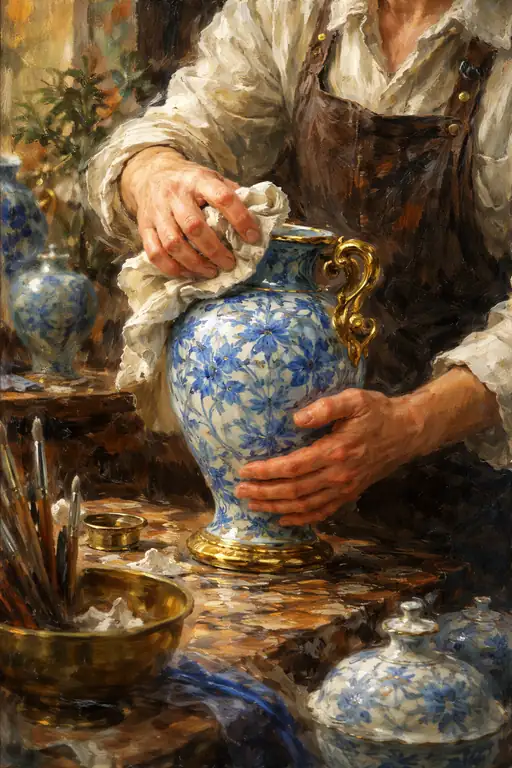 Gentle Hands of the Blue Heritage
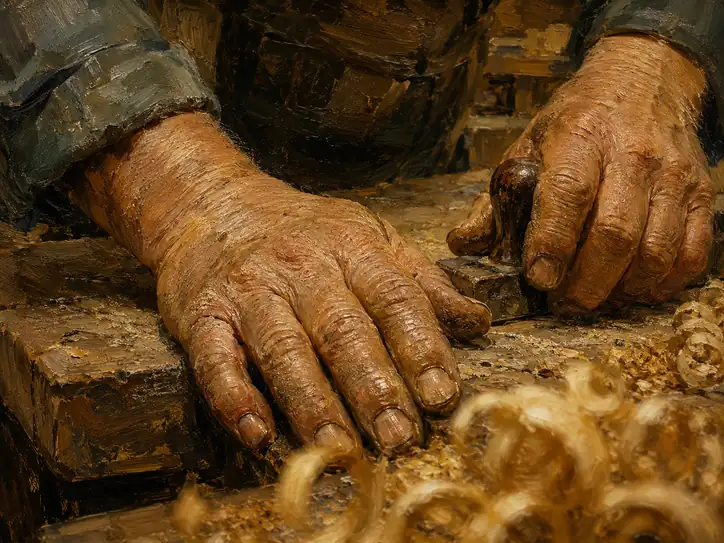 Prayer in the Grain
 The Master's Touch: Awakening the Azure Bloom
 Wisdom in the Clay
 Sunlit Clay and the Artisan's Soul
 Sunlit Rustic Pottery Workshop
 The Devotion of an Artisan's Touch
 Polishing the Echoes of Time
 A Creator's Devotion in Clay and Color