
The First Breath of the Thaw
Critique
1. Introduction This oil painting presents a stark yet intimate view of a frozen wilderness, where ice and rock meet in a narrow, shadowed crevice. The central motif—a single water droplet suspended from a slender branch—introduces a sense of time and transition to the otherwise static landscape. It is a work that explores the delicate balance between the harshness of winter and the subtle promise of a thaw, inviting a focused meditation on nature's quiet details. 2. Description The artwork features a towering wall of crystalline ice on the left, rendered with sharp, angular strokes that suggest a fractured surface. On the right, a rugged rock face provides a warm, earthy contrast in color and texture. Bridging these two masses is a small, dark branch, from which a single, translucent droplet of water hangs, reflecting a pale, ambient light. Below, a small pool of dark water catches the highlights from above, indicating a slow, ongoing process of melting. 3. Analysis The composition is tightly framed, emphasizing the claustrophobic yet fascinating interior of the ice formation. The artist employs a stark contrast between the cool, high-key whites of the ice and the deep, saturated browns of the rock to create a strong sense of volume. The brushwork is highly textural, with thick impasto used to define the ruggedness of the stone and the sharp edges of the frozen wall. Light is used strategically to illuminate the water droplet, making it the undeniable focal point of the piece. 4. Interpretation and Evaluation This piece evaluates the theme of endurance and the inevitable cycle of the seasons. The water droplet serves as a powerful symbol of change, representing the first signs of life in an environment dominated by frost. Technically, the artist’s ability to render the different physical properties of ice, rock, and liquid water is exceptional. The balance of warm and cool tones, combined with the mastery of texture, results in a highly original and evocative landscape study. 5. Conclusion Ultimately, the painting is a profound observation of the natural world’s more hidden and transient moments. The initial impression of a cold, unforgiving scene gradually reveals a delicate story of transformation and resilience. It stands as a testament to the power of representational art to find significant meaning in the most subtle of subjects, leaving the viewer with a sense of quiet wonder.
 Crystal Tears of the Awakening Spring
 Weeping Winter, A Golden Promise
 The Pulse of Winter's Dream
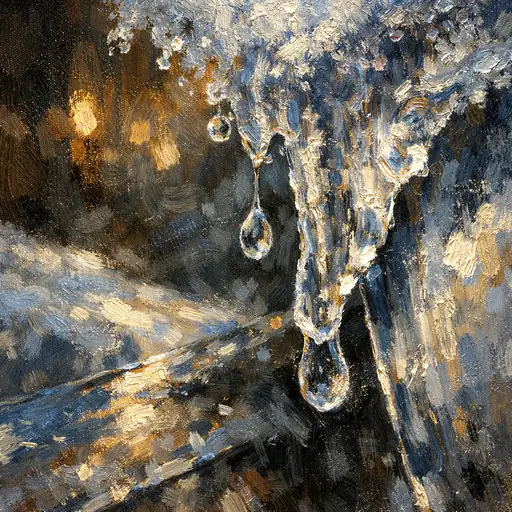 Tears of the Winter Sun
 Golden Meltdown
 Weeping Winter
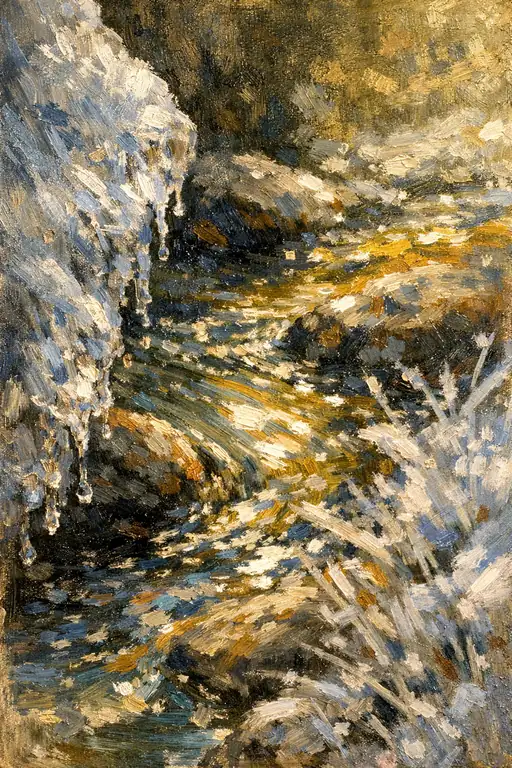 Echoes of the Frozen River
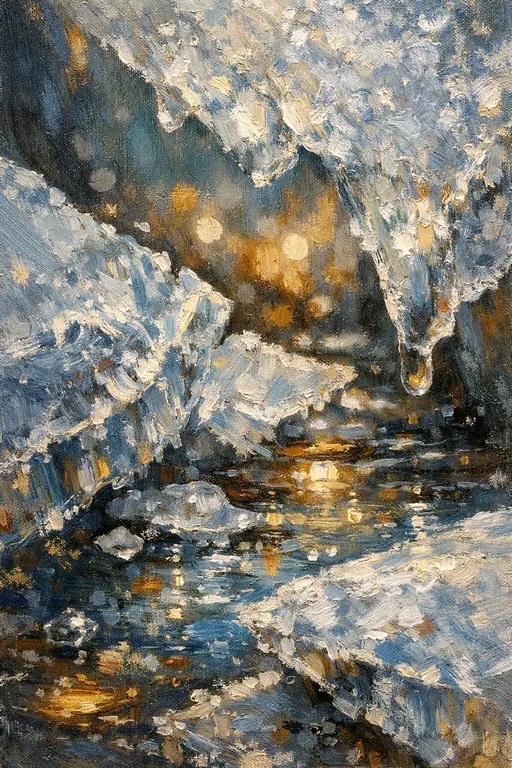 Golden Echoes in the Frost
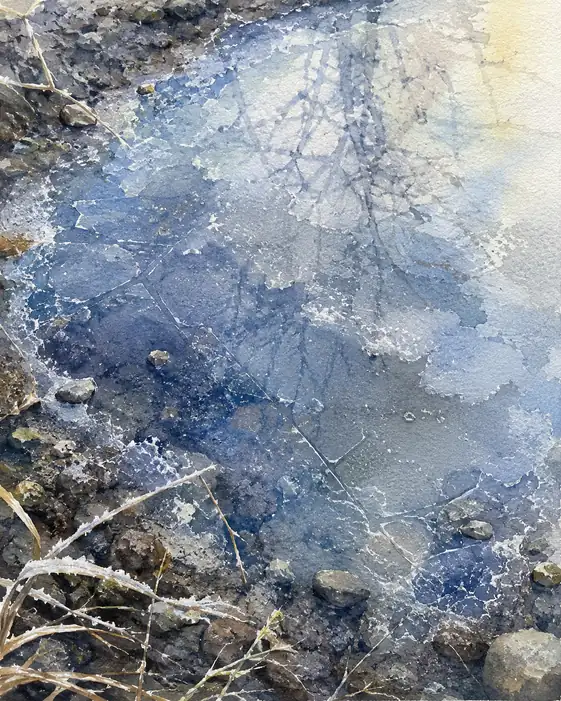 Crystalline Memories of a Winter Morning
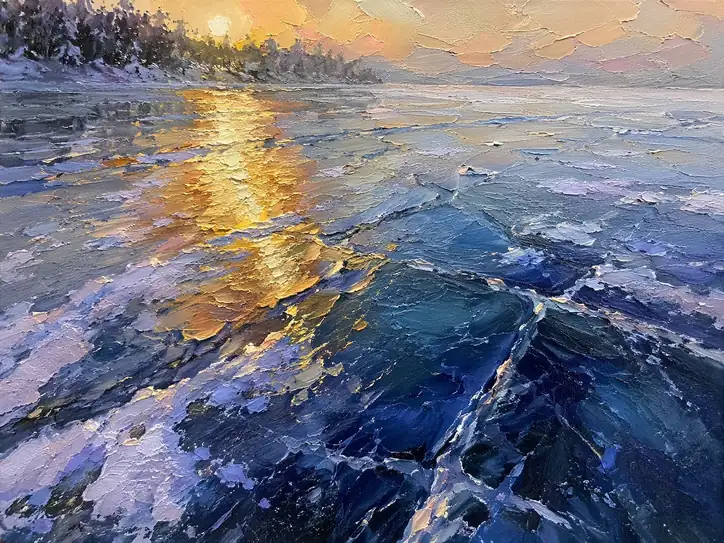 The Golden Hour Thaw: A Textured Solitude