
The Song of the Silver Rapids
Critique
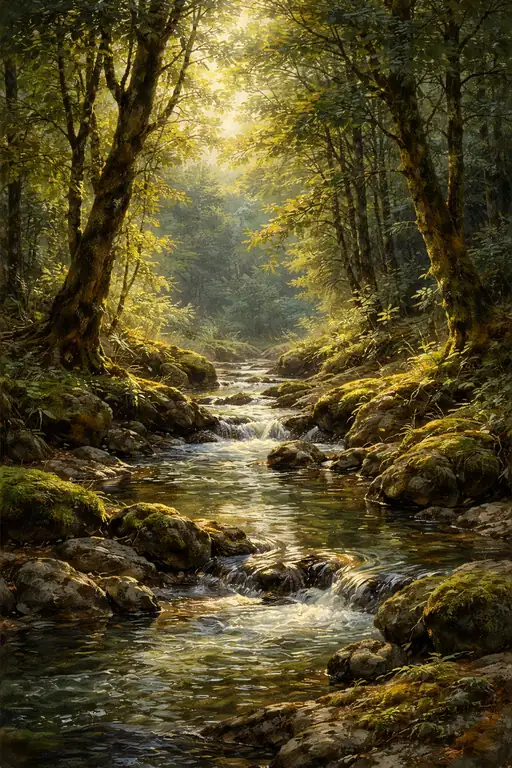
1. Introduction This oil painting presents a vivid depiction of a secluded mountain stream, where the interplay of light and water creates a refreshing natural scene. The composition focuses on a dynamic cascade flowing over moss-covered stones, framed by lush foliage and delicate wildflowers in the foreground. It captures a fleeting moment of serene beauty, inviting the viewer to contemplate the peaceful rhythms of the wilderness. 2. Description The artwork features a narrow stream cascading diagonally from the upper right toward the lower left, its surface reflecting a bright, golden light. In the lower-left foreground, a large, moss-encrusted rock serves as a base for several pale purple and white bell-shaped flowers on slender stems. Above, a canopy of vibrant green leaves filters the sunlight, which illuminates the mist and spray rising from the rushing water. 3. Analysis The artist utilizes a strong diagonal composition to guide the eye through the movement of the water, creating a sense of continuous energy. Contrast is effectively employed between the dark, shaded areas under the leaves and the brilliant, high-key highlights on the water's surface. The texture of the moss and the ruggedness of the rocks are rendered with thick, expressive brushstrokes, providing a tactile quality that balances the ethereal nature of the light. 4. Interpretation and Evaluation This piece evaluates the harmony between the enduring strength of stone and the transient sparkle of flowing water. The inclusion of the fragile wildflowers adds a layer of vulnerability and seasonal poignancy to the otherwise robust landscape. Technically, the handling of the water’s translucency and the dappled light is exceptional, demonstrating a sophisticated understanding of natural phenomena and atmospheric perspective. 5. Conclusion Ultimately, the painting succeeds in transporting the observer to a tranquil forest sanctuary through its masterful use of color and light. The initial impression of a simple nature study evolves into a deeper appreciation for the complex textures and vibrant life found in the quiet corners of the world. It stands as a testament to the evocative power of representational landscape art.
Same Subcategory
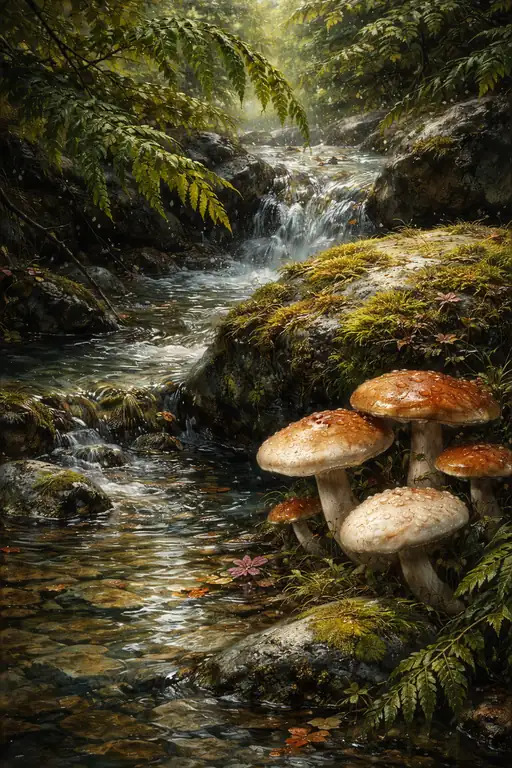 The Sacred Hush of the Forest Floor
 Morning Breath of the Emerald Woods
Similar Artworks
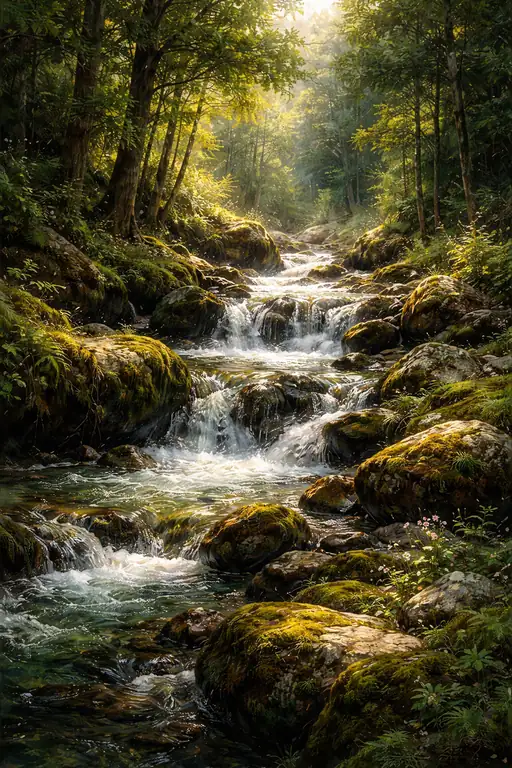 Timeless Flow Through Ancient Stones
 The Sanctuary of Eternal Light
 Golden Dance of the Stream
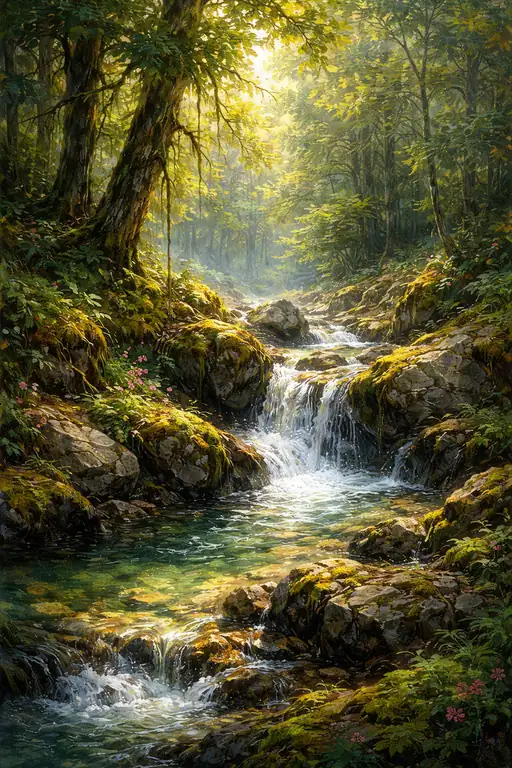 Whispers of the Emerald Canopy
 The Forest's Soliloquy: A Rush of Light
 Whispers of the Eternal Woods
 Whispers of the Eternal Forest
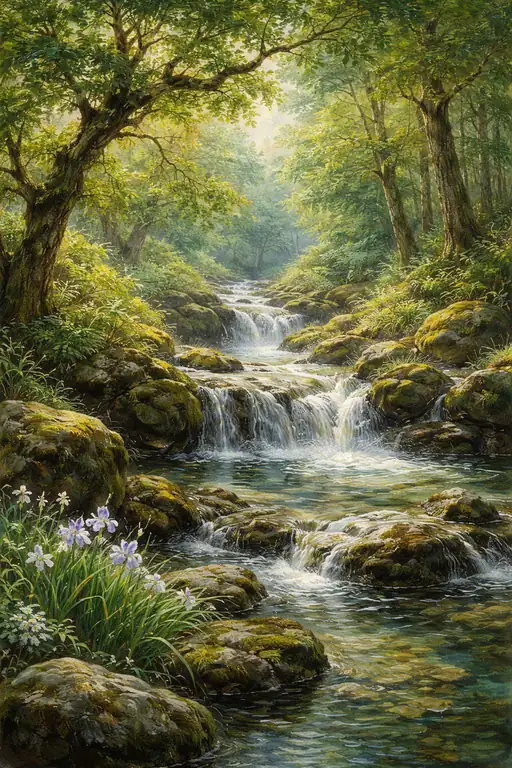 Symphony of the Crystal Rapids
 Whispers of the Mountain Stream
 Sunlit Serenade of the Secret Brook