
The Silent Watcher of the Cascade
Critique
1. Introduction This painting depicts a majestic white egret poised at the edge of a cascading stream within a dense, shadowed forest. It captures a fleeting moment of intense focus and natural grace, highlighting the striking contrast between the bird's pristine plumage and its rugged, wet environment. The work invites the viewer to observe the quiet drama of a predator in its natural habitat, emphasizing the stillness required for survival. 2. Description The primary subject is a large white egret standing on mossy, dark rocks in the middle-right of the frame. Its long neck is elegantly curved, and its sharp, yellowish beak is pointed intently toward the rushing water. The stream falls over several rocky tiers, creating vibrant white foam and splashes that catch the filtered light. The background is filled with thick, dark foliage and overhanging branches, with soft sunlight penetrating the canopy to illuminate the bird’s back and the cascading water. The color palette is dominated by earthy browns and greens, which makes the brilliant white of the egret’s feathers stand out as a luminous focal point. 3. Analysis Compositionally, the work is anchored by the vertical presence of the bird, whose curved form guides the eye down toward the turbulent water. The artist employs a detailed and expressive painterly style, utilizing fine brushstrokes to render the delicate, airy texture of the egret’s feathers. In contrast, the rocks are depicted with broader, more textured strokes that convey their hard, moss-covered surfaces. Light is used strategically to create depth and focus; the bright illumination on the egret against the dark, receding background creates a strong sense of three-dimensionality and dramatic isolation. 4. Interpretation and Evaluation The artwork can be interpreted as a profound study of patience and the inherent tension found within the natural world. The egret’s absolute stillness amidst the constant motion of the falling water creates a compelling visual metaphor for focused intent. Technically, the rendering of the white plumage is exceptional, as the artist uses subtle shades of grey and cream to provide volume and form without compromising the bird's overall whiteness. The balance between the detailed wildlife subject and the atmospheric landscape is masterfully handled, creating a cohesive and immersive visual narrative. 5. Conclusion Overall, the painting is an evocative and technically proficient depiction of a classic wildlife subject. While the theme of an egret by the water is traditional, the dramatic lighting and the exquisite focus on texture provide a fresh and sophisticated perspective. The final impression is one of silent intensity and refined natural beauty, successfully capturing the essence of a serene yet powerful moment in the wild.
Same Subcategory
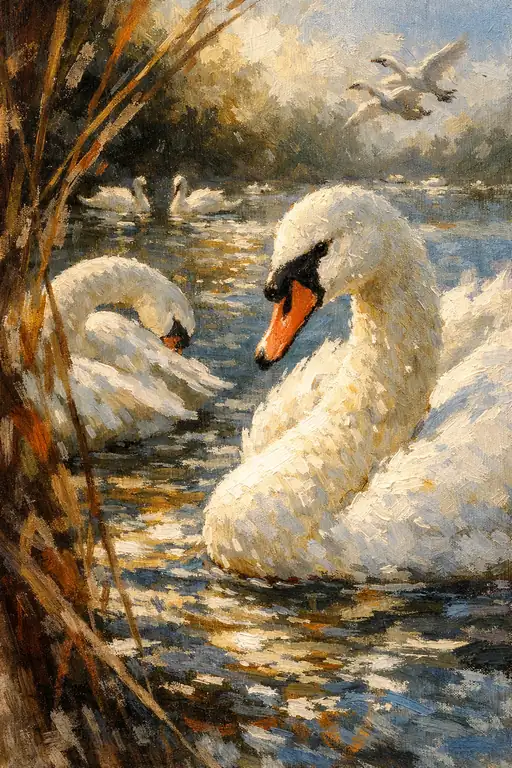 Swans on a Sunlit Lake
Similar Artworks
 Sanctuary of the Silver Stream
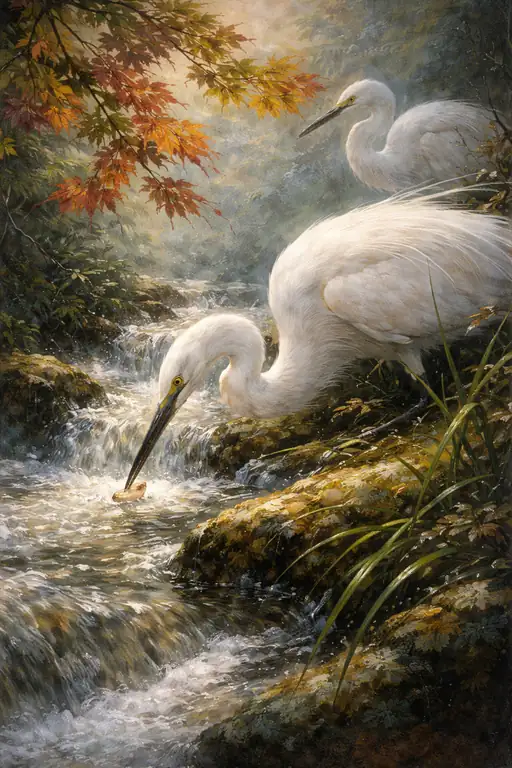 A Fleeting Strike in the Calm
 A Solitary Egret Stilled in the Autumn Stream
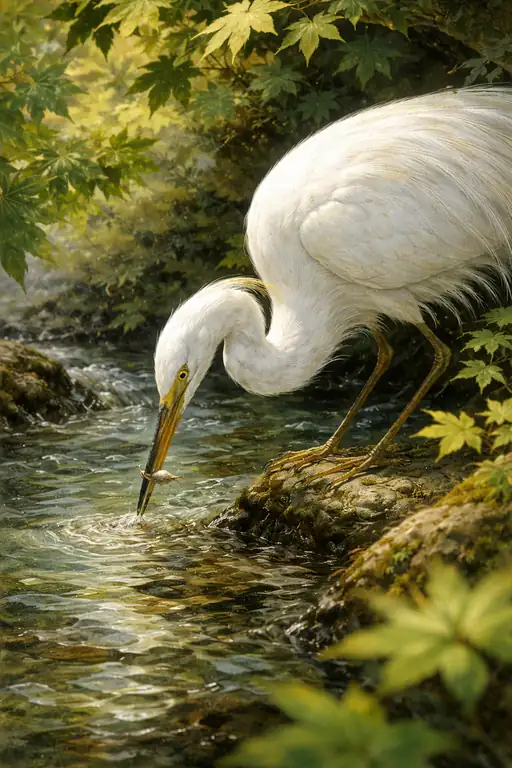 Stillness Broken by the Rippling Hunt
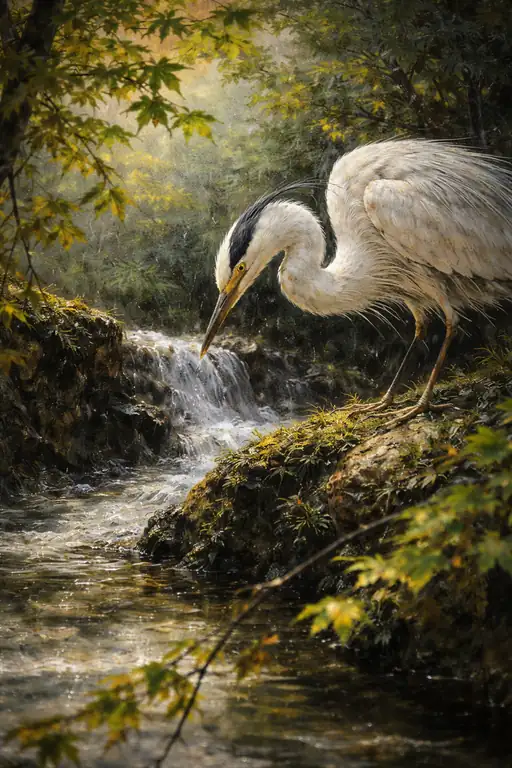 A Solitary Gaze Where the Water Meets the Gold
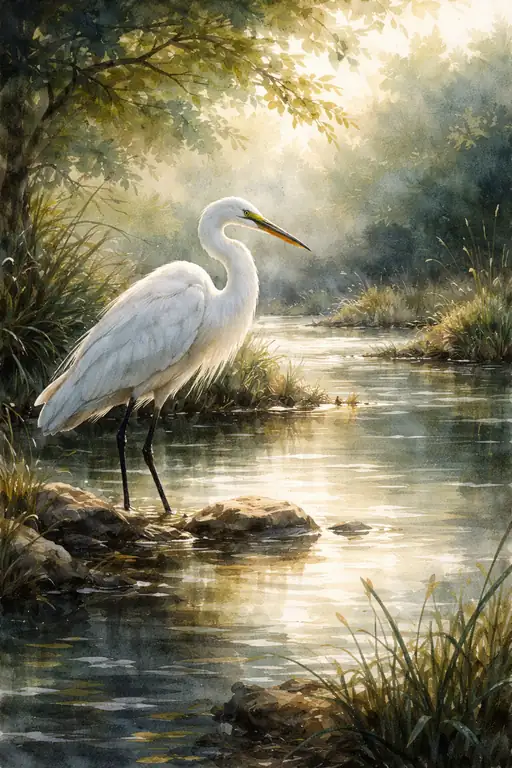 Solitude in the Whispering Shallows
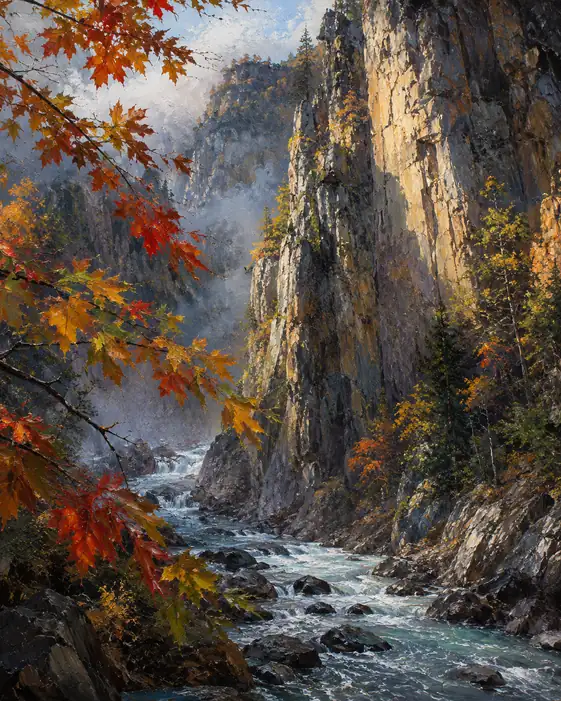 Autumn Whispers in the Sunlit Gorge
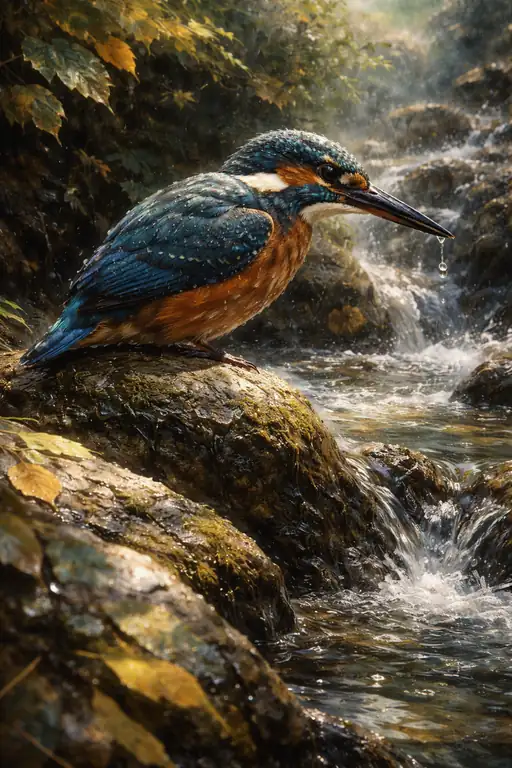 The Sapphire Sentinel
 The Song of the Silver Rapids
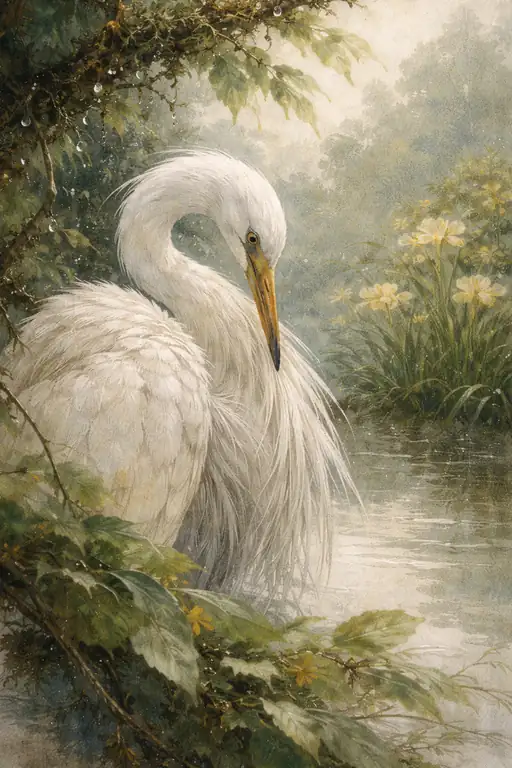 The Elegant Solitude of White Plumage in the Morning Dew