
A Celebration of Autumnal Stillness
Critique
1. Introduction This painting is a richly decorative still life that celebrates the elegance of traditional tea culture through a meticulously crafted tea set and accompaniments. It features a vibrant pattern of autumn leaves and flowers set against a deep blue porcelain base, evoking a sense of seasonal transition and refined hospitality. The work invites the viewer to appreciate the intricate beauty of everyday objects transformed by artistic vision. 2. Description The central focus is a large, ornate teapot with a lustrous blue glaze, adorned with detailed white chrysanthemums and fiery red maple leaves. To the left, a matching teacup filled with green tea rests on a saucer, its pattern echoing the teapot’s design. In the lower right, a small glass plate holds a collection of colorful, jewel-like sweets. The entire set is accentuated with polished gold trim that glints under a warm, golden light. The background is a soft blur of amber and cream tones, suggesting a cozy, sunlit interior. 3. Analysis Compositionally, the teapot dominates the frame, while the smaller objects are arranged to create a balanced yet dynamic scene. The artist employs expressive, textured brushstrokes, particularly in the highlights, which give the porcelain a palpable weight and shine. The use of a bold color palette—deep indigo, brilliant crimson, and luminous gold—creates a striking visual contrast that enhances the festive atmosphere. Light is used effectively to define the curved surfaces of the tea set, creating a sense of three-dimensional form and material realism. 4. Interpretation and Evaluation The artwork can be interpreted as a tribute to traditional craftsmanship and the ritual of tea. The inclusion of autumn motifs suggests a contemplation of the seasons and the beauty found in natural cycles. Technically, the painting is impressive for its ability to balance intricate pattern-work with a bold, almost impressionistic application of paint. This combination creates a unique tension between the formal structure of the tea set and the energetic execution of the artist, resulting in a work that feels both classic and contemporary. 5. Conclusion In conclusion, the painting is a vibrant and celebratory exploration of a traditional still life subject. While the objects depicted are conventional, the exuberant brushwork and rich colors imbue the scene with a remarkable sense of vitality and warmth. The final impression is one of luxury and grace, successfully capturing the essence of a peaceful yet sophisticated moment.
Same Subcategory
 Afternoon Light on Rose Porcelain
Similar Artworks
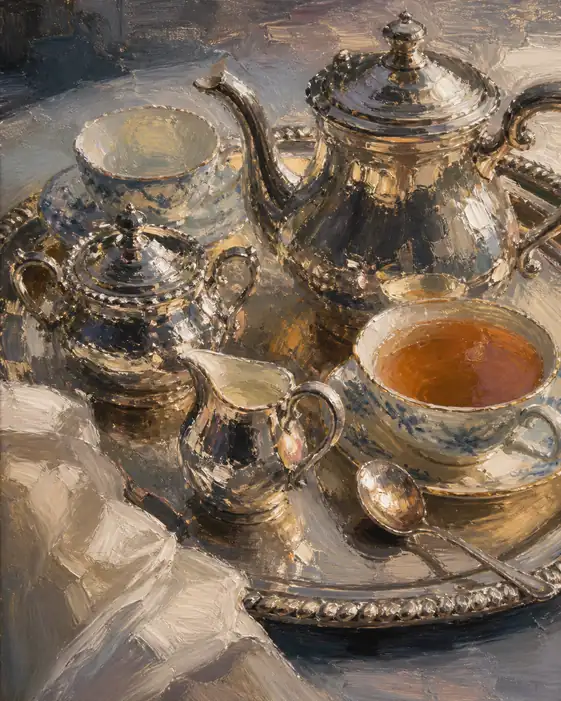 An Afternoon Written in Silver
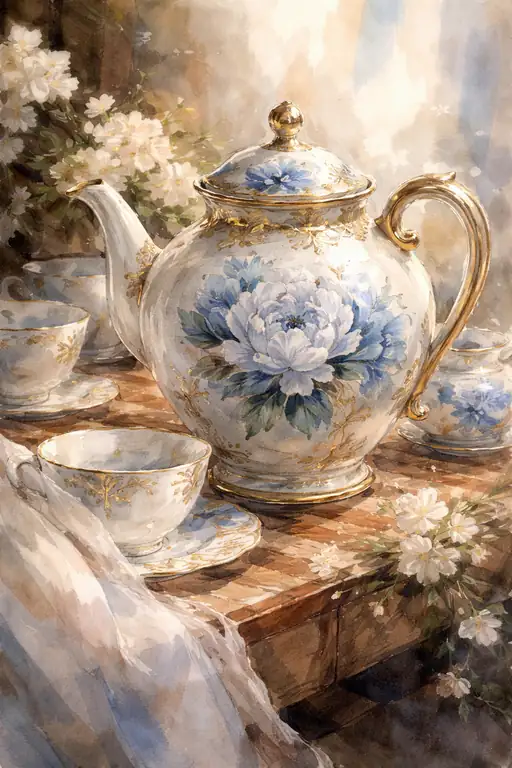 The Golden Bloom of Afternoon Serenity
 Luminous Repose
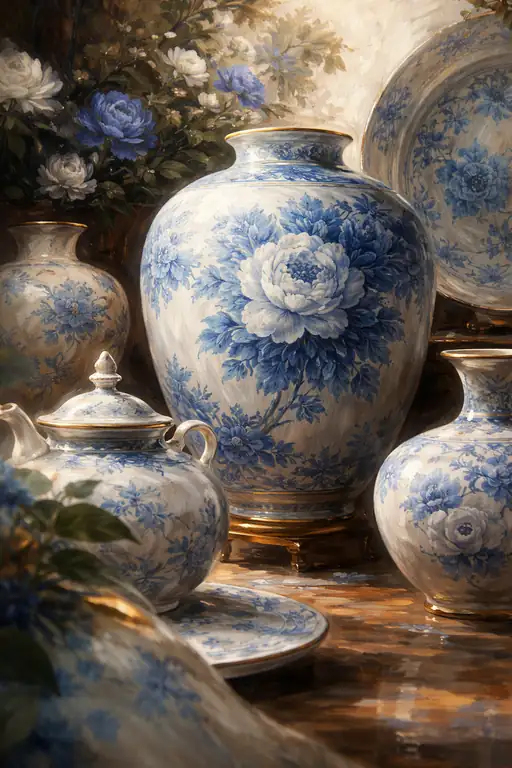 Opulence in Cobalt
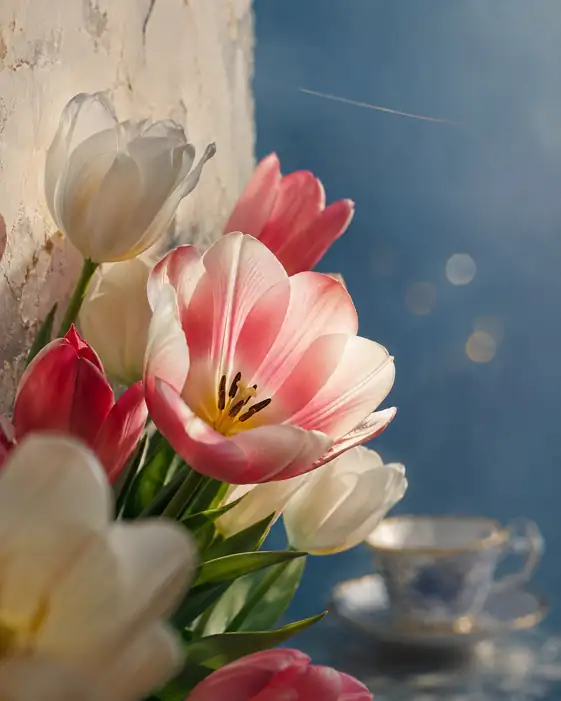 Morning Tulips by the Porcelain Cup
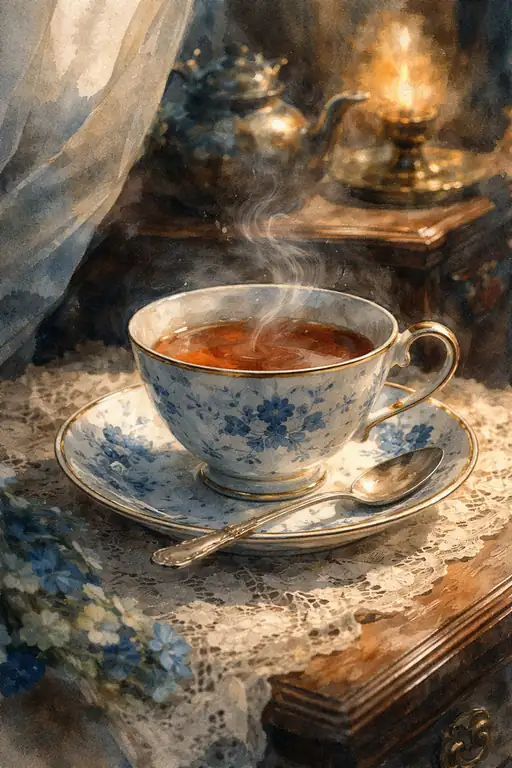 A Warm Embrace in Porcelain
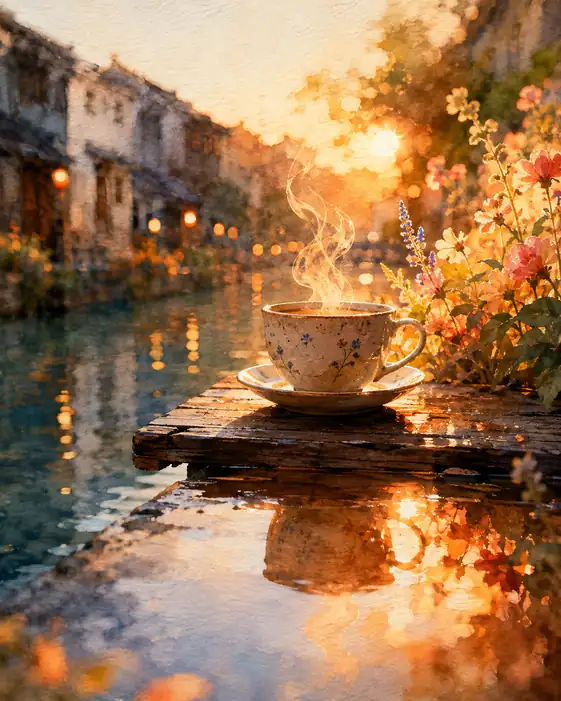 The Cup That Kept the Last Golden Hour
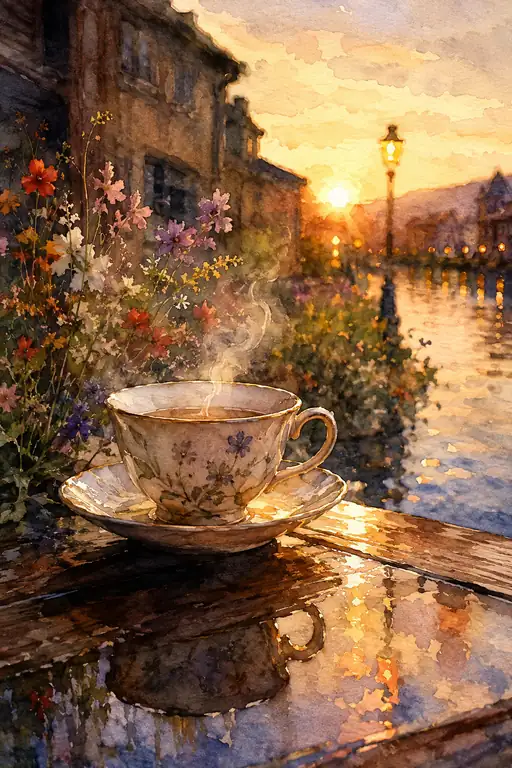 Tea Steaming at the Edge of Sunset
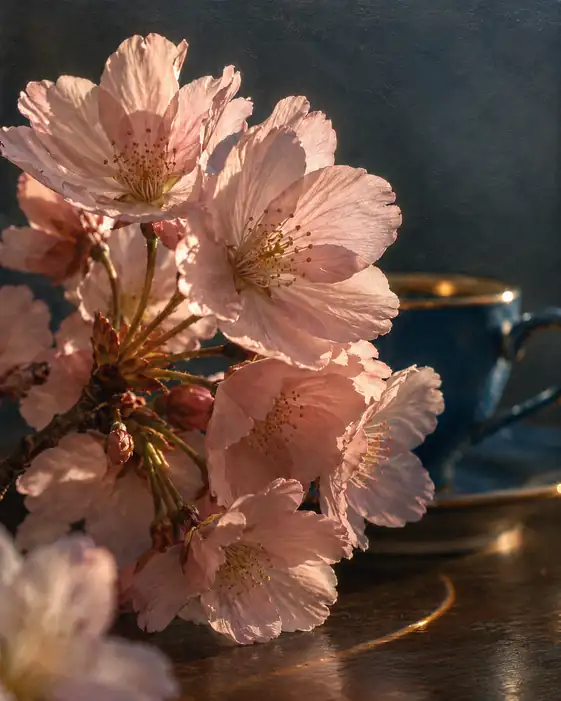 Morning Tea Beside a Branch of Bloom
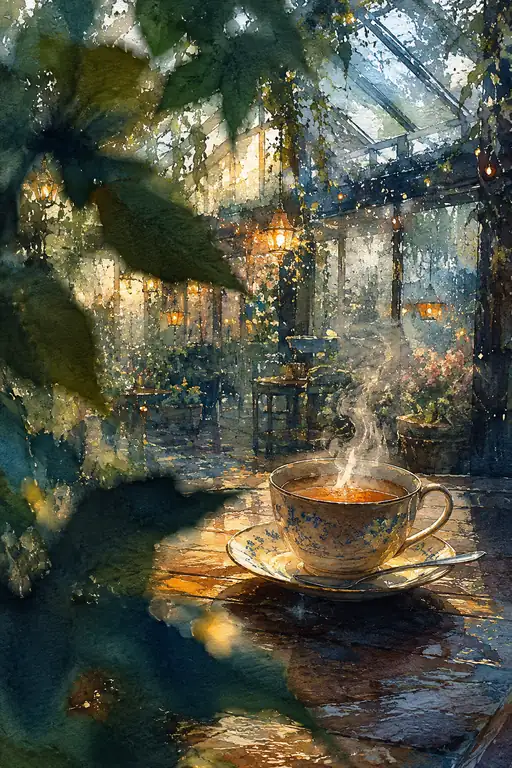 Tea Steams Where the Greenhouse Lights Wander