
Kaleidoscope of Raindrops
Critique
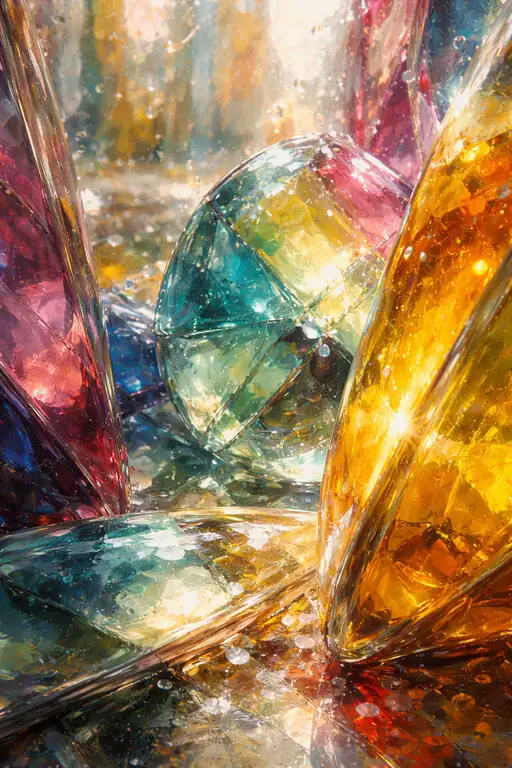
1. Introduction This macro-focused painting captures the intricate details of a stained glass surface adorned with delicate water droplets. The work explores the intersection of geometric structure, vibrant color, and the ephemeral nature of moisture in a highly detailed, luminous style. 2. Description The composition features a mosaic of colorful glass segments, including shades of ruby red, amber yellow, emerald green, and deep sapphire blue. These panels are held together by dark, metallic leading that forms a network of intersecting lines. Numerous translucent droplets of water are scattered across the surface, each reflecting the intense light source and distorting the colors beneath them. The focus is sharp in the center, with the upper and lower edges blurring into a soft bokeh effect. 3. Analysis The artist utilizes a full spectrum of saturated colors, creating a kaleidoscopic effect that is both chaotic and organized. The lighting is the primary agent of drama, appearing to emanate from within the glass, which makes the colors glow and the water droplets sparkle with white highlights. The composition is dynamic, using a low-angle perspective that emphasizes the curve and texture of the glass panels. 4. Interpretation and Evaluation The painting is exceptional in its technical execution of transparency and reflection. The way each water droplet acts as a tiny lens, magnifying and refracting the glass patterns, adds a layer of complexity and realism. The contrast between the rigid geometric leading and the organic, fluid shapes of the droplets creates a visually stimulating tension. It successfully captures a sense of light-filled beauty. 5. Conclusion This work is a masterful study of light, color, and texture. Its ability to transform a familiar object into a breathtaking visual landscape demonstrates significant creative vision and technical proficiency.
 Swirling Energies of the Soul
 Festival of Light in Crystal
 Wisdom of Centuries
 Prismatic Symphony
 Embers of Autumn Under Glass
 Morning of Enchantment
 Crimson Threads of Destiny
 Fragments of Luminous Time
 Kaleidoscope of the Forgotten Realm
 Illuminated Secrets in Stained Glass
 Pride of the Garden
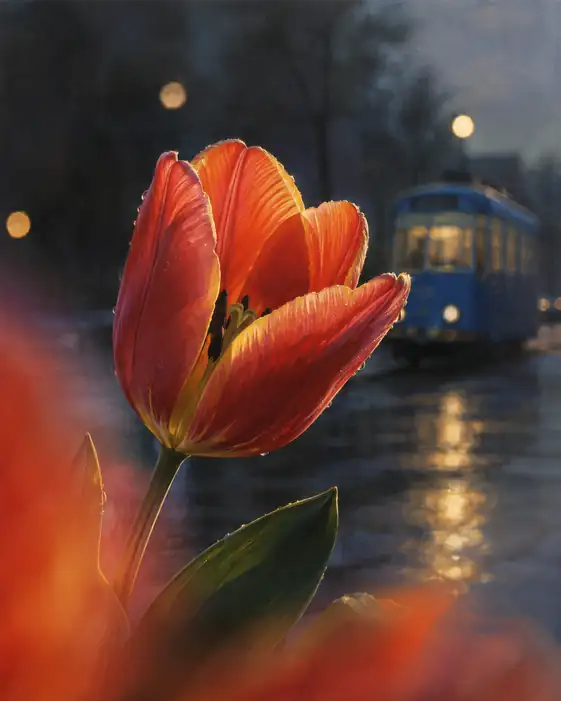 Red Tulip and the Night Tram