
Order and Impulse
Critique
1. Introduction This abstract oil painting presents a grid-based composition that immediately recalls the principles of De Stijl. The work employs a primary color palette—red, blue, and yellow—interspersed with white and black rectangular fields. Unlike the flat surfaces often associated with this movement, this piece is characterized by a vigorous, tactile application of paint. 2. Description The canvas is divided by heavy black lines of varying thickness, forming a complex matrix of rectangles. A large yellow block occupies the upper left, while a prominent red square anchors the lower right quadrant. The blue sections appear in both concentrated dark tones and lighter, more ethereal applications. Thick impasto layers are visible throughout, with some areas showing the physical ridges and valleys created by a palette knife or heavy brush. 3. Analysis The composition relies on a dynamic balance between the rigid geometry of the grid and the organic energy of the textured surface. The black lines act as both separators and structural anchors, preventing the vibrant colors from overwhelming the white space. The contrast between the saturated primary hues and the neutral white blocks creates a rhythmic visual flow across the surface. Light interacts with the uneven paint layers, adding a physical depth that shifts depending on the viewing angle. 4. Interpretation and Evaluation This work successfully reinterprets classical abstraction through a lens of physical expressionism. By combining the cerebral order of a grid with the visceral quality of thick impasto, it bridges the gap between rational design and emotional execution. The artist demonstrates exceptional control over color saturation and textural density. The resulting piece feels both modern and timeless, celebrating the inherent qualities of oil paint as a medium. 5. Conclusion Initially, the painting may seem like a formal exercise in geometric arrangement. However, closer inspection reveals a deeply tactile exploration of materiality and light. The synthesis of strict form and expressive texture provides a compelling viewing experience. Ultimately, the work stands as a testament to the enduring power of primary colors and fundamental shapes in contemporary art.
 The Pulse of Vivid Joy
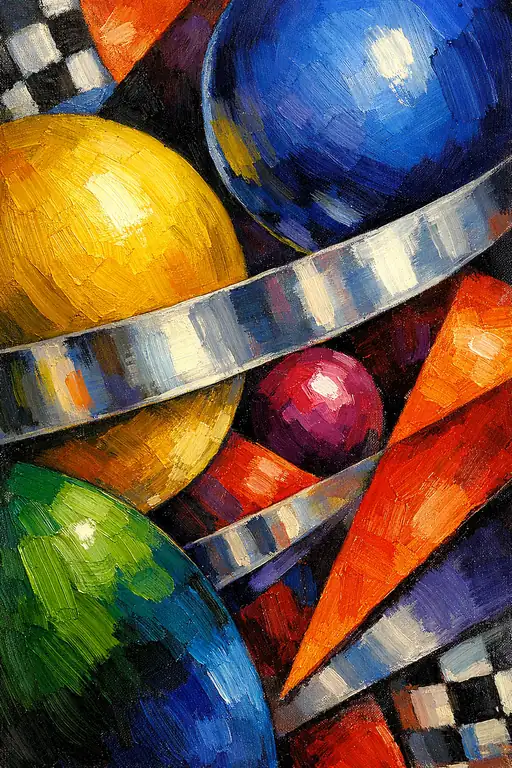 Dynamic Symphony of Shapes
 The Pulse of Primary Colors in a Geometric Soul
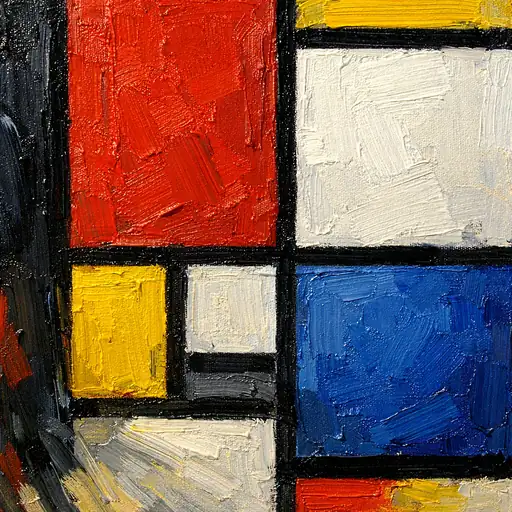 Equilibrium within the Primary Grid
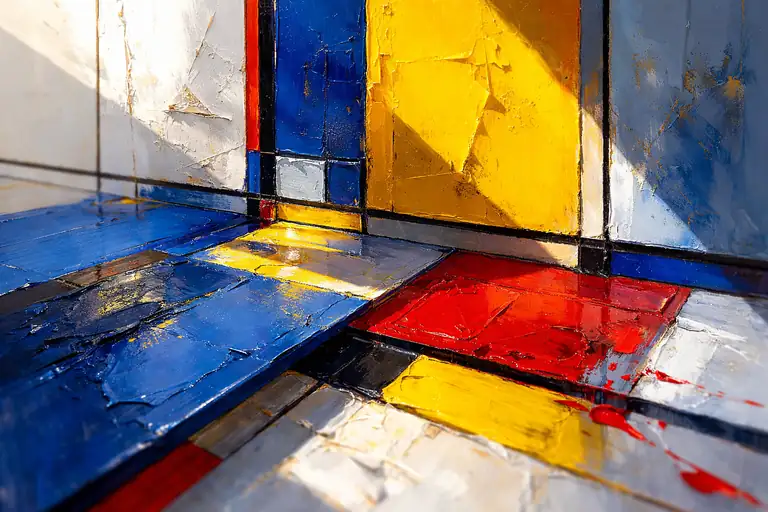 Symphony of the Concrete Soul
 Geometric Rhythm of My Mind
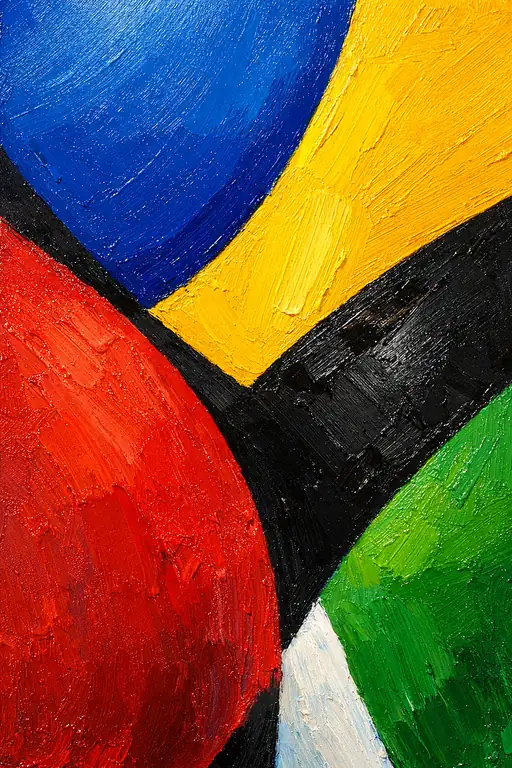 The Bold Pulse of Colors
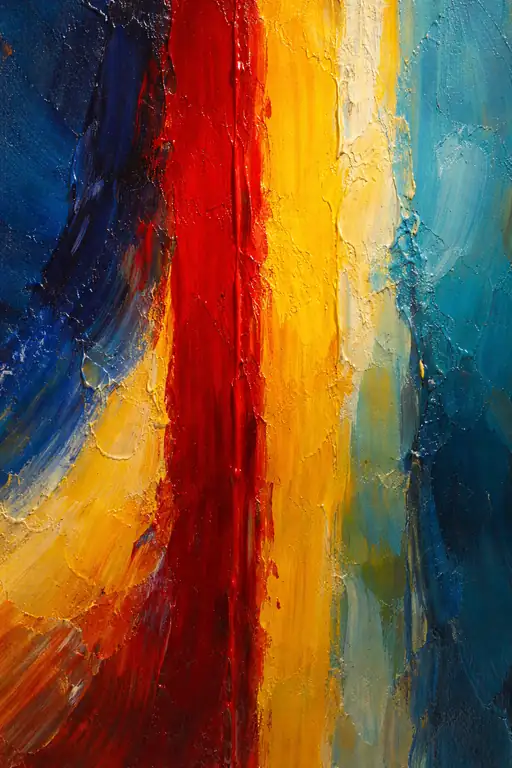 Echoes of the Abstract Mind
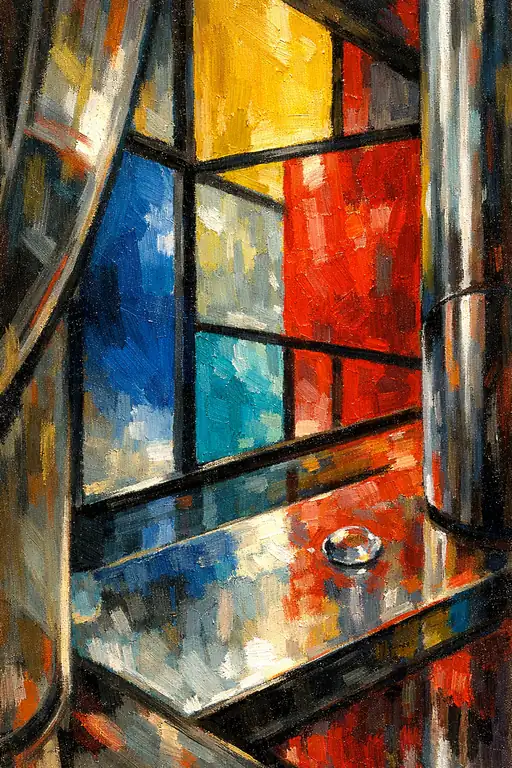 The Geometry of Being
 Rhythm of the Primary Soul