
Crimson Anchor in the Storm
Critique
1. Introduction This oil painting presents a powerful close-up of a hand firmly grasping a vibrant red tulip against a swirling, expressive background. The artist utilizes a heavy impasto technique, where thick, rhythmic brushstrokes create a palpable sense of movement and energy. This stylistic choice emphasizes the emotional weight of the gesture, transforming a simple act of holding a flower into a dynamic and soulful expression of life. 2. Description The central focus is a large, weathered hand, its skin rendered in a mosaic of warm ochre, sienna, and peach tones. It holds the green stem of a brilliant orange-red tulip that blooms at the top right, its petals flared and textured. In the background, a chaotic yet harmonious blend of deep blues, golden yellows, and fiery oranges suggests a distant city street or a festive gathering under a night sky, with blurred figures visible in the distance. 3. Analysis The painting is characterized by its intense tactile quality, as the raised paint surface catches the light and adds physical depth to the forms. The color palette is built on a bold contrast between the cool indigo and violet of the background and the radiant warm tones of the hand and flower. The circular and diagonal movement of the brushstrokes creates a whirlpool effect that draws the eye toward the center, where the hand and tulip provide a solid, grounding presence. 4. Interpretation and Evaluation The work is deeply evocative, suggesting themes of connection, resilience, and the persistence of beauty in a bustling or turbulent world. The artist’s ability to convey the rugged texture of the hand alongside the delicate yet fiery nature of the tulip displays a masterful command of contrast and character. The composition is expertly balanced, using the weight of the hand to anchor the explosive energy of the surrounding environment, resulting in a piece that is both intimate and epic. 5. Conclusion Through its vibrant execution and strong emotional resonance, the painting captures the essence of a fleeting but meaningful human moment. The technical rigor of the impasto method reinforces the sense of physical reality, making the subject feel immediate and undeniable. The final impression is one of profound vitality, where the simple tulip becomes a symbol of hope and individual expression amidst the swirling currents of life.
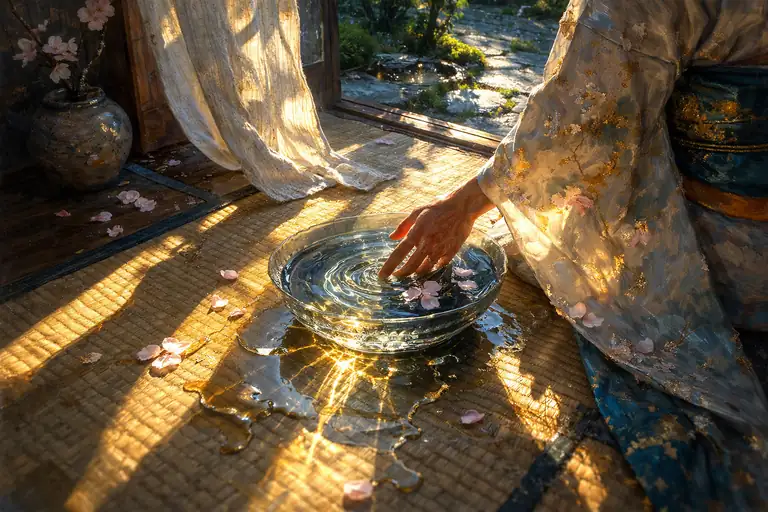 Resonating Silence: The Touch of Spring Light
 The Silent Weight of a Golden Memory
 A Heartfelt Gift of Blooms
 Soul of Brass
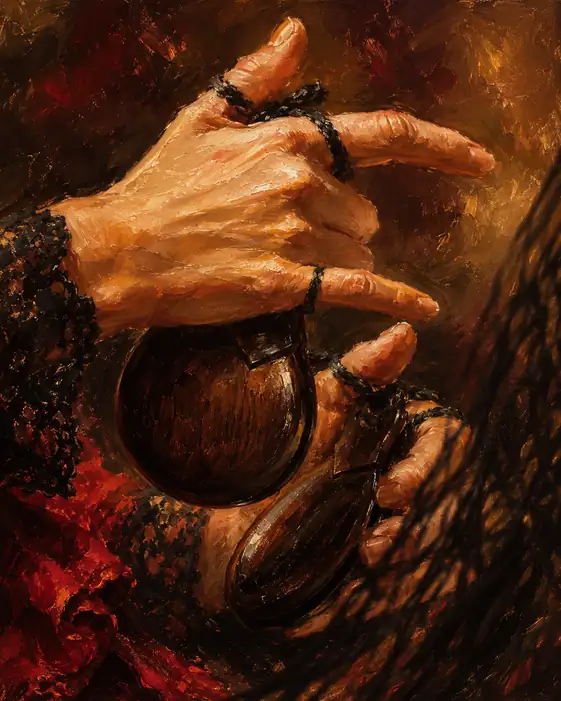 Resonance of the Fiery Rhythm
 The Eye that Swallows the Sun
 The Heavens Aflame
 Luminescence: The Girl with the Stained Glass Glow
 Fragments of a Buried Sun
 Whispers in Blue Velvet
 Blue Note under the Sunset
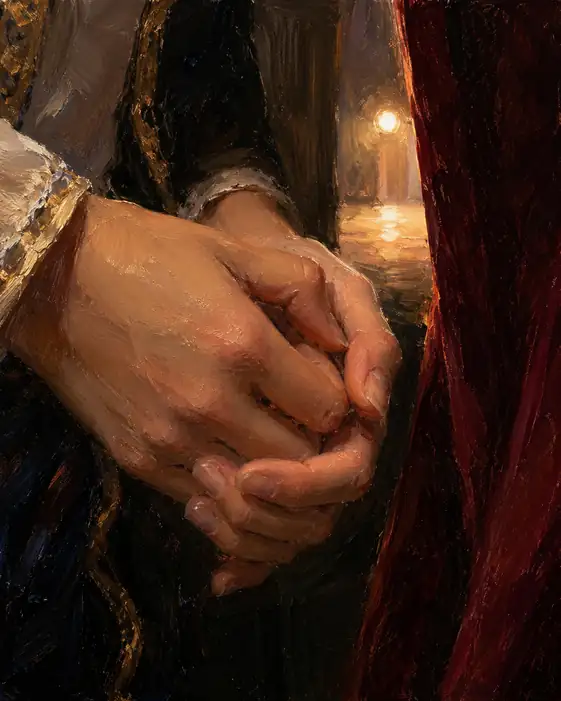 Fragile Vows Beneath the Gold