
The Quiet Weight of Days
Critique
1. Introduction This oil painting presents a traditional still life study, focusing on a collection of stacked kitchen utensils and ceramic jars. The composition, arranged vertically, evokes a sense of domestic stability and the quiet passage of time. Through the heavy application of impasto, the artist imbues mundane objects with a tangible physical presence. The viewer is immediately struck by the dramatic way these utilitarian items emerge from a deeply shadowed background. 2. Description At the center of the frame, three large bowls are stacked atop one another. The uppermost bowl is filled with a white substance, possibly rice or flour, which catches a brilliant light from the upper left. Below this sits a rich, terracotta-red bowl, followed by a darker, nearly black vessel at the base. To the right, a deep blue glazed jar sits prominently, its surface reflecting the ambient light. The scene is rounded out by wooden structures and a draped cloth on the left, all rendered in warm, earthy tones. 3. Analysis The color palette is characterized by a range of browns and ochres, providing a neutral stage for the vibrant red and blue of the ceramics. The use of light is particularly effective, creating sharp highlights on the edges of the bowls and emphasizing the texture of the cracked glaze. The brushwork is vigorous and confident, with each stroke contributing to the structural integrity of the objects. This tactile approach to the medium enhances the sense of weight and materiality inherent in the subjects. 4. Interpretation and Evaluation The work transcends its humble subject matter through a masterful command of light and shadow, reminiscent of classical traditions. The stacking of the bowls can be seen as a metaphor for the layered history of a household or the accumulation of daily labor. Technically, the artist excels in differentiating textures, from the smoothness of the glaze to the rough grain of the wood. The original handling of the composition gives these everyday items a monumental quality that demands the viewer's respect. 5. Conclusion What initially appears to be a simple depiction of household goods gradually reveals itself as a sophisticated exploration of form and light. The painting serves as a reminder of the inherent beauty found in the tools of everyday life. Each object, though worn and weathered, possesses a unique character that contributes to the overall harmony of the piece. Ultimately, this work is a powerful testament to the enduring appeal of the still life genre when executed with such technical proficiency.
 The Golden Promise of Dawn Awakening the Silence of Iron and Stone
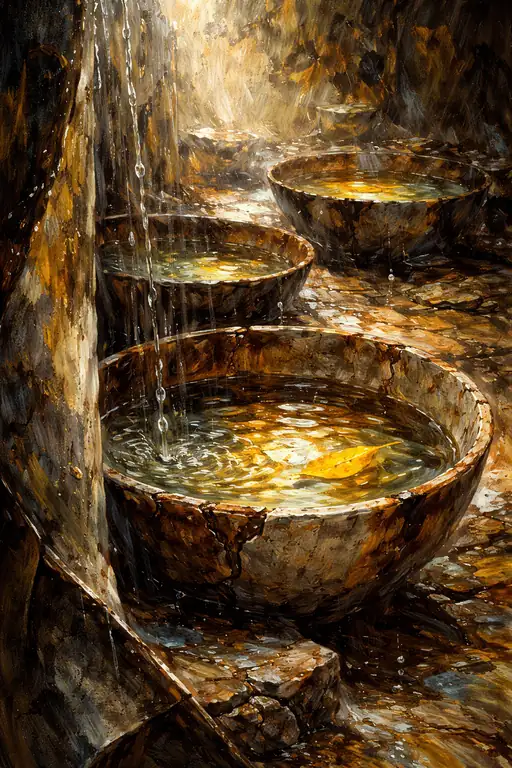 Whispers of Stone: The Endless Patience of Water
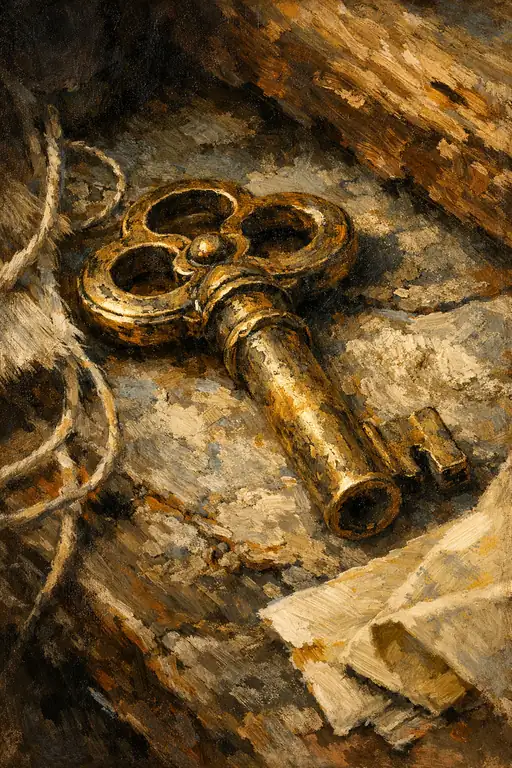 The Weight of Forgotten Doors
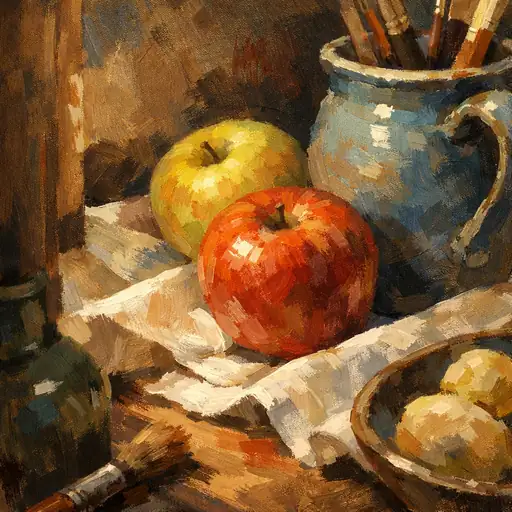 The Painter's Silent Reverie
 The Dignity of Stillness
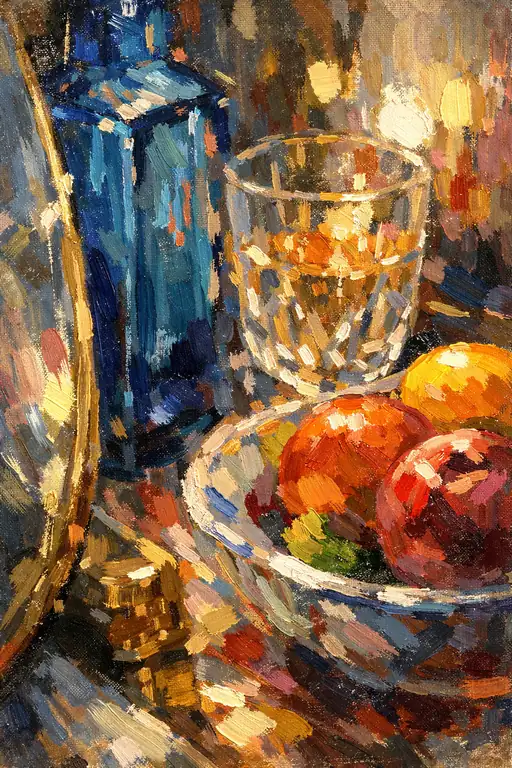 Whispers of the Cobalt Glass
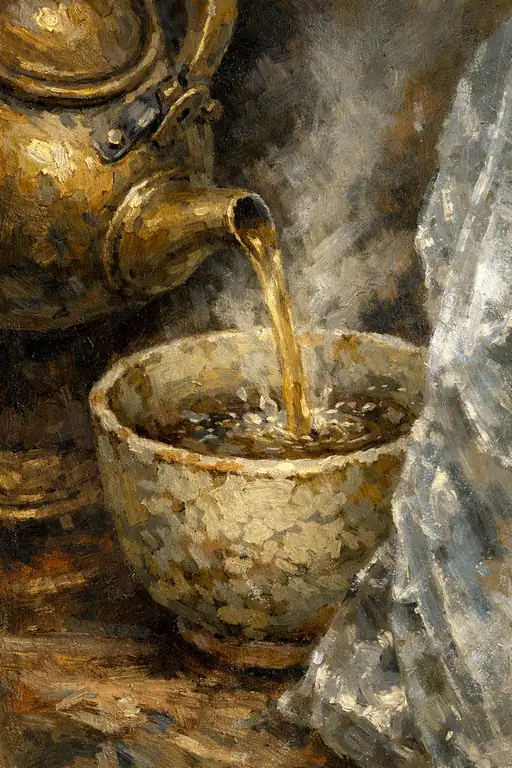 Golden Warmth Pouring into the Silence of Bronze
 Gentle Touch of Time
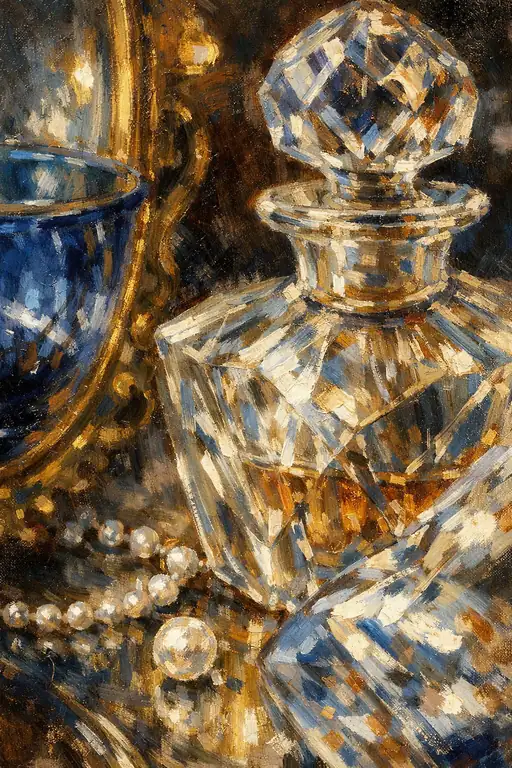 Luminous Reflections of the Crystalline Era
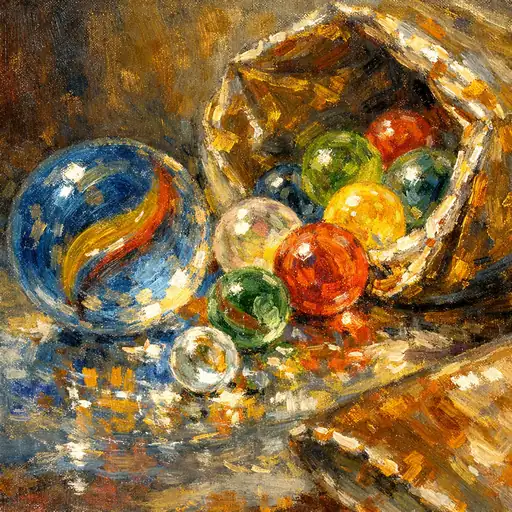 Spilling Dreams
 Dance of the Crimson Refraction
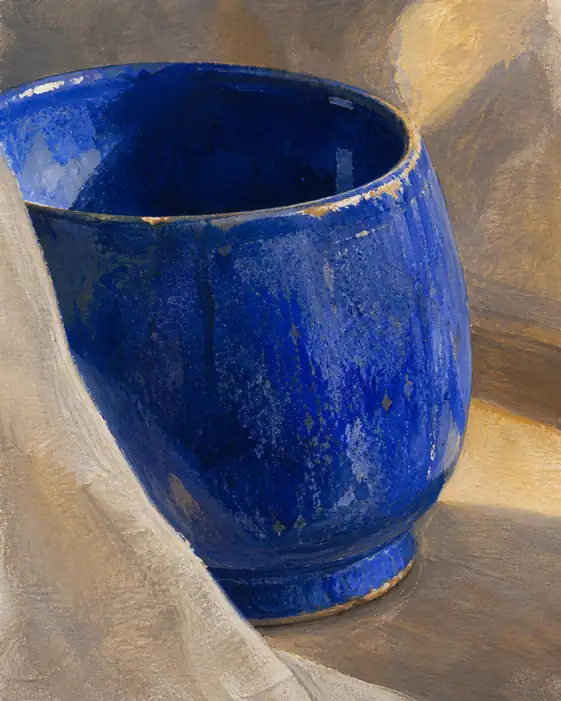 Vessel of Boundless Blue