
Whispers of the Eternal Waterfall
Critique
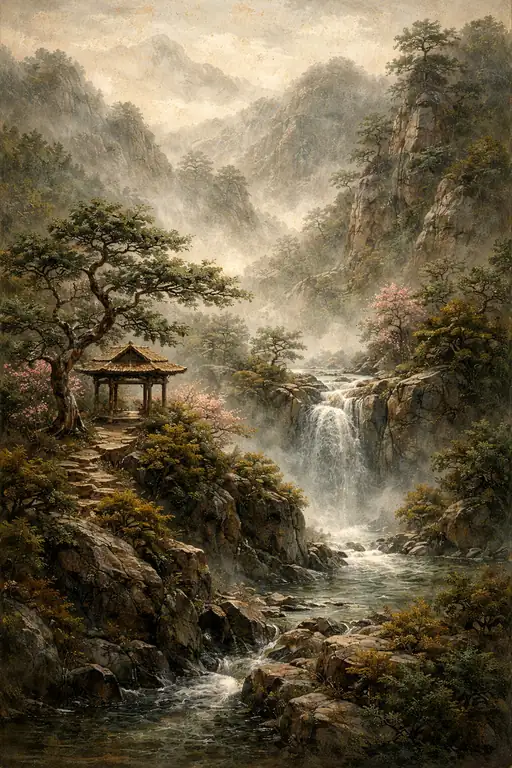
1. Introduction This oil painting presents a serene mountain landscape, capturing a harmonious scene of a waterfall and a hidden pavilion. The vertical composition emphasizes peak height and flowing water, creating natural grandeur. It invites viewers to experience quiet contemplation within a traditional, idealized setting. 2. Description In the center, a tiered waterfall cascades down a cliff into a misty valley. To the left, a traditional pavilion sits on a ledge, surrounded by gnarled trees and fog. In the foreground, a dark branch bears luminous white flowers that contrast with the rocks. Ethereal peaks are partially obscured by clouds in the distance. 3. Analysis The artist employs a technique balancing detailed rendering with atmospheric washes. The palette is dominated by earthy browns, deep greens, and misty greys, with white highlights in the flowers and waterfall. Diffused lighting filters through the mist, creating a gentle glow that enhances depth. Diagonal lines guide the eye, creating a balanced visual flow. 4. Interpretation and Evaluation This work successfully bridges East Asian landscape aesthetics with the richness of oil painting. The pavilion suggests a human presence in harmony with nature's vastness. The technical execution of textures—from fluid water to rugged cliffs and delicate petals—is exceptional. While the theme is classical, the atmospheric depth provides a fresh perspective on the genre. 5. Conclusion The painting stands as a masterful tribute to the beauty of the natural world. Its ability to evoke peace through its coherent mood and balanced composition is a major strength. Through this synthesis of tradition and technique, the artist offers a vision that is timeless and moving. Ultimately, the work celebrates the connection between humanity and the landscape.
Same Subcategory
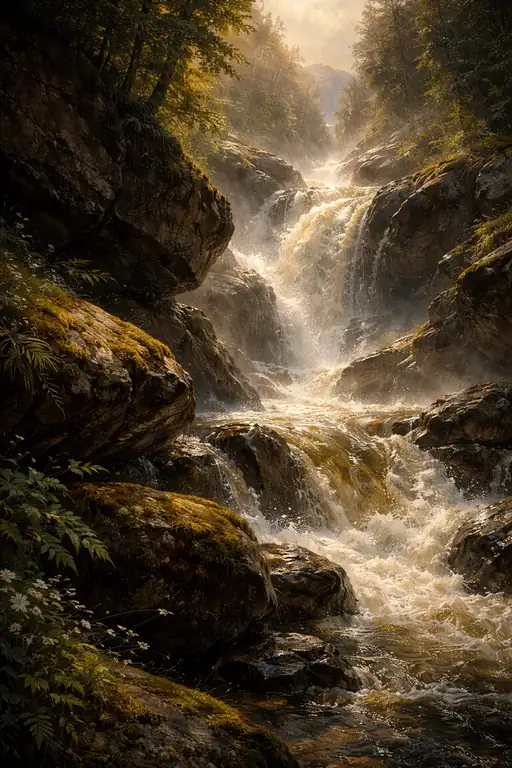 Serenity in the Verdant Gorge
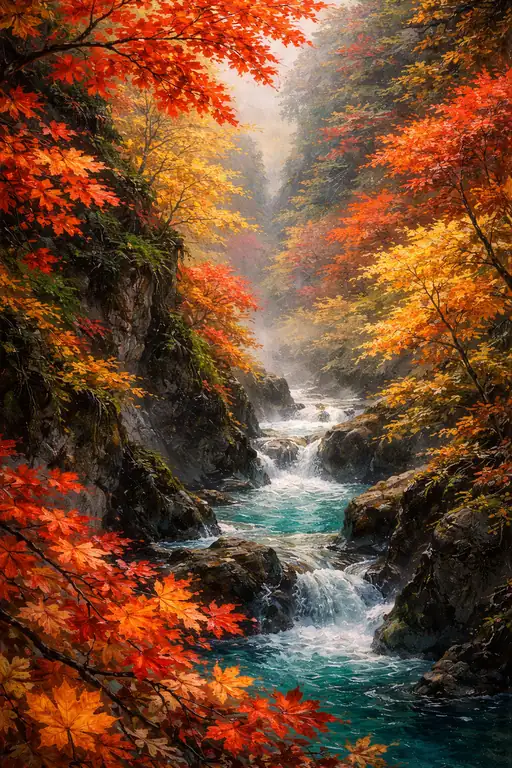 Burning Valley: The Current of Timelessness
Similar Artworks
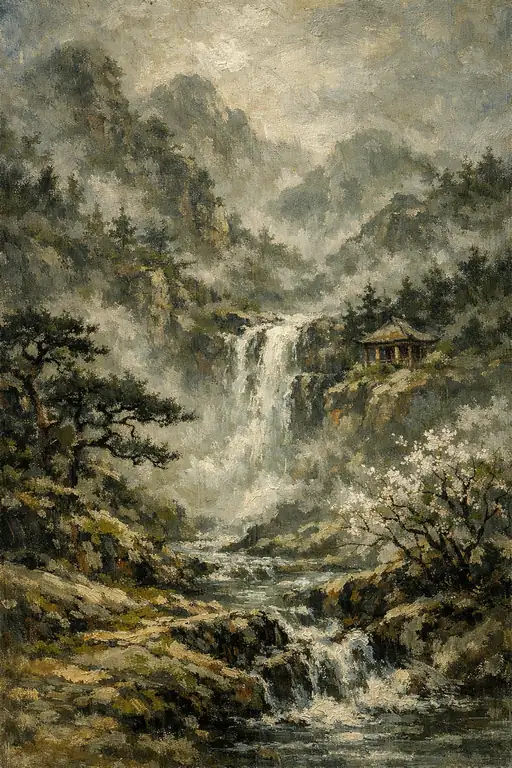 Spring Illusion Blooming in the Mystic Peaks
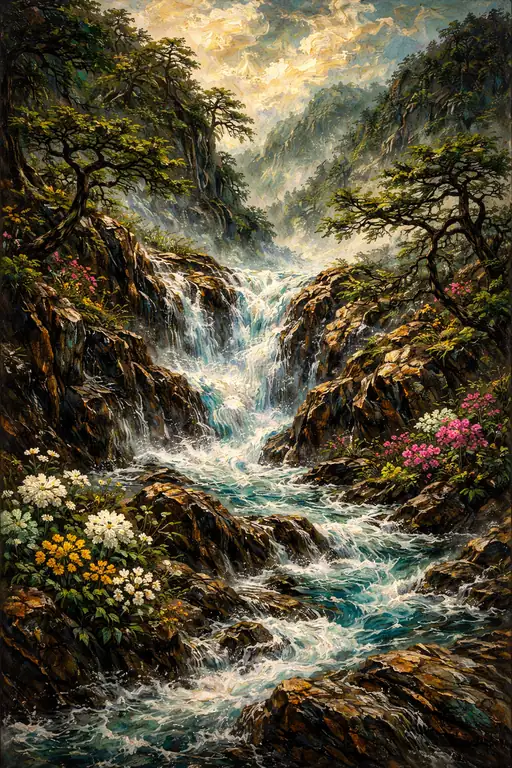 Roar of the Untamed Valley
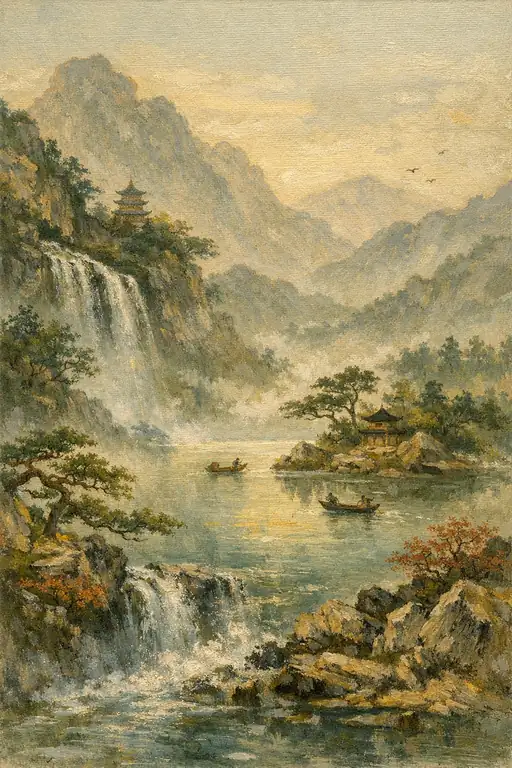 Eternal Silence Drifting on the Misty Water
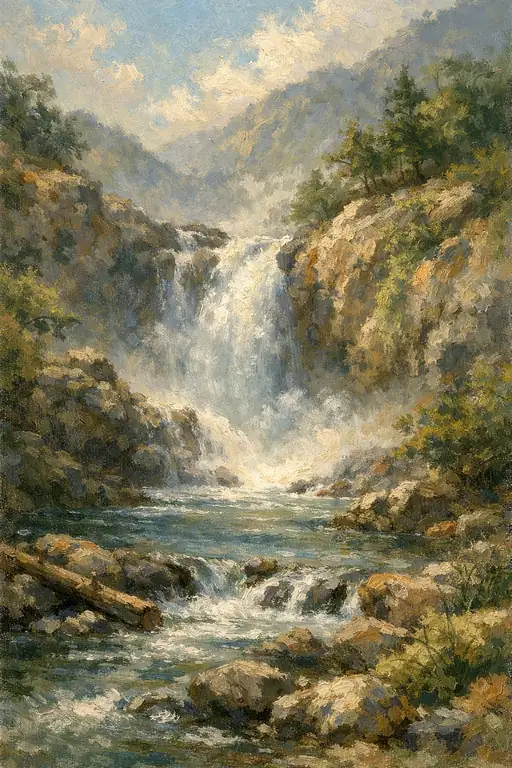 Roar of the Untamed Earth and the Piercing Spray
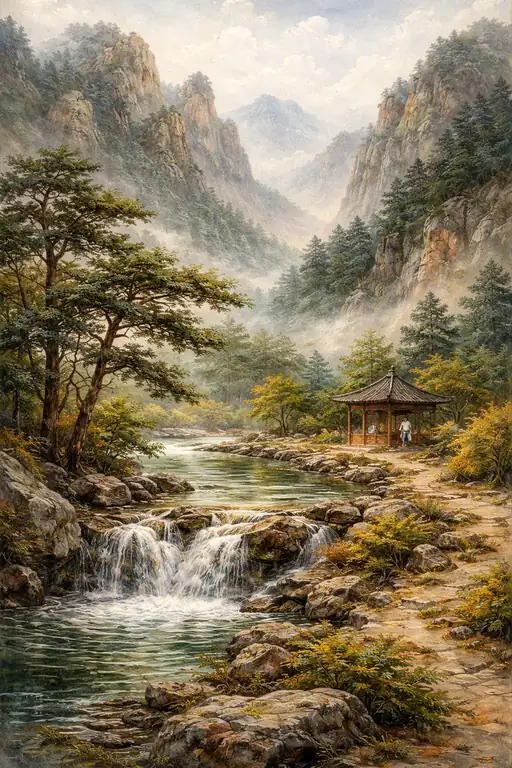 Pavilion by the Waterfall in a Misty Mountain Valley
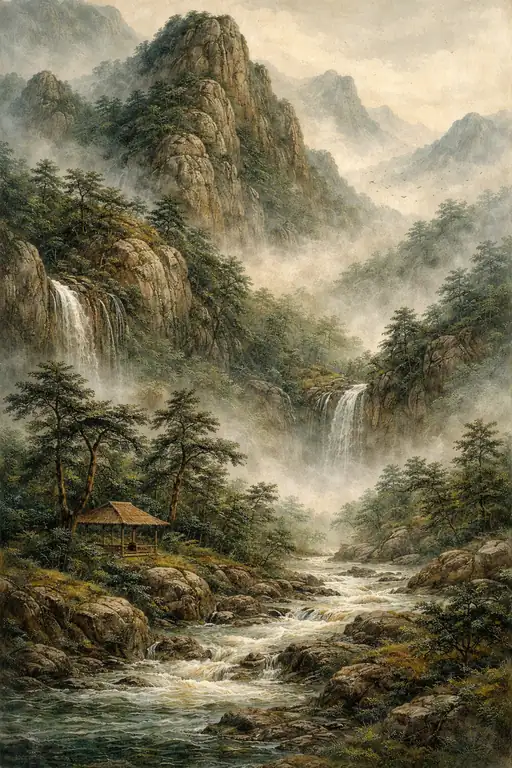 The Serene Pavilion by the Waterfalls
 The Gilded Protector
 Reverence for the Roaring Depths
 The Roar of Nature's Majestic Heart
 Shadows Dancing in the Twilight Earth