
The Silent Verse of Heian Elegance
Critique
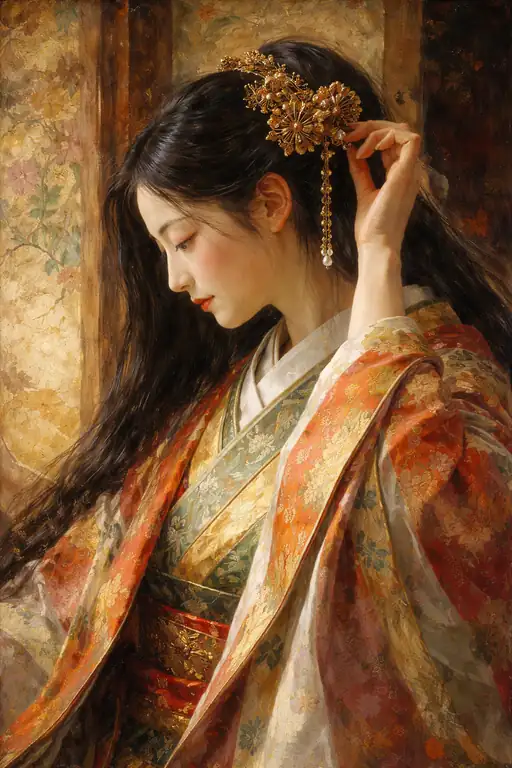
1. Introduction This evocative oil painting portrays a noblewoman from the Japanese Heian period engaged in the quiet act of reading a calligraphic scroll. The work utilizes a rich, impasto technique to blend historical elegance with a vibrant, tactile modernity. 2. Description The subject is shown in a three-quarter view, her gaze directed downward toward a partially unrolled paper scroll. She is dressed in an exquisite multilayered kimono featuring intricate patterns of crimson, gold, and forest green, accented by delicate floral and geometric motifs. Her hair is styled traditionally, topped with a black and gold ceremonial headdress adorned with a bright red band and hanging golden tassels. The background is dark and indistinct, allowing the luminous quality of the subject’s skin and the shimmering details of her attire to dominate the frame. 3. Analysis The artist employs a thick, expressive application of paint, particularly evident in the rendering of the kimono’s brocade and the weathered texture of the scroll. The composition is centered on the diagonal line created by the subject’s gaze and the angle of the scroll, creating a sense of focused concentration. A warm, diffused light illuminates her face from above, highlighting the subtle contours of her features and the creamy texture of the paint used for her skin. Gold leaf or metallic paint appears to have been integrated into the impasto, adding a literal and figurative brilliance to the decorative elements. 4. Interpretation and Evaluation The painting successfully captures a moment of intellectual pursuit within a highly formalized aesthetic tradition. The artist’s ability to represent the weight and stiffness of the silk through heavy, directional brushstrokes is highly original. The contrast between the subject’s serene expression and the energetic, almost turbulent surface of the paint creates a compelling tension. Technically, the work is a masterpiece of texture and color management, demonstrating a profound respect for Japanese historical costume while maintaining a bold, contemporary artistic voice. 5. Conclusion By combining classical subject matter with a visceral, physical approach to oil painting, the artist creates a work that is both historically resonant and visually arresting. The masterful interplay of light and texture ensures that the viewer is drawn into the silent narrative of the scene.
Same Subcategory
 Emerald Sorrow
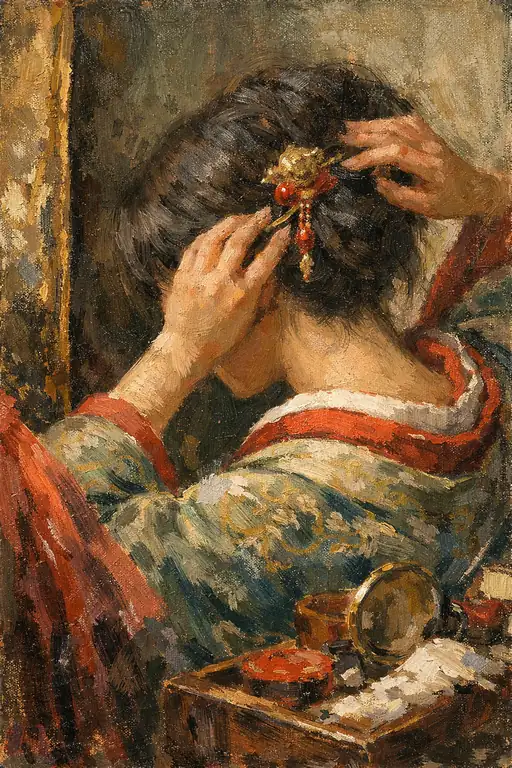 Whispers of a Morning Ritual
Similar Artworks
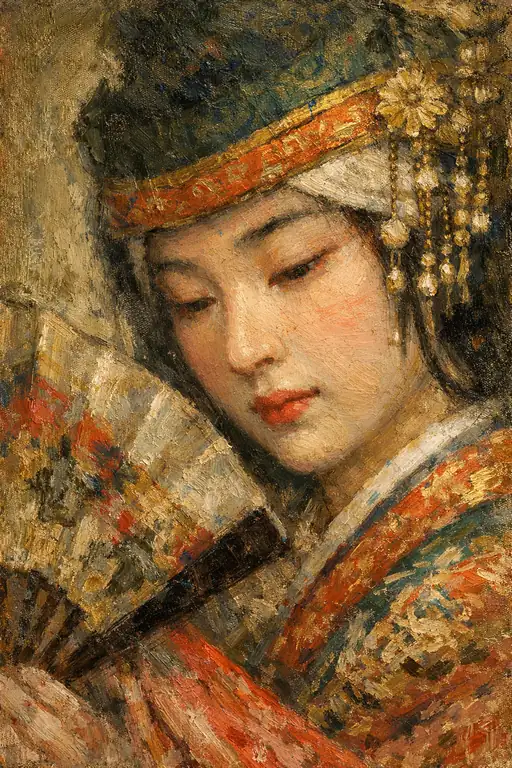 A Graceful Gaze Through Time
 Whispers of Golden Threads
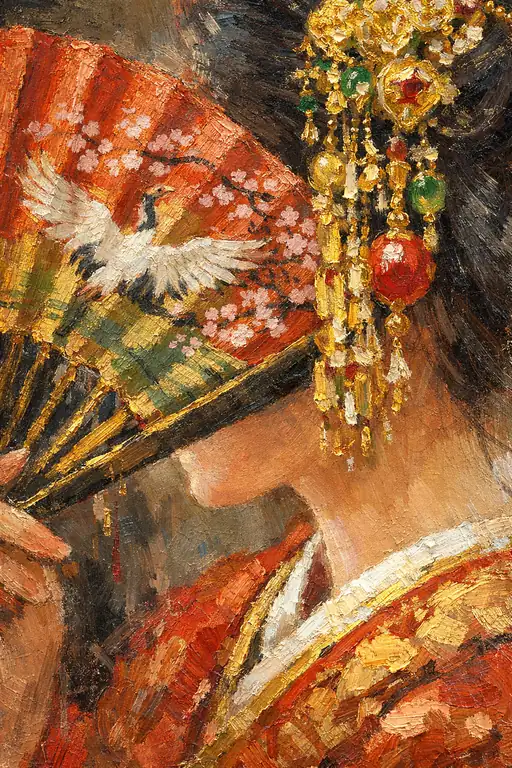 Crimson Elegance Behind the Fan
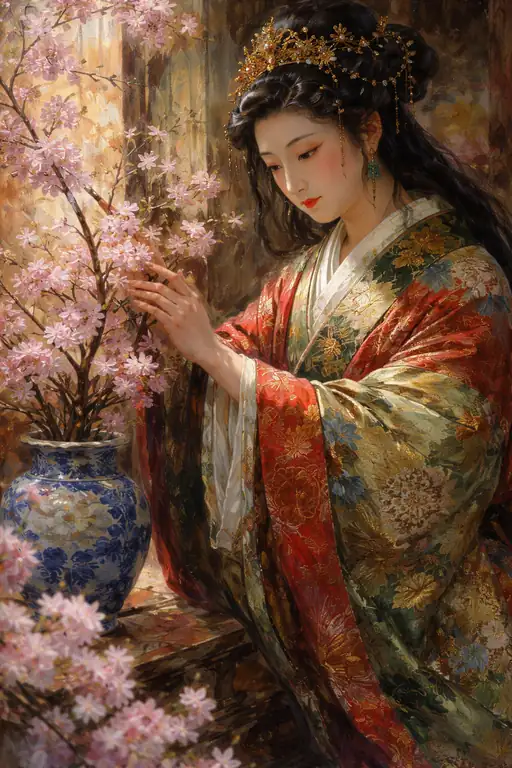 Contemplation Beneath the Spring Petals
 Golden Embers of Forgotten Evenings
 The Hidden Observer's Gaze
 Veiled Elegance Beyond the Fan
 Gaze of the Golden Empress
 Silent Reverie in Golden Threads
 Whispers of Silk and Sunlight: A Moment of Grace