
Vow of the Crimson Cord
Critique
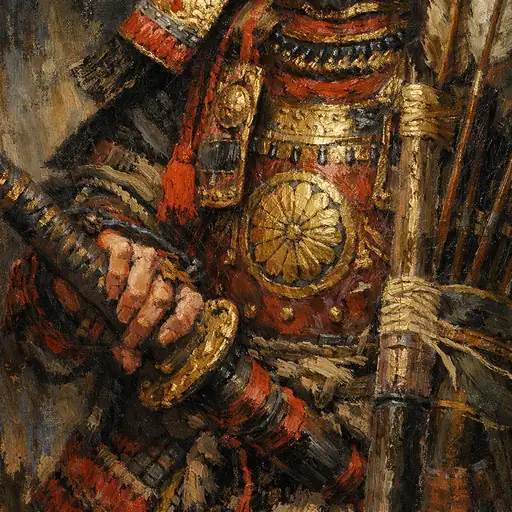
1. Introduction This powerful oil study offers a granular view of a warrior’s hands adjusting the complex lacework of their traditional armor. The piece focuses on the tactile reality of historical military equipment, emphasizing the intersection of utility and ornate craftsmanship through a rugged, expressive technique. 2. Description The composition is a tight, vertical crop centered on two weathered hands interacting with bright crimson cords. The subject wears intricate lamellar armor, characterized by overlapping scales of gold and dark iron, adorned with embossed floral motifs on the bracers and breastplate. To the left, a portion of a wooden pole or weapon handle is visible, wrapped in coarse blue and white braided ropes. The entire surface is covered in thick, layered paint that gives the materials a tangible, three-dimensional presence. 3. Analysis The artist utilizes an extreme impasto method, where the physical height of the paint mimics the ridges of the rope and the embossed patterns of the metal. This stylistic choice prioritizes texture over smooth realism, creating a vibrant, vibrating surface that captures light in countless small highlights. The color palette is earthy and metallic, punctuated by the high-saturation red of the cords which serves to guide the viewer’s eye through the complex structural details of the armor. The composition is dense and claustrophobic, pulling the viewer directly into the subject's personal space. 4. Interpretation and Evaluation The focus on the hands rather than the face shifts the narrative from the individual's identity to the ritual of preparation. The artist’s ability to evoke the varied weights of metal, cordage, and skin using a single, heavy-handed technique is remarkable. The work balances the rigid formality of the armor with the organic, lived-in quality of the hands. Technically, the mastery of color harmony—particularly the way the gold reflects the surrounding reds and browns—is exceptional, demonstrating a sophisticated understanding of material science in art. 5. Conclusion By stripping away the wider context, the artist elevates the mundane act of dressing for battle into a profound exploration of texture and form. The visceral application of paint ensures that the work remains grounded in the physical reality of its subject.
Same Subcategory
 Echoes of a Restless Frontier
 Echoes of a Forgotten Crusade
Similar Artworks
 The Slumbering Spirit of the Blade
 The Warrior's Resolve
 Prayer of Gold and Lacquer
 The Spirit within the Empty Shell
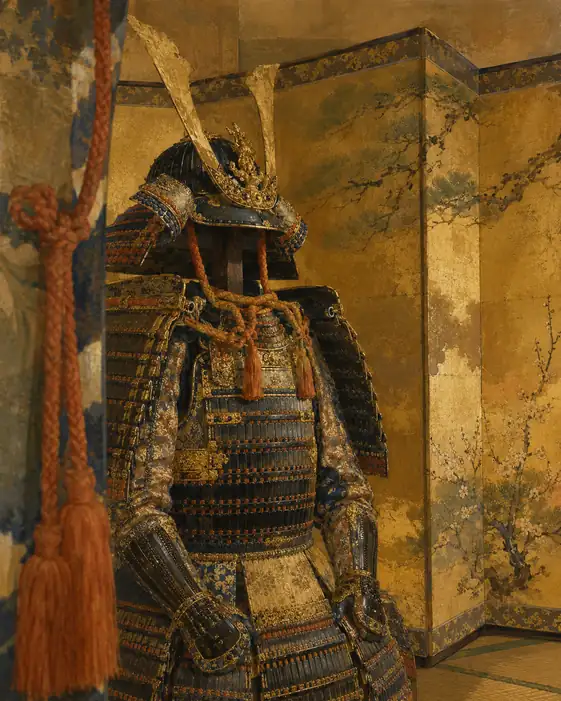 The Majestic Silence of Gold and Iron
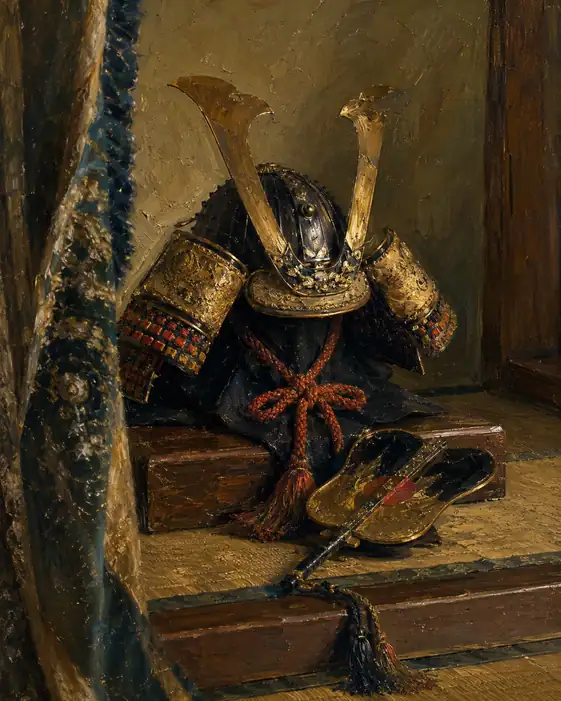 The Silent Pride of the Kabuto
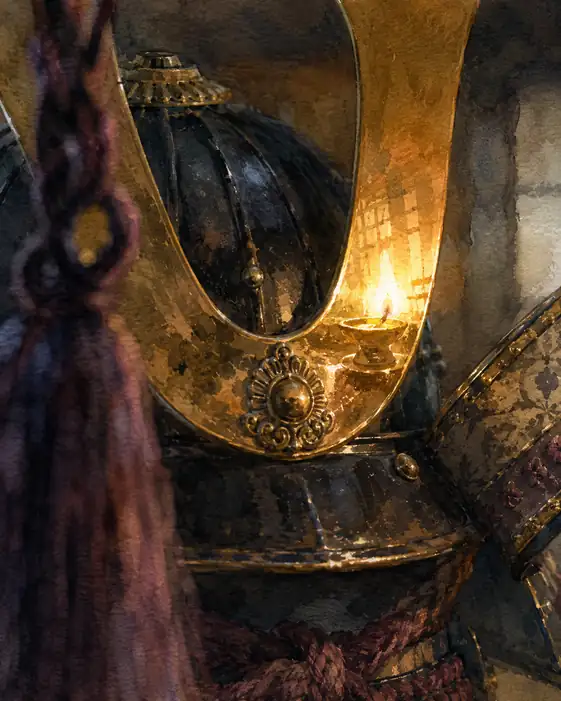 The Flame of Silent Honor
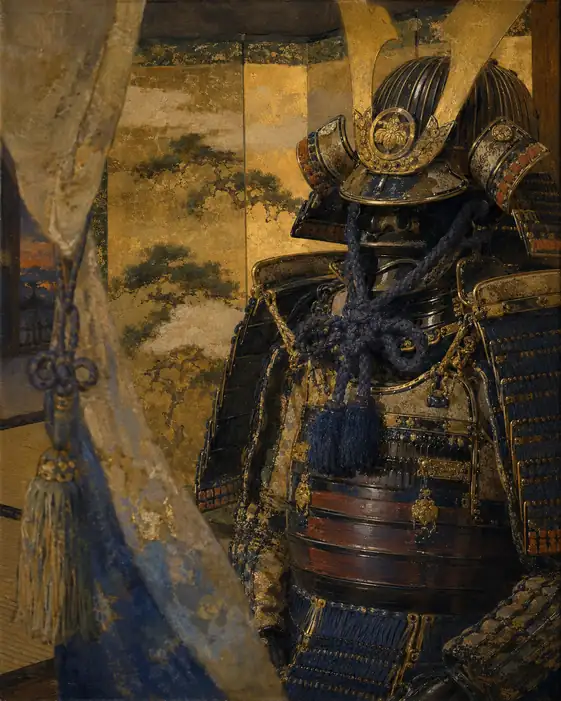 The Silence of Ancestral Echoes
 Determination Forged in the Dark Abyss
 The Silent Will of the Crimson Armor