
Where the Heart Points
Critique
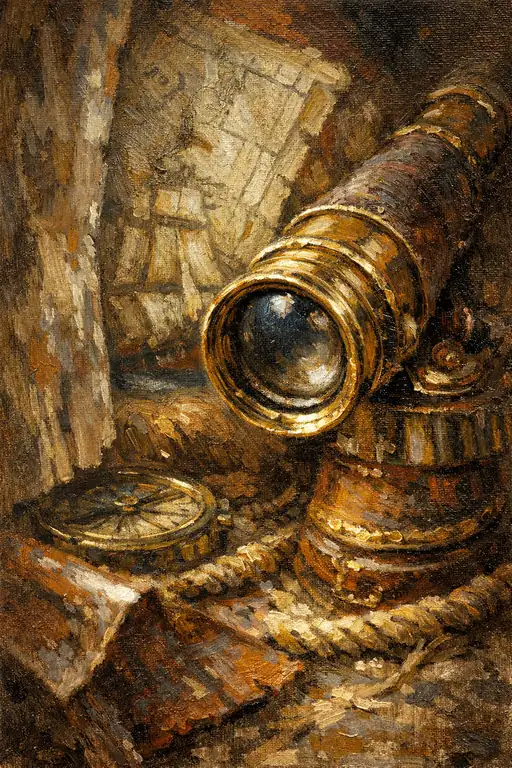
1. Introduction This vibrant oil painting presents a thematic still life centered on the tools of navigation and discovery. A heavy brass compass rests prominently upon a weathered map, accompanied by a cylindrical instrument and a draped textile. The work is executed in a post-impressionist style, utilizing broken brushstrokes to create a sense of light and energy. 2. Description The compass is the focal point, its golden casing catching a bright, direct light source. The needle, tipped with a sharp red accent, points toward the upper left, while cardinal directions are clearly inscribed on its face. Beneath it, a map rendered in pale yellows and greens suggests distant lands. To the left, a dark, vertical cylinder stands in shadow, and to the right, a textured blue-green cloth provides a soft contrast to the hard surfaces of the equipment. 3. Analysis The artist employs a mosaic-like application of paint, where small, distinct strokes of color blend in the viewer's eye. A warm, saturated palette of ambers, golds, and burnt oranges dominates the composition, which is effectively balanced by the cool tones of the blue cloth. The lighting appears to come from the upper right, creating strong highlights on the metallic rim of the compass and casting deep, rhythmic shadows across the map's surface. 4. Interpretation and Evaluation The choice of motifs evokes a powerful narrative of exploration and the human desire to chart the unknown. From a technical perspective, the rendering of the brass's reflective quality without the use of smooth gradients is particularly impressive. The dynamic brushwork imbues the static objects with a feeling of anticipation and movement. The composition is tightly framed, drawing the viewer into the immediate workspace of a traveler or cartographer. 5. Conclusion Through its sophisticated use of color and texture, the painting transforms functional objects into a poetic meditation on journey and destination. The initial focus on the sharp red needle leads to an appreciation of the complex interplay of warm and cool tones across the entire canvas. It is a masterful example of how expressive technique can enhance the symbolic weight of a traditional still life subject.
Same Subcategory
 Mapping the Winds of Eternity
 Vista of Empires: Where the World Meets the Eternal Sunset
Similar Artworks
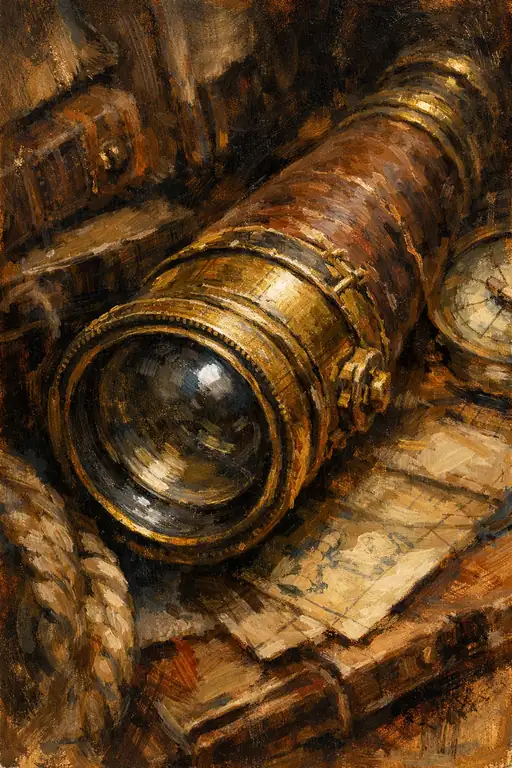 Echoes of the Uncharted Sea
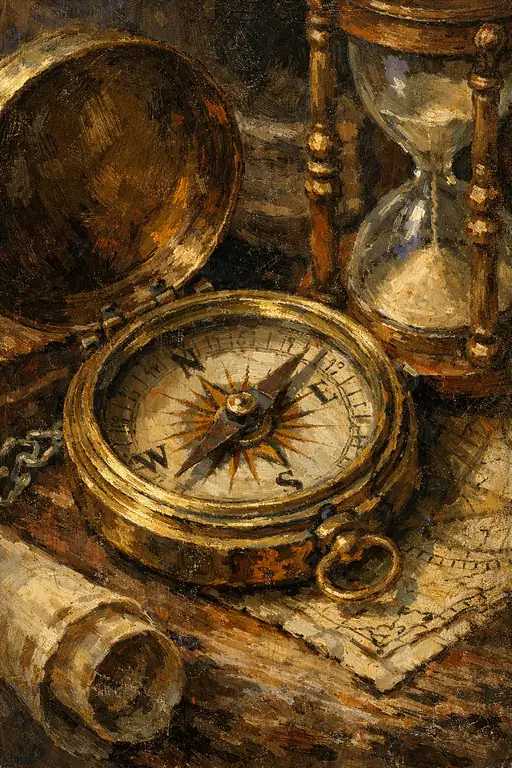 Spark of Creation
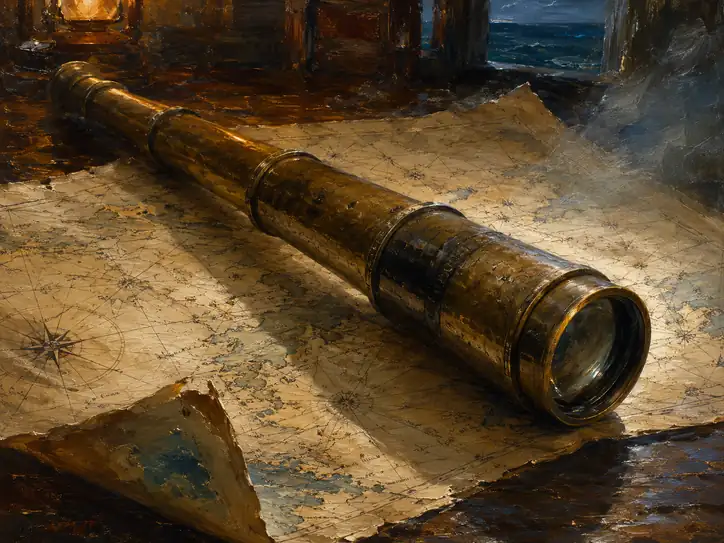 The Silent Call of the Infinite Sea
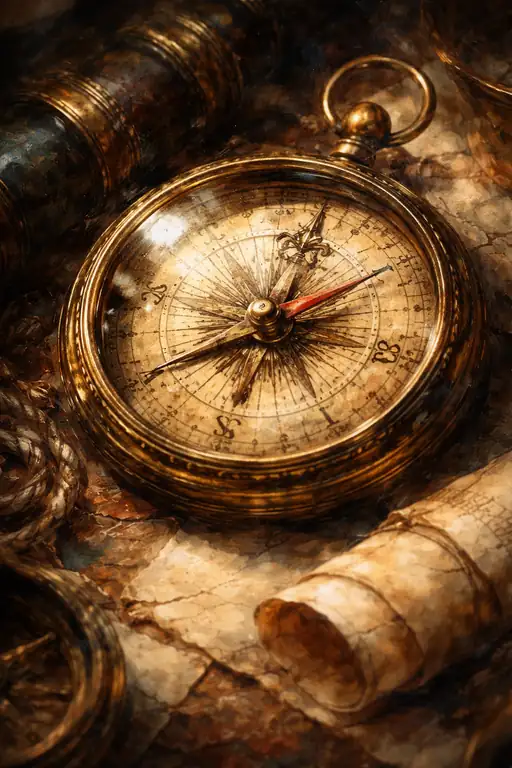 The Compass that Knows My Heart's Direction
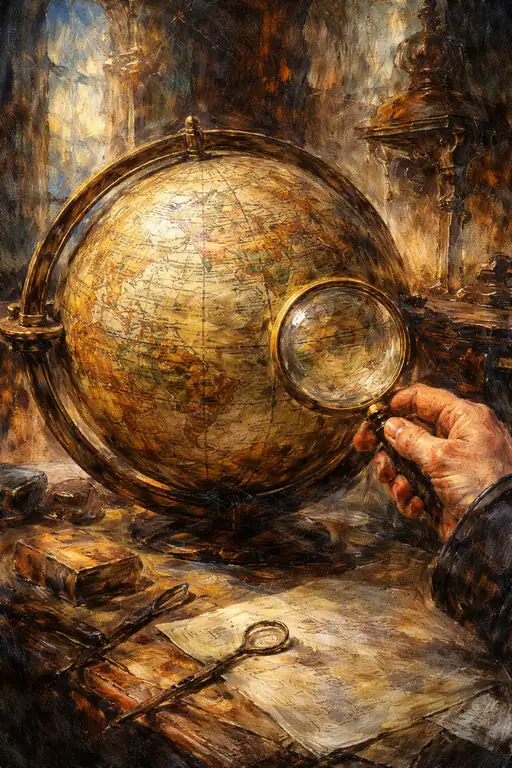 Whispers of the Old Cartographer
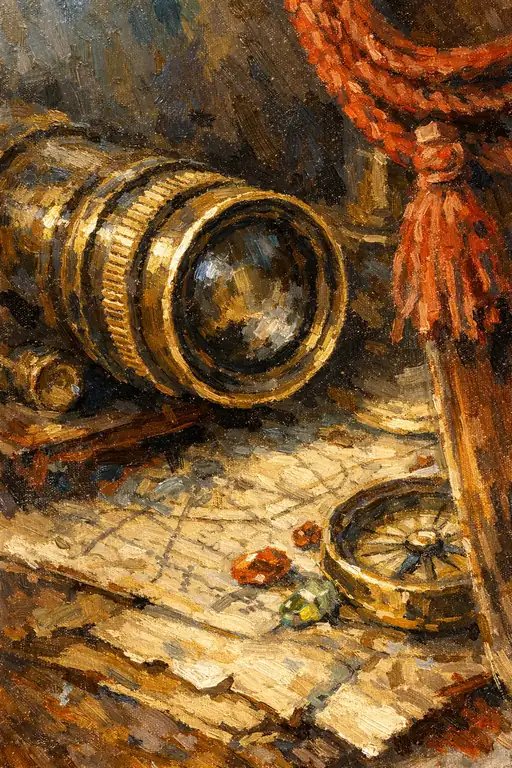 Fragments of a Broken Dream
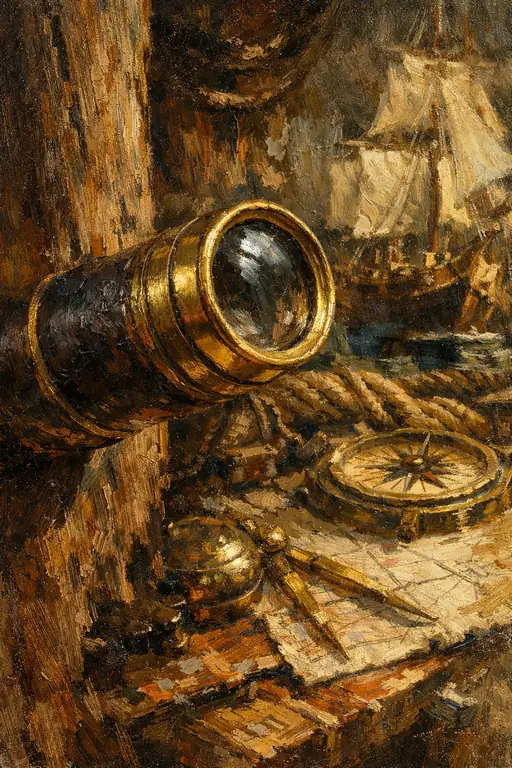 Looking Towards the Unknown Sea
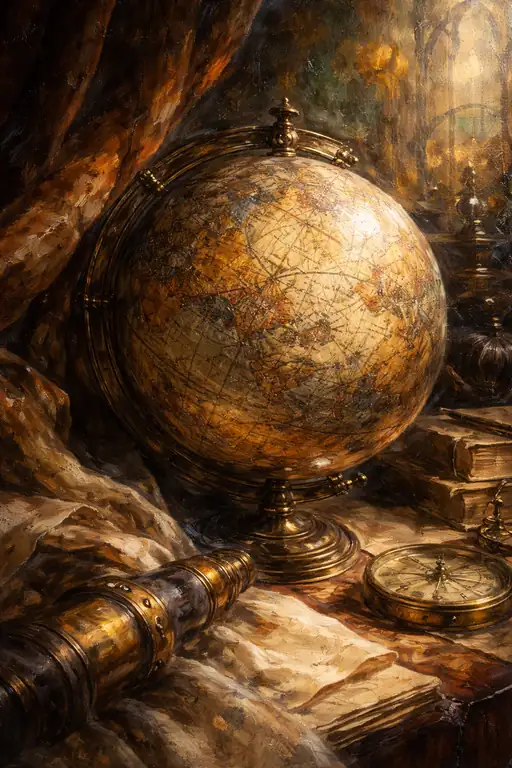 A Golden Globe of Forgotten Dreams
 Whispers of the Uncharted Sea
 Voyage Through Amber Dust