
Threads of Eternal Seconds
Critique
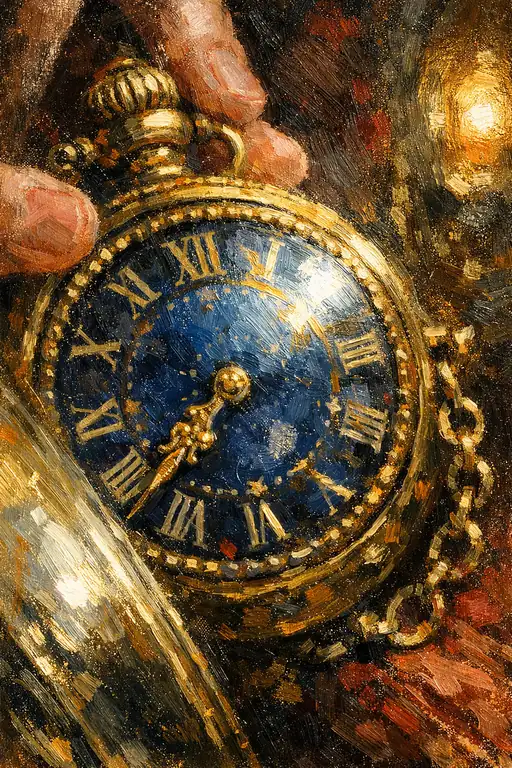
1. Introduction This painting presents an intimate, close-up view of a complex mechanical timepiece, likely a pocket watch, being handled by a human subject. The work immediately evokes themes of tradition, the relentless passage of time, and the intricate relationship between man and machine. Through a heavily textured oil-on-canvas style, the artist transforms a functional object into a poetic exploration of craftsmanship and history. The composition is tight and focused, drawing the viewer into the microscopic world of gears and Roman numerals that define our measurement of existence. 2. Description The central subject is a golden-toned pocket watch with its internal mechanisms partially exposed. Two blue metallic hands point towards the Roman numerals, while intricate gears and wheels are visible beneath the surface. In the lower-right foreground, two fingers with visible skin textures and creases grasp the winding crown of the watch. The background is a dark, indistinct blur of earthy browns and ochres, which serves to push the reflective surfaces of the watch forward. Every element, from the curved glass to the metallic casing, is rendered with thick, visible brushstrokes that emphasize physical presence. 3. Analysis The artist utilizes a warm color palette of gold, bronze, and fleshy oranges, which is sharply contrasted by the cool, vibrant blue of the watch hands. This color choice creates a visual anchor at the center of the piece, guiding the eye to the primary indicators of time. The application of paint is highly expressive, using impasto techniques to simulate the glint of light on polished metal and the rough texture of skin. The composition relies on circular motifs—the watch face, the gears, and the curve of the fingers—to create a sense of harmony and rhythmic continuity throughout the frame. 4. Interpretation and Evaluation The painting can be interpreted as a meditation on the fleeting nature of life and the human desire to control and measure it. By showing the fingers in the act of winding the watch, the artist emphasizes the necessity of human intervention to keep the march of time moving. Technically, the work is impressive for its ability to convey hard, mechanical details through such a soft and textured medium. The evaluation of the piece highlights the successful balance between representational accuracy and artistic abstraction, showcasing a high level of skill in capturing metallic luster. 5. Conclusion In summary, the painting is a masterful blend of technical precision and emotional depth, offering a profound look at a timeless object. The initial curiosity regarding the mechanical details eventually gives way to a deeper appreciation for the tactile and atmospheric qualities of the scene. It effectively bridges the gap between the cold logic of horology and the warm subjectivity of human experience. The final result is a work that feels both historically grounded and philosophically resonant, leaving the viewer to contemplate their own relationship with the ticking of the clock.
Same Subcategory
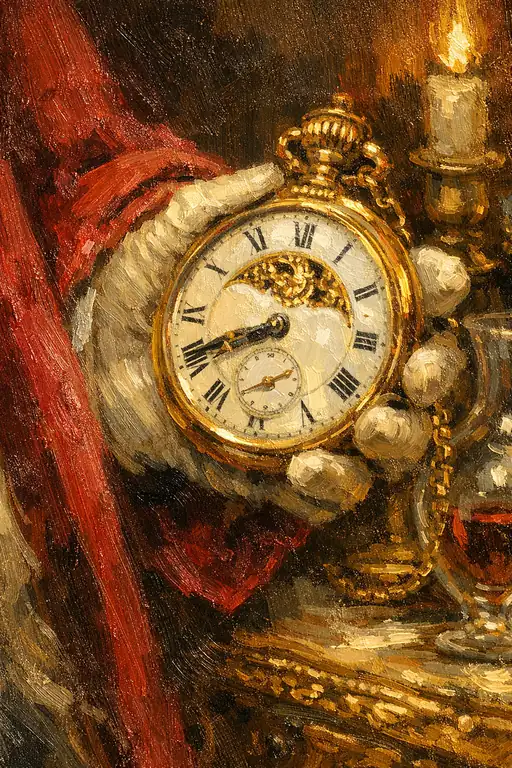 The Elegant Weight of Time
Similar Artworks
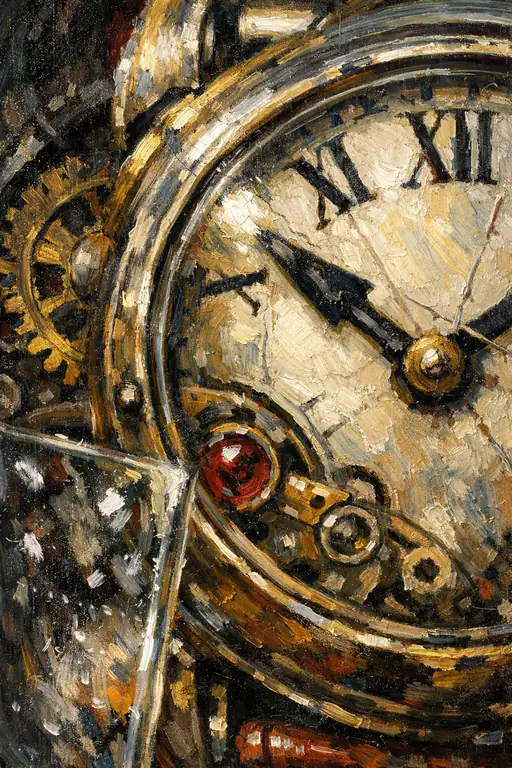 The Relentless Gears of Time
 A Gamble Against Eternity
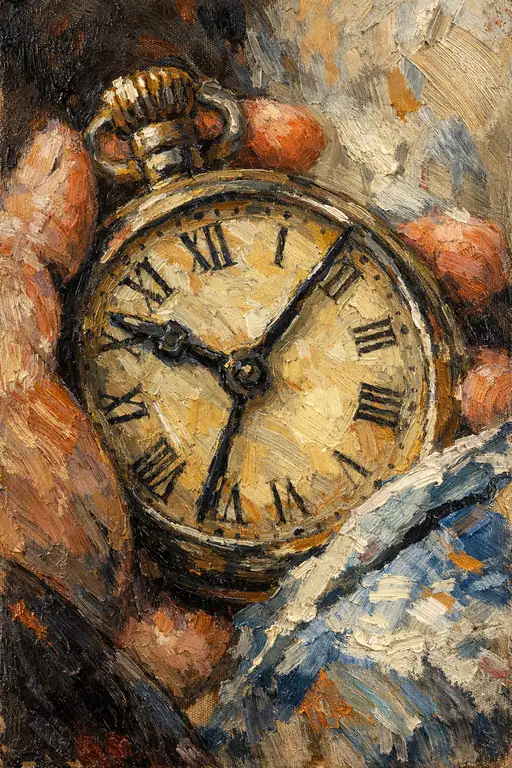 Holding the Weight of Painted Time
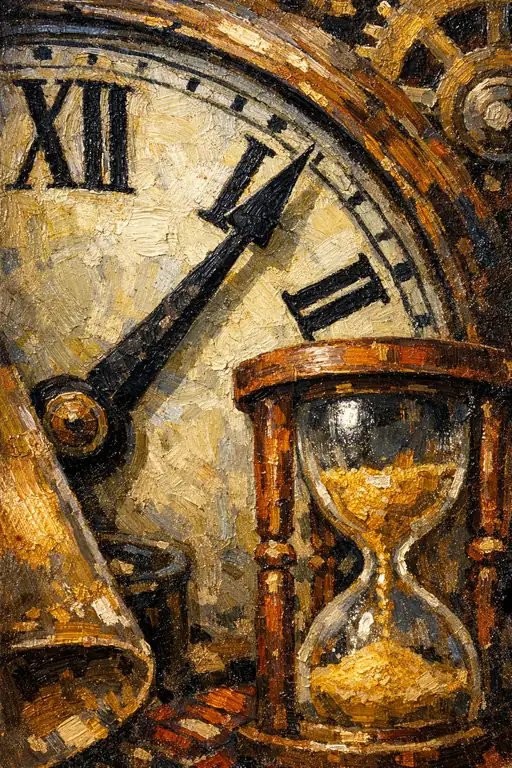 The Golden Weight of Eternity
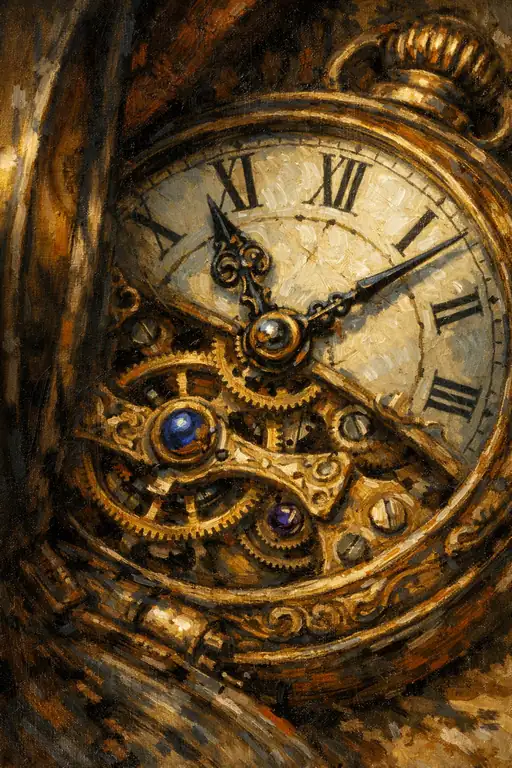 Heartbeat of Eternity
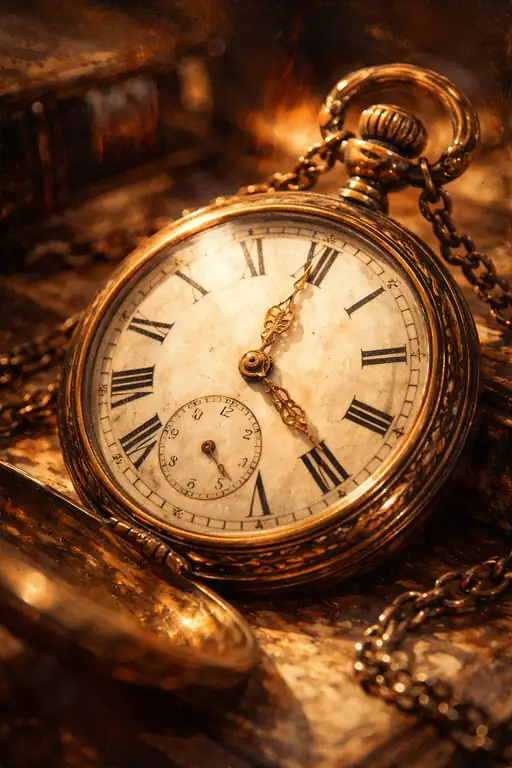 A Nostalgic Meditation on Time's Elegance
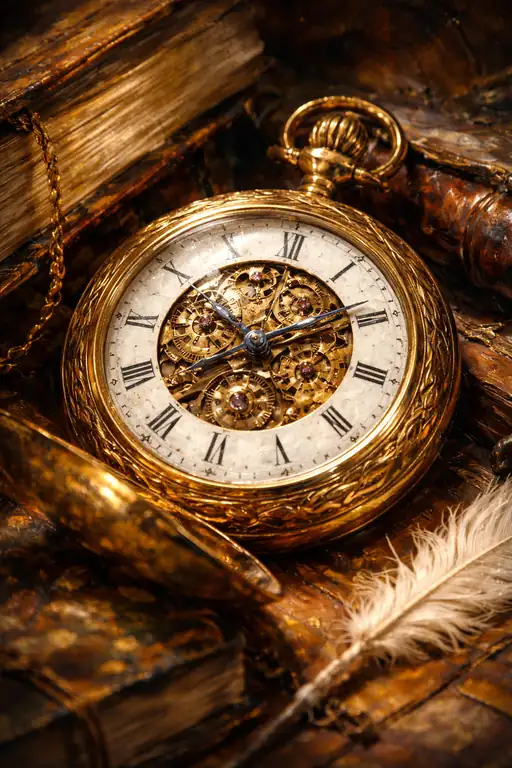 The Golden Echoes of a Forgotten Epoch
 Heart of the Mechanism
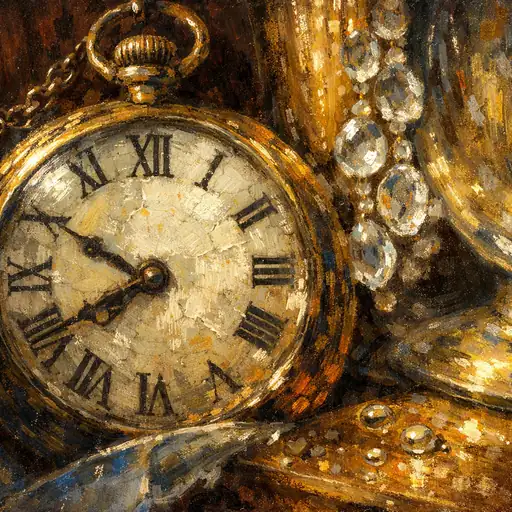 The Golden Hour of Decay
 Golden Pulse in the Abyss of Time